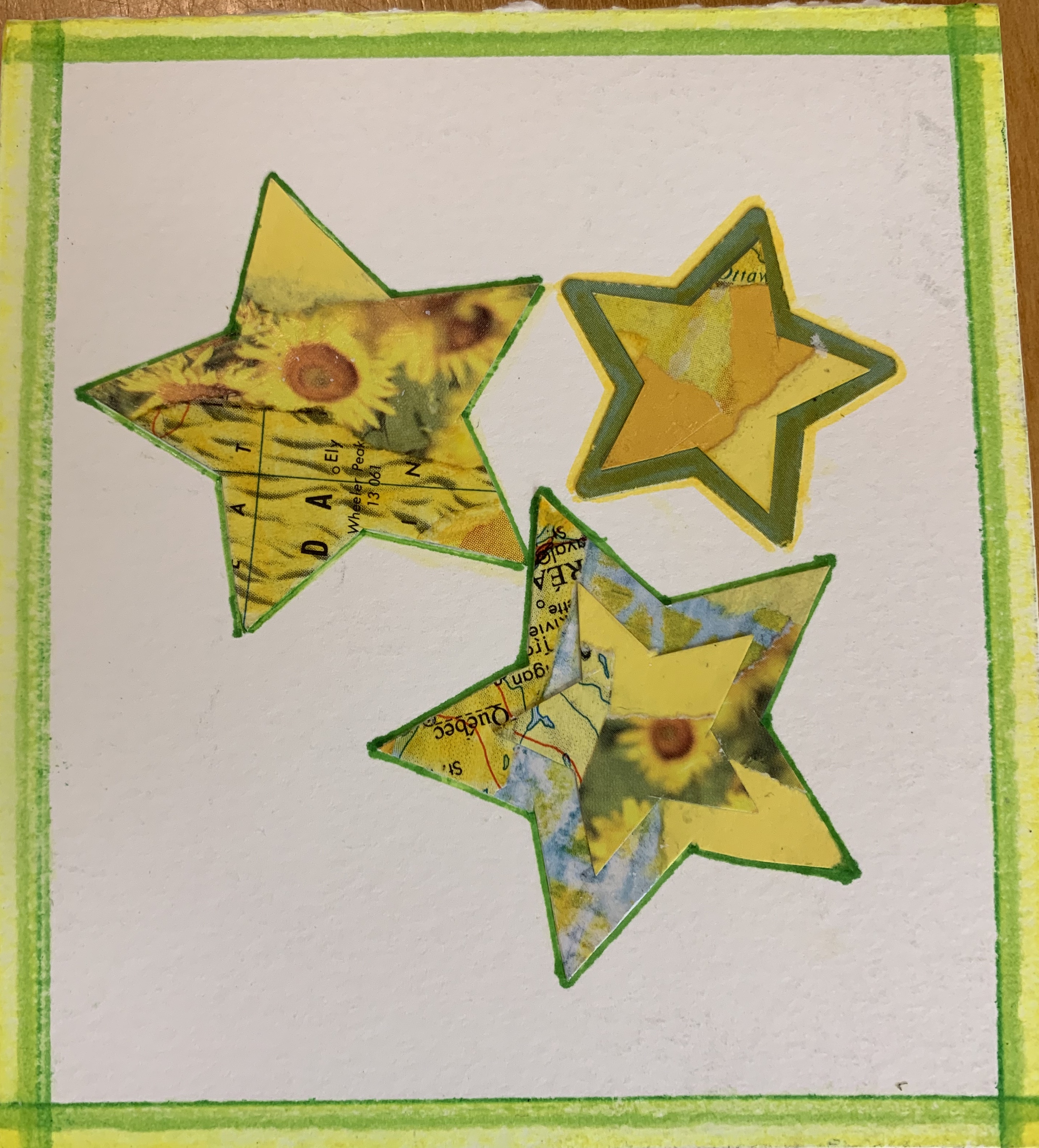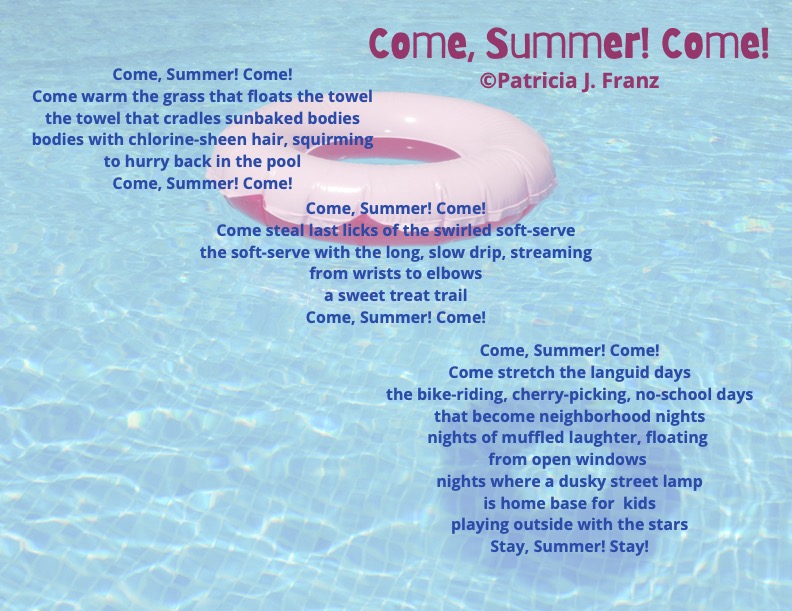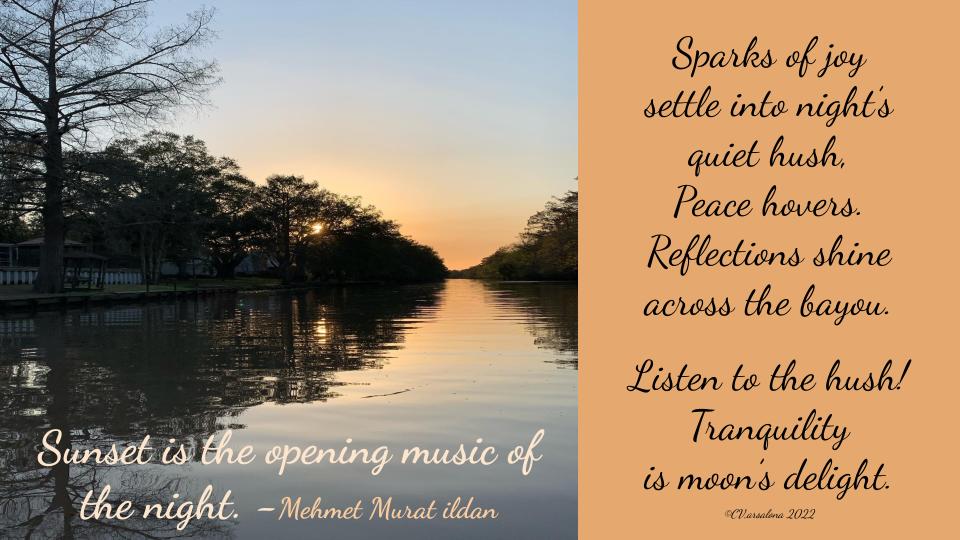
Each summer Tabatha connects us kidlit poets by coordinating a poem swap. My first poem swap was with Kat Apel, all across the globe in Australia. Believe it or not, we have met face to face. She is a tall, sunshiny gal. I finally got around to sending her a poem yesterday, and she has shared it with the world today. Check it out here.
Kat loves nature and often writes about it. She has watched our wood duck nesting box project over social media. She sent me this poem a few weeks ago. She captured the photo from my video, so cute with two ducklings peeking out. The poem is a lai form (which I looked up here.)
Honestly, I’m not sure if I’ll be home soon. I’m glad you were able to see me. I love how you hear a different story from my eyes,
how we find honesty under the moon– a strawberry moon rising– like a beacon through the trees.
You read me with an elder’s wisdom. Tears well up when you hold my heart with your eyes, how they flow with knowing. Your own tears leaking onto your cheek.
You never even met my father, but he was speaking through you, his presence nowhere and everywhere.
Honestly, the well of deep compassion grows when watered with our tears.
This week was the first week of Simon Summer Camp with the visit of Thomas, better known as Tuffy. We have had a wealth of experiences each day. How do you build memories for a 2.9 year old? Why, you sing about it, of course. Tuffy and I have been singing along to the brilliant and everlasting Raffi. (If you’re a grandmother, you must download his songs.)
I haven’t had much time to spend alone writing poetry, but that’s as it should be. I missed posting yesterday on actual Friday. His mother is back from her “trip.” The song we sang together to tell her about his camp week is sung to the tune of “If You’re Happy and You Know it.” When I sang it to him last night at bed time, he cuddled up on my shoulder, and I looked at my daughter and whispered, “I think I’m going to cry.” He popped his head right up and said, “Don’t cry, Mamère!” Then we all laughed and laughed. Pure Joy!
Uncle Ric fixed your tires, so you could stroll. Svitlana gave you vegetables to grow. CeCe watered flowers and plants in her yard, And Mr. Al waved good-bye.
KiKi showed you sculptures you could touch. She told you all about them, oh so much. Sophie made quesadilla out of play dough, And Rylee chased water rainbows.
Image by Linda Mitchell Round up this week is with Karen Edmisten.
Today is the first Friday of June, so that means Inkling Challenge! My writing group rotates a challenge for each month, and we post on the first Friday of the month as a group, The Inklings! This month Molly Hogan challenged us to write about a domestic task.
Truth be told, I did not read the mentor poem or write about spring cleaning because the truth is I’ve been very ill. I got Covid on a family trip to Seattle and had to stay alone in a hotel room for five days. My husband’s brother, who is a doctor, was nearby and on call for me, but there wasn’t much he could do. I just had to get through it, so I could fly home. I made it home on Saturday night. I’m still recovering, but I no longer have the virus. On Sunday morning, I read The Writer’s Almanac and used the poem “Joy” by George Bilgere as a mentor text. His poem was about recovering from the flu. I borrowed a few lines. The form helped me write again which brought me Joy.
Joy
after George Bilgere
Today I sit in the kitchen with a glass of Gatorade, on ice, my daily cocktail. The door is open to let in cool morning air. I sit with my body, just the two of us for a change. Covid has left us and moved on to someone else, with its knife well-sharpened to gut and leave behind loose limp skin.
I am sitting in amazement that I am able to be here breathing. Amazed at a body’s will to survive even in the deepest dark cave of fear.
For a while I thought I would never get better. That I would dissolve into dust in a hotel room alone, not discovered for days.
But every day there are miracles. We wake up. We taste and smell the air. Tiny eggs in a nest hatch into finches that will fly.
Today I sit watching a prothonotary flutter at the window, make a mental note to refill the feeders. The desert rose at my front door welcomes me home with a fireworks show.
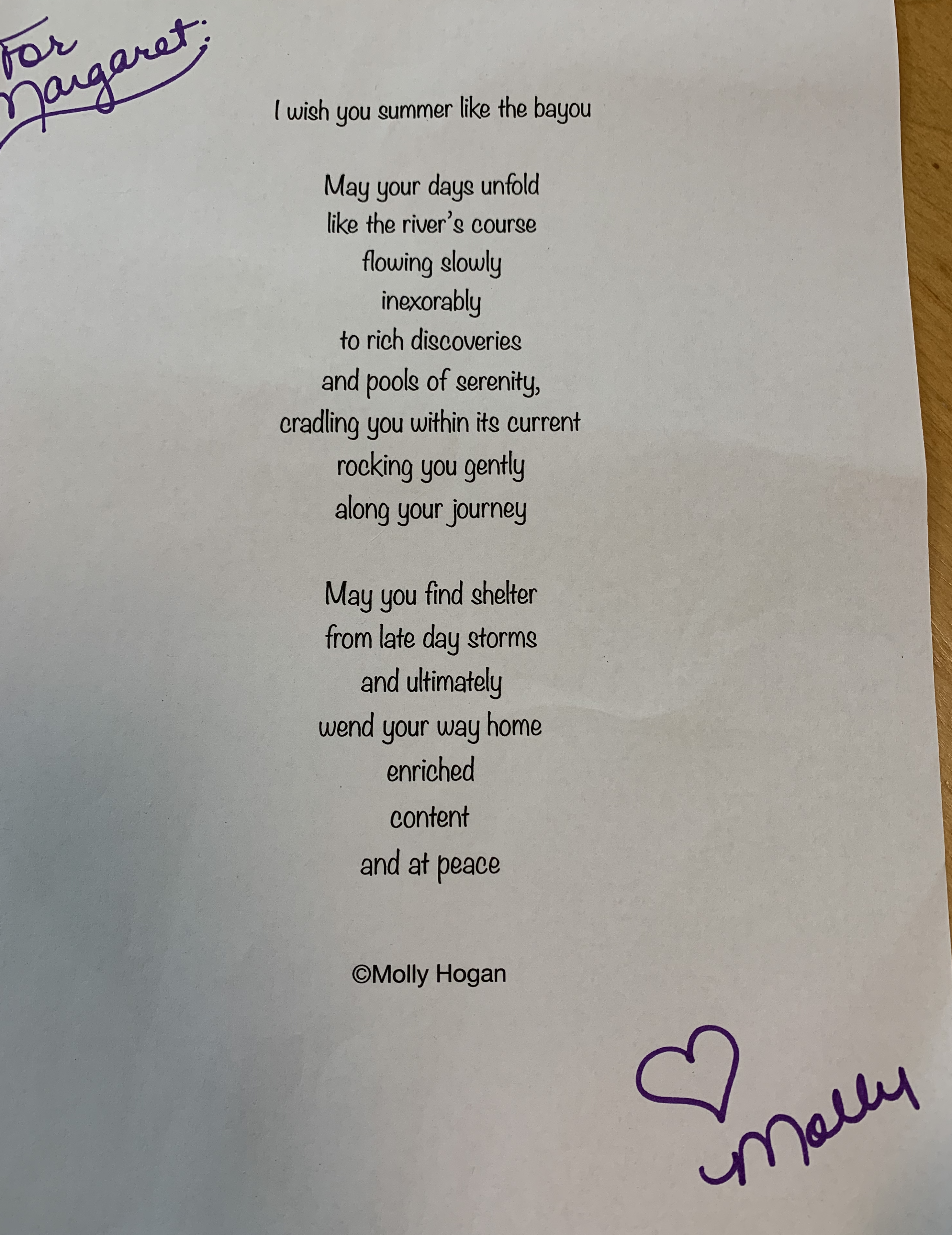
One of the wisdoms I have gained as a writer is that writing with others creates strong friendships because writing is such an act of vulnerability. It is true for the classroom, for writing workshops, and for critique groups. My group, the Inklings, are true friends. They listen, respond with integrity, and encourage me as a person as well as a writer. We live far away from each other, but we used Zoom long before the pandemic, and see each other twice monthly. This is all to say that when my father died, they did what they do best, and sent me a book of poems. I sat alone with these poems and let the comfort and wisdom of words wash over me. I offer a video today of me reading each poem sitting out by my beloved bayou. It’s 8 minutes long.
Awakening the Heart by Georgia Heard is a go-to book for me. I recently came back to it to find an inspiring poetry lesson (page 48) around a stanza of Naomi Shihab Nye’s poem Valentine for Ernest Mann.
We watched this video of Naomi reading it and telling the story of its inception. Then we borrowed the words poems hide for our own poems. Avalyn says it’s the best poem she’s ever written (in her year of writing poetry with me.)
I was reminded of a resident at my parents’ retirement home. When my father was ill, I stayed with my mother in her apartment and got to know many of her friends. This is a true story about Angel, but after I gave her a copy of the poem, she had to correct me that the cats do trust her and let her pet them.
Poems Hide in an Instagram image of sunrise a small songbird the trickle of water over a streambed.
Poems hide in the calico that lost its tail in the woman named Angel who sits on the ground to feed the lonely cat, her hand out, longing for trust.
Angel laughs in poetry.
She gives me a Styrofoam cup of cut roses aflame in her hand. I find poetry in the things I touch and in your forever love.
Margaret Simon, all rights reserved
Poetry Hides by Avalyn, 2nd grade
poetry hides in talent,
poetry hides in your favorite stuffed toy
poetry hides in the beautiful Robin you saw hurt on the ground
poetry hides in yourself and all beings
poetry hides in magnolia flowers
poetry hides in the things you love most
poetry hides in the ones that helped you get awards and medals
poetry hides in the lost and found shared memories
poetry hides in your life and soul
poetry hides in the book of quotes that helps you feel grateful
There’s a loss of energy in grief, a sadness that is heavy and weighs you down. I’m not at all sure that writing helps, but writing for me is the most personal act and wherever I am, my writing is there, too.
Over at Ethical ELA, Shaun Ingalls posted a prompt inspired by Alicia Mountain’s “Drift” inviting us to re-encounter something with a new perspective.
I Hold an Acorn
in my hand in a field of clover.
Am I a child now? Walking with sun bright in my eyes as it rises above the live oaks?
It is spring, to be sure, a time of resurrection. Yet you are not here.
I cannot call you or text (You never learned how to text), so I stand in the field, hold the acorn lift it to smell my childhood, like the scent of the Paschal candle, anointing to save, to savor.
I am here. You are not.
Margaret Simon, draft
Grandmother oak in the morning. Photo by Margaret Simon
The Kidlit Progressive Poem is nearly complete. You can follow its progress with the schedule on the side bar. Karen has the next to last line today.
The Kidlit Progressive Poem is stopping here today. It’s been on a long journey and now we are turning toward home. I want to take this opportunity to thank all the participants who without much guidance just kept this poem going and growing.
The last stop was with Kevin Hodgson at Kevin’s Meandering Mind. Here is the poem so far with my line added in italics.
Where they were going, there were no maps.
Sorry! I don’t want any adventures, thank you. Not today.
Take the adventure, heed the call, now ere the irrevocable moment passes!
We have to go back. I forgot something.
But it’s spring, and the world is puddle-wonderful,
so we’ll whistle and dance and set off on our way.
Come with me, and you’ll be in a land of pure imagination.
Wherever you go, take your hopes, pack your dreams, and never forget –
it is on our journeys that discoveries are made.
And then it was time for singing.
Can you sing with all the voices of the mountain, paint with all the colors of the wind, freewheeling through an endless diamond sky?
Suddenly, they stopped and realized they weren’t the only ones singing.
Listen, a chattering of monkeys! Let’s smell the dawn and taste the moonlight, we’ll watch it all spread out before us. The moon is slicing through the sky. We whisper to the tree, tap on the trunk, imagine it feeling our sound. Clouds of blue-winged swallows, rain from up the mountains,
Green growing all around, and the cool splash of the fountain.
If you look the right way, you can see that the whole world is a garden,
a bright, secret, quiet place, and rather sad; and they stepped out into the middle of it.
Their minds’ libraries and lightning bugs led them on.
The darkwood sings, the elderhist blooms, the sky lightens; listen and you will find your way home.
The night sky would soon be painted, stars gleaming overhead, a beautiful wild curtain closing on the day.
Mud and dusk, nettles and sky – time to cycle home in the dark.
There are no wrong roads to anywhere
I am away from home staying with my mother. My father is in hospice care in the hospital after a stroke ten days ago. This liminal time has been a blessing in many ways. I am listening to my mother play the piano as I write this. She and Dad are big Leonard Cohen fans. My father gave her a picture book of “Dance Me to the End of Love” illustrated by Matisse. I am not sure my line makes sense with the poem, but I also know that poetry is a safe place and a place of mystery. So I’m just going with it.
lift me like an olive branch and be my homeward dove
1. The Imaginaries: Little Scraps of Larger Stories, by Emily Winfield Martin 2. The Hobbit, by J. R. R. Tolkien 3. The Wind in the Willows, by Kenneth Grahame 4. Walk Two Moons by Sharon Creech 5. inspired by “[in Just-]” by E. E. Cummings 6. “Pure Imagination” from Willy Wonka and the Chocolate Factory 7. Maybe by Kobi Yamada 8. Sarah, Plain, and Tall by Patricia MacLachlan 9. inspired by Disney songs “A Whole New World” from Aladdin and “Colors of the Wind” from Pocahontas 10. The Other Way to Listen by Byrd Baylor 11. adapted from Cinnamon by Neil Gaiman 12. adapted from The Magical Imperfect by Chris Baron 13. adapted from On the Same Day in March by Marilyn Singer 14. adapted from a line in Bridge to Terabithia by Katherine Paterson 15. The Secret Garden by Frances Hodgson Burnett 16. Prince Caspian by CS Lewis 17. The Last Cuentista by Donna Barba Higuera 18. Kate DiCamillo’s The Beatryce Prophecy 19. The Keeper of Wild Words by Brooke Smith 20. Last Child in the Woods by Richard Louv 21. ThePhantom Tollbooth by Norton Juster 22. Dance Me to the End of Love by Leonard Cohen
And here is today’s new line from poet Janet Clare Fagal, a blogless soul who posts on Facebook as Janet Clare and whose poems can be found in a variety of anthologies (pictured below), and online at nlapw.org. If you are not a Facebook friend, please send Janet a request if you would like to connect!
I am happy to be participating once again in the Poetry Friday Progressive Poem! Thanks to Margaret for hosting me this year.
Such an adventure we have begun. I tried a little formatting to get a feel for the bones of our poem, but please feel free to try your own version as we move along down the path! For my line, I found one from Neil Gaiman, and using my poetic license, I adapted/edited the line to make it work a bit better for the poem. I am eager to pass the poem to my friend Jone Rush MacCulloch!
Don’t we all love the adventure of April in this wonderfully creative Blogosphere of Kidlitosphere poets and writers! I am so glad you started this Progressive Poem, Irene, I look forward to it every April.
Where they were going, there were no maps.
Sorry! I don’t want any adventures, thank you. Not Today.
Take the adventure, heed the call, now ere the irrevocable moment passes!
We have to go back. I forgot something.
But it’s spring, and the world is puddle-wonderful, so we’ll whistle and dance and set off on our way.
Come with me, and you’ll be in a land of pure imagination.
Wherever you go, take your hopes, pack your dreams, and never forget – it is on our journeys that discoveries are made.
And then it was time for singing.
Can you sing with all the voices of the mountain, paint with all the colors of the wind, freewheeling through an endless diamond sky?
Suddenly, they stopped and realized they weren’t the only ones singing.
(Now for my addition! An adapted line from Cinnamon by Neil Gaiman.)
Listen, a chattering of monkeys! Let’s smell the dawn and taste the moonlight, we’ll watch it all spread out before us.
Lines 1 -11, poet and where they are from:
Irene (The Imaginaries)
Donna (The Hobbit)
Catherine F. (The Wind in The Willows)
Mary Lee (Walk Two Moons)
Buffy Silverman (a bit from e.e. cummings)
Linda Mitchell (Charlie and the Chocolate Factory)
Kim Johnson (from Maybe by Kobi Yamada)
Rose Cappelli (Sarah, Plain and Tall)
Carol Varsalona (Disney Songs)
Linda Baie (The Other Way to Listen.)
Janet Clare Fagal (line adaptation from Cinnamon by Neil Gaiman)
I met Allan Wolf years ago when he visited and presented in our area. He’s incredibly entertaining in real life. He is also one of the kindest people I’ve ever met. So when an opportunity appeared to get an ARC of his latest book of poems, along with an interview, I jumped at it.
Behold our Magical Garden is full of poems that take us into a school garden. You can jump in without getting dirty. The poems are lyrical, funny, and informative. They beg to be read aloud. Behold Our Magical Garden was released on March 8. Please enjoy this delightful interview with Allan.
Allan Wolf is a member of the species Poemo sapien. He often vocalizes in verse from atop chairs. He spends many hours alone sitting at his nest using his imagination to make things. Although he is 59 years old and 5’8” in height, he imagines himself much younger and much taller. He is a writer of poetry, novels, and picture books, and a serious believer in the healing powers of poetry. His latest collection of poems is Behold Our Magical Garden: Poems Fresh from a School Garden, illustrated by Daniel Duncan.
What inspires your writing?
Reading is a big inspiration. Listening to music. Watching performances of all kinds. Observing and experiencing any creative expression that resonates and moves me. While I certainly am a writer, I am more specifically a creator. I have an urge to create. We all have these urges to create life from the clay of our imaginations. And in that respect, we are all amateur gods. Writing and poetry is my default medium.
Why poetry?
Since I first discovered rhythm when I was four years old (I remember it as if it was yesterday!), my thought process has lent itself well to poetry, metaphorical thought, rhythms, rhymes, music, story. And most importantly, my brain is something of a non-linear array of constellations of thought bubbles, with observations flying in and out, unbidden as birds.
Words give a poem sense, while the space between the words give it resonance. Poets can arrange words based on craft, style, and clarity, just as prose writers do. But poets don’t have to stop there. Poets can arrange words based on prescribed patterns . . . or not. Poets can even arrange words wherever the words instruct them too. Space is key. Space between words. Space between lines. You can even remove a word, like you would remove a superfluous wisdom tooth. Line-breaks can be purposefully clunky or smooth. When a line breaks, the words turn. The poem’s rhythm may also turn. The poem’s pace may turn as well. The reader’s eyes, heartbeat, and attention all turn. (Bonus Fact: The word “verse” comes from the Latin, verso, to turn.)
The poet chooses
where
the lines break.
Three things you love?
One) I love juggling (just juggling balls, not clubs, or rubber chickens, or chainsaws! Well, maybe I would love to juggle rubber chickens. That would be really funny!)
Two) I love making music, playing the guitar and the drums, singing, and making up songs.
Three) I love being an author of books! There is such a feeling of closure to have your thoughts and ideas and words and revelations enshrined within a book that is widely available to all. It is a sense of relief, that my words will continue to live and to speak, long after I’ve stopped doing either one.
Oh and, Four) Puppets! Let’s not forget puppets. I love puppets.
During the pandemic, how did you keep creating?
Like many of my writing colleagues, I was surprised how hard it was to keep creating new work, even with two years of mandatory “free time.” I had already been reassessing my work, even before the pandemic. At that time the Black Lives Matter and Me Too movements were already in full swing. As a white male writer, I felt like it was more a time to listen than to speak. Then the pandemic, with its forced stay-at-home quarantine, provided the necessary Petri dish to amplify the whole conversation. During that time, I temporarily set aside my most pressing novel, the one I’m back at work on now. It has taken me all this time away from it to reassess what I was trying to say. So much has changed. Meanwhile, throughout my writer’s block, I was actually writing poetry and picture books, which can be a little easier to carry around in your head without going nuts. I also made a lot of videos and I organized my private journals (which I’ve been keeping since I was 12 years old).
What are you most proud of?
I’m most proud of my wife and my children, Simon, Ethan, and James. As for writing, it’s hard to say. I’m proud of the Iceberg character/narrator in The Watch that Ends the Night. That character’s voice is written in iambic pentameter that gradually melts to tetrameter, trimeter, dimeter, and finally, monometer. The Iceberg’s last two spoken words, “I am,” are actually an iamb!
Do you have a writing activity to pass along? (I’d like to challenge my readers and my students to respond.)
What’s In a Name?
ONE) Begin by generating a list of all the “names” you are known by. General Names, like son, daughter, best friend, hero, helper, athlete, or alchemist. And Specific Names like Elizabeth, LaQuesha, Darius, or David. And Nicknames like Doodle, Tutu, Junior, or Jack.
TWO) Choose one example from your list. Using informal prose write “the story of your name.”
THREE) After you’re done, circle (or highlight) five to ten words or phrases that seem integral to your story. Next, use those chosen words or phrases as the building blocks of a poem.
Note to readers: If you do Allan’s challenge, add your poem to this padlet.
Margaret Simon lives on the Bayou Teche in New Iberia, Louisiana. She is a retired elementary gifted teacher who writes poetry and children's books. Welcome to a space of peace, poetry, and personal reflection. Walk in kindness.