Feeds:
Posts
Comments

Archive for the ‘Teaching’ Category

Please use this button on your site for DigiLit Sunday posts

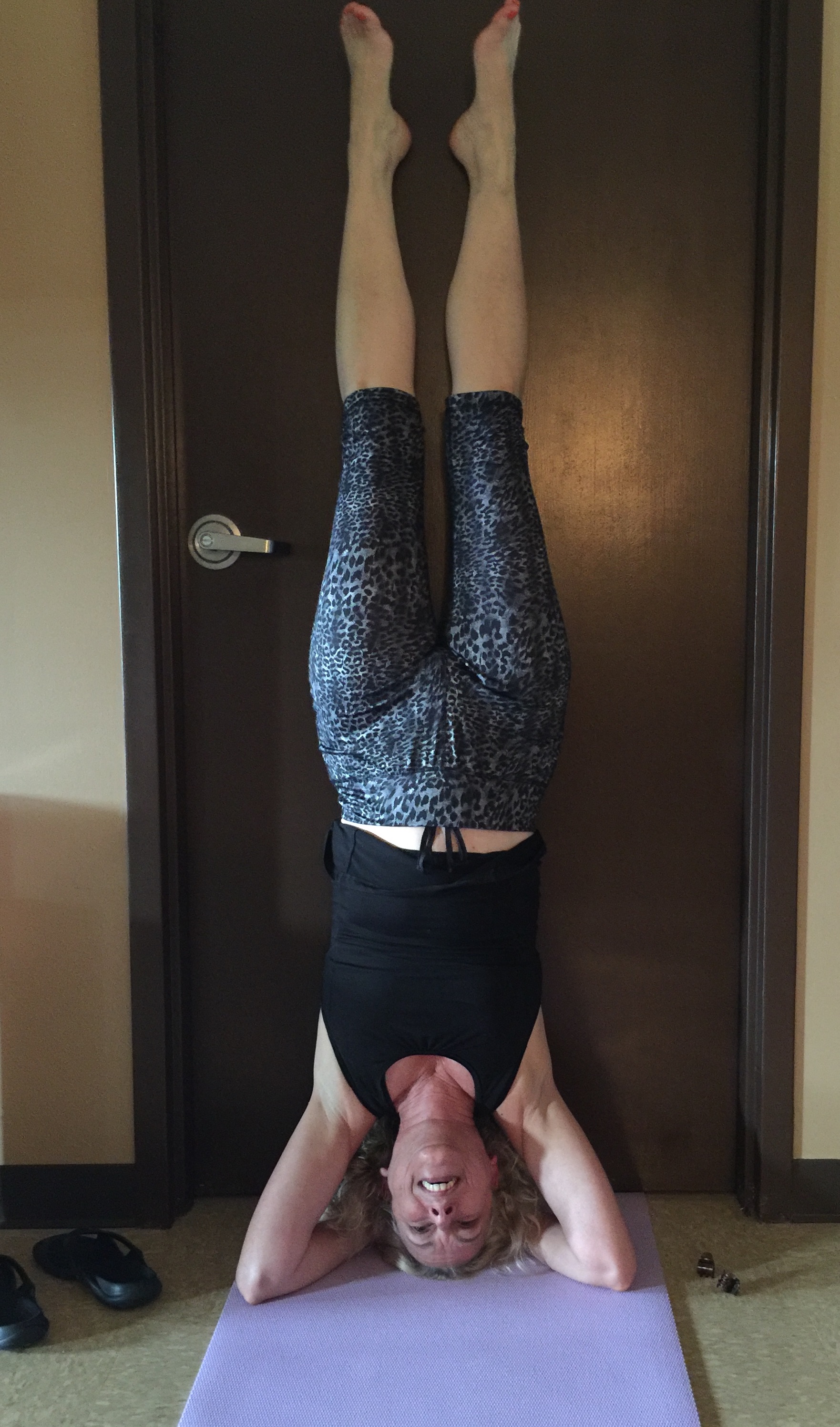
Saturday morning yoga, my instructor, Susan, says “You should not tell yourself that your body can’t do something. Challenge yourself to try, and your body may just surprise you.” So when she said we were going to do head stands, I stopped the “No way,” and said, “Ok. I’ll try.” I opened myself to her knowledgeable instruction. She guided me step by step. And when I was upside down, I felt powerful, giddy, invincible.

I want to take this learning into my classroom and into my teacher-self. Our school year begins on Wednesday. Scheduling is a nightmare for anyone who has to look at a master schedule and plan for all the various pull-outs and special classes. I am one of those teachers that messes up the master schedule. This year I will be servicing three schools. Three different schools with three different schedules pulling out gifted students in 5 different grade levels. I know you must be saying by now, impossible.

Teachers, isn’t that how we roll? Turning impossible into possible. Whatever it may be, a move to a new classroom, grade level, or position, a new administrator to get to know, a crazy schedule to make work, we put on our super hero capes and take off, letting the winds of self-doubt fly past us. Flexibility is in our stride.


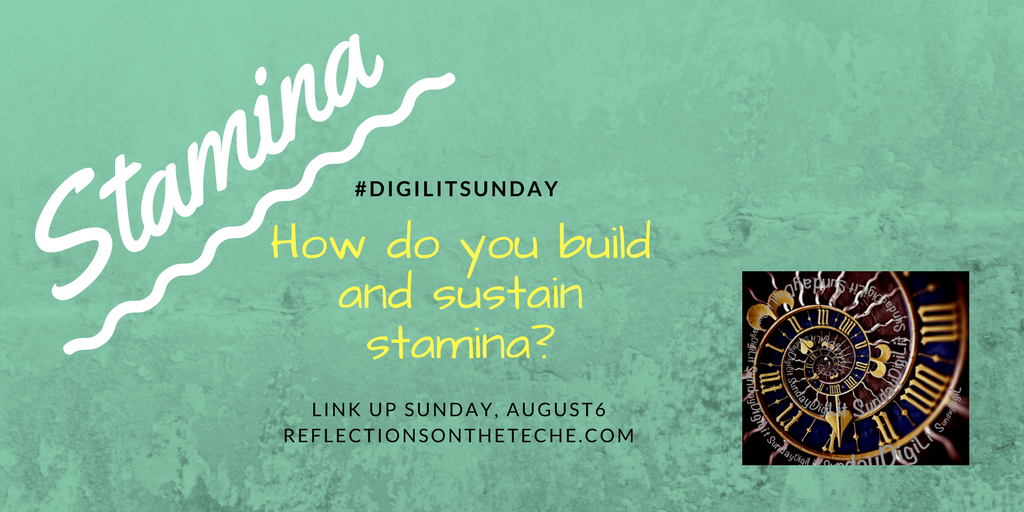
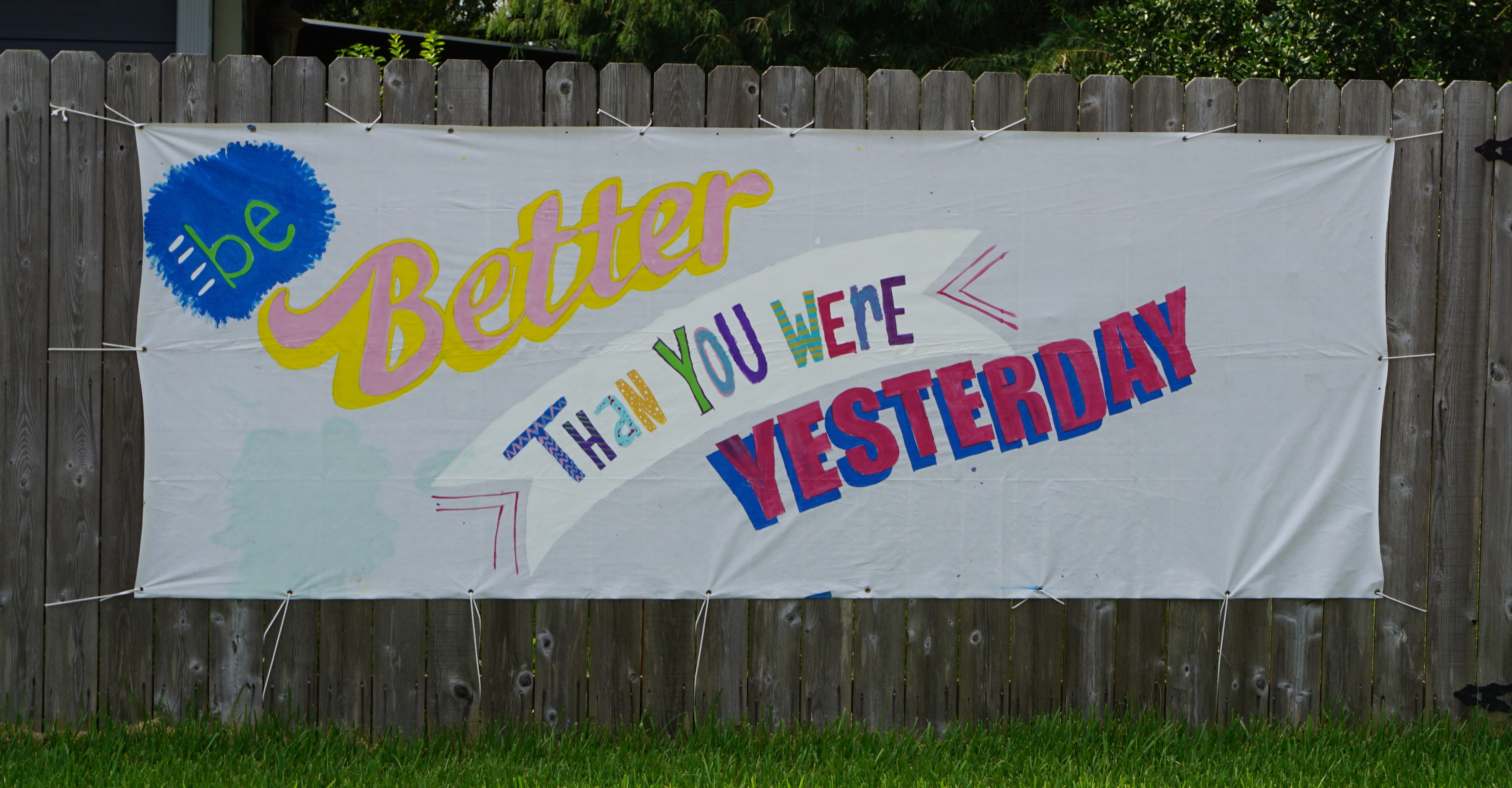
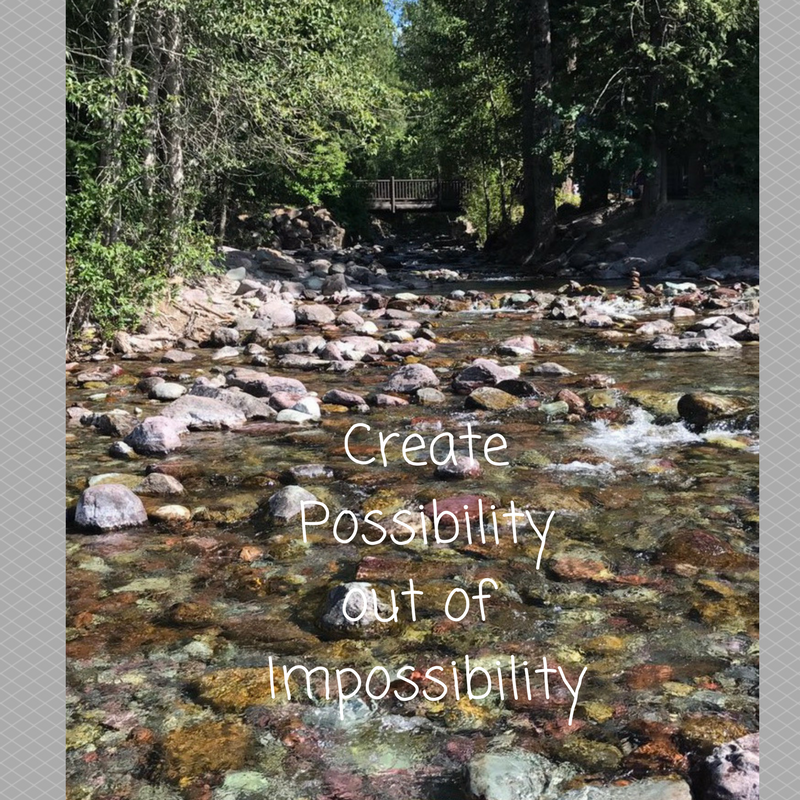
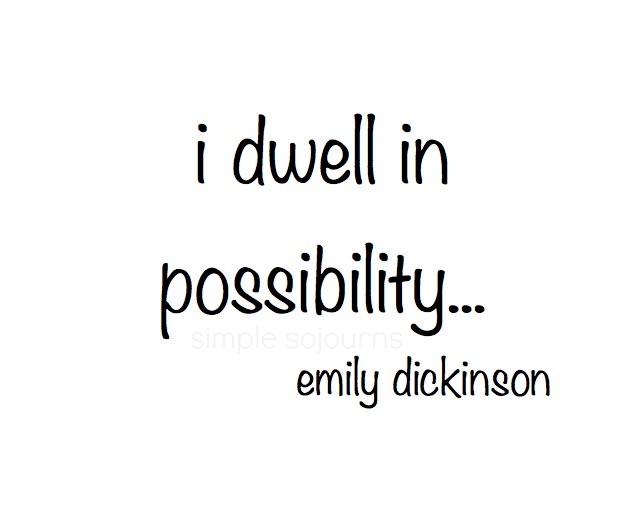
If I can do a hand stand, I can go confidently into this school year. But just in case I need a guiding mantra, I made a Canva poster out of Cornelius’s charge and my friend, Dani Burtsfield’s photo from Glacier Park in Montana.


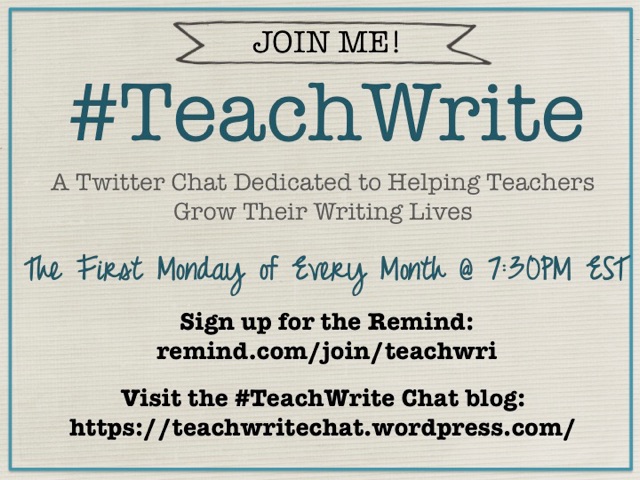
Be sure to join me in the new #TeachWrite chat on Monday, August 7th at 7:30 EST.  For more information and a list of questions, go to #TeachWrite Chat.


Link up your DigiLitSunday posts below:


Read Full Post »

Find more celebration posts at Ruth’s blog.

Empty classrooms
echo sights and sounds
of children.

Each knickknack evokes
a memory of a child.

I move desks to their places,
reconnect computer cables,
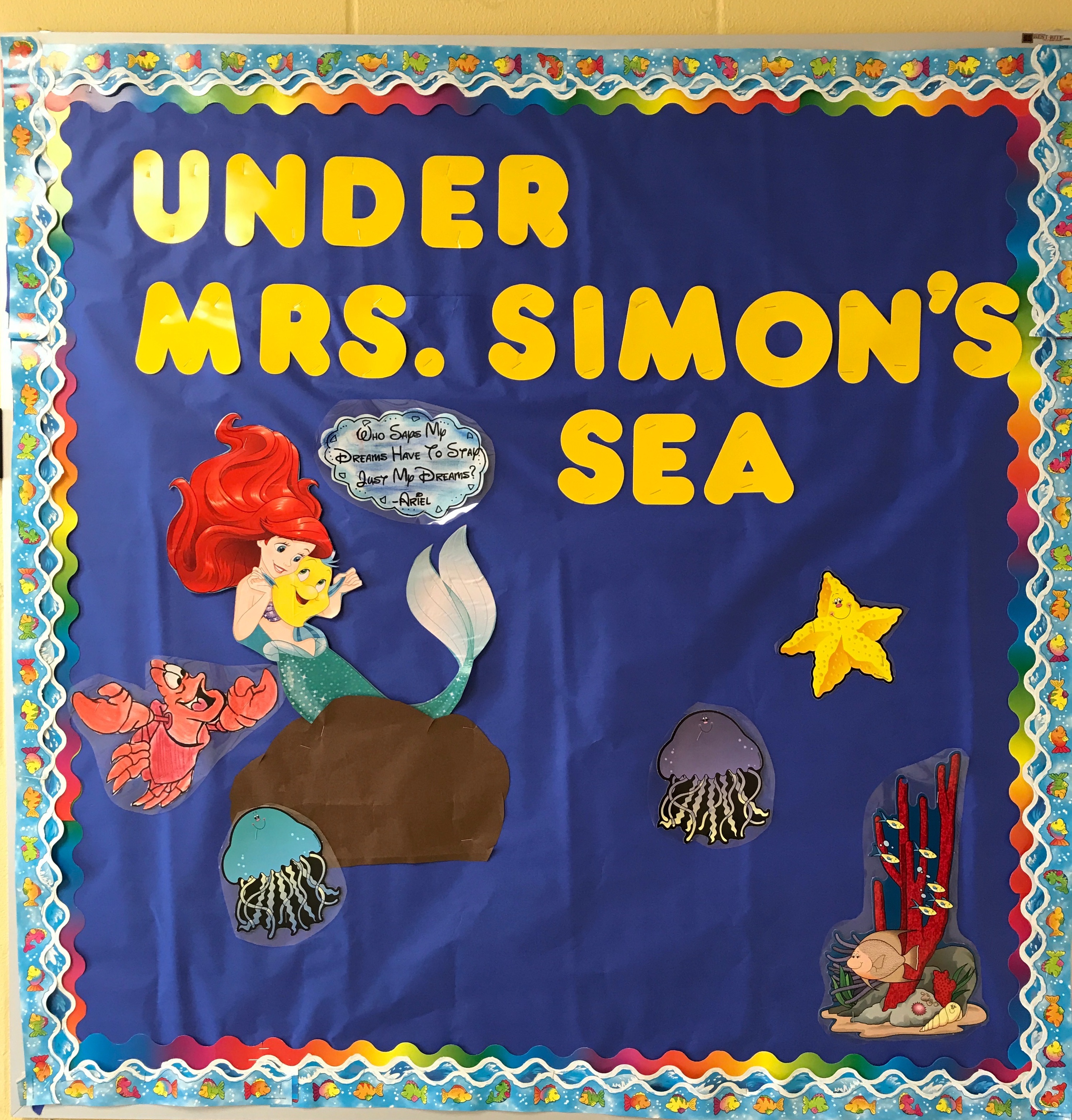
staple border on bulletin boards,
roll out the rug,
dust shelves,
arrange books,
and wonder who
the first bell will bring.

Tall pencils in a jar,
blank notebooks in the cubbies,
sticker charts wait.

Empty classrooms
invite, inspire, invoke
a spirit of expectedness,
elasticity to expand
for new voices, new hearts,
new children to embrace.

Read Full Post »

Please use this button on your site for DigiLit Sunday posts

Not really, but I didn’t get the DigiLitSunday post up this morning.  I have my excuses.  Don’t we all?  But the basic reason was self-doubt.  I battle this as much as anyone. Even some of my favorite authors go through this, so why would I expect anything different of myself?

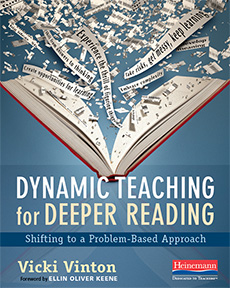
I’ve been trying to keep up with #cyberPd.  This group is reading and responding to Dynamic Teaching for Deeper Reading by Vicki Vinton.  This week’s posts are around chapters 7 and 8.  I just now finished chapter 7, so I didn’t do all of my homework.  I was reminded by a friend that this is a self-made assignment and if I don’t want to do it, nobody will care.  That is true, but then I had to re-assess why I am reading and writing in the first place.

I want to be a better reader, a better writer, and a better teacher of both reading and writing.  I believe that I should practice what I preach.  So, for better or worse, here I am.  If you did write a digilit post, link up below.  It’s not too late.

Chapter 7, Creating Opportunities for Readers to Interpret, begins with this epigraph:

We search for patterns, you see, only to find where the patterns break.  And it’s there, in that fissure that we pitch our tents and wait.  –Nicole Krauss

Readers do not build interpretations on what is obvious in a text.  We sit in the fissure of broken patterns, wondering, questioning, testing out our theories, and peeling away the layers the author has set up for us.

I feel I have done a disservice to my gifted students in not helping them understand that we don’t always understand.  Julieanne Harmatz wrote in her reflections about Chs. 7 & 8 that we must embrace confusion as part of learning.  Vicki Vinton shows me how to honor my students’ thinking and hold onto it in order to promote engagement, a sense of agency, and ownership.  They need to understand that not knowing is part of the thinking process. And what’s wrong with going back to the text to re-read?

Have you ever had an Aha moment while reading, and turned back to say, “Oh, that’s what that was about!”?   Of course you have.  Because that is how authors grab us and make us want to read more.  By focusing on the process rather than the product (test, essay, whatever), we can mold our students into problem-solving thinkers.

Reading is a transactional act.  The text comes alive in our minds when we interact using our own interpretations and our own hearts.  Then a story becomes real and meaningful.  We can encourage this flexibility of thought within our classrooms.  Vicki Vinton helps show us how.


Read Full Post »


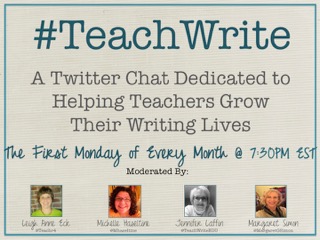
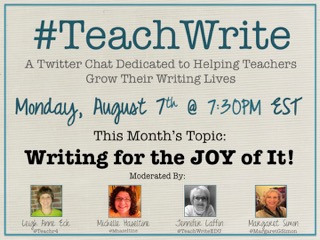
I am so excited to announce a new collaboration.  I have joined Leigh Anne Eck, Michelle Haseltine, and Jennifer Laffin in the debut of a new Twitter chat.  Last week I led a Twitter chat with the purpose of introducing teachers in my writing institute to Twitter.  While only 3 teachers from my workshop joined, lots of other teachers who want to nurture their writer selves joined in.  The chat was a success and spurred on an interest that was already brewing with Jennifer, Leigh Anne, and Michelle.  They contacted me to join them.  I am honored.

I met these three powerhouse teachers through blogging with the Two Writing Teachers Slice of Life Challenge.  There is a magic that works in cyberspace connecting people of like minds and shared passion.  We all share a passion for teaching writing.  We’ve supported each other for years by commenting on each other’s blogs and connecting on Twitter and Facebook.  With the amazing power of technology, I feel we know each other.

We want to invite you into the circle.

Do you….

Believe that teaching writing is easier when teachers are writers themselves?

Believe that our own writing lives deserve to be nurtured?

Believe that all writers grow through dedicated writing time?

Believe that all writers need support and encouragement?

Believe that writing is a messy process and the best way to learn this is through our own practice?

Believe that when teachers write, they make writing a priority in their classrooms?

Our chat will support teachers not only in their quest to become better teachers of writers, but to become better writers ourselves.

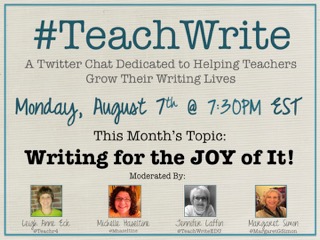
Join us the first Monday of every month for #TeachWrite, a new Twitter chat dedicated to growing teachers as writers and teachers of writers.

Our first chat is Monday, August 7th at 8PM EST with the topic of  “Writing for the JOY of It!”

Sign up for Remind on your Remind app at #Teachwrite Twitter Chat.


Read Full Post »

Please use this button on your site for DigiLit Sunday posts

I know, it’s summer and who wants to think about problems during summer?  I didn’t expect to, but I do enjoy having more time to read.  I’ve been reading Dynamic Teaching for Dynamic Reading by Vicki Vinton.  This book was chosen for the CyberPD book for July. To follow the discussions around this book, tune in to #cyberpd and Michelle Nero’s blog Literacy Learning Zone. 

In Dynamic Teaching, Vicki sets us up to think more about the complexity of and the authentic purpose for reading. She leads us into the problem solving process for students when reading.


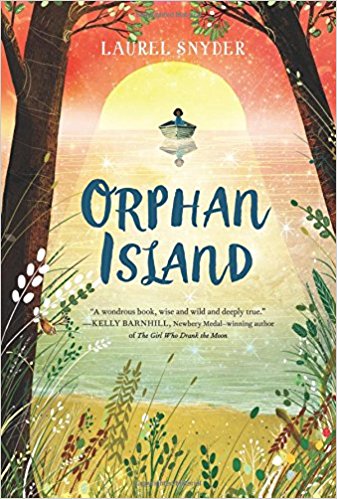
It’s one thing to read theory in a professional book, but quite another to see the theory play out in your own life.  I started reading Orphan Island by Laurel Snyder.  This book is intended for middle grade students, the students I teach. Immediately in the first chapter, I have to enter into the process of solving a problem.

Jinny heard the bell.  She threw down her book, rose from the stale comfort of the old brown sofa, and scrambled to the door.  When she burst from the cabin into the evening air, Jinny ran.

I can assume from the title of the book that Jinny is an orphan.  This first paragraph makes me think she is at camp.  A bell rings, and she runs from the cabin.  As I continue to read, though, I find clues that she is not at any camp I’ve ever known.

My purpose for reading is heightened.  I have to figure out why Jinny is at this camp.  Who else is there?  What happened to her parents?  Reading only this first chapter, I am full of questions.

It is time to honor this process of problem finding and problem solving with our students.  How could I set my students up to do this?

  • What do you think is happening?
  •  What are your questions?
  • Why do you want to keep reading?

My summer reading has taken on a different dimension.  I’m not only reading for understanding, but I am reading to find the problem.  Where can I apply this problem to my teaching?  How do my students find problems?  How do I present problems that will interest them enough to solve?

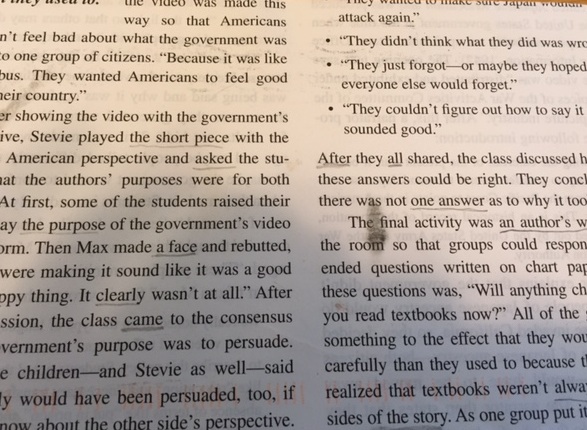
I have found a problem that interests me.  In fact, it came in the mail.  I think it’s from someone in the CLMOOC postcard exchange, but that in itself is a mystery. I received a postcard with a snippet of text glued to the back.  The instructions are to create a poem out of the text, black-out style.

As you may be able to see, I’ve started underlining words in pencil.  I haven’t committed to any of them yet.  The fact that I have to black-out and send the postcard back with some sort of meaningful text selected has heightened this problem from one of mere play to a serious thoughtful process.   How can I take this experience and apply it in my classroom?  I want my students to both play with language and see the serious potential of making meaning with words.  Wouldn’t it be interesting to send a postcard to each of my students with these same instructions?

Problem seeking leads to problem finding to problem solving.  This is the way of language in reading and in writing.  I invite you to contemplate problems in your own literacy learning and teaching and link up your blog post below.


Read Full Post »

Please use this button on your site for DigiLit Sunday posts

My email inbox is filled with ways for me to improve myself from reading recommendations to Enneathought (how to improve my personality and spirituality) to Choice Literacy.  It was this month’s Choice Literacy email that caught my eye and my idea for this week’s DigiLit topic.

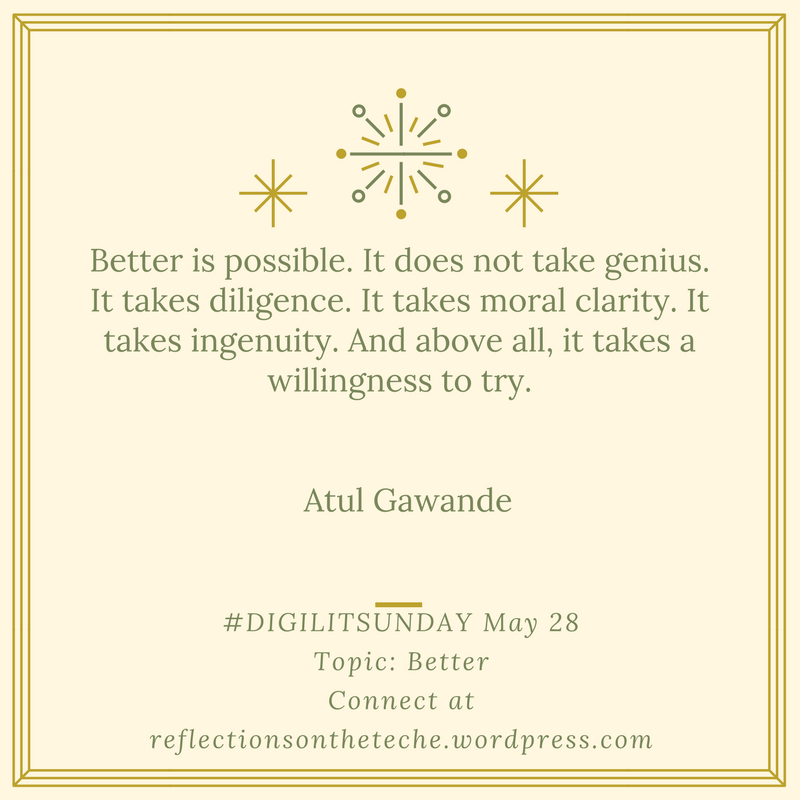
This quote from Atul Gawande was the epigraph to Matt Renwick’s letter.   Quoting from the Gawande’s book Better: A Surgeon’s Notes on Performance, Matt outlines 3 ways for us to be better as teachers.

  1. Don’t complain
  2. Write something
  3. Change

These three directives immediately resonated with me.  This school year has ended, and I was having lunch with a colleague in our gifted department.  She said, “We have to do better next year.”

We then began a long discussion of how we could.  One way is we are going to meet together even if we don’t get paid.  As the years have gone by, the education budget has gotten smaller and smaller.  We were once able to meet weekly to plan for the next year and get a stipend.  Does the stipend matter?  Not when we are talking about doing our best for the kids.  We will meet anyway.

I am reading Dynamic Teaching for Deeper Reading by Vicki Vinton.  Vicki challenges our current thinking about the teaching of reading.  She calls for a change to embrace reading as the complex act that it is and teach the whole child-reader. I am convinced this book will not only improve my teaching, it will improve me.

The only way to make sense of change is to plunge into it, move with it, and join the dance. –Alan Watts

Summer break is a time to rejuvenate and renew what we believe about our own lives as well as our selves as teachers.  This year was my thirtieth year in education. Yet, I’m not best yet.  I continue to talk, write, and change to meet my own needs and those of my students.  Won’t you join me in doing the same?

Please add your links below.  Click to see more posts about Better.


Read Full Post »

Please use this button on your site for DigiLit Sunday posts

I didn’t tweet out a topic for DigiLit this week because I’m in an end-of-the-year funk. In some ways I’m ready for this school year to close. I’m tired. I want to have time to relax, read, write, visit my parents, etc.

However, this time of year sends me into a sadness that I don’t really understand. The classrooms around me are loud. The teachers are out in the halls talking. Announcements over the intercom are warnings about the things we teachers need to turn in. Learning, questioning, quiet reading have all stopped. This week brings award ceremonies, splash days, and early dismissals. It’s time to pack up and put everything away for the yearly floor waxing.

“The classroom is so empty!”

While I was packing up, I filled a bag with books to take home. Some are middle grade books I haven’t read, a few poetry books to inspire my writing, and professional books I haven’t gotten around to reading yet.

Cathy Mere and Michelle Nero lead a Cyber PD each summer. I didn’t join in last summer because I was traveling a lot. But this summer I’m ready. They are asking teacher bloggers to share their professional book stacks on the Google+ #cyberpd page.

Michelle’s post here explains how to participate. They will announce the chosen book on June 3. The reading and posting will happen in July.

If you are writing a post today, please link up. If you are reading my post, please click the link to read more #DigiLitSunday posts.

Read Full Post »

Find more celebration posts at Ruth’s blog.


Since I first read Donalyn Miller’s book The Book Whisperer, I have implemented the 40 book challenge.  I teach 1st-6th grade gifted kids.  These kids are usually readers when they walk into my classroom.  My bulletin board houses sticker charts all year long.  Students add a sticker for every book they read.  Every nine weeks grading period I remind them to update their charts, but other than this, I leave them alone.

I do not believe in gimmicks to get kids to read.  What I do believe in is finding space to read every day and knowing a student well enough to place a just-right book into their hands.  My students have not all met the challenge, but this year a majority of them did.  This week we colored bubble numbers celebrating their achievements.

This Animoto video is a showy one. I didn’t get a posed picture will all of my kids, but here are a few proud readers. Enjoy!

https://animoto.com/play/q3z0TlAxDyNWvhIyfliGNg?autostart=1

Read Full Post »

Please use this button on your site for DigiLit Sunday posts

On Monday evening, I participated in #Wonderchat on Twitter.  The topic was led by Dr. Mary Howard: Instilling a Sense of Professional Wonder. If you are here reading this post, you are likely a person who wonders, reads, researches, and is always learning.

We are nearing the end of the school year and yet, I am still filled with professional wonderings. Three new books have arrived in the last few weeks, Dynamic Teaching for Deeper Reading by Vicki Vinton, Disrupting Thinking by Kylene Beers and Bob Probst, and Joy Write by Ralph Fletcher.

If anyone is interested in a summer book study of one of the books above, let me know in the comments. Wouldn’t it be more fun to read if you have someone to discuss it with? Google docs work well for housing a book study.

Why do I keep buying professional books? You’d think I would know what I was doing after 30 years of teaching. But I am still learning. I want to continue to question what I do and why I do it. I think that is the definition of a professional. When I stop wondering about teaching, I should stop teaching.

During the #Wonderchat, Sarah Eaton posted a padlet for teacher wonders. I remade the padlet wall to house our posts today. (A test run for using padlet for the round up.) Double click inside the padlet to add to it. In addition to voicing our professional wonders here, perhaps we can also post ideas and links to further research. Be sure to put your name and a link to your post, so we can continue the conversation.


Read Full Post »

Find more celebration posts at Ruth’s blog.


My students were quietly working on their Slice of Life posts on Tuesday.  Erin announced she didn’t know what to write about.  I ignored her.  Tucked behind a laptop computer on a counter in the classroom was The Writer’s Toolbox.  I don’t remember buying this.  I think it was at Barnes and Noble one summer when I was teaching a writing camp.  Since then I’ve used it occasionally but not very often.

Frankly, I don’t really like The Writer’s Toolbox.  It is a box of gimmicks.  There are sticks for a first sentence, a non sequitur sentence, and a last scene.   There are spinners for characters.  The toolbox was designed for adults.  There were sticks I had to remove for their adult content.  When I used the kit to inspire writing, I found that the writing that resulted was not very good.  So there the box sat on the counter until Erin found it.

Erin asked, “How do you play this game?”

I responded, “I don’t remember.  Why don’t you read the directions?”

Soon Erin was writing crazy stories.  Lani joined her.  It seemed like so much fun.  Then Emily and Kaiden, and before I knew it, there sat an enthusiastic group of writers.  They used the 3 minute timer and wrote in 3 minute segments.  They shared their writing, and soon each other’s characters were showing up in other stories.  This game went on for 2 days.

Emily and Erin both wrote about this activity on their Slice of Life posts for the week.  They asked each other to proof their posts to make sure they were accurate.

So I discovered this amazing game called The Writer’s Toolbox. It lets you make up your own stories. It can be serious or funny. But it’s really hard to not make it funny because the prompts are so weird. One of them is “I was dressed in a completely inappropriate shade of pink.” That was one of mine.

All this got started with Juan when she just wanted some McNuggets and a case of Kool-Aid. But she and Helen became best friends cause they both loved to dance. Then Jimmy told them that they should become exotic dancers. Then Bob came along singing lalala with his dad behind him. Then Hillary popped out of nowhere with a toilet paper covered Sheila and Principal Barbara.  Also Melissa and Larry who were eating cat sandwiches. Can’t forget about Fred who just came back from Russia. Finally Mr.Margaret who drove them all insane.

Erin, 5th grade

I could not have planned this activity.  It would not have worked if I had.  The student-driven wild writing that took place delighted this writing teacher’s heart, but I didn’t say that to my students.  I don’t want to ruin whatever ferocity that drove this activity by putting the teacher approval stamp on it.

Erin’s feral writing, pages and pages of writing.


Read Full Post »

« Newer Posts - Older Posts »