Feeds:
Posts
Comments

Archive for the ‘Teaching’ Category

Please use this button on your site for DigiLit Sunday posts
I didn’t tweet out a topic for DigiLit this week because I’m in an end-of-the-year funk. In some ways I’m ready for this school year to close. I’m tired. I want to have time to relax, read, write, visit my parents, etc.

However, this time of year sends me into a sadness that I don’t really understand. The classrooms around me are loud. The teachers are out in the halls talking. Announcements over the intercom are warnings about the things we teachers need to turn in. Learning, questioning, quiet reading have all stopped. This week brings award ceremonies, splash days, and early dismissals. It’s time to pack up and put everything away for the yearly floor waxing.

“The classroom is so empty!”

While I was packing up, I filled a bag with books to take home. Some are middle grade books I haven’t read, a few poetry books to inspire my writing, and professional books I haven’t gotten around to reading yet.

Cathy Mere and Michelle Nero lead a Cyber PD each summer. I didn’t join in last summer because I was traveling a lot. But this summer I’m ready. They are asking teacher bloggers to share their professional book stacks on the Google+ #cyberpd page.

Michelle’s post here explains how to participate. They will announce the chosen book on June 3. The reading and posting will happen in July.

If you are writing a post today, please link up. If you are reading my post, please click the link to read more #DigiLitSunday posts.

Read Full Post »

Find more celebration posts at Ruth’s blog.


Since I first read Donalyn Miller’s book The Book Whisperer, I have implemented the 40 book challenge.  I teach 1st-6th grade gifted kids.  These kids are usually readers when they walk into my classroom.  My bulletin board houses sticker charts all year long.  Students add a sticker for every book they read.  Every nine weeks grading period I remind them to update their charts, but other than this, I leave them alone.

I do not believe in gimmicks to get kids to read.  What I do believe in is finding space to read every day and knowing a student well enough to place a just-right book into their hands.  My students have not all met the challenge, but this year a majority of them did.  This week we colored bubble numbers celebrating their achievements.

This Animoto video is a showy one. I didn’t get a posed picture will all of my kids, but here are a few proud readers. Enjoy!

https://animoto.com/play/q3z0TlAxDyNWvhIyfliGNg?autostart=1

Read Full Post »

Please use this button on your site for DigiLit Sunday posts

On Monday evening, I participated in #Wonderchat on Twitter.  The topic was led by Dr. Mary Howard: Instilling a Sense of Professional Wonder. If you are here reading this post, you are likely a person who wonders, reads, researches, and is always learning.

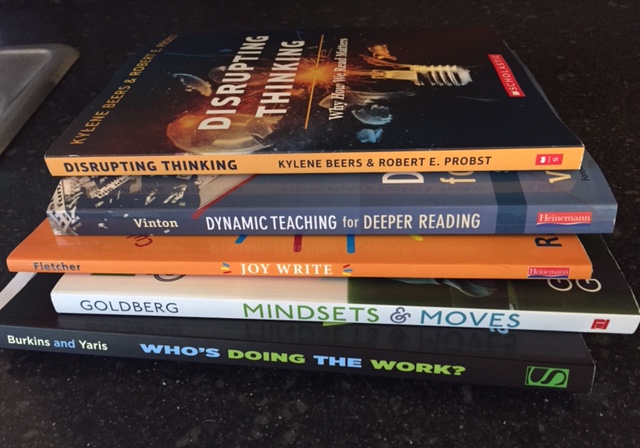
We are nearing the end of the school year and yet, I am still filled with professional wonderings. Three new books have arrived in the last few weeks, Dynamic Teaching for Deeper Reading by Vicki Vinton, Disrupting Thinking by Kylene Beers and Bob Probst, and Joy Write by Ralph Fletcher.

If anyone is interested in a summer book study of one of the books above, let me know in the comments. Wouldn’t it be more fun to read if you have someone to discuss it with? Google docs work well for housing a book study.

Why do I keep buying professional books? You’d think I would know what I was doing after 30 years of teaching. But I am still learning. I want to continue to question what I do and why I do it. I think that is the definition of a professional. When I stop wondering about teaching, I should stop teaching.

During the #Wonderchat, Sarah Eaton posted a padlet for teacher wonders. I remade the padlet wall to house our posts today. (A test run for using padlet for the round up.) Double click inside the padlet to add to it. In addition to voicing our professional wonders here, perhaps we can also post ideas and links to further research. Be sure to put your name and a link to your post, so we can continue the conversation.


Read Full Post »

Find more celebration posts at Ruth’s blog.


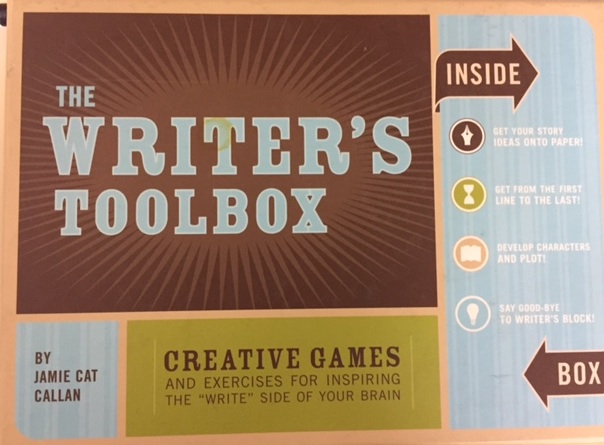
My students were quietly working on their Slice of Life posts on Tuesday.  Erin announced she didn’t know what to write about.  I ignored her.  Tucked behind a laptop computer on a counter in the classroom was The Writer’s Toolbox.  I don’t remember buying this.  I think it was at Barnes and Noble one summer when I was teaching a writing camp.  Since then I’ve used it occasionally but not very often.

Frankly, I don’t really like The Writer’s Toolbox.  It is a box of gimmicks.  There are sticks for a first sentence, a non sequitur sentence, and a last scene.   There are spinners for characters.  The toolbox was designed for adults.  There were sticks I had to remove for their adult content.  When I used the kit to inspire writing, I found that the writing that resulted was not very good.  So there the box sat on the counter until Erin found it.

Erin asked, “How do you play this game?”

I responded, “I don’t remember.  Why don’t you read the directions?”

Soon Erin was writing crazy stories.  Lani joined her.  It seemed like so much fun.  Then Emily and Kaiden, and before I knew it, there sat an enthusiastic group of writers.  They used the 3 minute timer and wrote in 3 minute segments.  They shared their writing, and soon each other’s characters were showing up in other stories.  This game went on for 2 days.

Emily and Erin both wrote about this activity on their Slice of Life posts for the week.  They asked each other to proof their posts to make sure they were accurate.

So I discovered this amazing game called The Writer’s Toolbox. It lets you make up your own stories. It can be serious or funny. But it’s really hard to not make it funny because the prompts are so weird. One of them is “I was dressed in a completely inappropriate shade of pink.” That was one of mine.

All this got started with Juan when she just wanted some McNuggets and a case of Kool-Aid. But she and Helen became best friends cause they both loved to dance. Then Jimmy told them that they should become exotic dancers. Then Bob came along singing lalala with his dad behind him. Then Hillary popped out of nowhere with a toilet paper covered Sheila and Principal Barbara.  Also Melissa and Larry who were eating cat sandwiches. Can’t forget about Fred who just came back from Russia. Finally Mr.Margaret who drove them all insane.

Erin, 5th grade

I could not have planned this activity.  It would not have worked if I had.  The student-driven wild writing that took place delighted this writing teacher’s heart, but I didn’t say that to my students.  I don’t want to ruin whatever ferocity that drove this activity by putting the teacher approval stamp on it.

Erin’s feral writing, pages and pages of writing.


Read Full Post »

Please use this button on your site for DigiLit Sunday posts


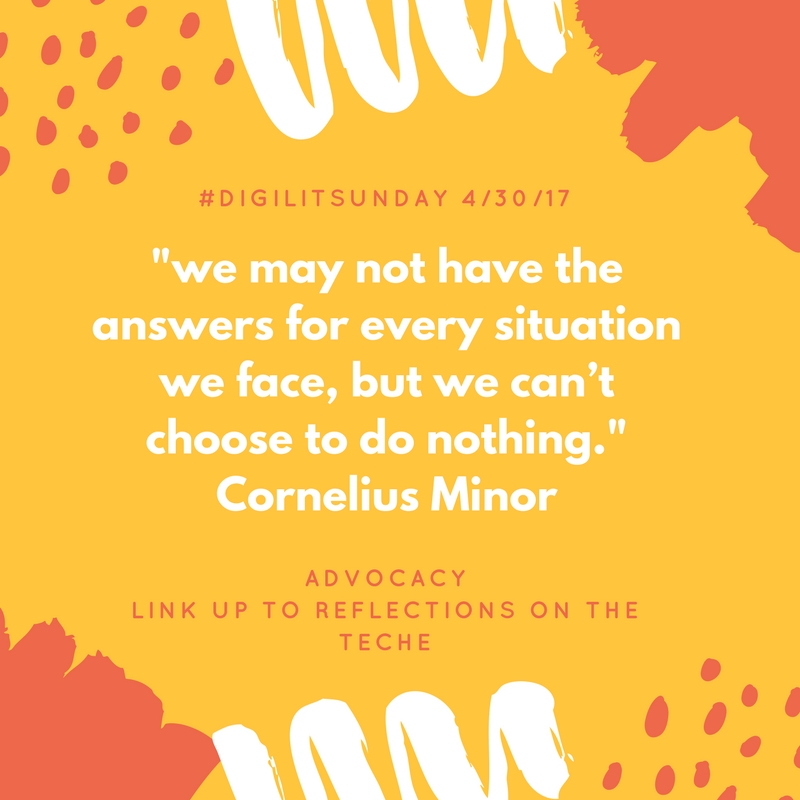
Cornelius Minor is one of those people who tells it like it is, and you say to yourself, “Oh, yeah.”  I was first impressed by him at NCTE16 in Atlanta when he spoke about the influence of Donald Graves at the Heinemann breakfast.  I captured a quote from him that morning, “We do not teach for mastery. We teach for revolution.”

Cornelius is the kind of man you could walk up to and on the first meeting hug him. He represents what I want to be.  Someone who speaks up.  Someone who loves with all that he has.

This weekend I listened to a podcast with Cornelius on the Heinemann website.  Please take some time to listen.  He speaks of being an advocate for a student who needed him.  In his voice, you can hear his determination as well as his kindness.

I think sometimes we teachers shy away from advocacy for our students for many reasons.  The main one is fear.  Fear of repercussions.  Fear for our own reputation. Fear of failure (or firing).

At that same breakfast we were asked to create our own credo for teaching writing.  (Here is the podcast of that morning.) The statement I wrote encompasses my thoughts about advocacy.  We must listen to our students.  We have to listen without judgement.  Listen to be the best advocate we can be for them.


On Thursday evening, Cornelius Minor will be a guest on the Good2Great chat on Twitter.

To join our conversation, please leave a link to your blog post below. To read more posts about advocacy, click the link.

Read Full Post »

Please use this button on your site for DigiLit Sunday posts

In my classes this week, I introduced the ABCs of poetry. We have written a poem everyday using a different poetic form. My partner for two of these exercises was Read, Write, Think. This amazing site full of lessons for teaching reading and writing also includes student interactives.

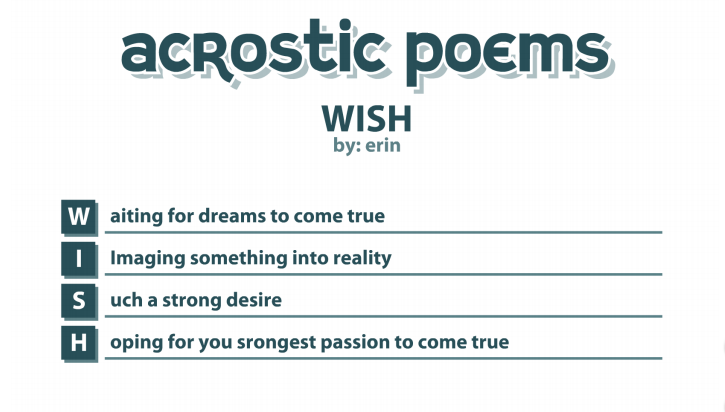
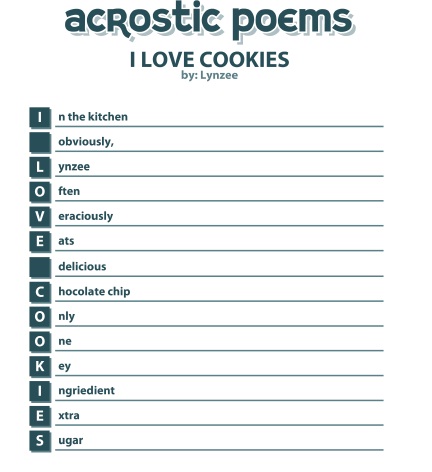
For the letter A, we used this one for Acrostics. My students had free choice for the words they chose to write about. The interactive allows for brainstorming and also gives word suggestions. The final form appears as a downloadable pdf. I taught my students how to take a screenshot of the pdf, paste it into paint, and save as a jpeg. They uploaded their jpeg images into our Kidblog site.

Two very different poems above. Erin is a fifth grader. She’s been going through a rough time lately, so I gave her a wishing rock inside a prayer pouch that I had crocheted. Her poem grew from her strong desire to have her dreams come true.

Lynzee was writing from the moment. I had brought in left over cookies from a writing group meeting. She chose chocolate chip and this moment became the subject of her poem. Don’t you love the word voraciously? She is such an avid reader that her vocabulary is advanced. She loves using new words, and I enjoy our conversations about them.

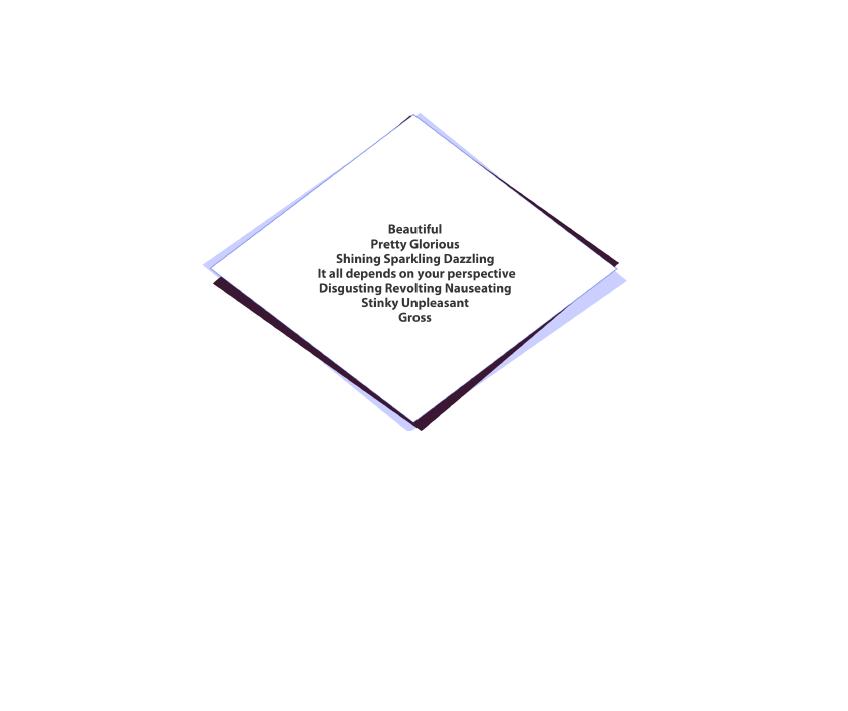
Another interactive we used this week was for diamante poems. In this form, my students selected antonyms or nouns that had near opposite meanings. Like acrostic, this form allows students to explore word meanings. They looked for words that were specific to their chosen noun.

Lani, 5th grade, wrote honestly about her feelings around life and death. Andrew was reading a book entitled “Gross Science” so his poem explored the difference between beautiful and gross. We talked about how each one depends on a person’s perspective.

I hope you will consider playing with language by using these interactives from Read, Write, Think. Happy National Poetry Month!

If you are writing a DigiLitSunday post, link up below.

Read Full Post »


Slice of Life Challenge

Join the Two Writing Teachers blog for the Slice of Life Challenge.


Please use this button on your site for DigiLit Sunday posts

In my teaching, reflection is important to me.  Not on purpose, really, but as part of my nature. I mull over things.  I wonder out loud and silently.  I talk with colleagues.  I also participate in a Good2Great Voxer chat.

Good2Great teachers are continuously reflecting.  We are always engaging in conversations about our teaching practice. One evening last week, Trevor Bryan and I got into a conversation about the writing process.  He made me think when he said, “The writing process is a creative process, and in the creative process, artists and writers are always making bad work.  Something that doesn’t work is part of the creative process.”

My burning question was born from this conversation.  “How do we honor the process of writing?”

Blogging is a huge part of the writing process in my classroom.  I’ve contended that by writing every day on a blog, my students’ writing grows and improves.  I still believe that, but I’m not sure I honor the mulling, the brainstorming, the idea gathering.  I have stressed to my students that they are writing for an audience.

Jacob decided to write about the movie Moana for his Slice.  When I read his post, he was telling the story of the movie…the whole movie.  He said, “This is only one third of the movie.  I can make more posts.”

Of course he could, but would anyone want to read multiple long posts retelling the Moana story?  I posed that question to him and immediately felt a pang in my gut.  I wasn’t honoring the process.  I was thinking only of the product.  I realized that maybe by writing this whole story, Jacob would learn about writing dialogue.  He would learn about a story arc.  And he wasn’t writing from a book he read.  He was writing from a movie he watched.  He would have to create the actions with his words.

How often do we stifle our young writers?  I know they need to practice.  They need to write often.  But who am I to tell them they must produce a worthy product every time?  As a writer, do I?  Not at all.

Sometimes students do not need to write for an audience.  I will continue to reflect on this question and watch myself more carefully.  Honoring the process is as important, if not more important, that celebrating the product.


If you are joining the DigiLit conversation today, please link up.

Read Full Post »

Join the Two Writing Teachers blog for the Slice of Life Challenge.

Find more celebration posts at Ruth’s blog.

Today is a busy day.  I am preparing for a dinner party tonight as well as a backyard wedding in one week.

Currently:

Baking lemon squares: I don’t bake very regularly.  The new mixer I bought at Christmas was still in the box.  Also, I don’t follow directions well.  I expressed my frustration at having to re-read the directions, and my husband said, “You just don’t like anyone telling you what to do.  Even when it’s a recipe.” He’s right, I guess.  Nevertheless, said lemon squares are currently making my kitchen smell fresh and lemony.

Arranging flowers: I love buying cheap flowers at the grocery store.  I feel like I am rescuing them from a terminal life in the garbage bin.  Yellow-orange tulips and white carnations are currently brightening up the kitchen and dining tables.

Cleaning cat litter: I will spare you the details.

Reading blog posts: The Slice of Life Challenge is well on its way, and I am finding so many great posts to read.  I secretly wish I could sit here all day and read and comment.  But the floor needs sweeping and the bathrooms need a once over before guests arrive.

Cuddling Charlie: Charlie is a cuddle-dog, a nine-year-old schnauzer/ poodle mix, a schnoodle.  Currently, he has an infected mole on his face that needs to be surgically removed on Monday, so I am giving him lots of hugs and kisses.

Opening the doors: The spring air is fresh and warm.  The sun is shining.  The trees are reaching out for green, green, green.  We’ve added more plants to the deck in preparation for the wedding.  They make me happy.  A shasta daisy that I thought died in the freeze is pushing out red blossoms.

Writing and thinking about writing:  This SOL challenge has my mind always thinking about writing. Ideas float around like butterflies.  Every day I look forward to opening the blank blog page and writing.  After 6 years of this practice, I am finally feeling like I can do this.  (Tomorrow may be a different story.)

Celebrating: Each week I join Ruth Ayres blog round up of celebrations.  Having a practice of looking for celebration nurtures a positive, grateful outlook.  Here are some pictures from my week.

Time change means dark morning walks with the moon lighting my path.

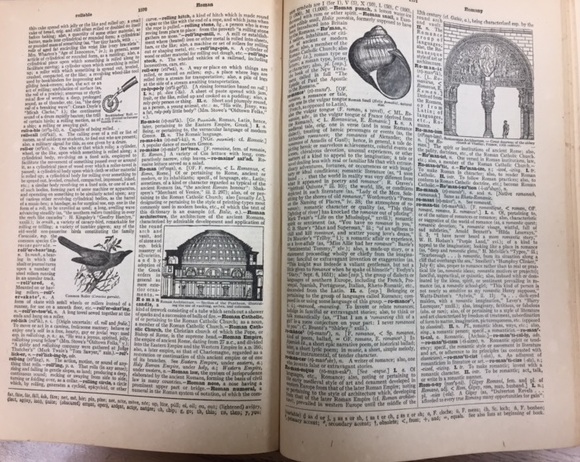
The “big whopping dictionary” an antique two-volume dictionary that we used to find root words for fractal poems.


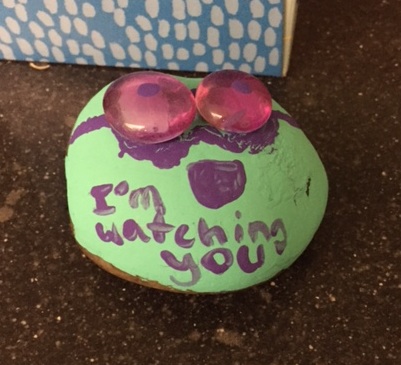
Found this watching minion rock at a local restaurant.

My neighbor fed a group of visiting students from Arcadia University. She invited friends to help teach them how to peel crawfish. They quickly got the hang of it and dug right in.

I decided to go all out for St. Patrick’s Day, all the way to green eyelashes.


Read Full Post »

Join the Two Writing Teachers blog for the Slice of Life Challenge.

Poetry Friday is with Robyn at Life on the Deckle Edge


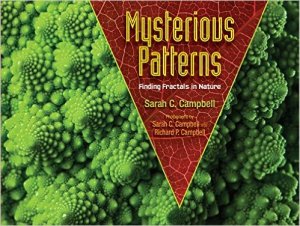
Do you know what a fractal is?  I had a vague idea, but certainly didn’t know enough to teach my students about them.  Nonfiction books are wonderful ways to introduce new concepts to students.  At the SCBWI MS/LA regional conference last weekend, I ran into Sarah Campbell.  Her most recent book caught my eye and my curiosity. I knew it was be a favorite in my classroom.

Sarah describes fractals through photographs and simple descriptions.

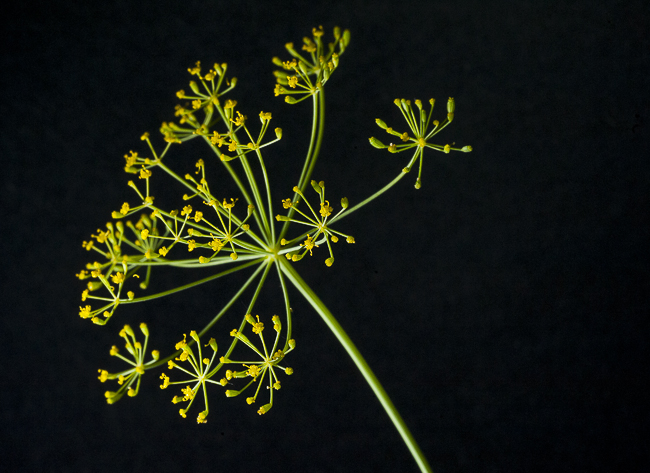
Every fractal shape has smaller parts that look like the whole shape. Fractals are everywhere in nature, and can form in different ways. A tree is a fractal. It starts with one shape that changes in the same way over, and over, and over again.

–Sarah Campbell, Mysterious Patterns: Finding Fractal in Nature


dill flowers by Sarah Campbell

I wondered aloud with my students if there would be a poetry pattern designed after fractals, as we have Zeno poems from J. Patrick Lewis and Fib poems from Greg Pincus and others that come from mathematical patterns.  We did a quick Google search and a poetry exercise evolved.

Fractal poem: Choose a root word.  List words that use that root.  Create a poem that uses one of your words in each line.

Frag

By Madison

A frag of hope
in the fragment of
a diamond,
sparkling
and flaring
like a
fragile
piece of
orange glass
a fragrance
of a delicious
orange.

Enlighten Poem

by Andrew

There is lightning in every storm
which is a light
of hope
and in every lighted room
there is faith.
And in every room is a child
enlightened by a night-light.
And all the moonlight that shines
on this Earth, there is life.

Hope

by Margaret Simon

Hope is in the seed
Food of hope within
Hoping light will shine
Enter my hopeful seed
Hopefulness, dance with me
Take hopelessness away
Grow more hopeful in each day
Hope is in the seed.

Click here to read my students’ posts on Kidblog.

Read Full Post »

Please use this button on your site for DigiLit Sunday posts

Join the Two Writing Teachers blog for the Slice of Life Challenge.

I subscribe to the Edutopia newsletter.  When I came across this article, Are we Innovating, or Just Digitizing Traditional Teaching?, I had to ask myself if what I am doing in my classroom is true blended learning or is it just the same ole stuff digitized.  

“True blended learning affords students not only the opportunity to gain both content and instruction via online as well as traditional classroom means, but also an element of authority over this process.” Beth Holland

I watched with renewed interest as my students worked on book talks this week.  I started assigning book talks 10 years ago when I taught 4th grade.  I’ve been using the same rubric.  But watching what my students were doing with the addition of technology, I realized I needed to throw out the old rubric.

In my small groups of gifted students, my students rarely stand in front of the class to present their books.  I can take off the element of “engaging the audience with eye contact.”  I also need to remove “reading aloud a portion of the book.”  While this does show the audience the style and voice of the author, this is difficult to accomplish in an online presentation.

“(An online presentation) is about the visual,”  my student Emily said when I asked her how using the internet changed the work of a book talk.  She realizes that her visual elements play an important role in the presentation.  She wants the viewer to be inspired not only by what she says about the book but also by how attractive her video is.  

Blended learning can mean a step toward agency if we teachers create the conditions in which agency can occur.  I look on my role as more like a coach.  I stand by for any trouble shooting.

A student may say, “I don’t know the theme of this book.”  Then we have a conversation about it.  What are the major events?  What does this say about your character?

“My character was brave.”

“Did he need help? Did his family or friends help him?”

Theme: Family and friends can help you feel brave.

This kind of conversation doesn’t only happen when students are creating book talks; it may also happen during a reading conference, or when a student is writing a literary essay.

Again I ask myself and my students, “What is different when you use technology?”

Jacob said, “It makes it so much more interesting.”

Kaiden said the process of interacting with the graphics is more enjoyable.  He contends that it is more interesting to the viewer, too.

Emily responded with a “Yes!  And it’s so much more fun to do!”

I’m still unsure if I have truly switched over to blended learning. I use technology with my gifted students because it is motivating and gives them control over their product.  They look to the chart on the wall to see if every element I require is there.  When their presentations are done, they call out to me, “Mrs. Simon, come see this.”  They are proud producers of digital media.  This pride of accomplishment is enough for me.


If you are joining the DigiLit conversation today, please leave your link.

Read Full Post »

« Newer Posts - Older Posts »