Feeds:
Posts
Comments

Archive for the ‘Teaching’ Category

Read other Slice of Life writers at The Two Writing Teachers

Read other Slice of Life writers at The Two Writing Teachers

Yesterday was our first day back at school for 2013. Rather than making resolutions, I asked my students to pick One Little Word for the New Year. So we brainstormed possible words, words like responsibility, joy, integrity, courage, brave, bold, etc. Some students even wrote a poem about their word choice.

Brooklyn is a fifth grade student. She is quietly inspiring to all who know her. She is the school’s choice for Student of the Year and will soon compete for the district. Brooklyn is the younger sister of an amazing athlete. Her brother, Bryce, has won National Championships. Brooklyn, however, does not feel she is in his shadow. Instead, she is doing whatever she can to help Bryce reach his goal of being an Olympic athlete.

Recently on a regular weekly language workbook page, Brooklyn was asked to write a paragraph about a unique person. Here is her paragraph:

One of the many unique people I know is my brother. He is disabled. He has a type of Cerebral Palsy. It only affects his lower body. Even though he has this disability, it doesn’t stop him from doing whatever he puts his head to. My brother, Bryce, does different sports. Bryce does track, field, and power lifting. He even has 7 national records. My brother is truly unique.

Brooklyn is unselfishly devoted to her brother. She has created a Facebook page for him as he continues to train. Team Bryce

Brooklyn wrote with conviction when she decided that her word for 2013 would be “different.” Brooklyn knows that supporting her brother, being the wind beneath his wings, makes her stronger, makes her shine, makes her different.

I will be different.
I will be outstanding.
I will be the one.
I will be shining.
I will be decorative.
I will be different.

I will be known.
I will be independent.
I will be capable.
I will be courageous.
I will be caring.
I will be different.

I will be giving.
I will be helpful.
I will be faithful.
I will be clever.
I will be me.
She who stands out
and is the only me.
I will be different.

bryce

Read Full Post »

Names

Join the Tuesday Slice of Life

Join the Tuesday Slice of Life


I hear their names.
My heart aches,
Tears form.
Tears of fear
or cleansing, prayerful,
hope-filled streams?
I cannot bear to look
at the smiling faces
at the ball park,
on a swing-set,
with the family on the beach.
They are the kids next door,
the little boy at the grocery store,
my very own students.
They are us, and we are them.
Our lives are forever changed.
Now I will lock my classroom door.
I will teach my students to stand
against the wall,
be still and quiet,
in lock down.
No words.
No reasons.
The names–remain.

Read Full Post »

Join Jama at Alphabet Soup for more of Poetry Friday.

Join Jama at Alphabet Soup for more of Poetry Friday.

At this time of year, the days grow shorter, the weather cooler. In a recent e-newsletter from Poets.org, I found a lesson plan designed for 9th-12th graders about exploring darkness and light through poetry. I teach gifted elementary kids, so I adapted the plan somewhat to fit my level of students. But I kept Emily Dickinson’s poem There’s a Certain Slant of Light. The poem is presented on Poem Flow in which a few words appear on the screen and fade out to the next lines. This technology added interest to the lesson. My students didn’t quite “get” the message of the poem, but they learned about the sound of poetry. We talked about some of our “wonder” words, like heft, affliction, and oppression.

Before presenting the Dickinson poem, I turned off the lights and we wrote words and phrases that we thought of in the dark. Then they chose words they wanted to “steal” from Emily Dickinson. Then we wrote. Each time we write, we share. We have a class Kidblog site, so they post to it. Since I travel between two schools, this allows my students to read and comment on writing from another school’s gifted class.

Some of our poems were coming out pretty spooky and dark. OK, I know I set that up with turning out the lights and reading There’s a Certain Slant of Light, but I challenged myself to write a happy poem. I was pleased with my poem that the students helped me title “Silhouettes.”

Silhouettes

We turn out the lights
Behind sheets, our hands
Make shapes–a story,
a dance,
a play–
No audience
No stage
No flashing lights
Just my brother and me
on a winter afternoon.

Margaret Simon, all rights reserved

One of my students wrote a short piece with a repeating line, so when I conferred with him, I taught him about the Pantoum form in which the second and fourth line becomes the first and third of the next stanza. This is his revised poem:

Winter (A Pantoum)
This is darkness, the black, blurry time of the year.
It blinds me in sadness.
Its dull appearance gives me the blues.
This is darkness, the black, blurry time of the year.

Darkness blinds me in sadness.
Cobwebs surround me.
This is darkness, the black, blurry time of the year.
Shadows everywhere.

Cobwebs surround me.
Tiny bits of light make creepy reflections on the floor.
Shadows everywhere.
This is darkness.
–Matthew

I have a new student who is a third grader. I have gently drawn her into our writing circle. She is shy, yet confident. When she wrote the following poem, it had 3 rhyming lines, but no others, so I talked to her about making a decision in her revision. She could keep the rhyming lines, but since we expect the poem to rhyme, she would need to make some of the other lines rhyme. She decided not to keep the rhyming words and went to the thesaurus to revise. I think she is quickly getting the hang of writing workshop. Here is her revision:

Winter Glory

The winter woods can be glowing

even though you are afraid.

The bright sun shines from behind.

The cold dark woods are sometimes gloomy.

The squirrels are scurrying for the last nut.

I am blinded by the beauty.

–Vannisa

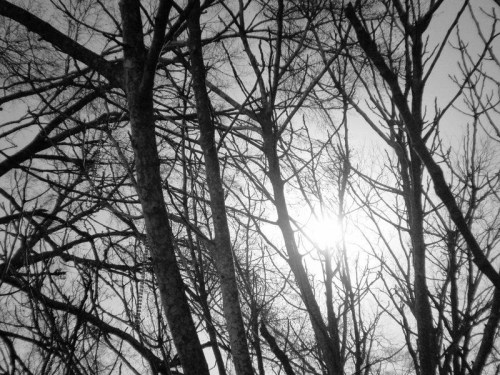
Photo by Clare L. Martin
Vannisa’s inspiration came from this photograph.

Read Full Post »

Join the Tuesday Slice of Life

Join the Tuesday Slice of Life

As a fundraiser for the Festival of Words, Darrell Bourque, former Louisiana state poet laureate, offered a master class. I submitted 3 poems and was accepted. Twelve poets gathered in Darrell’s home on Saturday afternoon. His house is set in a grove of bamboo. To get to the house, you walk through a shaded garden, enter a beautiful courtyard then into his art-filled home. I immediately relaxed and felt welcome.

Once the others arrived, Darrell quickly began teaching. I’ve known Darrell for more than 15 years. I’ve taken a number of workshops with him, but this was different. While I missed the interchange of ideas of the workshop style, I adjusted to just listening. His knowledge did not intimidate me as I expected. Instead, I understood. I followed. I wrote notes. I was a student and a poet.

He started off by telling us that there are no mistakes. He compared writing a poem to making a quilt. You get all the pieces laid out, and then you can move them around until a new pattern emerges. He challenged us to look for a pattern.

He took each person’s heart out, held it up to the light, and shaped it into something more beautiful, more glowing.

In an email to us all on Sunday, Darrell wrote this verse about this group of poets:

Brushing a child’s hair,
sitting by a powerful river,
taking a lunch break and really listening while being at work,
seeing angels,
standing next to sleeping Gypsies,
traveling toward the beloved,
salvaging the essential after rupture,
letting footsteps become prayers,
searching for traiteurs and medicine men,
sewing a new seam,
visiting monasteries,
standing in the presence of natural wonder
or grieving for a lost child—
these are all common experiences which you made extraordinary by your making them a part of your most essential human experiences. I thank you heartily and I wish you all continued good luck.

To show the results of Darrell’s shaping, I am posting one of my poems in both versions. He found the pattern of commands to make my poem-quilt clearer, stronger, and just plain better.

After the Storm (version 1)
If you want to study the skeletons of frogs,
take a walk after the storm when the sun comes up.
Listen to mockingbirds sing, high-pitched, discordant.
Walk the path of fallen limbs, clustered leaf-puddles.
We are washed yet still unclean. New day sun breaks
deepening the green, solid, and strong earth. Red spots
glitter after I glance at the spotlight. God’s eyes
peak through the ghost of a waning moon. Wren gathers
twigs for nesting, flutters off like a thief with goods.
No need for imagination here; all life breathes.
The beat of my footsteps become my prayer.

After the Storm (Darrell’s reshaping)
Study the skeletons of frogs.
Take a walk in the light after the storm.
Listen to mockingbirds in discordant songs.
See the sun deepening the green earth.
Glance at the sun; see the red spots glitter.
Peak through the ghost of a waning moon.
Gather twigs for nesting; become the wren.
Flutter off like a thief with his stolen goods.
Imagine nothing; all life breathes.
Let my footsteps become prayers.

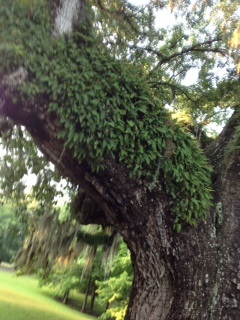
After a storm, resurrection fern fluffs up and becomes a green blanket on the live oaks.

After a storm, resurrection fern fluffs up and becomes a green blanket on the live oaks.

Read Full Post »

Thanks to Robyn Hood Black for hosting Poetry Friday today.

Thanks to Robyn Hood Black for hosting Poetry Friday today.

Prepositions were on parade in my class this week. We brainstormed a list of prepositions. The list grew to 50 words. Wow! Who knew there were so many?

Students wrote poems in which each line began with a preposition. To help our readers along, we decided the title should give a clue to the theme. Students experienced through practice how to use prepositions, and it was fun.

Mother Nature

From the high branch
of that cypress tree
beyond the flowing bayou
near a wading heron
through the slightest breeze
toward my longing heart
upon this lonely landscape
for eternity.
—Margaret Simon, all rights reserved.

My Rainbow

under the setting sun
across the ocean
with rays of light
through the oak trees
over the valleys
to the depths of the bayou
through my heart.
—Emily, 2nd grade

Louisiana

Through the tallest sugarcane
on the fastest feet
over the wettest mud
with the newest creatures
until I am at home
—Brooklyn, 5th grade

The Innocent Mouse

in the classroom
nearby kids on top of their desks
inside the cabinet, scratching
out he comes
across the room
beyond the bathroom
under the desks
as the kids try to escape
from the tragedy
except he only wanted paper
—Keana, 6th grade

Read Full Post »

Join the Tuesday Slice of Life

One of my favorite poets is Mary Oliver. She writes accessible, simple nature poetry. She recently published a new collection, A Thousand Mornings. When it came up on Amazon as a suggestion (how do they know me so well?), I had to buy it. This book was so special I had to go to the post office to pick it up. When I opened the package, I lifted the book to my cheek. It felt like silk. Seriously, soft and smooth like a silk blouse! Mary Oliver’s poetry is so clear that even elementary students can understand it. I wanted to share her with my students. Of course, first I let them feel the cover. They knew immediately that magical poetry lay within.

I read aloud Mary Oliver’s words, “This morning the beautiful white heron was floating along above the water.” My students know what this looks like, a common scene here in South Louisiana. I read a few more poems. But they were getting anxious.

“What are we going to do with the shells, Mrs. Simon?”

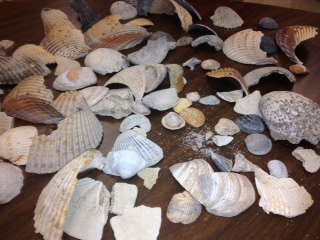
On the table, I had placed a plastic container of shells, real beach-collected shells from the storage closet. I dumped them out on the table with these instructions, “Find a shell that you like. Draw it slowly, paying attention to the details. Then write a poem.”

I played classical music and wrote along with my students. Some beautiful poetry emerged. Taking time to slow down, enjoy the beauty that nature creates, and to listen to simple true words, that is the joy of writing work.

My poem: Broken

My heart bubbles
like the shell in my hand
when air pours through
its tiny holes,

Shaped as a mountain
with jagged incuts
and paths of lined creation.

I am imperfect
battered by crashing waves like
this shell torn from the sea

collected by a child
who knows how to love
imperfection.

by Matthew (3rd grade)

I taste the sea in me,
the ocean of wonders I smell,
the bumpy texture sends chills down
my spine, the echo of the ocean awakens
me, I see the sea’s symbol,
it is in my possession,
shell

by Kylon (4th grade)

A spirit, a dead, lost spirit
a lost stray child, who cannot find her mother
no hope, no life, just darkness,
dark like a night sky with no stars,
a smooth seashell,
it’s washed up- the ocean didn’t want it,
but I did, and it’s safe with me.

Read Full Post »

Join the Tuesday Slice of Life

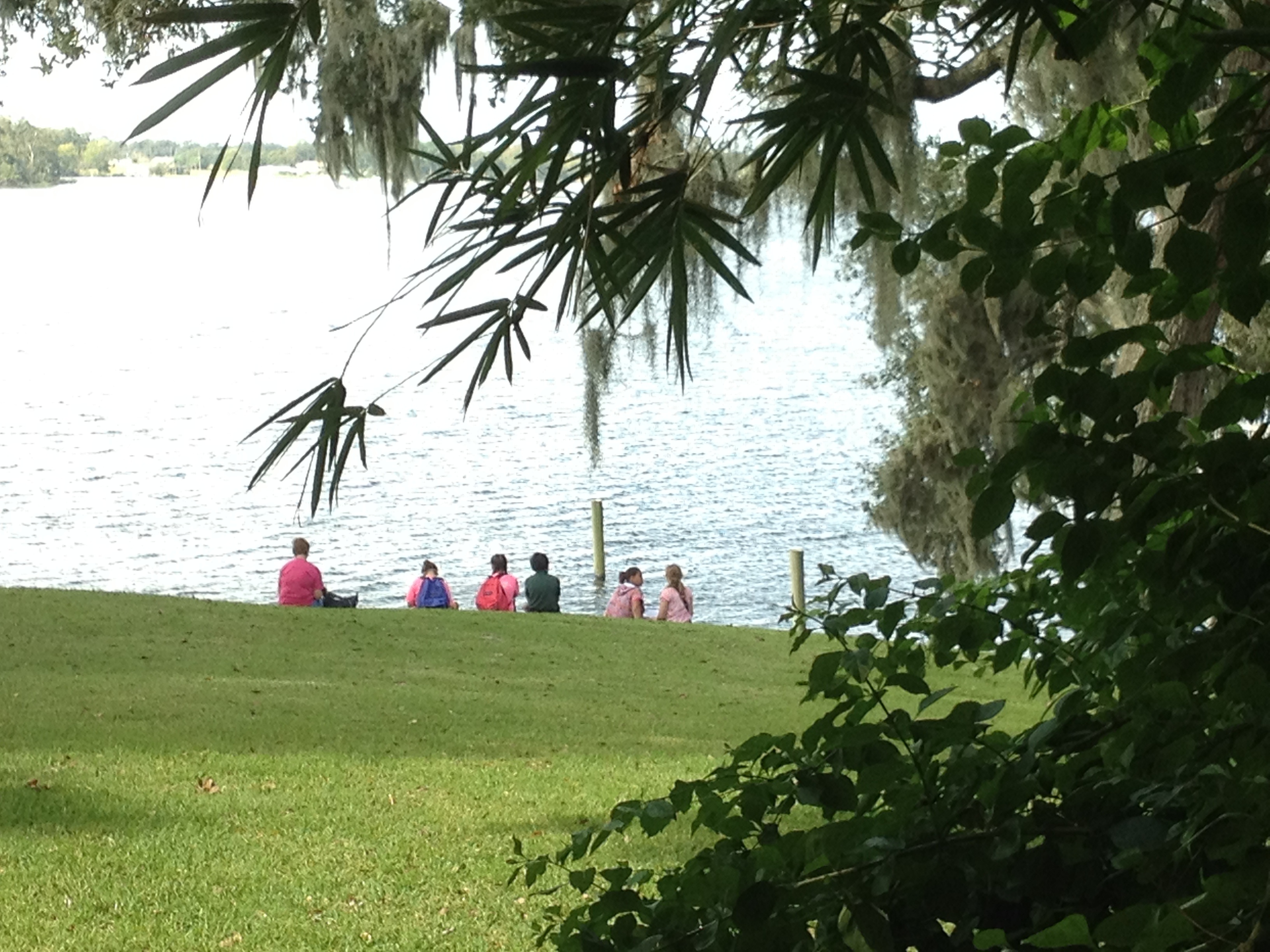
Students perch near the water for inspiration.

Our team of 6 elementary gifted teachers took the 6th graders from our parish (district) on a field trip to Rip Van Winkle Gardens on Jefferson Island. If you live around here, you know that Jefferson Island is not a true island. It is one of 5 land masses that rise up out of the South Louisiana marshes. Jefferson Island was once the home of Joseph Jefferson and holds a beautiful antebellum home with acres of tropical gardens.

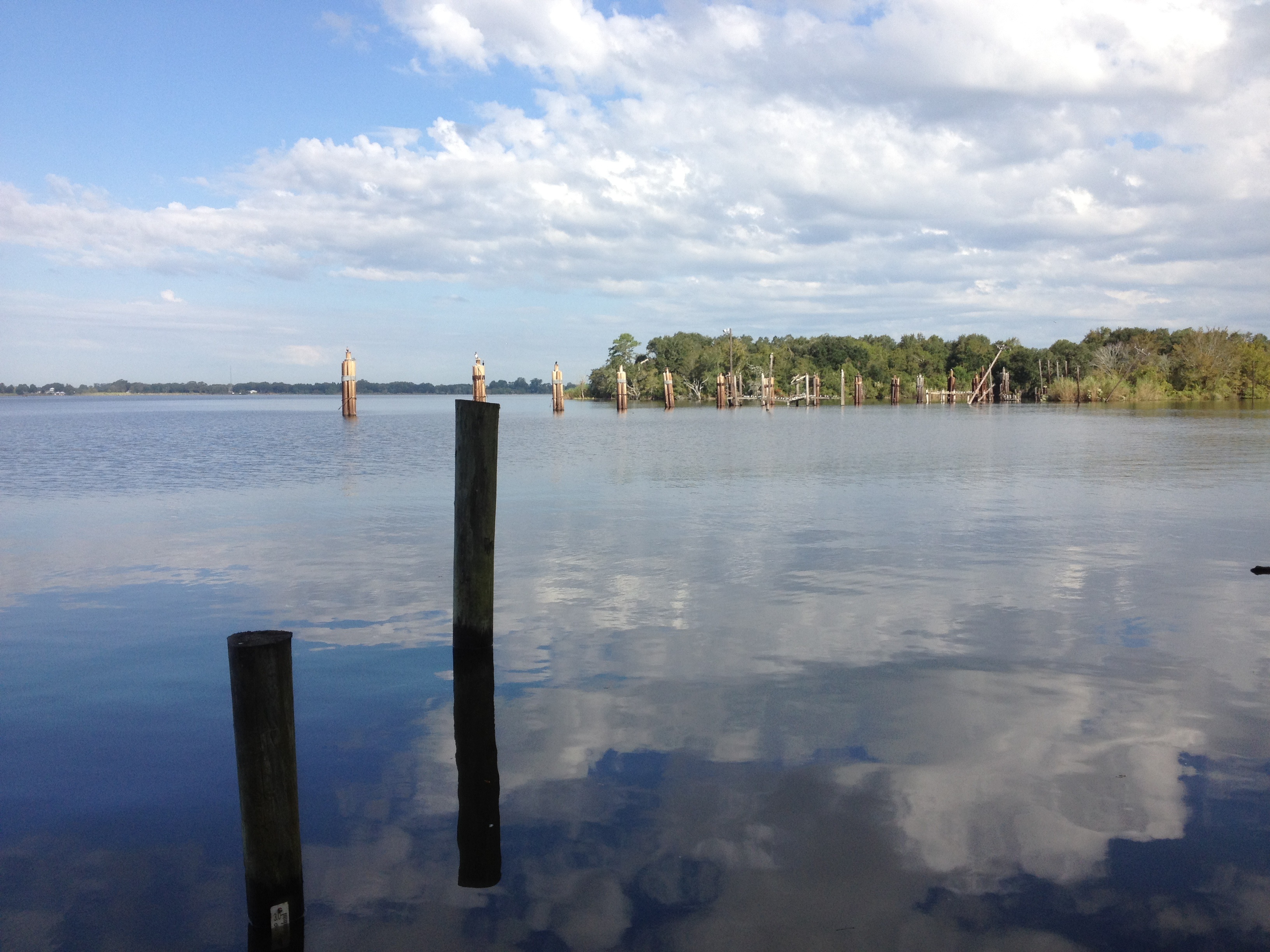
Reflections on Lake Peigneur

The purpose of our field trip was to introduce our students to a natural place where water is integral to its survival. We will be working with these students once a month for the school year on a project of their choice about water. At Jefferson Island, we learned some history, discussed questions, and enjoyed the beauty around us.

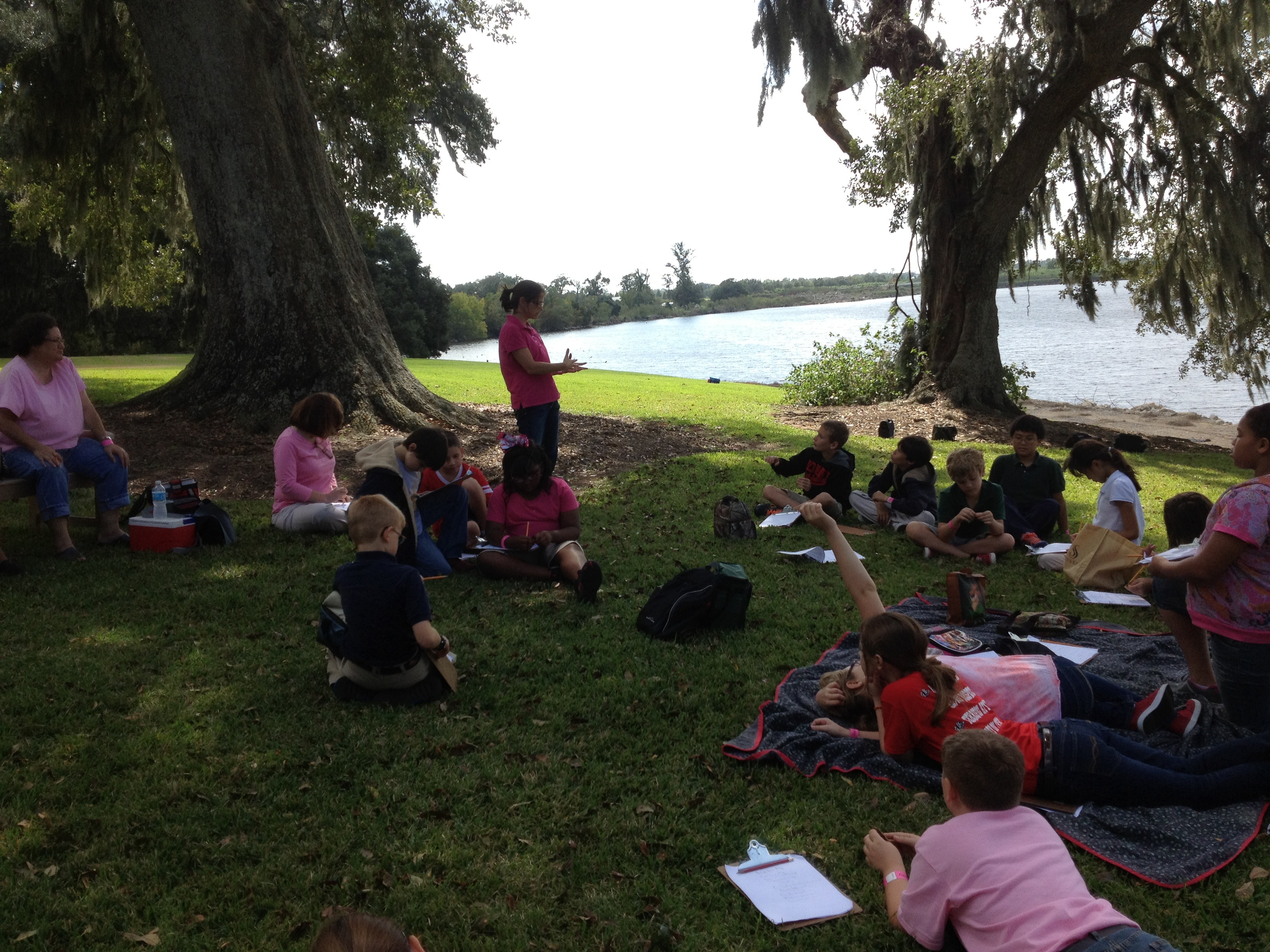
I led the students in a writing exercise from Georgia Heard’s book Awakening the Heart. The pre-writing exercise asks students to use an image. (In this case, the images were all around us.) There are 6 rooms, or divisions on the paper. Each room serves a purpose, such as “describe the image,” “what sounds do you hear,” or “describe the light.” Each room leads the writer to a deeper understanding of the image and often leads to a creative poem. We sent the students off to different areas of choice with a teacher. Teachers wrote, too.

Sharing time

Out at Jefferson Island, among the oaks, bamboo, and palmettos, we became a community of writers and explorers. We set the tone for the project yet to come and generally had a grand time.

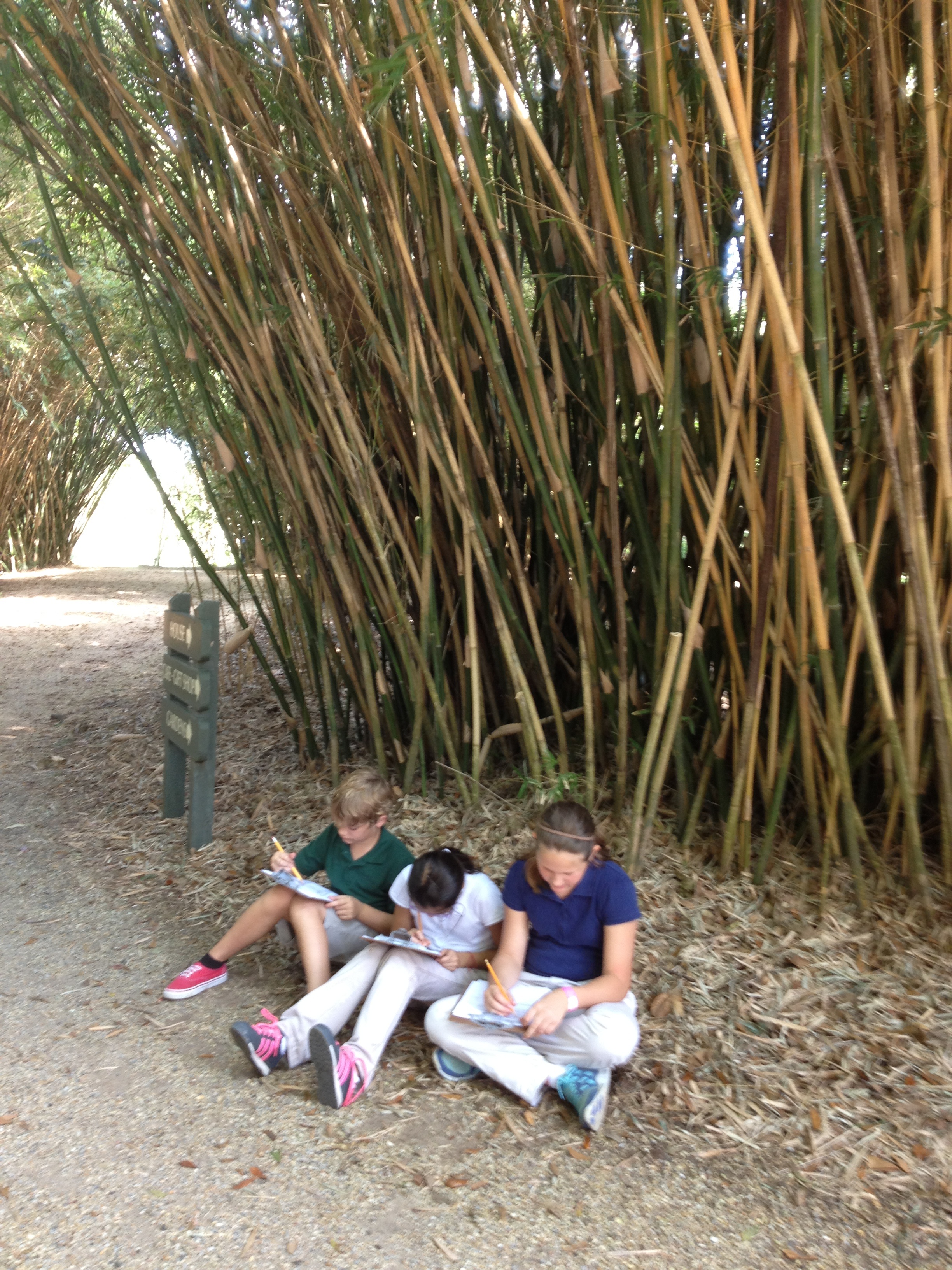
Bamboo Poem
by Dustyn

Tall, arching, stalks of bamboo,

Bright and beautiful skies of blue,

Huge structures where flowers bloom,

Trees towering over you,

It relaxes me to feel the bamboo, so smooth,

And I’ll bet you’ll feel the same way too.

Writing in the bamboo forest

Rip Van Winkle Gardens
by Rhyan

We are in a mysterious land,

An enchanted garden,

Where the butterflies roam,

and the dock hangs over the lake.

The lake is screaming “I am a wonderful lake and I shall not be destroyed.”

But now it is silent.

The only sounds are rustling leaves and chirping birds.

Wait, what was that?

Are those the loud blades of a propeller?

Does this man know he is destroying nature?

Eventually this wonderful land will be gone.

Read Full Post »

Read other Slice of Life writers at The Two Writing Teachers

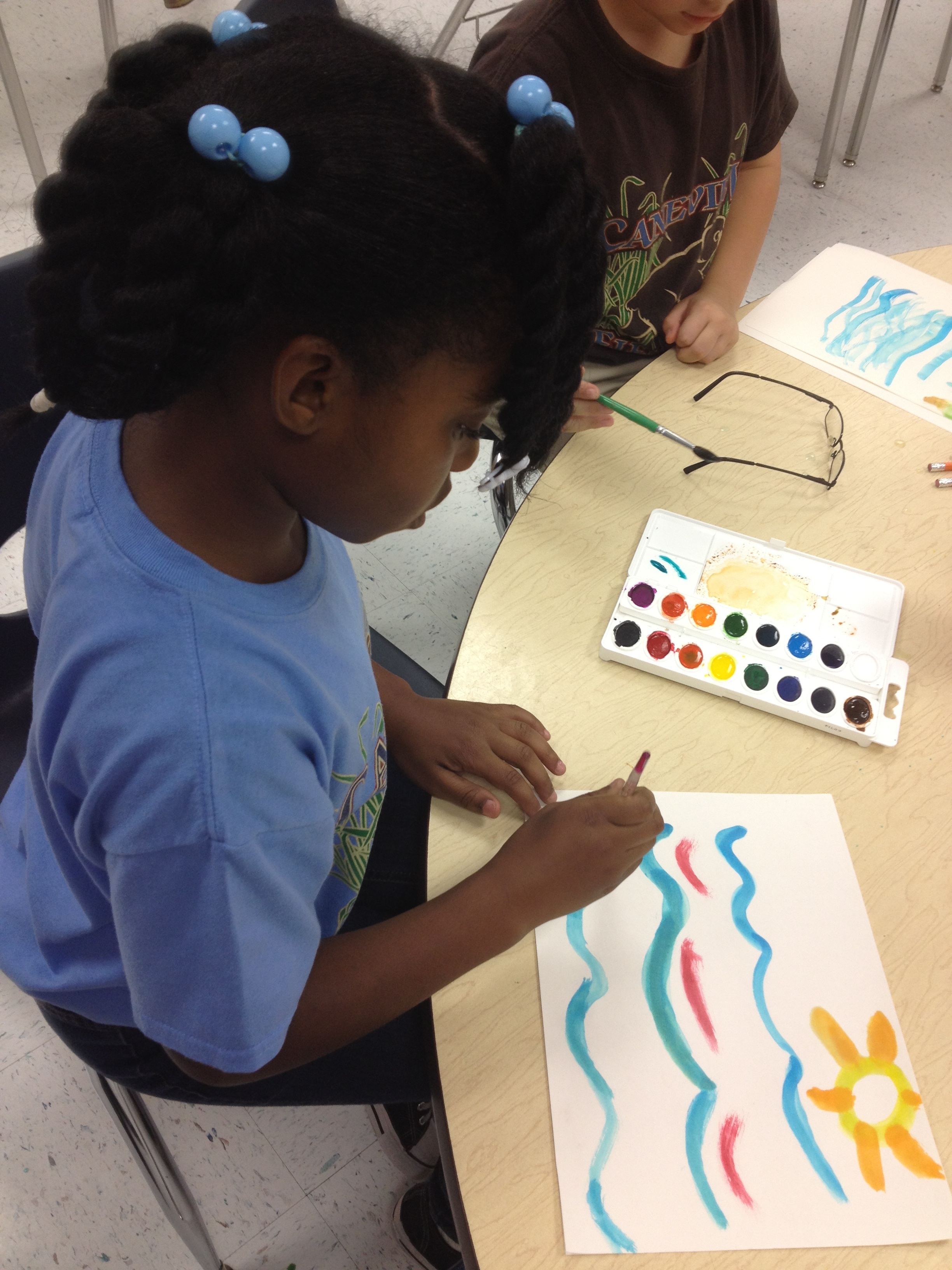
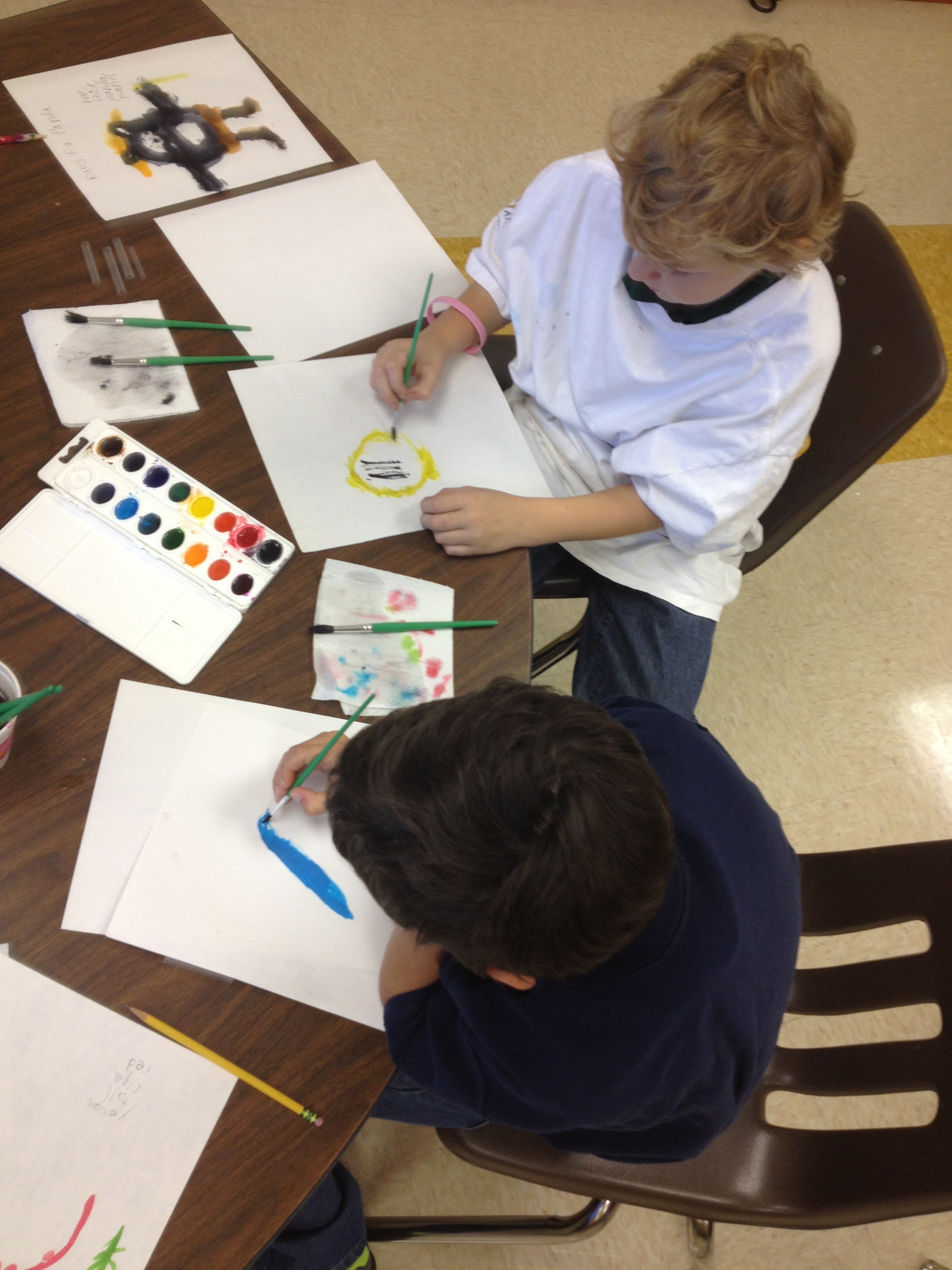
October 20th has been dedicated by the National Council of Teachers of English as the National Day of Writing. This year, the date fell on a Saturday, so my students and I celebrated on Friday, Oct. 19th. One of my favorite writing activities evolved from a workshop originated by artist Paul Schexnayder entitled, “Dancing with a Paintbrush.” Paul’s idea was to free up creativity by playing different selections of wordless music and having students paint whatever colors, lines, and shapes that come to mind. I borrowed this idea and added a writing element.

Dancing with a paintbrush

I selected some musical pieces. There is no magic in the selections I made, but basically I was looking for pieces that evoked different emotions. The ones I used were “Silent Moon” by Jia Peng, “A Day Without Rain” by Enya, “Tarantelle Styrienne” by Debussy, and “The Girl I Left Behind,” a Celtic selection.

With watercolor paints and drawing paper, the students and I painted while the music played. Then at the end of each piece, I asked them to write 4 words and a title for their painting. After all selections were played and they had a collection of 3 paintings with words and titles, I asked them to select one to write about. Make the title of the painting your title and use the 4 words in some way within the poem. The results were all different and creative.

Focused and listening leads to creative expression.

Here are some sample poems from this exercise:

Beauty
it comes with amazing colors
of red,
green,
blue,
and even yellow too
All the colors
could be a rainbow
just waiting for you
for beauty is true
telling of mood,
majesty,
and imagery.
Pure beauty comes from heart,
The Rightful Beauty.

by Kendall, 5th grade


The Chinese Gates

I am a girl
I live In China
Every day I paint swirls
Ah,so beautiful
I paint the sun and water
I paint the moon and rivers
Even some Chinese words
I learn new paintings every day
And maybe some day you could visit me in China by the Chinese Gates.

by Emily, 2nd grade

Read Full Post »

Fall Poetry

Join the Tuesday Slice of Life


Teaching gifted students means I teach multiple grade levels at the same time. This can be both a joy and a challenge. Some of my students come to me for their language arts block, some for math. My two second graders come to me at the very end of the day. They usually come in to an already active classroom.

One day last week when the second-graders came in, I had all the other students seated at the table writing fall poetry. On the projection screen was a collage of fall pictures for inspiration. We had collected words and were in the writing process. Tobie sat right down to write, but couldn’t find his journal, so someone found him a loose leaf page to use. Emily, however, was intrigued by the projector and started making finger puppets in the light. I sent her away to a desk in the classroom. I wanted to make sure she was behaving herself and that she wasn’t too upset about being punished, but when I looked up, I saw her perched on the edge of the farthest desk in the room quietly writing. I left her alone. Later after our lively sharing session, I encouraged the students to post their poems on our kidblog. Emily posted her poem. The next day I got an email from her mother praising me for inspiring Emily’s poem.

As I reflect on my classroom, I often worry about the constant activity and many levels going on at the same time. Sometimes, I have so many balls in the air, I just know one will clobber me in the head at any time. What I realize about writing workshop is that even when it doesn’t seem to be working, it is working. It’s about making writing an integral part of any day. It’s about safety. And it’s about providing the space for creativity to happen. And ultimately, it is about the students themselves.

I am posting Emily’s fall poem today. Originally, there were few periods and no line breaks, but I took the opportunity to have a little mini-lesson with her about this, so you are seeing the revised version.

Fall Leaves

I walk down the path.
It’s morning. The sun hasn’t even risen yet.
I watch the wind carry the leaves across the valley.
I see pumpkins in the pumpkin patch.
I love the colors falling from the trees.
I smell the sweet smell of sugarcane.
The sun is rising and getting warmer.
I feel the breeze. I find some leaves.
I pile up the leaves, and I jump in!
I love the fall,
the best season in October.

Massachusetts in October where leaves turn golden. Courtesy of my friend, Leon, who is traveling and posting beautiful pictures of real fall.

Read Full Post »

Join the Tuesday Slice of Life

This summer I participated in the Teachers Write virtual writing camp made possible by author Kate Messner. She had many guest authors teaching and posting writing prompts. From one of the posts, I learned about the young adult character generator. Earlier this year, I introduced this tool to my students. They loved it, and much writing has been inspired by it.

Using kidblogs, my students are working on stories that develop their characters. I am pleased with how motivating this activity has been. One of my students, Matthew, was a reluctant second grade writer, usually satisfied with a few sentences. When asked to elaborate or incorporate figurative language, he would say, “I like it the way it is.”

Now a third grader, Matthew’s writing has taken off in the first few weeks of school. He wrote his whole story in his journal, posted it on kidblogs, pasted it onto paper, drew illustrations, and painted a cover for his book. I don’t know if a summer’s worth a maturity or the young adult character generator was the impetus, but this year Matthew is a writer.

Chapter 1 The Curse
It was a normal Tuesday morning at Denver Catholic High, or was it? Aiden was walking to gym, twitching as usual. Then out of nowhere, it started getting dark, really dark. Then, a giant ghost came out of the dark and said, “Da school curse is a spreading.”

Suddenly, Aiden’s friends came outside as zombies! “What happened?” said Aiden’s still human friend, Jenna.
“I… I don’t know,” said Aiden, frozen. for once in his life. He’s feeling a feeling he has never felt before, fear. He was so afraid, he couldn’t move. He could barely speak and refused to look away from the ghost or even blink.

Chapter 2 The Adventure

“Da only way to stop it is to get da gem of legend,” The ghost said in a country voice.
“What gem?” asked Aiden.

“Here, take da map.”said the ghost.

Aiden read the map and said, “Jenna, we’re going to the beach.”

“OK,” said Jenna.

“I’ll drive,” said the ghost.

“What?” said Jenna and Aiden.

They headed to the beach. As Aiden got out of the car, he said, “Hey, I’m not twitching!” He was happy, but then the ghost pushed them in a cave. They put on headlamps and started walking.

“OK,” said Aiden nervously. His head suddenly jerked to his shoulder, twitching again. ”We, uh, go that way?”

They stopped at a pool of…lava! Only a few rocks to jump on.

“Well, let’s get moving,” said Aiden.

They hopped across, rock to rock. Finally, they got to the other side. They walked until they stopped at the end of the cave.

“Look!” shouted Aiden. The gem was standing on top of a cone-shaped rock structure at the end of the cave.

“It’s beautiful!” cried Jenna, leaning back. The gem was a glowing baby blue color in the shape of a diamond.

Swiftly, Aiden grabbed the gem, “Got it!” He held the gem over his head in triumph. Then he heard a loud caw caw!

Aiden looked up and saw a blue-gray falcon swoop in toward him. Before he could draw the gem out of the bird’s reach, the bird quickly grabbed the gem with its talons.

“There goes all our hard work,” said Aiden. Of course, he was right. They had worked so hard.

They went after the bird. They hopped across the rocks. Aiden found a light, sharp stick and threw it at the bird, but before the stick could hit it, the falcon flew down and accidentally dropped the gem.

“Thanks,” said Jenna.

Chapter 3: Lifting the Curse

“Well, let’s get going!” said Aiden. ”It’s been a great day. I stopped twitching, we got the gem, we lost the gem and got it back. Now, we can lift the curse!”

So, they were off. They went back to school.

Chapter 4: Curse Gone

Aiden and Jenna lifted the curse by saying, “I here-by lift the curse of the Hex, and I shall face anything next! I will not say ‘no’ or ‘I’m afraid’ I’ll face anything, alive or slayed!”

But before the magic could work, a half moth half cat flew toward the gem. Aiden’s allergic to cats and hates moths.

“No!” Aiden yelled, then kicked the creature hard. Whack! The creature fainted in pain.

The curse was lifted! They had done it! Aiden said in triumph, “We did it, guys!”

Read Full Post »

« Newer Posts - Older Posts »