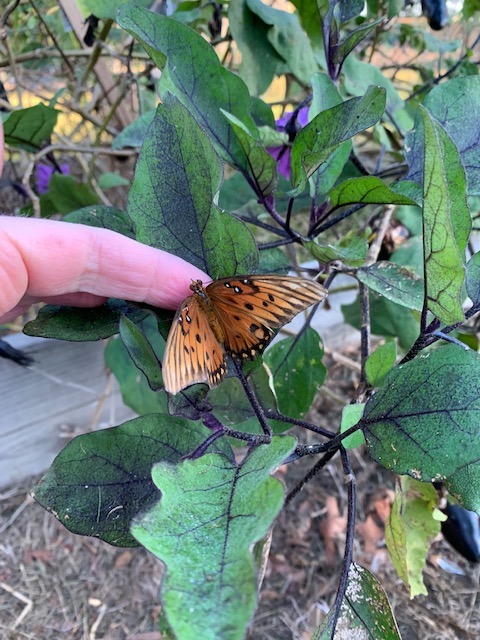
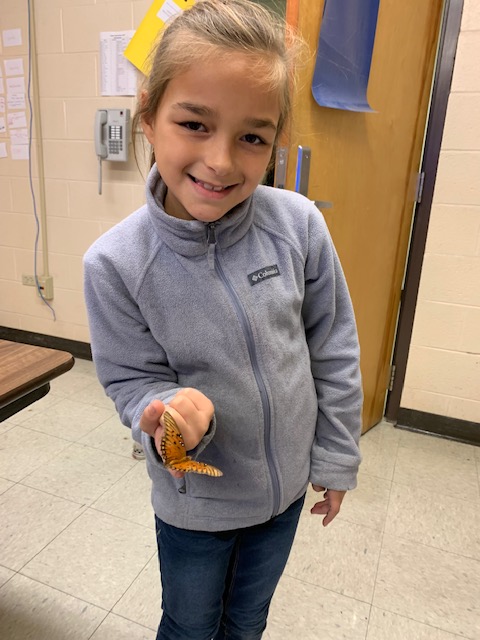
You park in the same spot. You walk the same hall, see the same faces, but one day, a child opens her hands to show you a butterfly, and suddenly, you become a part of her wonder.
You invite her to go outside. “Let’s find a flower to feed the butterfly.” You open Google and take a photo. Images pop up identifying the beautiful wings as “Gulf fritillary or Passion butterfly.”
Other children gather round and pass the gentle butterfly hand to hand.
In your mind, you know this is not a good sign. The butterfly is not viable, yet one student squeals, “I’ve never seen a butterfly so close up!” Others whisper, “Wow!” “It’s so soft!”
Wonder continues, grows, swells, so the poor fritillary becomes a subject to study, a specimen for children’s eyes.
You decide it’s an honor to be known as the butterfly whisperer.
Every year around the date of October 20th, the National Writing Project announces the Day on Writing along with the prompt, “Why I Write.” I avoid this question, mostly because it intimidates me. Who am I to say I am a writer? If I make that claim, will I be magically transported to the land of authors? Do I belong? Will I meet the standard? I’d rather stay in the closet. It’s easier to claim to be a teacher, a profession that has degrees behind it, credibility, and many years of service.
The problem is I want to write. I want to share my words with you. I want to connect with you through writing. The value in that connection is gold.
In my email inbox, I receive endless blogs and poems to read. I hesitate to delete them, so they build up, and the whole thing becomes unmanageable. However, I never know what may inspire me to write. One reliable set of prompts for me are Ethical ELA’s monthly Open Write. Each month we write together for 5 days. The prompts are written by people like me who juggle teaching and writing every day.
This last week Carolina Lopez drew inspiration from Richard Blanco’s poem “Since Unfinished,” asking us to steal his first line and write. “I’ve been writing this since…”
When we get right down to it, writing makes us ultimately vulnerable. If we are true to ourselves, we put our feelings all out there. This poem structure led me to more memories of my father.
Since You’ve Been Gone
I’ve been writing this since I learned to walk holding onto your pointer finger since driving the circular block hearing you warn “turn signal” “stop sign” “slow down.”
I’ve been writing this since “slow down” meant thinking, means remembering, meant crying when I reach for the phone to call you with the news.
I’ve been writing this since you pointed to the clock (after your stroke) to remind us to get Mom back for lunch.
I’ve been writing this since I held your dying hand your pointer finger blue and bruised no longer pointing me in the right direction.
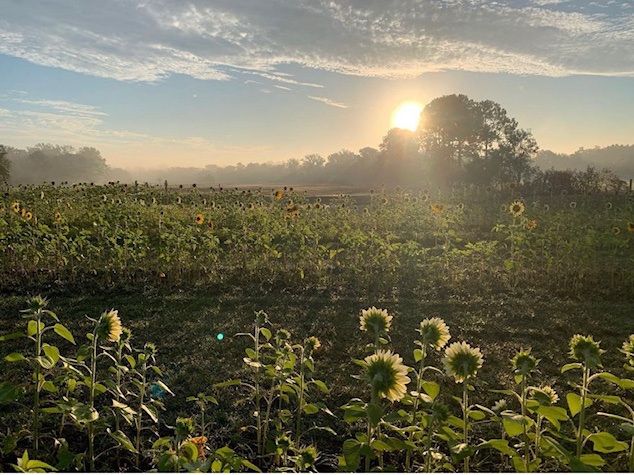
As Autumn arrives, the arc of the sun shifts. The sky can show us the seasons if we learn to watch. One of my former students, a young mother, lives on a farm where they grow seasonal sunflowers. There’s a crop in the spring and this year, another in the fall. They open up on weekends for “you pick” days. I follow her on Instagram and have a totally romantic view of life on a farm. It must be hard work, especially with the hot, dry days we’ve had this fall. Nevertheless, this image popped up on my feed and I thought it wanted to be a poem.
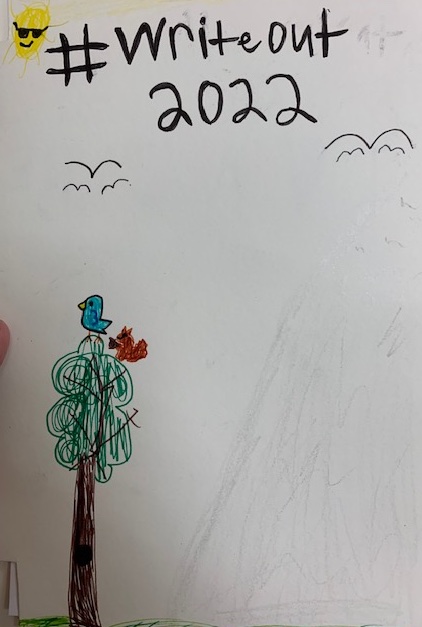
My students and I have been participating in the annual Write Out sponsored by the National Writing Project and the National Parks Service. Each day this week we’ve watched a video from a park ranger and followed a writing prompt. We made special #WriteOut notebooks following Sheri Edwards’ model found here.
We’ve gone outside to observe the trees and written a script of two trees talking to each other.
We’ve drawn from observing architecture and written about the significance of the building.
We’ve imagined the day in the life of a bird as it interacts with human environments.
Each day there is a new surprise. I hope I can find a way to continue this enthusiasm for writing after the two weeks of Write Out are over.
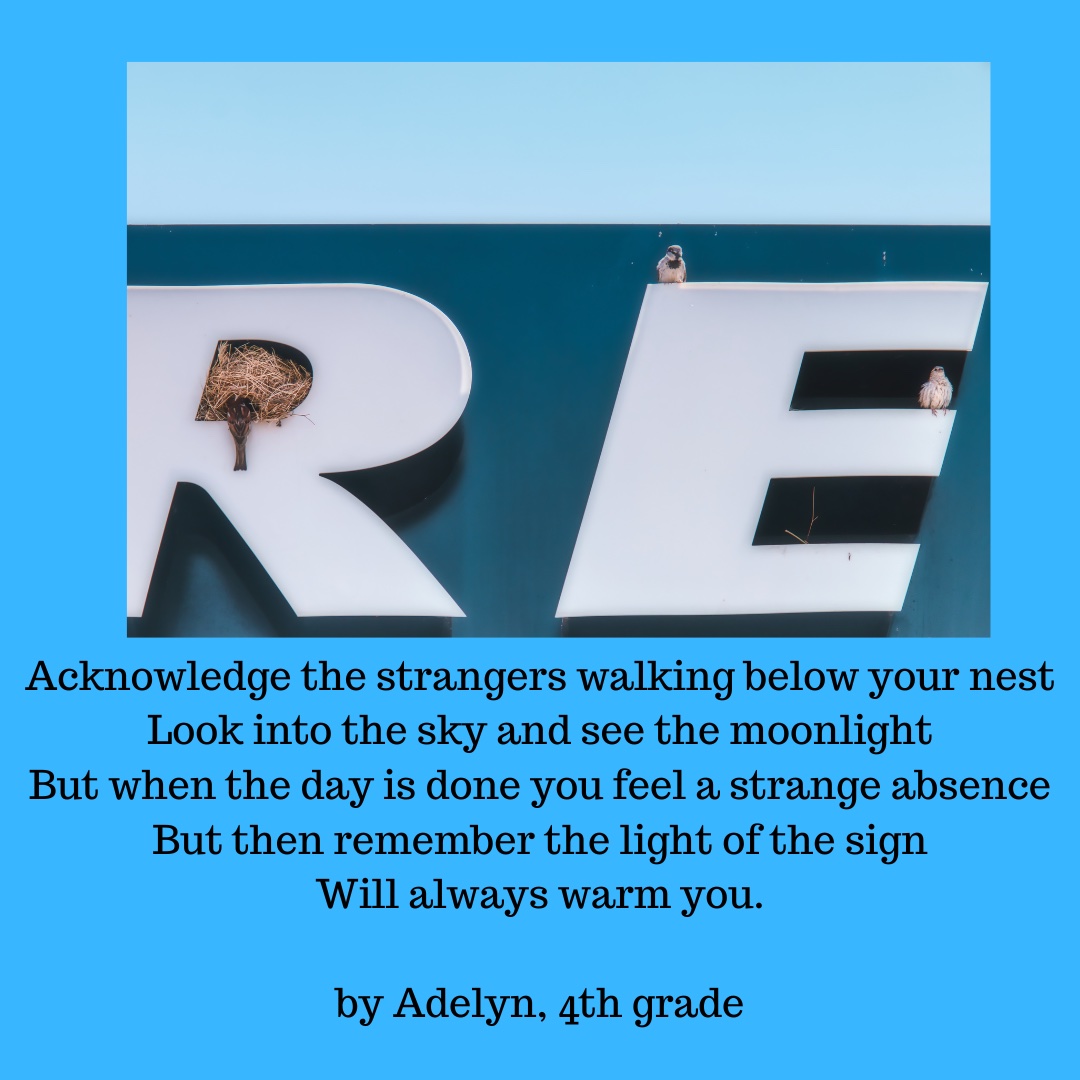
The Write Out prompt I chose on Thursday included a Rita Dove poem. We discussed the poem and collected words to use later in a poem of our own. Today I am sharing two student poems written after Rita Dove.
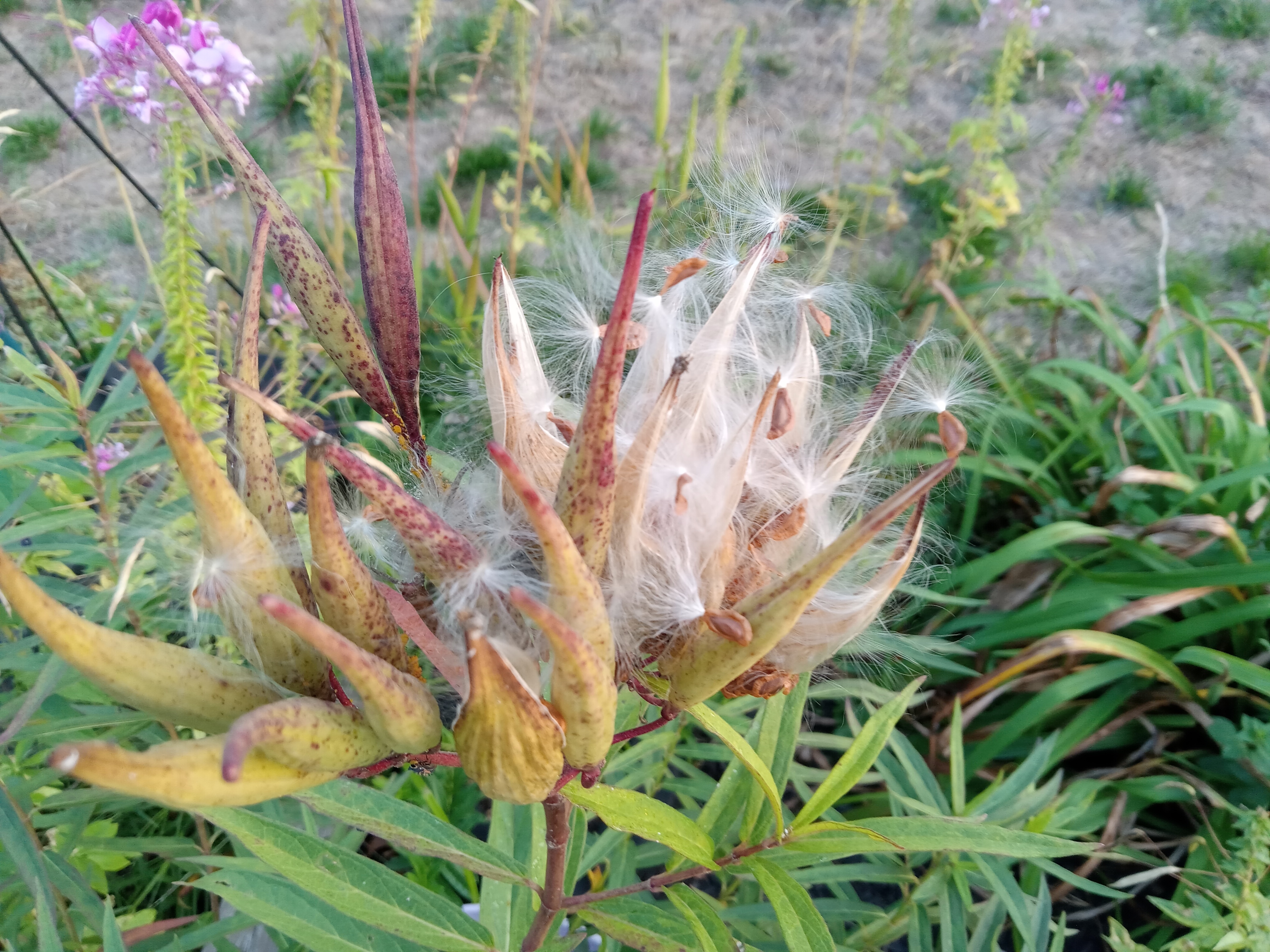
I love how both students and poet participants are on the look out for photos that want to be poems. Last week I featured a sunset photo taken by a third grader. This week Karen Eastlund sent me an interesting photo from her garden. She said they planted milkweed hoping for monarchs. I have recently found 3 monarch caterpillars on my own milkweed. Two of them were on volunteer milkweed that had planted itself in a crack of concrete near my air-conditioner units. I’m so glad I left it there growing wild and free like the weed it is meant to be. Thanks Karen for this amazing photo of a milkweed seed pod, open, soft, and free.
Milkweed seed pods, Karen Eastlund
Seed pod opens to the morning sun waiting for a wisp of wind to carry feather-soft seedlings to the sky. Plant me upon your pinwheel and carry me along.
Margaret Simon, draft
Please leave a small poem draft in the comments. Come back, if you can, to write encouraging comments for other writers. Happy Hump Day!
Spiritual Journey First Thursday is hosted today by Chris Margocs.
For Spiritual Thursday, Chris suggested we write about “those who have passed and left something behind in our hearts.” My father died 5 months ago. My grief returns when I’m struck by something I want to share with him. A few weeks ago, we were driving to my daughter’s house to watch the LSU game and without realizing it, I thought about calling my dad to see if he was watching the game. Bam! Before I knew it, tears were welling up and I couldn’t speak.
I’ve started listening to a new podcast with Anderson Cooper on grief, All There Is. The episodes I’ve listened to are powerful and poignant. While I was blessed to have my father for 61 years, loss is loss is loss.
Anderson Cooper interviewed Stephen Colbert, and I was touched by what Colbert said about grief.
It’s a gift to exist. And with existence comes suffering. There’s no escaping that. But if you are grateful for your life. Then you have to be grateful for all of it… I have some understanding that everybody is suffering and however imperfectly, acknowledge their suffering and connect with them and to love them in a deep way that makes you grateful for the fact that you have suffered so that you can know that about other people. I want to be the most human I can be, and that involves acknowledging and ultimately being grateful for the things that I wish didn’t happen because they gave me a gift.
Stephen Colbert, All There is
I’m not sure I am at the point at which I can be grateful for the pain of loss, but I can be grateful for the life my father had and the legacy he left behind.
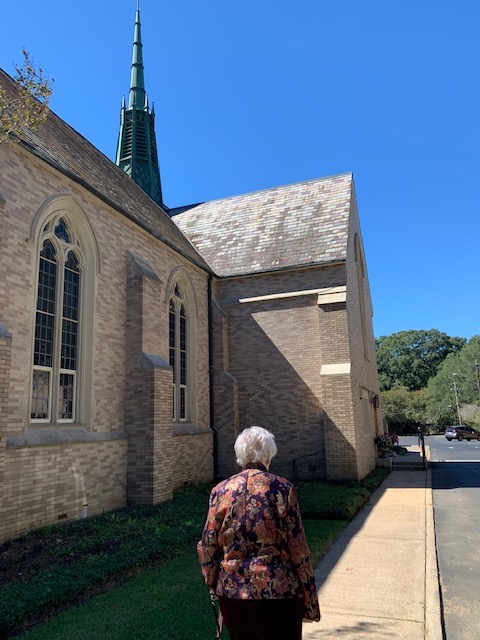
Last weekend my sister and I visited my mother. We took her to church on Sunday. We have a family history at St. James. When my parents were married there, my mother’s father served the church as a priest. I was baptized, confirmed, and married there. When I walked down the aisle holding my mother’s hand, we both got teary-eyed. My father’s ashes reside in the church walls in the columbarium. His presence was with us in that moment.
St. James Episcopal Church, Jackson, MS (photo by Margaret Simon)
I subscribe to Suleika Jaouad’s The Isolation Journals newsletter. A recent writing prompt suggested composing a prayer beginning with the Sanskrit prayer, “May creatures everywhere be happy, healthy, and free.” Here is my prayer:
May creatures everywhere be happy, healthy, and free. May you sleep as soundly as my old dog Charlie on his therapeutic bed. May you laugh as loudly as my granddaughter Stella on Facetime, eating a cookie, crumbs all around her mouth, smacking between giggles. May your muscles feel as stretched and tired as mine after yin yoga class, still tingling from pigeon pose. May our paths cross on a fall evening when the breeze is cool, and we see the bright light of Jupiter, shining with eternal hope. May we share a moment of memory of a life we knew was good. May we cry a little. May you look forward to tomorrow feeling the peace of knowing you are prepared. Yes, and be still and know God as the deepest, most truthful, and holy part of you.
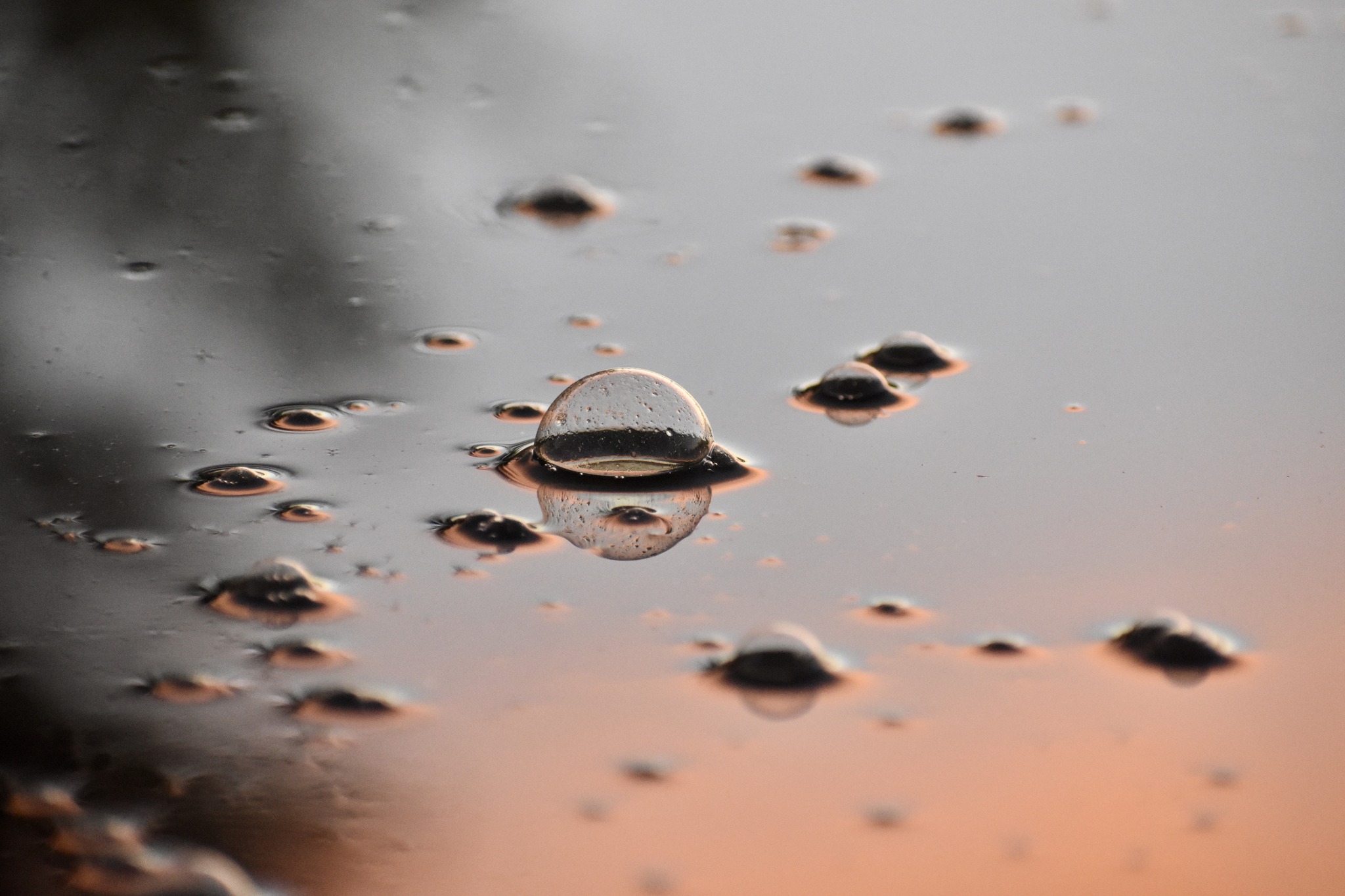
Our friend Molly loves to rise early and with camera in hand, head to the nearest water source. Morning light illuminated some mysterious bubbles on her recent excursion. I marvel at her photography skills and her ability to see beauty. Let’s take a moment to stand in awe, to see beauty, to feel alive.
Write a small poem in the comments and respond with encouragement to other writers.
Bubbles by Molly Hogan
Just below surface mysterious, magical breath of life bubbles
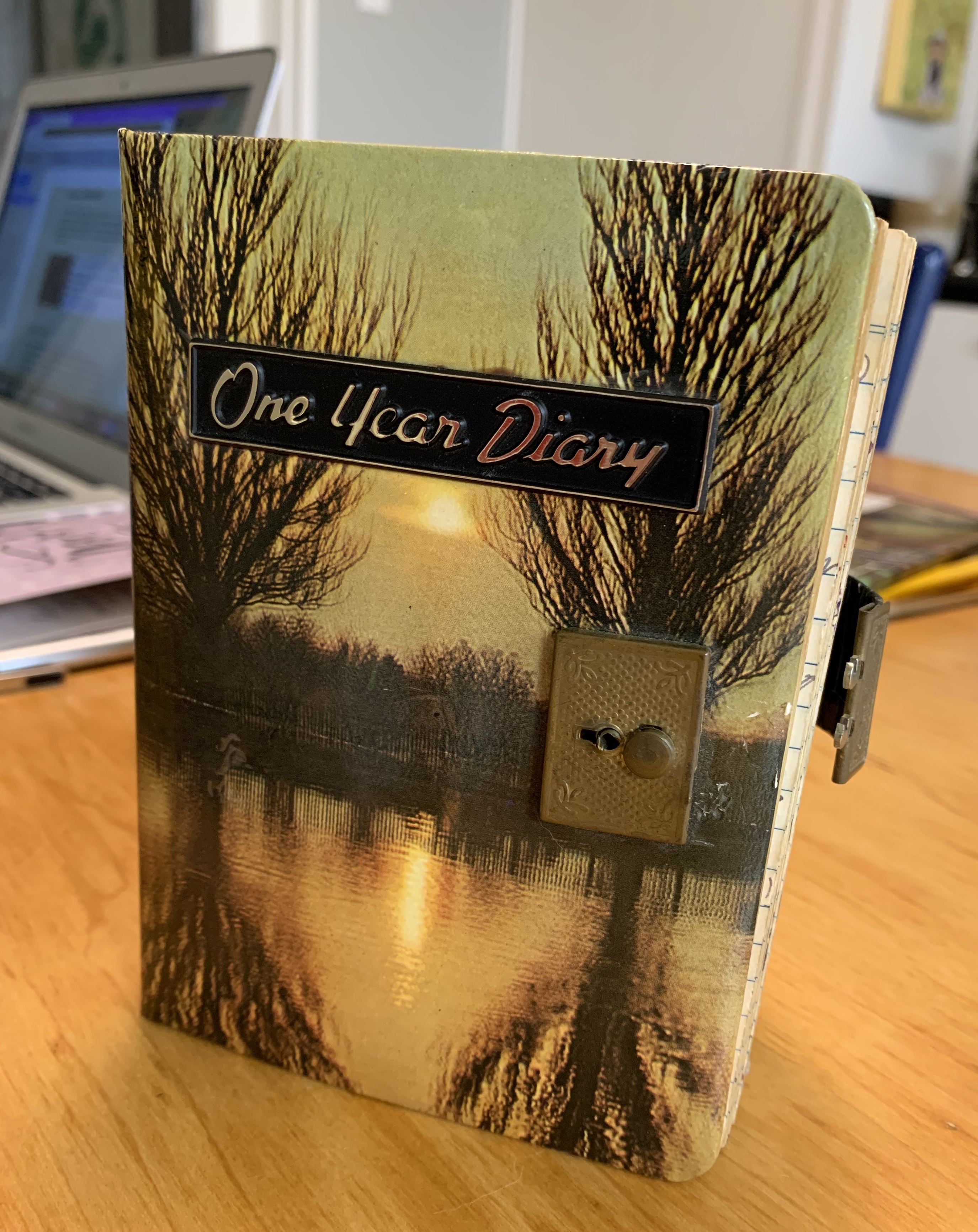
The Open Write over at Ethical ELA was happening this week. I participated for a few days. On Saturday, Denise Krebs offered this writing prompt: write an ode to a childhood love. I thought about my diary from 1975 which I still have tucked away in my closet. It’s something of a miracle that I still have it because my childhood home was flooded in 1979. I’m not sure how this diary escaped.
Time was that when I looked at my diary, all I could see was the struggling teenager, flip-flopping from I like Robby to I like Bobby. I had tucked slips of paper into the diary, notes from friends and poems. Yes, poems.
Today I’m trying a different perspective of my younger self. I am thinking more kindly toward her. She was developing, in the process of becoming. No one is perfect when they are 14. Actually, I am not perfect now. We are constantly in a period of discovery about who we are, who and what we love. I think this diary may hold a precious girl, one in need of love.
“One Year Diary” circa 1975
“One Year Diary”
Golden pages wrapped in a keyless lock, you locked away all my dreams and screams for truth and understanding.
I was standing at the threshold of who I am. You honored the me I was with timeless sanctity.
Notes and poems tucked in like folds of a blanket, nestling moments I wanted to keep (and forget.)
Cursive swirls and exaggerated tittles, my fourteen year old soul remains buried here.
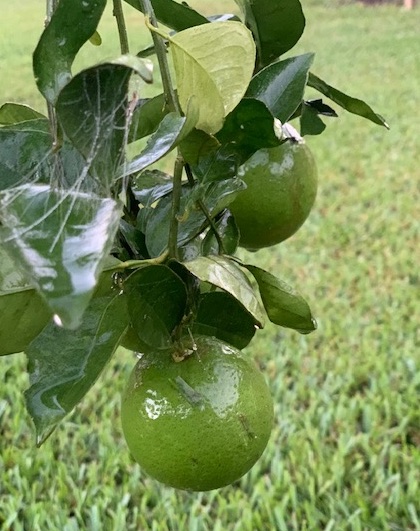
I try to get outside early in the morning for a walk, often before the sun rises. On my path is a grove of fruit trees. I watch these trees as the season slowly changes to fall. Trees seem to know even before we can feel the air temperature change that fall is on its way. I know the slant of light changes and all that, but I just wish for a little cooler breeze. My husband always says that satsumas (oranges) ripen around the time of the first report card. I wrote a modern haiku in honor of the wet green fruit. Please take a moment to write a small poem in the comments and support other writers.
green fruit by Margaret Simon
Sweet fruit of the earth Taste of rain, taste of sun Abundantly enough
Thank you to Two Writing Teachers for creating an amazing community of writers and a safe, welcoming space to write and share.
The decorating theme at one of my schools this year is books, so I chose to depict one of my favorite books, The Dot. I celebrate Dot Day every year with my students, but this year I adopted the whole school, sort of. I sent out an invitation to teachers to sign up to send 4 kids to my room at recess time. (I only have 4 chairs around a single table.) I had wonderful participation and have had so much fun working with a variety of grade levels. With the older kids I opened up sets of watercolors and set out paper plate dots. For the younger ones, I gave them a coffee filter to decorate with markers. I then sprayed them with water so that the ink spread for a cool looking result.
With my gifted students, I made Dot Zeno Zines. In the spirit of “making a mark and seeing where it takes you”, we drew a design on plain paper. Then we wrote Zeno poems. Zeno is a form created by J. Patrick Lewis that uses the sequence 8, 4, 2, 1, 4, 2, 1, 4, 2, 1 with each one syllable rhyming. I’m not sure which should come first, the first 8-4-2-1 sequence or the rhyming words. We’ve tried both ways. I let the kids struggle somewhat to just figure it out. Sometimes it’s hard to say what you want to say with so many constraints. It’s a process. Process can be messy and imperfect, but when you’ve puzzled it out, it’s rewarding.
Margaret Simon lives on the Bayou Teche in New Iberia, Louisiana. She is a retired elementary gifted teacher who writes poetry and children's books. Welcome to a space of peace, poetry, and personal reflection. Walk in kindness.






 Reflections on the Teche