Today is my 60th birthday. I gasp when I see that. Sixty years is a long time! I share my birthday with two sisters I met right here, connecting through blogging, Linda Mitchell and Julieanne Harmatz. Happy Birthday to you, too!
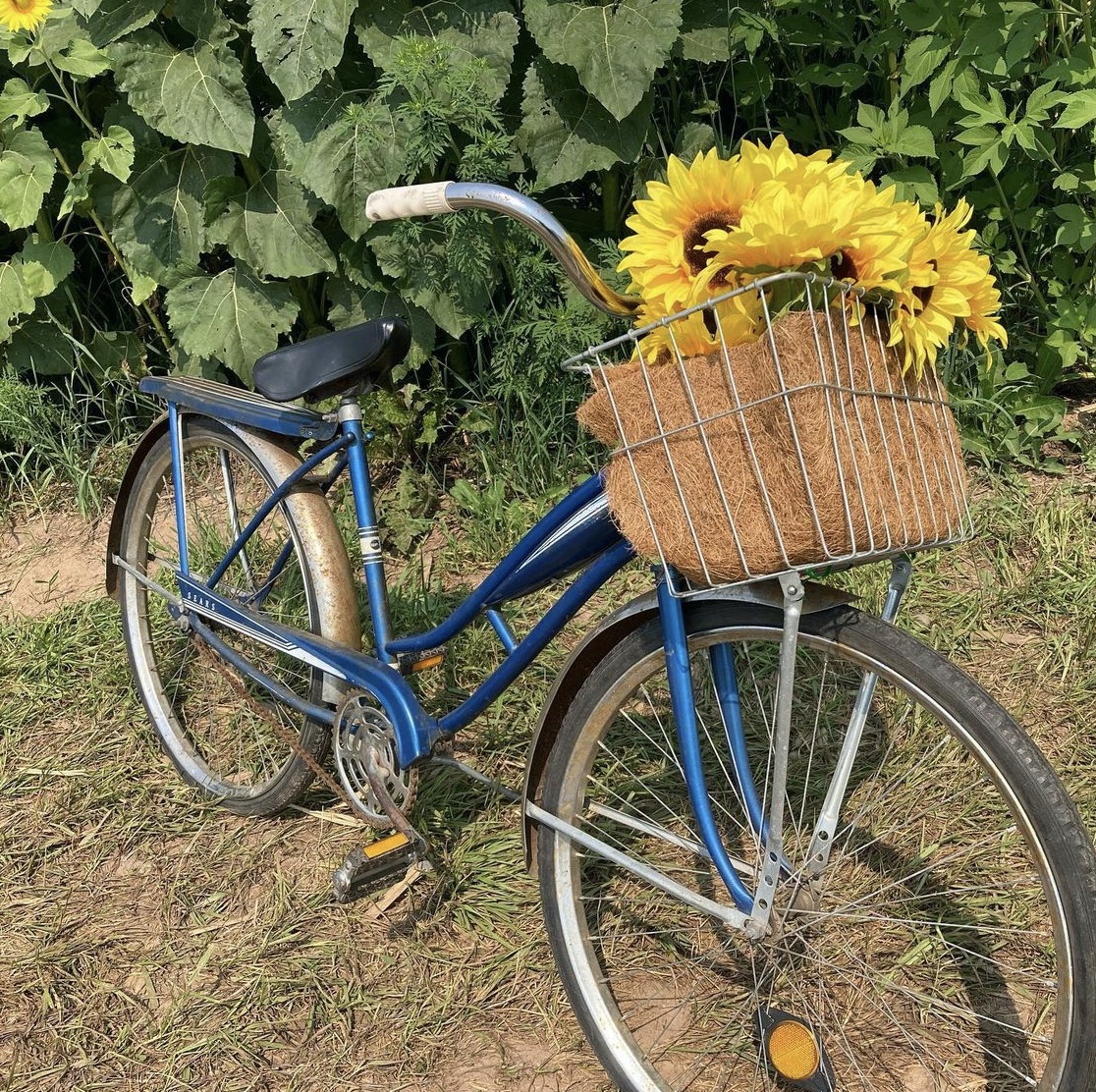
This week’s photo is a fun one. I found it on Instagram, posted by Trina Bartel, another fellow blogger. She tells me it was taken at Bergsbaken Farms in Wisconsin.
(The photo) is from a sunflower farm in a tiny town in Cecil, WI (NE WI). It’s a huge field of sunflowers that you can visit for a suggested donation of 2 dollars each. There are props (like the bike) that you can take photos with. The bike is on the edge of a huge sunflower field. It is at the entrance. This sunflower farm is about 3-4 years old. I believe it was created as a way to generate money for a struggling family farm.
My writing group is here this week with a new name and a new challenge. Formerly, the Sunday Swaggers, we are now the Inklings. Catherine Flynn challenged us this month to write an Ekphrastic Poem.
From the Poetry Foundation:
Ekphrasis
“Description” in Greek. An ekphrastic poem is a vivid description of a scene or, more commonly, a work of art. Through the imaginative act of narrating and reflecting on the “action” of a painting or sculpture, the poet may amplify and expand its meaning.
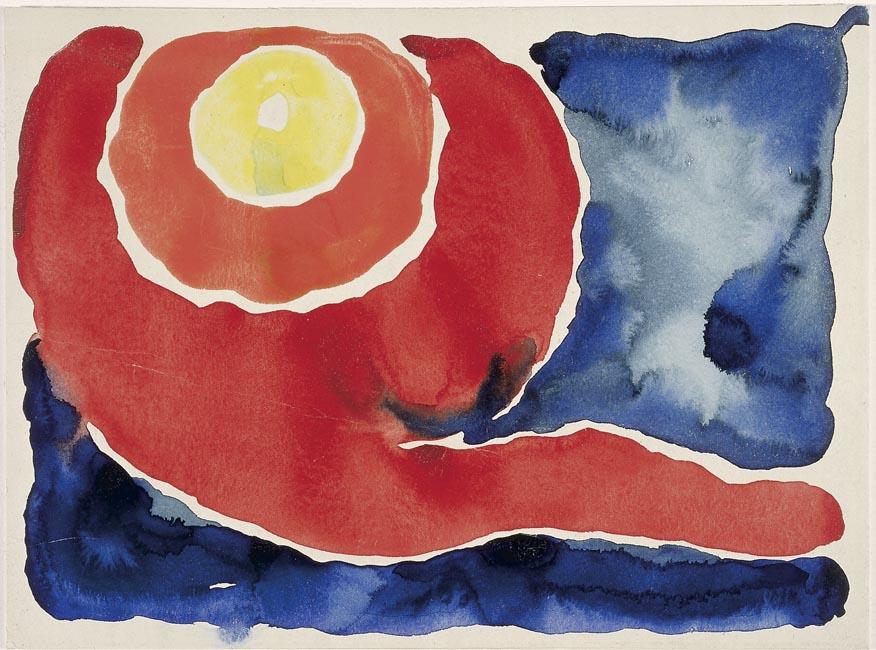
A few weeks ago I was participating in #WriteOut, a virtual writing marathon from the National Writing Project. On this visit, we were in San Antonio, Tx. One of the prompts was a work of art by Georgia O’Keefe that is housed at the McNay Art Museum.
Evening Star V by Georgia O’Keefe, from the McNay Art Museum
Evening Star
Texas sky blooms into star-gaze red glare haze across blue waves–
And there– a point of light opens a minor C– insignificant note like a dust-speck glistening then gone.
For #TheSealyChallenge, I have read 5 poetry books. This week I wrote blog posts about Before the Ever After, a verse novel by Jacqueline Woodson, and Ilya Kaminsky’s Deaf Republic, a totally different novel in verse. I also blogged about The Bridge Between Us, a collection of poems about teaching through the Covid-19 pandemic. I’ve read Robert Bly’s Morning Poems and Naomi Shihab Nye’s Cast Away, but haven’t blogged about them yet. I am enjoying this challenge. It’s making me pick up poetry books that I have had on my shelves and never read through. I only heard about this challenge this year, but it’s been around for a few years. Is anyone else doing it? How are you handling and processing?
Spiritual Journey First Thursday is being gathered today by Linda Mitchell.
Linda Mitchell is gathering Spiritual Journey First Thursday posts. Her topic suggestion is Respect. I wasn’t going to write. In fact, I emailed Linda and apologized, “I’ve got nothing.” However, in the spirit of respect for this community of writers and because I’m awake on the last day of my summer break, I am writing.
Respect is born out of Love. The two are intertwined like the threads on the knitting needles. God calls us to Love.
And so we know and rely on the love God has for us. God is love. Whoever lives in love lives in God, and God in them.
1 John 4:16
This morning I read a beautiful poem by David Whyte, The True Love.
Step out of the boat and give your hand to God. Find true love with God. Trust the safety you feel. Hold your hand out to others in respectful response.
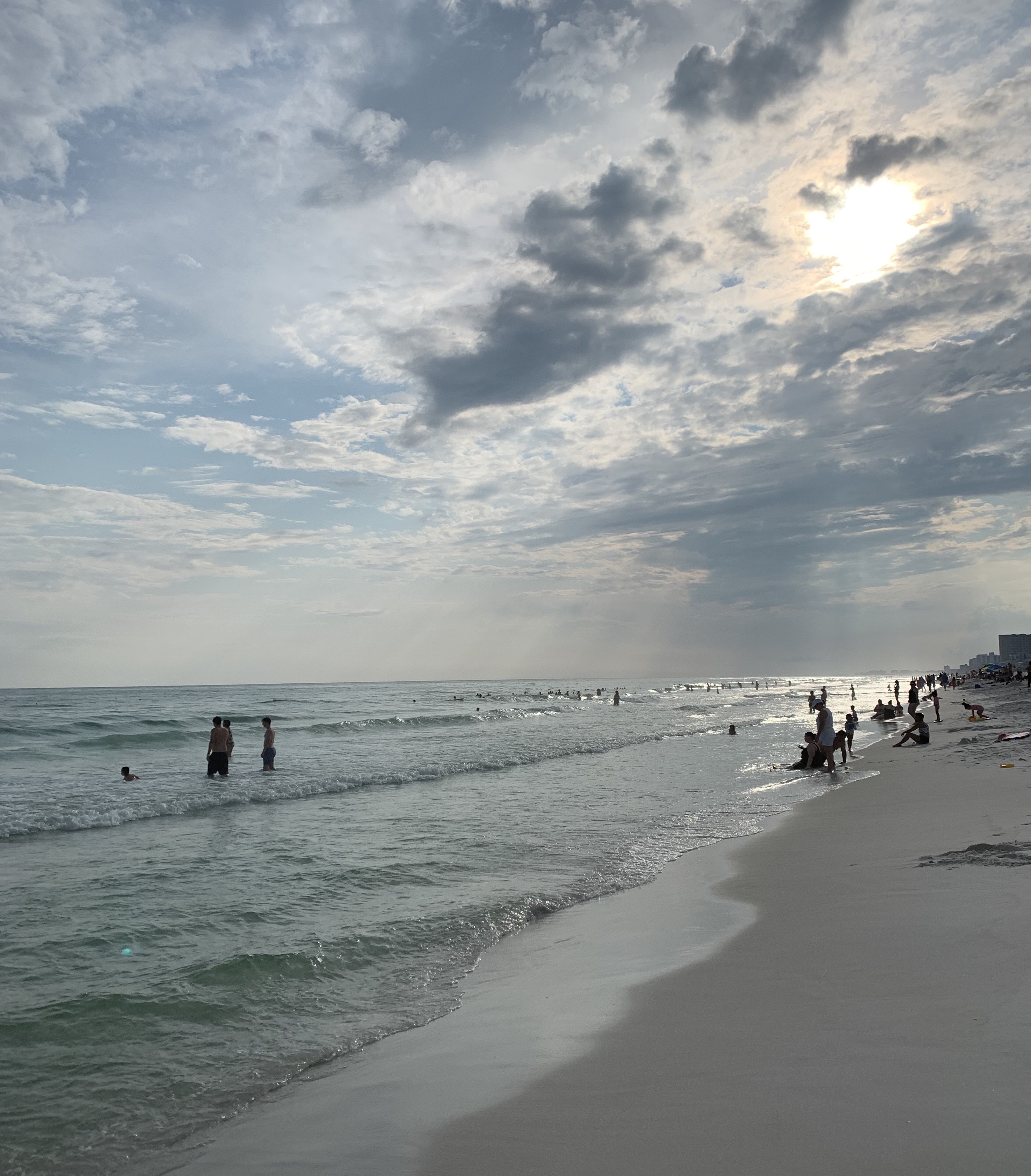
I am currently writing in a hotel room in SandDestin, Florida. We are being completely quiet to not wake up my sleeping grandson. My daughter has business here, so I came along to help with Thomas. (His daycare is on a summer break.) The beach views are wonderful, but I can’t take Thomas out on the beach because he hates the way the sand feels on his feet. We spent more time playing in the kiddie pool. He also enjoys running down the hotel hallways and hearing his voice echo. Oh, the joys of being a toddler!
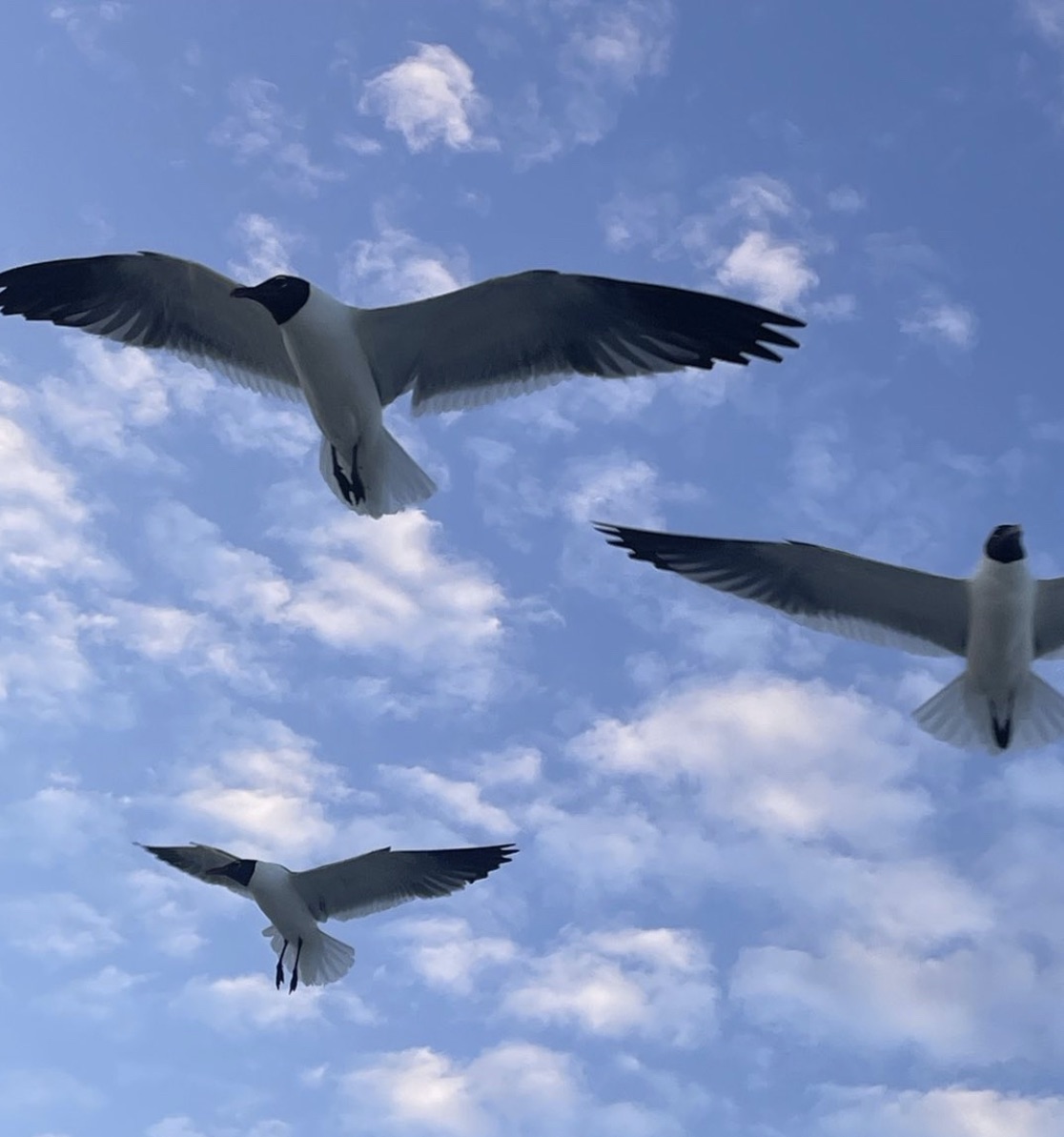
I took a few beach pictures on my phone, but I flipped back to Hope Dublin’s Instagram photos (@hopesview2021) and found this amazing one of flying seagulls. My summer days come to an end this Friday when teachers return to school.
Please join me today by writing a small poem in the comments. Support other writers with comment replies.
Photo by Hope Dublin
Sand tickles my toes while seagulls float on air sing an August song.
Margaret Simon, draft
Thomas finds the T on the keyboard. He can also find M for Mamére.
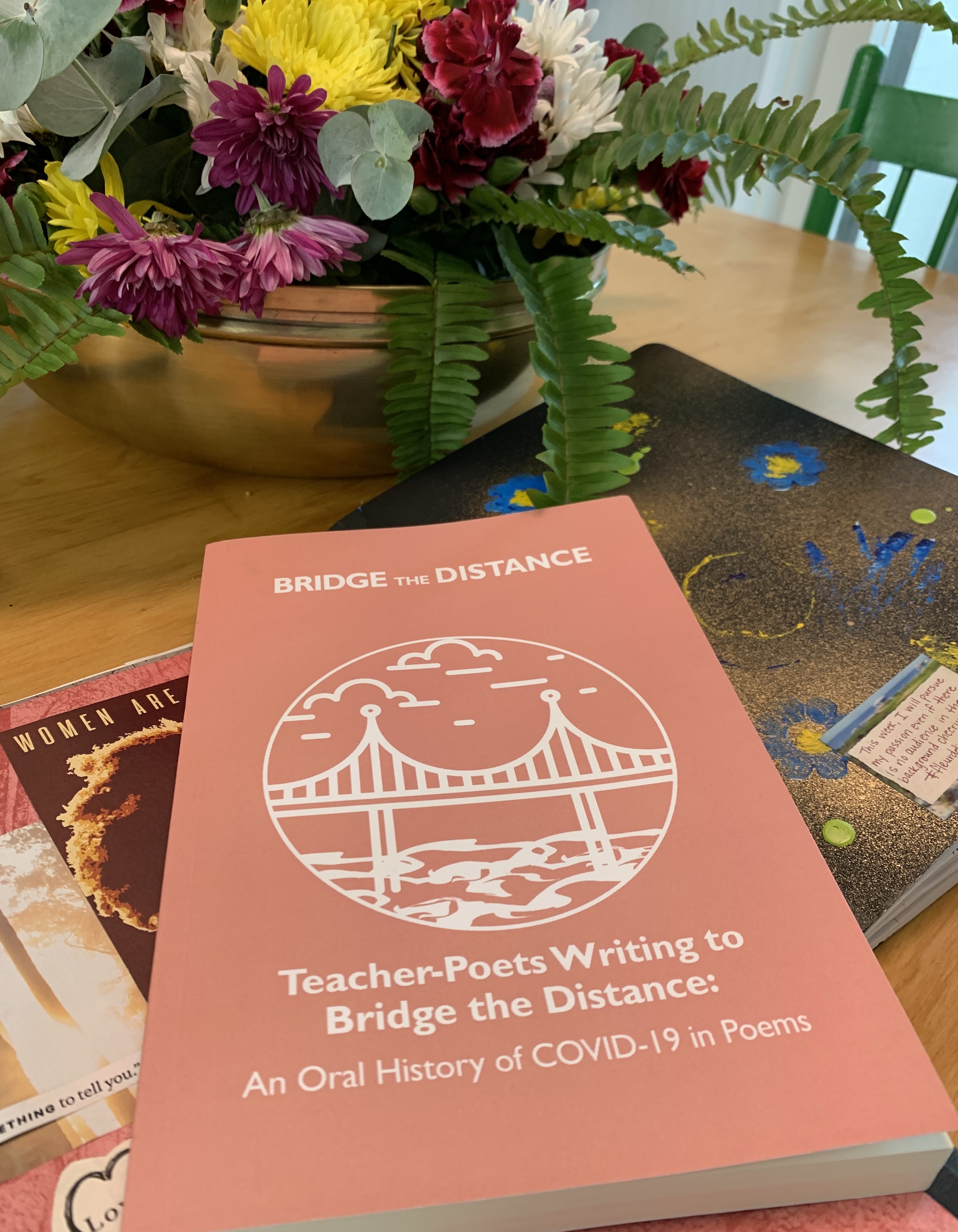
This month I am participating in The Sealy Challenge by reading a poetry book each day. Today’s book is An Oral History of Covid-19 in Poems gathered by Sarah Donovan of Ohio State University. Sarah curates Ethical ELA with an Open Write event each month. During the month of April, she posts a prompt each day. In the spring of 2020, the daily writing was a way for teachers isolated by the pandemic to connect through writing. We wrote poetry to process this unusual time. Sarah and her colleagues decided to preserve this work in an oral history project. Through that project, they conducted interviews by zoom and collected submitted poems into a collection. The book is free to read online or you can purchase a book copy for the cost of printing. (Link to Free Press Book.)
The thread that holds this collection together is the shared experience of teaching in 2020. Many of the poems are narrative while some follow forms.
I’ve chosen two poems to feature today.
Elms on Death Row
DENISE HILL
Three trees stand solemnly in a row just as planted nearly one hundred years ago
Each tendril root tapped deeply into place somnolently holding to earth
Craggy rough bark like aged hands so many life stories harbored there
Each now marked: a bright red dot some roughshod city worker sprayed just doing his job
Their days are numbered soon hewn to stumps then those ground flush
I place my hand on one breathe in breath out say “Thank you”
then the next: Thank you. then the next: Thank you.
Lest they go from this world unappreciated for all they have provided.
Thank you.
I relate to this poem as I have experience the chopping down of trees for development. Haven’t we all? I feel sad for the marked trees. Denise captures that feeling well. I love how she decides to deal with this sadness, not by ranting, but by gratitude. This poem also holds together as a metaphor poem for Covid. The illness strikes some with little or no symptoms while others are very ill and die. Senseless deaths. Like the Elms, they leave behind their stories.
Washing Hands
SCOTT MCCLOSKEY
They say that all poems are political; all poems are an expression of freedom against oppression are innately radical. Their mere “existence is resistance.”
But not this one.
This one is just about me washing my hands and how sometimes I lose count, so I need to start over to ensure that I’ve done it for the proper length of time.
Hands lathered up, I stare out the kitchen window at the neighbor’s house, at my neighbor who, although it’s the middle of December, and sure, it is unseasonably warm, looks to be planting fake flowers in the sills outside of her windows.
This is the same neighbor who was surprised when her racist lawn ornaments were stolen this past summer when yet more videos of atrocities and injustices were going viral,
which, of course, makes me scrub more vigorously, thinking of the UPS package that came, the actual reason that I’m standing here in the kitchen — Was that one thousand seventeen or eighteen? —
So, I apply more soap from the hands free dispenser, and watch, transfixed, as she carefully, artistically even, places various colors and kinds together, creating, to her mind at least, a pleasing arrangement, taking more care and effort to arrange these fake flowers than she has ever afforded her neighbors.
And I just wanted to wash my hands, wanted to not (potentially) infect my wife or myself, wanted to simply go about my business, maybe read a little, grade an essay or two,
but I keep thinking about the sad fact that cultivation does take time and effort and persistence, and, for some, it really is easier to arrange plastic flowers
than to plant and nurture live ones.
In Scott’s poem about washing hands, I appreciate how he sets up the poem as an ordinary moment, not a political poem “not this one” and yet, it becomes more and more filled with emotion, and in the end, imparts wisdom with an extended metaphor in “plastic flowers.”
I hope I can continue this daily blogging practice around a different poetry book each day, but realistically, “cultivation takes time and effort”, as Scott McCloskey says. I’ll take it day by day. Thanks for reading.
I first heard of Ilya Kaminsky in a Poetry Unbound podcast episode. Commentator Pádraig Ó Tuama said he read Deaf Republic three times on the airplane flying home to Dublin. Three times! I thought that would not be me. I don’t usually read books more than once, but when I bought it on Kindle, I had to read it at least twice to have any kind of understanding. In pulling together this post, I’ve read many of the poems a third time.
Deaf Republic is not a book of poems for kids or for the faint of heart, even. It was a difficult book. Violence and sex are not topics I choose to read, but I became intrigued by the characterization of deafness and sign language. The townspeople, after witnessing the shooting of a deaf boy, use an assumed deafness and create a sign language as opposition to the occupying forces.
I’ve learned that Ilya Kaminsky is deaf himself. It’s important to know this when listening to him read. I had a chance to see him present in the Poetry Teachers Institute from the Poetry Foundation last week.
The poem I’ve chosen to feature today is “Alfonso Stands Answerable”.
Alfonso Stands Answerable
My people, you were really something fucking fine on the morning of first arrests:
our men, once frightened, bound to their beds, now stand up like human masts— deafness passes through us like a police whistle.
Here then I testify:
each of us comes home, shouts at a wall, at a stove, at a refrigerator, at himself. Forgive me, I
was not honest with you, life—
to you I stand answerable. I run etcetera with my legs and my hands etcetera I run down Vasenka Street etcetera—
Whoever listens: thank you for the feather on my tongue,
thank you for our argument that ends, thank you for deafness, Lord, such fire
from a match you never lit.
Ilya Kaminsky, Deaf Republic
There is so much to notice in this poem. I notice the varying line lengths, first person narrative, and a strong simile is “deafness passes through us like a police whistle.”
A craft move that I would not consider in my own poetry because of the possibility of confusion is the direct address to different characters outside of the poem. “I was not honest with you, life–” and then “Whoever listens” To whom is the narrator testifying to? me, the reader? or the enemy?
I also wonder about the word “etcetera” repeated. I like the way it sounds when read aloud. But why, when the line means the same without the word?
This poem lands with power. As a poet, I rarely hit that mark.
I wonder about using this poem to teach poetry. For my students, I would remove the curse word and draw attention to repetition as a craft move and wonder about the word “answerable”. What does it mean? Why is the narrator answerable?
Honestly, the more I wonder about, the less I know. I probably need to read the book again.
When something comes across my radar multiple times, I pay attention. This is the first year I’ve heard of the Sealy Challenge. It is a challenge to read a poetry book each day in the month of August. I read poetry books for more than one purpose.
To enjoy lyrical language
To inform my own writing practice
To get ideas for teaching
The first book I read was Jacqueline Woodson’s Before the Ever After which accomplishes all three goals.
I picked up the book at a new local independent bookstore, and it was signed! Ha! What a find!
Before the Ever After is a middle grade novel-in-verse. To read a review, click here.
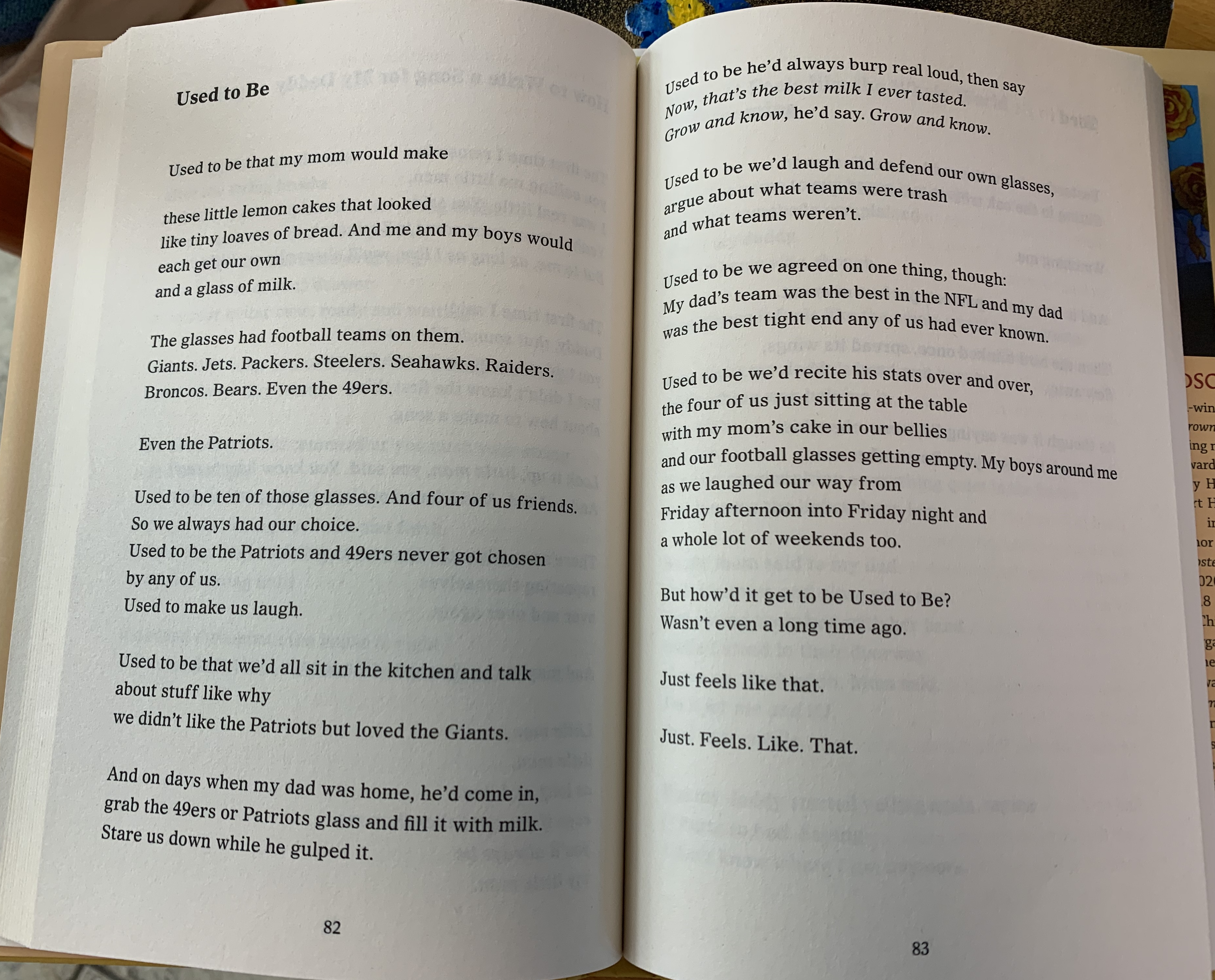
For my take on the Sealy Challenge, I’d like feature one poem and respond to it.
This poem captures a few themes of the verse novel. ZJ’s father is suffering from chronic traumatic encephalopathy (CTE) and his friends help him through the struggle. Football is a major topic, but ZJ is a musician and has troubled feelings about football due to his father’s illness. The repetition of “Used to” effectively communicates ZJ’s continued struggle about how things used to be before his father was ill.
Craft moves I love in this poem are the repetition (anaphora) of “Used to be” as well as that ending. “Just feels like that.” becomes “Just. Feels. Like. That.” This craft move is something I can try in my own writing and I can show kids how to use it with effectiveness.
Jacqueline Woodson, while being a master of craft, does not overuse any literary element. It just feels natural. It’s. Just. Natural.
Poetry Friday round-up is with Becky at Sloth Reads.
Two weeks in covid times is a lifetime, time enough for the Delta variant to quickly invade my territory. It has taken a few weeks for the CDC to catch up to this invasion and to adjust guidelines. From our own family’s experience we knew a few things before they did. The virus Can infect someone who is vaccinated. The virus Can be spread by vaccinated people. And the vaccine Does protect from grave illness. My 90 year-old mother-in-law was vaccinated in January and February. Two weeks ago she started coughing. She took a rapid antigen test that showed she was positive for Covid-19. Today she is fine. She’s back to swimming daily and has only an occasional cough lingering. No hospitalization was necessary. We aren’t even sure if her case was counted in the long run; however, in these last two weeks, CDC has taken an about-face. And we are glad they have.
In my anger over this viral outbreak, I wrote a villanelle for an Ethical ELA Open Write prompt. The Seven Poetry Sisters put out a villanelle challenge for this month, so I asked for critique from my writing group and revised. A villanelle is a challenging form. I used Rita Dove’s Testimony, 1968 as a jumping off place.
This poem is a jeremiad. (prolonged lamentation or complaint, originating from Jeremiah whose Biblical book is lamentations)
Delta Invasion
Who comforts me now that the virus has broken? Numbers mean nothing now that you’re ill. Anger invades my trust, hope lost or stolen.
We thought our lives safe to reopen, but Delta arrived with its own stubborn will. Who comforts me now? The virus has broken
through the vaccine’s promised protection. Credence is shattered on CDC’s sill. Anger invades my trust in hope; lost or stolen.
Safe, unsafe rules are misspoken as dispersed droplets aim to kill. Who comforts me now that the virus has broken?
Our lines of defense should be woken to what we now know is out there still. Anger crumbles trust as hope is lost or stolen.
Some still reject life-saving vaccination yet your nagging cough didn’t kill what comforts me now is the virus has broken and relief restores trust. Hope not lost or stolen.
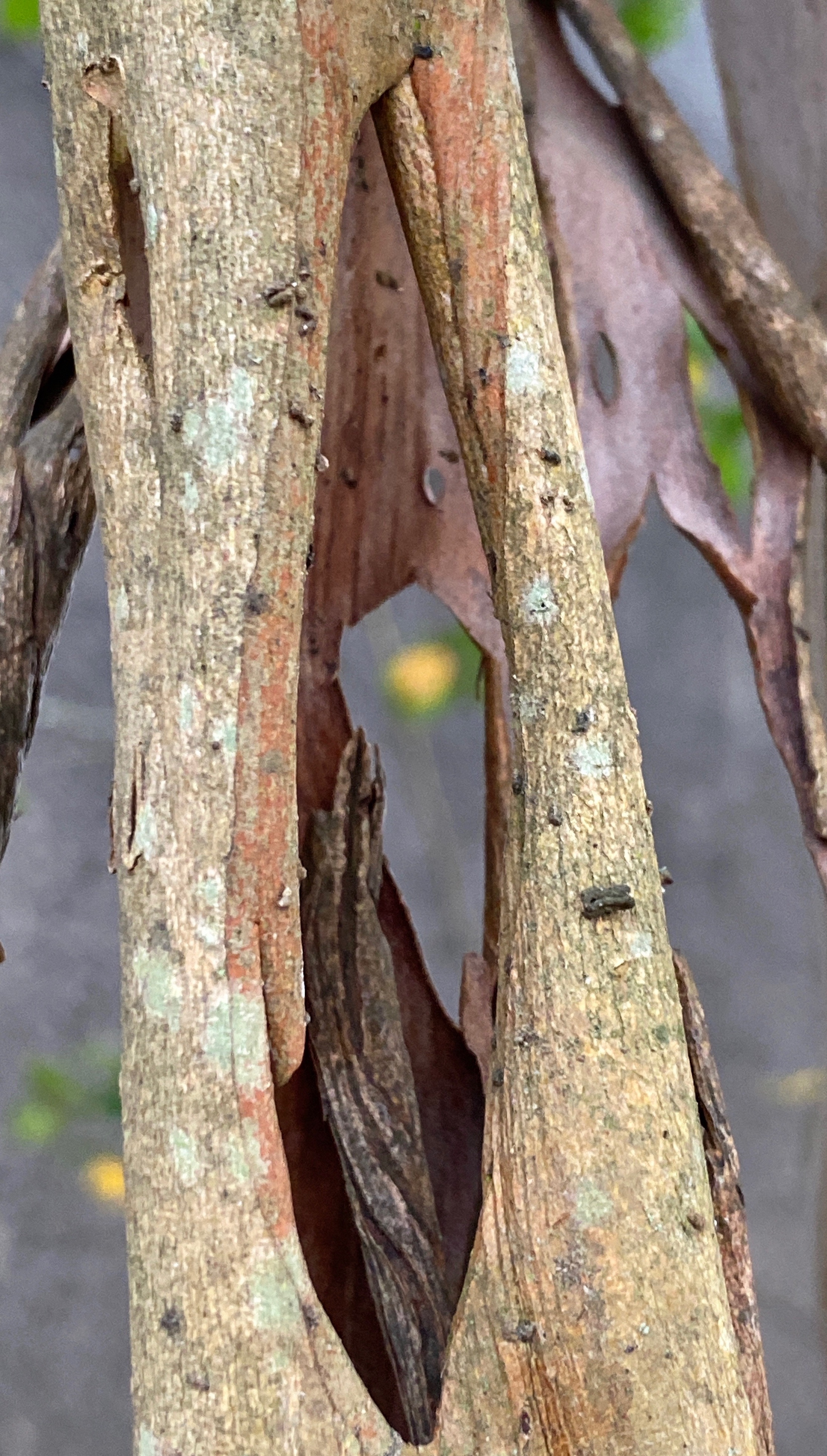
I’ve noticed recently on my morning walks that the crepe myrtle trees are doing something weird, shedding their bark. Surely this is something they do yearly, but I’ve never noticed it. Of course, I googled it.
As all Crepe Myrtles grow and mature, they shed last year’s bark, revealing a colorful, mottled bark beneath. Once the tree has reached full maturity, several years after planting… you are in for a real show. Sit back and enjoy the unique texture and coloration that shows up on their wood once the bark is shed. Because the Crepe Myrtle is a deciduous tree, it sheds all its leaves during the winter, leaving behind the beautiful bark on the tree which makes it a centerpiece in many winter landscapes.
This is not where I usually write, but I’m trying it out–the coffee shop where jazz is playing and the hum of the refrigerators sound like the cicadas in my yard. A young couple chat quietly. She’s wearing athletic shorts and a “Friends” long sleeved t-shirt. He’s got on jeans and a ball cap. She’s talking and playing with the straw in her cup. He leans in, nods and laughs. She is a natural beauty, long black hair, tanned skin, perfect teeth. Someone’s daughter. Someone’s sister.
While I watch this couple, I am trying not to look by the window where two women sit in the comfy chairs talking with their hands. Literally. There are no sounds, only signs. I once knew some sign language, but as with any language you do not practice, the ability fades with time. No matter. What they are talking about is none of my business. I can sit and listen with my eyes. Notice the beauty of expression without words.
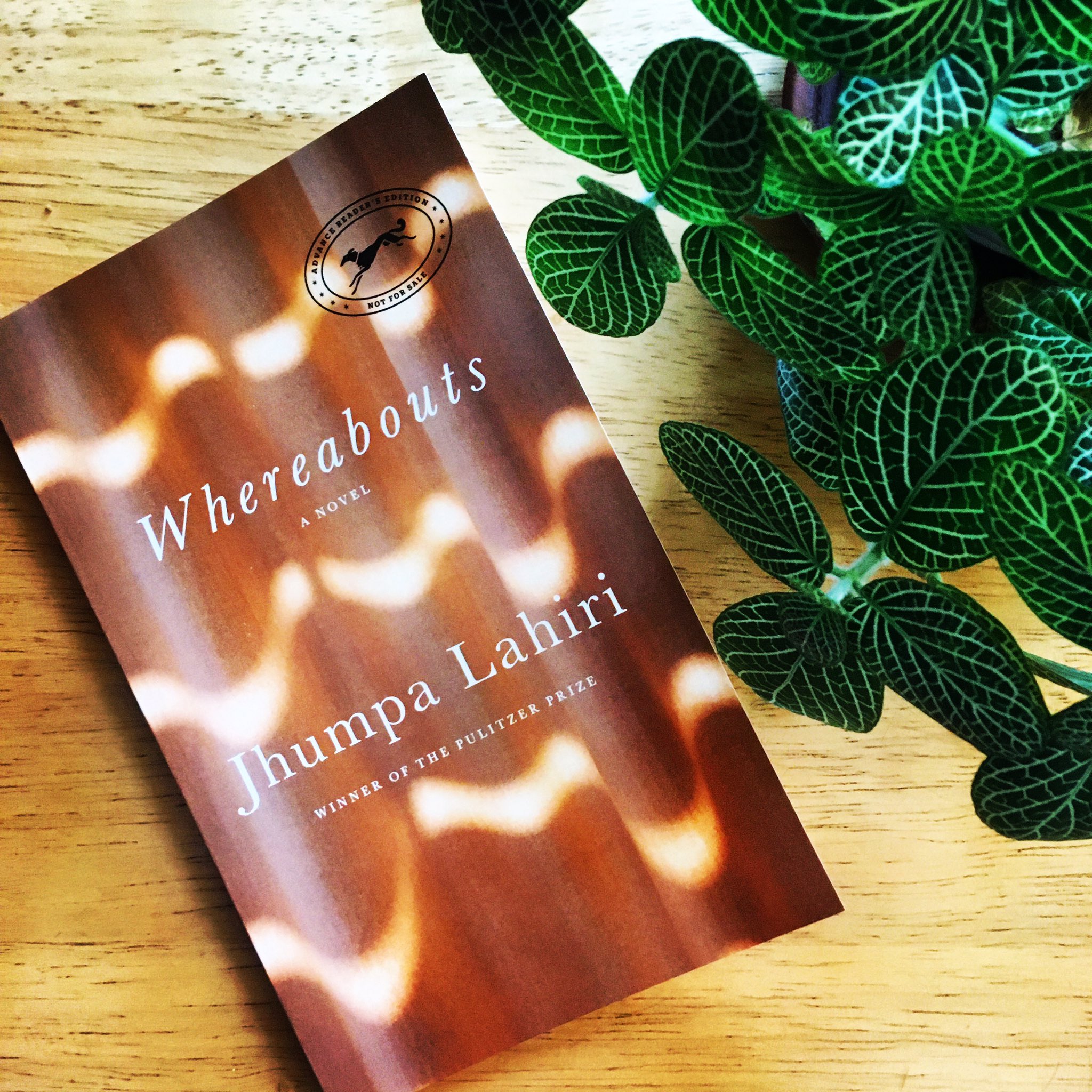
I recently read Jhumpa Lahiri’s latest book Whereabouts. Lahiri’s writing fascinated me because there was no defined setting even though you always had a sense for where she was. The narrator does not identify herself or anyone else by name. Lahiri breaks the rules about novels without blinking an eye. She takes us to wherever she is and we go willingly. Like sitting here in this coffee shop observing and being present to the moment when nothing much happened.
The writer’s greatest chance may be devotion to the passing fragment.
It is small, but it is pure, and it may hold compact infinity.
Margaret Simon lives on the Bayou Teche in New Iberia, Louisiana. She is a retired elementary gifted teacher who writes poetry and children's books. Welcome to a space of peace, poetry, and personal reflection. Walk in kindness.








 Reflections on the Teche