Happy Black Friday, a day I am celebrating with another family gathering around our newest grandchild Stella. She is turning one on Tuesday. There will be the traditional day after Thanksgiving gumbo as well as cake and presents and lots of wildness from her toddler brother and cousin. The best kind of Black Friday ever.
In the meantime, I wrote a quick ode to join the Poetry Sisters challenge for this month.
Ode to Autumn
Something in the way you move attracts the wandering eyes of this watcher– a tapestry of yellow and red settles my wild mind.
Something in the way you move blows a soft whisper to my weathered cheek not warm like a kiss but tickles just the same.
Something in the way you move stirs my soul to memory, opens the stored-away box of photos releasing a scent of amber and wood.
You move quickly, Autumn, dropping by with a basketful of acorns and satsumas, sweet sugarcane cigar, then leave on a storm cloud.
Take my grief with your wind and turn my heart to joy.
Margaret Simon, draft For Molly, who lost her dear father on Thanksgiving Day
A Happy Thanksgiving thank you for this little community of writers. Thanks for making time for yourself on Wednesday morning to write along with me and others. I am grateful for you!
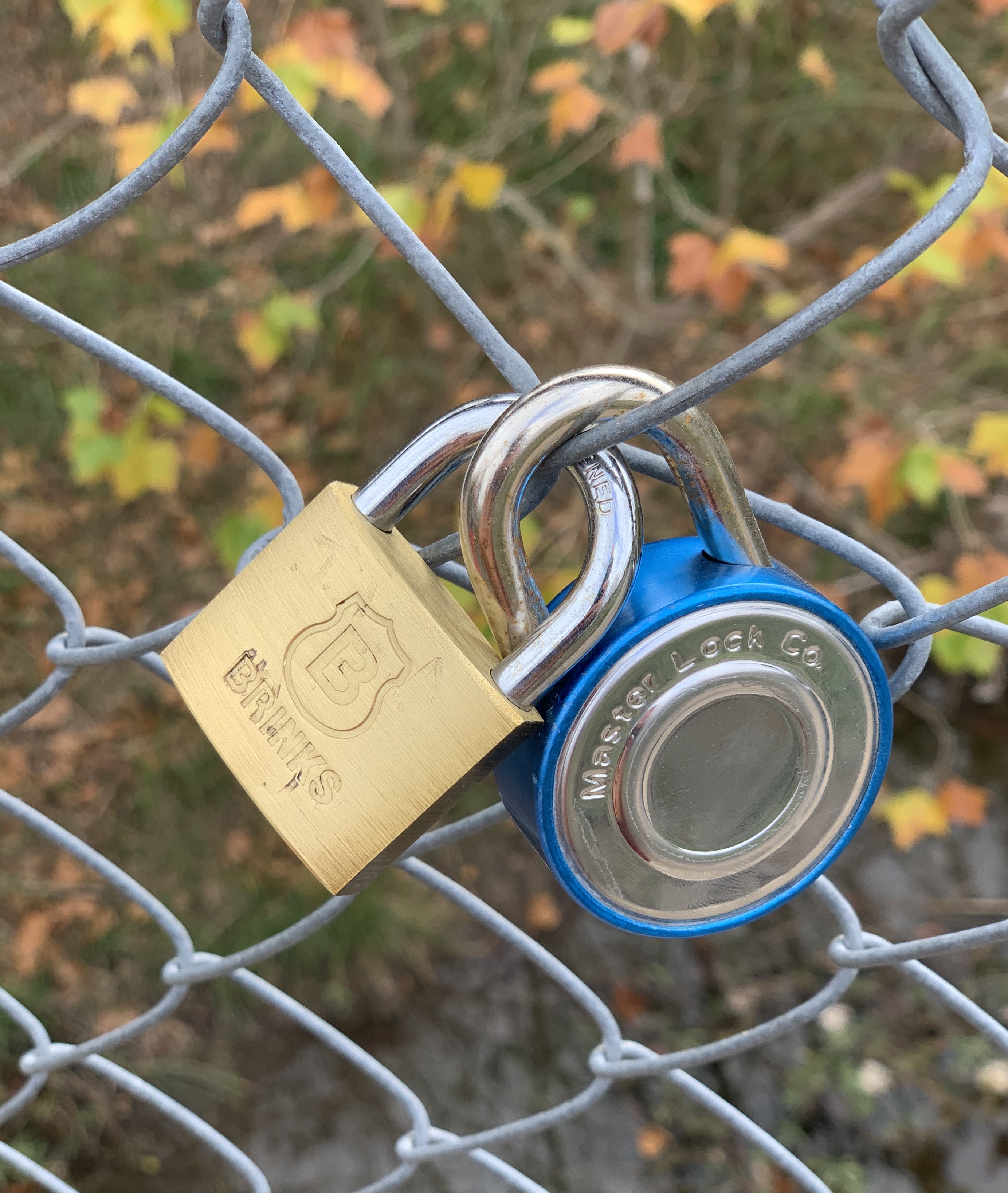
This past weekend my daughters and I traveled to Texas wine country. You can read my Slice of Life about it here. Our Airbnb was connected to downtown Fredericksburg by a narrow concrete bridge across Barons Creek. On the chain link fence were locks. Maggie said, “Like Paris!” Oblivious to the reference I took this picture.
Locks over Barons Creek, Fredericksburg, TX by Margaret Simon
I challenge you to write a small poem without using the word locks. If you haven’t tried a tricube form, read Linda Mitchell’s prompt from Ethical ELA. Like haiku, a tricube captures a single moment with few words. Three by three, three syllables in each line, three lines in each stanza, three stanzas. Share your small poems in the comments or on Facebook. Join here.
This prompt came to me in an email from Poets & Writers, The Time is Now. When my Inklings saw this poem, Mary Lee thought the prompt was surely In Gratitude by Abigail Carroll which was featured on this episode of The Slowdown. I love how the universe is like that sometimes, synchronous, speaking to each other. I join the conversation with my own ode to a single letter.
Ode to Letter M
But I love the M, mountainous- hill-valley-hill-valley signed with 3 fingers hugging a thumb, the way milk-full infant fingers grip my thumb and hold on tight.
I love the M handed down on grandmother’s tea towels, embroidered like the sign of the cross on my forehead. I baptize you in the name of Margaret.
I stand with the Roman numeral (M) confident in her thousand mornings musing on the mimicry of a single mockingbird.
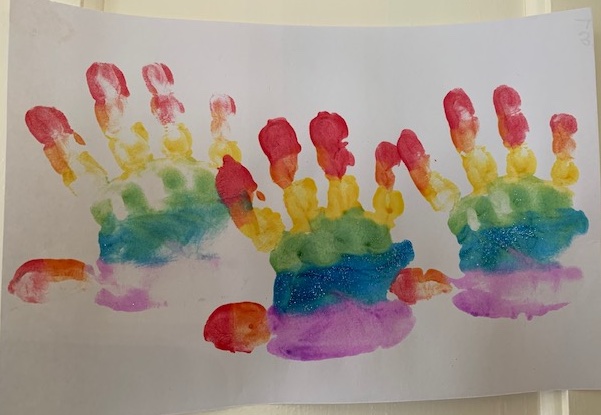
Scent of magnolia fills the room from the lit candle, like a warm May breeze that blows homemade cards, memories, and a rainbow handprint identifying me as Mamère, as someone to love.
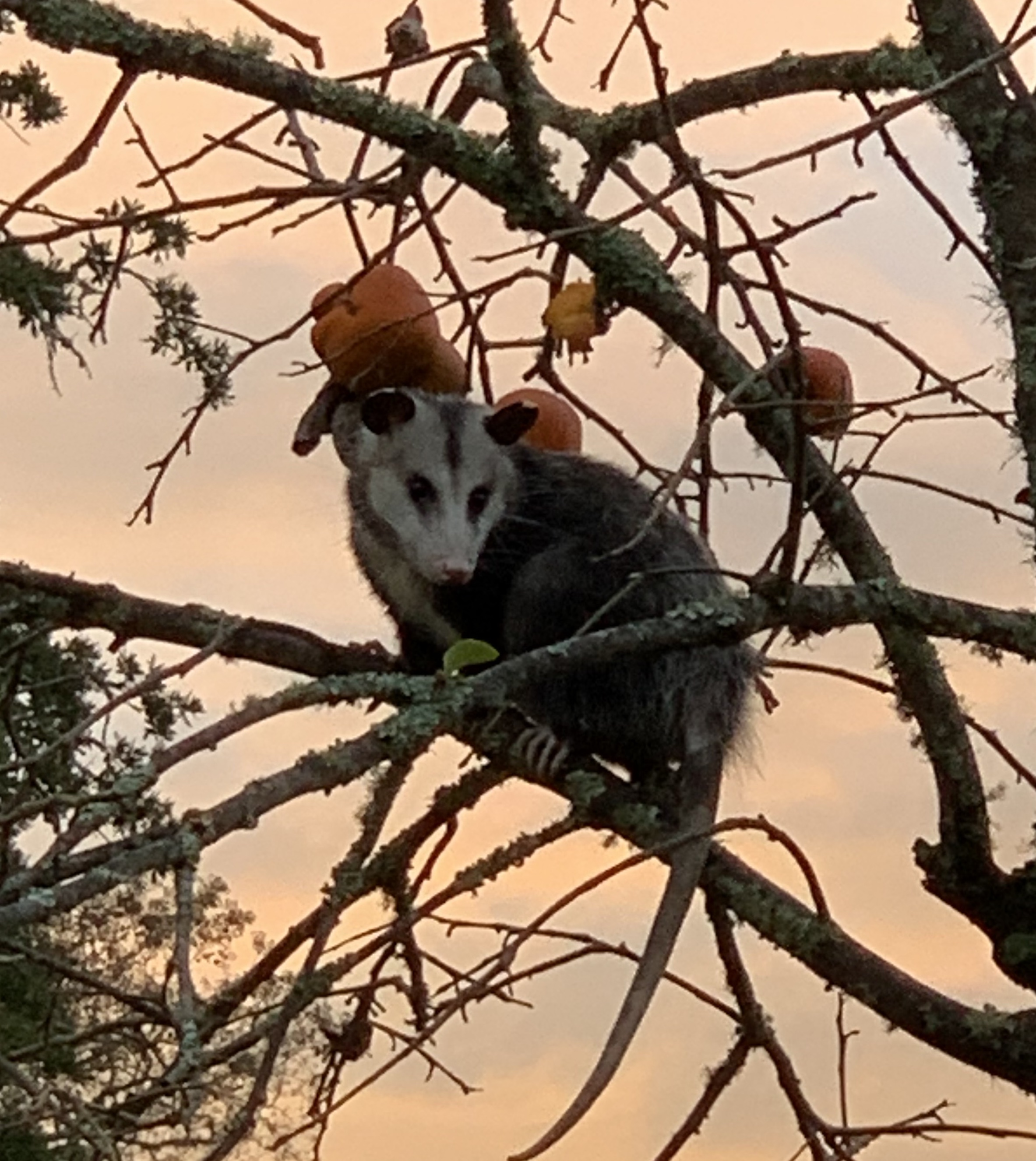
Opossum in a persimmon tree–say it three times fast. I caught this guy one morning on my walk with Charlie through the neighborhood. Does he look guilty to you? He didn’t move at all while I wandered to different perspectives to take his portrait. He was suspicious, yes, but completely still. Charlie didn’t bark. I don’t think he saw the opossum. We, opossum and I, however, locked eyes, and I will never be the same. These creatures usually freak me out, but this one…this one…was different somehow. Maybe it was the persimmon tree backdrop or his innocent guilty stare. Tempted to name him, I’ll just post his portrait here for you to muse about.
Opossum in persimmon tree, by Margaret Simon
Leave a small poem in the comments. I’ll be back to post mine. Be kind in your responses to other writers. Enjoy!
Opossum in a persimmon tree Staring right back at me Did I catch a thief or make a new friend?
Thank you to Two Writing Teachers for creating an amazing community of writers and a safe, welcoming space to write and share.
Through blogging communities like this one (Slice of Life) and Poetry Friday, I’ve met many mentors for writing. Amy Ludwig VanDerwater is one of those special teacher-poets who generously gives of herself. During the pandemic shut down, she recorded videos in Betsy, her writing camper, every day. These can be found on her YouTube channel. Last year she went back to teaching, so she didn’t blog as much. Boy, did we miss her voice in cyberspace!
But she’s back and each week on Friday, she posts a mentor poem on The Poem Farm with student-friendly (and adult-friendly) instructions for writing your own poem. This past Friday, her poem came up on my Instagram and was just right for our writing time.
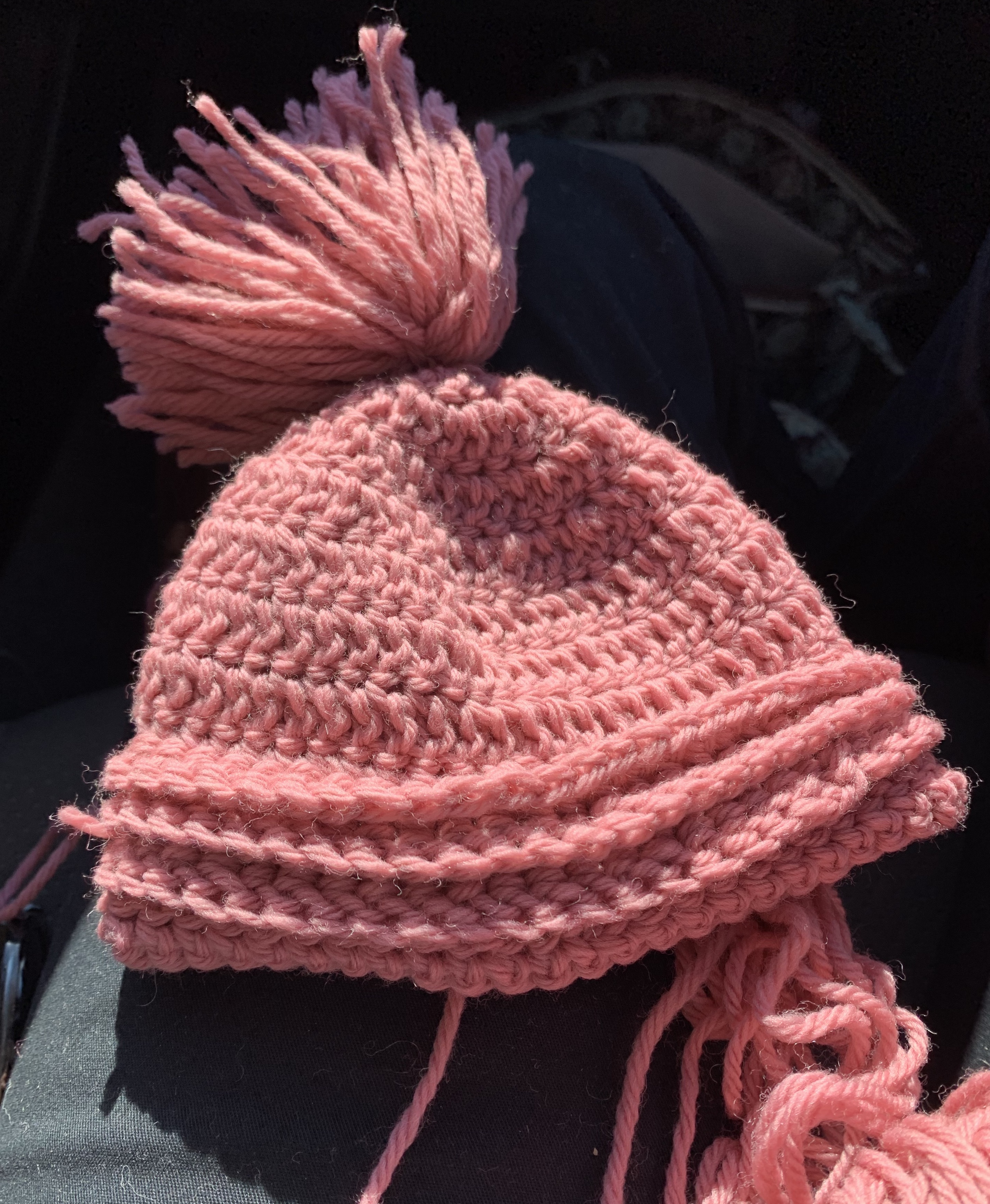
Crocheted wool hat by Margaret Simon
One of our kindergarten teachers is having a baby, so I crocheted a little hat for her new child. This was on my mind when I wrote alongside my students. I gifted the poem to Miss Heidi along with the hat.
When sheep’s wool becomes yarn becomes crochet becomes hat, a newborn baby’s head holds a sheep, yarn, hands, needle, warmth, and I wonder how prayers offered for a stranger growing inside a friend becomes a child wearing a hat passed on from sheep to hand to heart to warmth to love.
Margaret Simon
Jaden, 6th grade, has started a new trend when he writes his gratitude poem. If he makes a mistake, he turns it into a picture. I noticed his little designs and complimented him. He said, “Oh, I made those dots and stars because I messed up.” That sounds like a poem to me. And so he turned his mistakes into stars into a poem.
Recycle Poem
Old mistakes become rainbows and new designs old mistakes become new inspirations when I look at the designs will I remember the old mistakes? will I think of new ideas? shapes like stars and squares? or something new? what will the new mistakes become?
Jaden, 6th grade
One of the fourth grade teachers is raising monarchs. Katie was inspired by this and wrote her circle poem about the life cycle of a butterfly.
Life Cycle Poem
Out of a small egg comes a small, slimy, bean. A bean that squirms and grows and grows. Grows into a small chrysalis where it stays for a while until it’s ready to fly. Fly into the real world with beautiful, colored, wings and to reproduce another small egg.
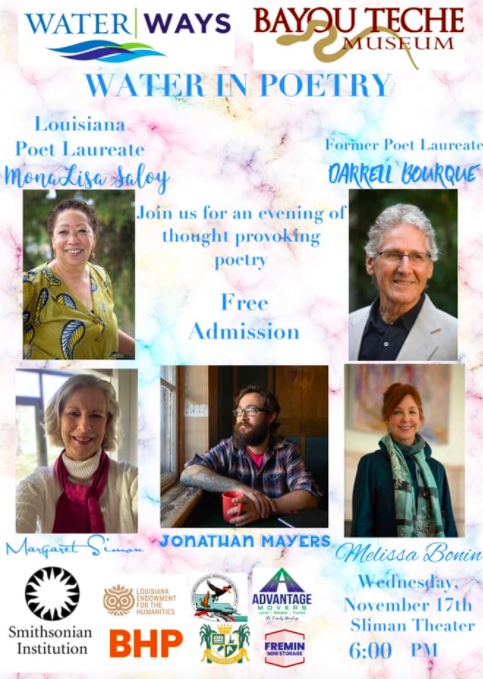
Three months ago I said, “Sure!” when my friend Stephanie asked me to participate in a poetry reading. I figured I had plenty of time. And here we are less than a week away. The poetry night is in conjunction with a Water/ Ways traveling Smithsonian exhibit. Stephanie, the assistant at the Bayou Teche Museum, wrote the grant and wanted to add arts into the presentations. I asked her, “Do you realize I write for children?”
The topic is water, so I plan to read from Bayou Song, a swimming poem from Rhymes and Rhythm, and two yet-to-be published poems from Swamp Song. There will be three poets laureate reading alongside me. I’m excited to meet the newest state poet laureate Mona Lisa Saloy. I’ve seen her present on Zoom, but this reading together will be in person.
Darrell Bourque is a mentor of mine. He was poet laureate in Louisiana from 2007-2011. And Jonathan Mayers is coming from Baton Rouge. He is the city’s poet laureate. Melissa and I have been friends since our writing group days in the 90’s. We will support each other as the two non-poets laureate.
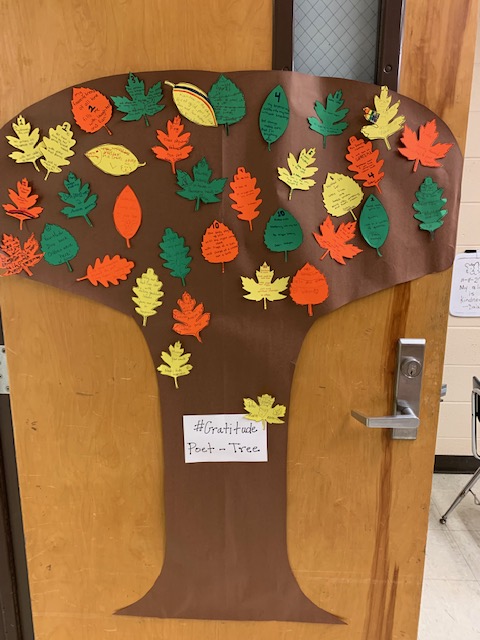
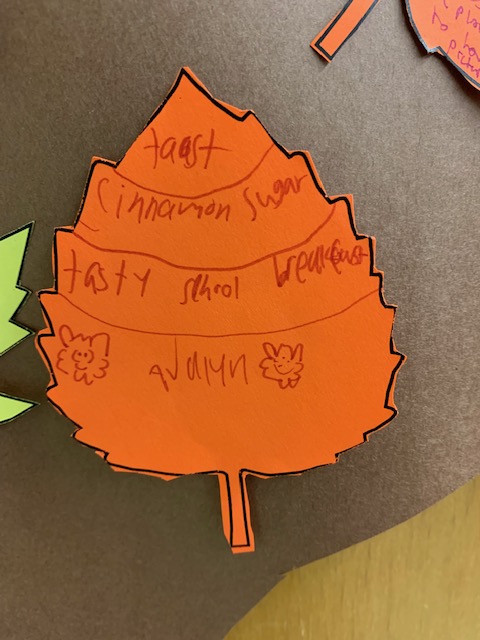
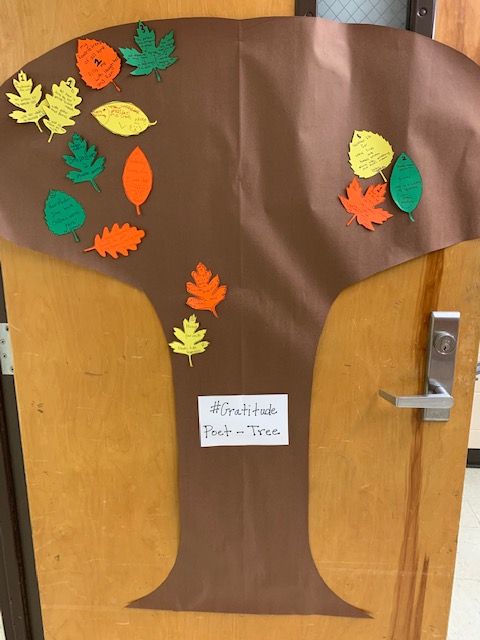
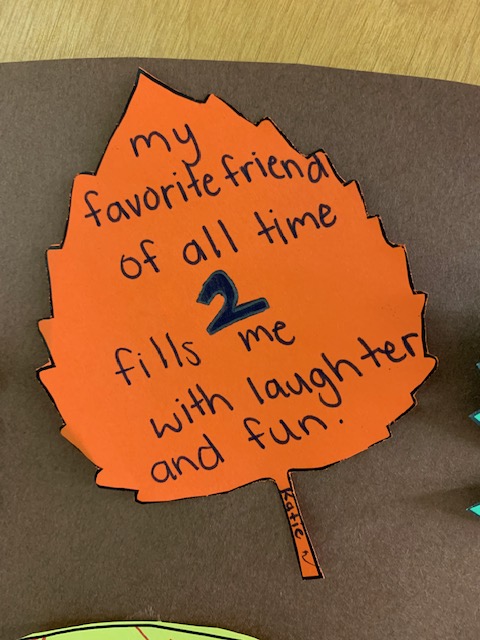
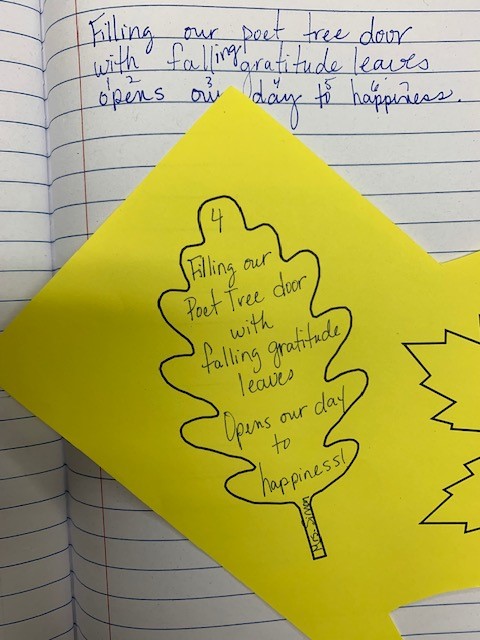
In my classroom, the gratitude “Poet-Tree” is filling up with leaves of grateful poems. Yesterday a few teachers stopped by to tell me they were reading the poems and one even said she wanted to write her own and put it on our tree. Spreading poetry love!
Thank you to Two Writing Teachers for creating an amazing community of writers and a safe, welcoming space to write and share.
On Saturday as part of the Festival of Words, I had the privilege to attend a small workshop with Aimee Nezhukumatathil. She led us through a number of writing exercises and ended with a discussion of the haibun.
From Poets.org: “Haibun combines a prose poem with a haiku. The haiku usually ends the poem as a sort of whispery and insightful postscript to the prose of the beginning of the poem. Another way of looking at the form is thinking of haibun as highly focused testimony or recollection of a journey composed of a prose poem and ending with a meaningful murmur of sorts: a haiku.”
Aimee added to this definition with two concepts: Aware, a Japanese concept similar to natsukashisa, a type of nostalgia with a fondness for what is gone but also slight optimism for what’s ahead and a sense of calm because this is the natural course of things. She also Nezhukumatathiled the form with the addition of scent. She spoke about scent as a way to activate the reader’s mind to a memory.
On Monday, I went to a former school to screen a student for gifted. They put me in my old room to do the testing and while the child took her test, I wrote this poem.
I enter the spacious classroom, and you are not here. So many hard days in masks and social distance defined our relationship then. Your desk is gone. The smell of pencil shavings is sharp mixed with musty-mold of an old school. Today I am testing a girl like you, bright and edgy with a little swagger to her walk. But she isn’t you. No one can be you but you. This chair, the small blue square that lost its cushion years ago, holds me again. I trip over its wobbly wheels wishing you were here to laugh at me. Where are you now? In another classroom, another school, same masked face, same suspicious eyes. I want to know if you are OK. I only ever wanted you to be OK.
Students come in Twist my heart into a knot And leave it longing
The Inklings challenge this month comes from Linda Mitchell. She charged us with writing “a poem that includes the idea of percentage or percent. Percentages are all around us in recipes, prices, assessments, statistics. Include the idea of percentage in your poem in some way.”
I put off this challenge for a while until a muse slapped me in the face from Brain Pickings (which is now called The Marginalian). This article is beautifully written: Every Loss Reveals What We Are Made Of by Maria Popova. Incorporating inspiration from Maria Popova and a quote from Maria Mitchell, I crafted a poem container of loss, aging, and rebirth.
The way we stand at the mirror and see strands of hair overnight lose their color, devoid of fresh light gone gray in the way a leaf loses the green of chlorophyll.
We lose our vigor.
The way I collapse on the sofa after the grandchildren leave– how it sags from years of holding us.
The way, like branches, we reach forth and strain every nerve, but we seize only a bit of the curtain that hides the infinite from us.*
How 96 percent of the universe is dark matter invisible to us, how can we know what tomorrow will bring?
The way we shed more color, fall to the ground, crush into mulch, then hatch from darkness and find light find light find light.
*Maria Mitchell
Margaret Simon, draft
Below are links to my fellow Inklings and their responses to the % challenge:
Spiritual Journey First Thursday Posts are being gathered today by Denise Krebs at Dare to Care.
Gratitude should be a daily practice, and I believe, for the most part, it is, but the month of November tucked gently between the wildness of Halloween and the frenzy of Christmas gives us an opportunity to find grace and gratitude.
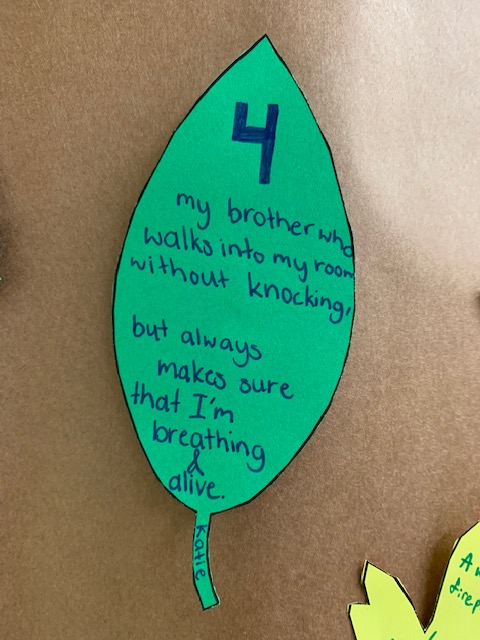
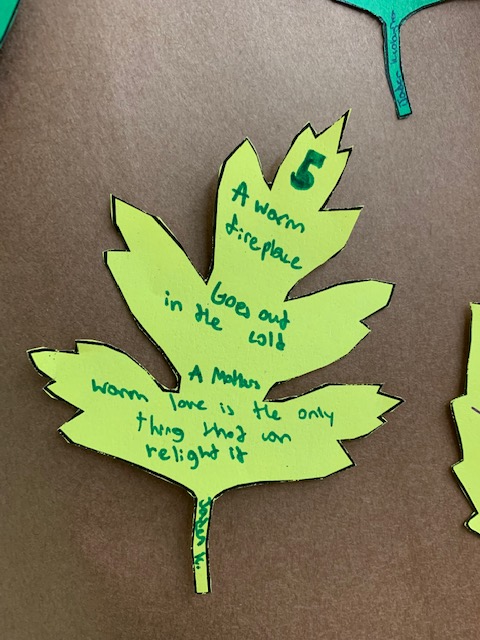
On Monday, I decided to start a monthlong project of gratitude poems with my students. When they walk in and open their notebooks, I ask, “What are you grateful for today? What is making you happy right now?” We have a quick discussion and then write small poems. I’ve printed leaves on colored paper. We write our #gratitude on a leaf, cut it out, and add it to the “Poet-Tree” on the classroom door.
Gratitude Poet Tree
I’m posting my poems on social media with #gratitude. I’m drawn to the small poem form hay(na)ku that Denise Krebs introduced me to. Here are the #haynaku that I’ve posted so far this month.
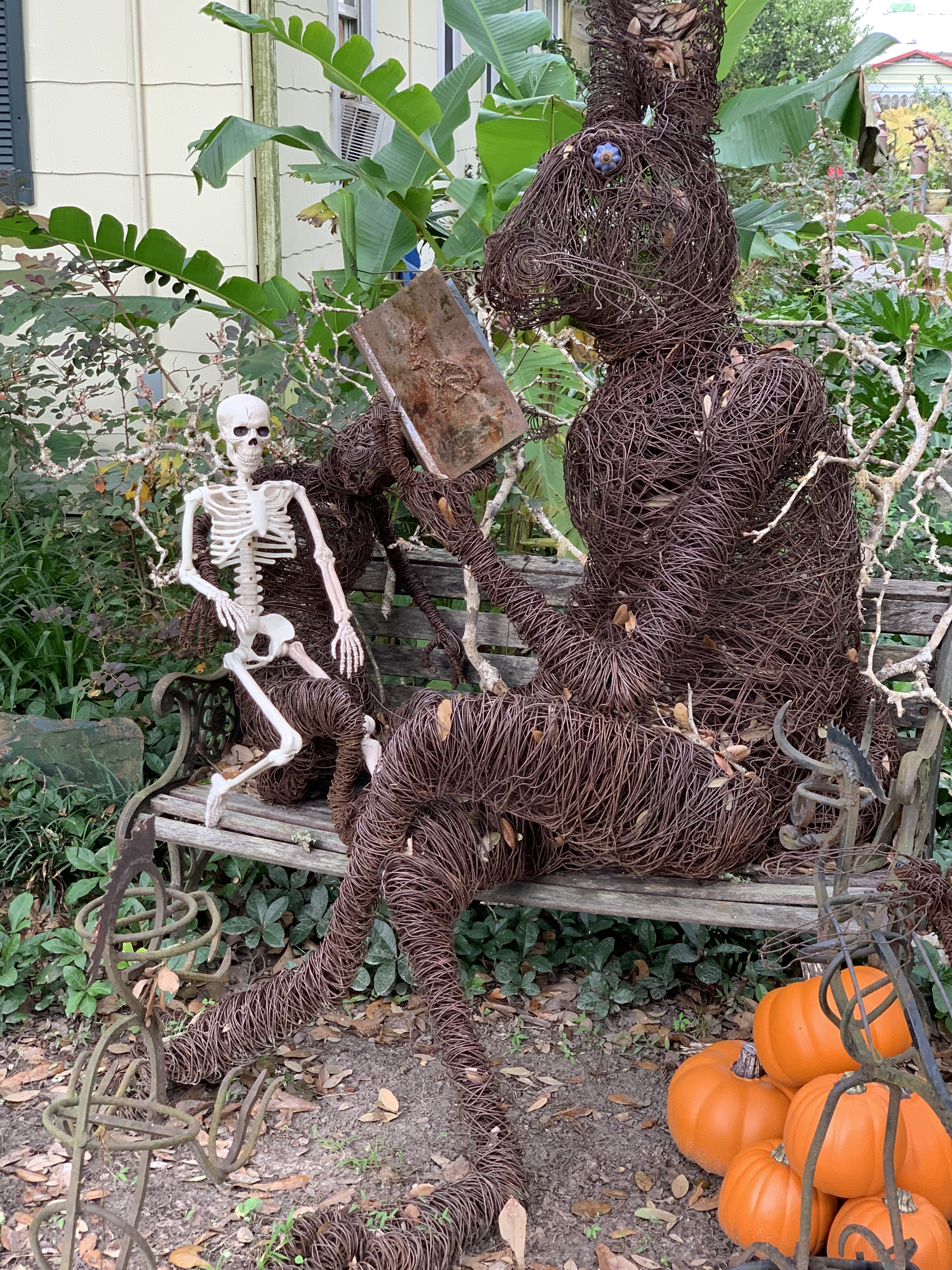
Yesterday I wrote about taking a walk with my two-year-old grandsons through our neighborhood. One of my neighbors collects folk art. Their collection has been shown in museums and is quite extensive. Their yard is no exception. As soon as Leo could walk on his own, he enjoyed meandering into this yard to see all the sculptures. One of his favorites is the gigantic bunny sitting on a bench reading. It is made of thousands of wires. And of course, around Halloween, he has a skeleton companion.
Studious Wire Rabbit, collection of Becky and Wyatt Collins. photo by Margaret Simon
I may twitch I may rust Up on my bench My story you can trust
Margaret Simon, draft
In keeping with the tradition of 15 words or Less, I have written a 15 word ditty-on-the-spot. Write your own quick poem in the comments and respond to other writers with kindness. You can also participate in our Facebook group.
Margaret Simon lives on the Bayou Teche in New Iberia, Louisiana. She is a retired elementary gifted teacher who writes poetry and children's books. Welcome to a space of peace, poetry, and personal reflection. Walk in kindness.