Feeds:
Posts
Comments
Find more celebration posts at Ruth's blog.

Find more celebration posts at Ruth’s blog.
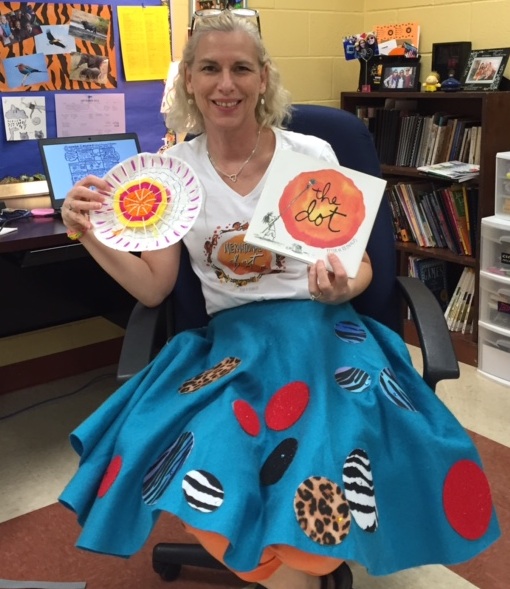
 

The Queen of Dot Day!

The Queen of Dot Day!


Thursday, September 15th was Dot Day.  My students love Dot Day.  Since I teach them year after year, they look forward to it from the first day of school.  International Dot Day was inspired by teacher Terry Shay in 2009.  The day is designed around The Dot by Peter H. Reynolds.  In The Dot, Vashti doesn’t feel like she can do art in art class.  She turns away from her paper.  But through the gentle guidance of her teacher, she discovers within herself a budding dot artist.  In the end, she passes on this confidence to another child who says he can’t draw a straight line with a ruler.  The Dot shows students in a very accessible way that they can be creative.

This summer I was privileged to join a Google Hangout with Trevor Bryan.  Trevor is writing a book around the Art of Comprehension.  He uses The Dot to show how students can access text and images through different lenses.  My students responded well to the Art of Comprehension, sharing eagerly about what they saw and read about Vashti’s changing mood.  One of my students, a 2nd grader, said Vashti had an aura.  She was referring to the changing color of the dot that surrounds Vashti on each page.

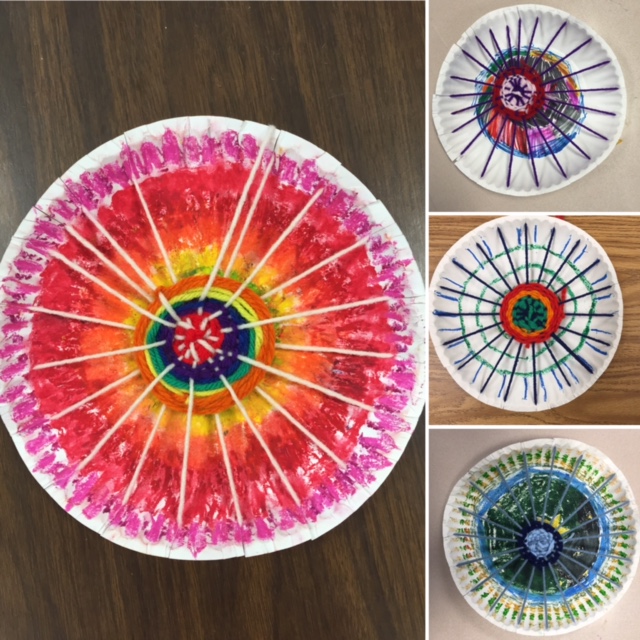
After we read and discussed the book, I invited my students to make a dot using this plan I found in Scholastic Teacher Magazine.  The art teacher let us use her oil pastels.  First we decorated the plate.  Then we made 19 evenly spaced slits around the rim of the plate. (I used the bumps on the edges to help the kids know where to make the cuts, every third bump.) Then we threaded yarn around the plate to create a base for weaving.  Most of my students had never weaved yarn before.  They loved this new activity.
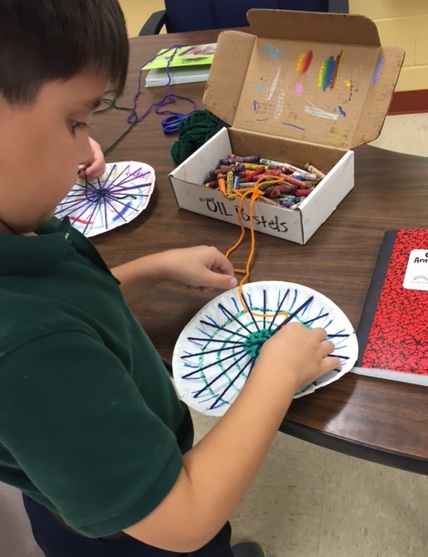
 

Weaving is a new activity for my students.

Weaving is a new activity for my students.

I wore my Dot Day skirt made especially for me by my friend Cathy and the official Dot Day t-shirt.  One student dubbed me the Queen of Dot Day.  And another said, “Mrs. Simon, thank you for giving us Dot Day!”

A joyful celebration of creativity, reading, and just being you!
 

Dots!

Dots!

Poetry Friday round-up is with Michelle at Today's Little Ditty

Poetry Friday round-up is with Michelle at Today’s Little Ditty

Last week, Michelle welcomed Laura Shovan to her blog with a workshop idea around Fractured Fairy Tales.

I have ordered the two books she suggested, Sleeping Ugly by Jane Yolen and Mirror, Mirror by Marilyn Singer.

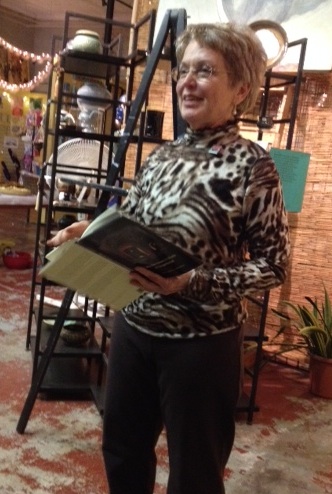
Ava reading at A&E Gallery, November, 2013

Ava reading at A&E Gallery, November, 2013

In the meantime, I was reminded of a book of poetry I have by Ava Leavell Haymon, former poet laureate of Louisiana, Why the House is Made of Gingerbread. This book is really for adult readers, but a few years ago Lemony Snicket published a collection of poems for adults that children would like, available here on the Poetry Foundation. He selected Ava’s The Witch has Told You a Story for this collection.

You are food.
You are here for me
to eat. Fatten up,
and I will like you better.

Your brother will be first,
you must wait your turn.
Feed him yourself, you will
learn to do it. You will take him

eggs with yellow sauce, muffins
torn apart and leaking butter, fried meats
late in the morning, and always sweets
in a sticky parade from the kitchen.

His vigilance, an ice pick of   hunger
pricking his insides, will melt
in the unctuous cream fillings.
He will forget. He will thank you

for it. His little finger stuck every day
through cracks in the bars
will grow sleek and round,
his hollow face swell

like the moon. He will stop dreaming
about fear in the woods without food.
He will lean toward the maw
of   the oven as it opens

every afternoon, sighing
better and better smells.
—Ava Leavell Haymon

My lesson plan around fractured fairy tale poems will include this poem about Hansel and Gretel.

Jane Yolen challenges us this month to write a septercet, a form she invented.  Each line of the 3 lined stanza has 7 syllables. I will ask my students to write a septercet about a favorite fairy tale, fractured or not.  So I’m giving it a try myself.

Fairy White

When she wanders in the woods,
soft white reflecting diamonds,
her fair skin glows like snowflakes.

Apple laced in evil spells
tastes of beauty golden red
slips her slowly into sleep.

Finally she rests from all
her troubles. Let her be free.
Love will find a peaceful soul.

–Margaret Simon

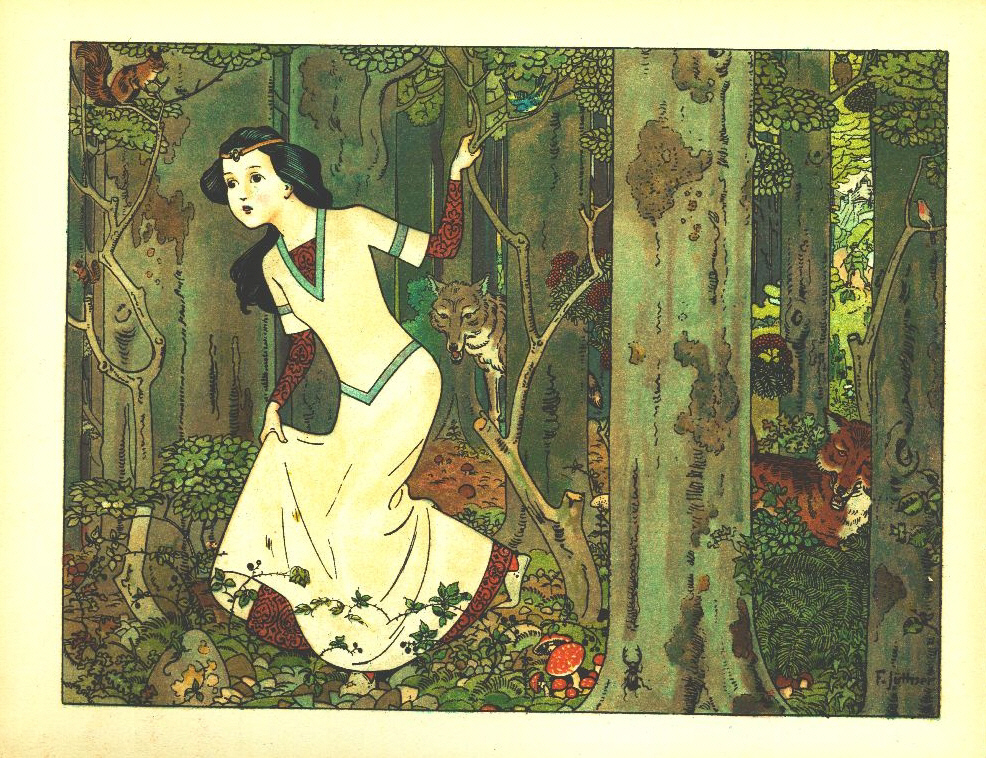
snow-white-vintage


Please use this button on your site for DigiLit Sunday posts

Please use this button on your site for DigiLit Sunday posts

I consider myself a reflective person. I have participated in many professional development opportunities that are built upon self-reflection, the National Writing Project, National Boards for Professional Teaching Standards, and NCTE Donald Graves Award for teaching writing. Each of these organizations or awards requires self-reflection around the teaching of literacy.

Voxer is another way that I am a reflective teacher. I am involved in three chats at the moment, and each one encourages me to reflect on myself as a writer, a teacher, and a person.

This week Donna Donner asked a question on the Good to Great Voxer chat about self-assessment, and I began to question my ability to pass on this reflective mindset to my students.

Dr. Mary Howard (@DrMaryHoward) in her response to Donna had some great points about self-reflection of students.

  • Ask students “What did you learn about yourself as a reader, writer, listener, researcher…?”
  • Students should reflect outwardly: with a teacher in conferring or with another student in turn and talk.
  • Focus must remain on the learner.
  • Not a task, but a mindset.
  • The teacher must be self-reflective to help students be self-reflective.

I want to pay more attention to this thing I do naturally.  How did I become a reflective teacher?  What steps can I offer my students toward more active self-reflection?  I believe, like Mary, that it needs to be more than a task (a checklist).  It must become part of the fabric of being a life-long learner.  Self-reflection done well has the potential to change the way students think about themselves and about their responsibility to their own learning.


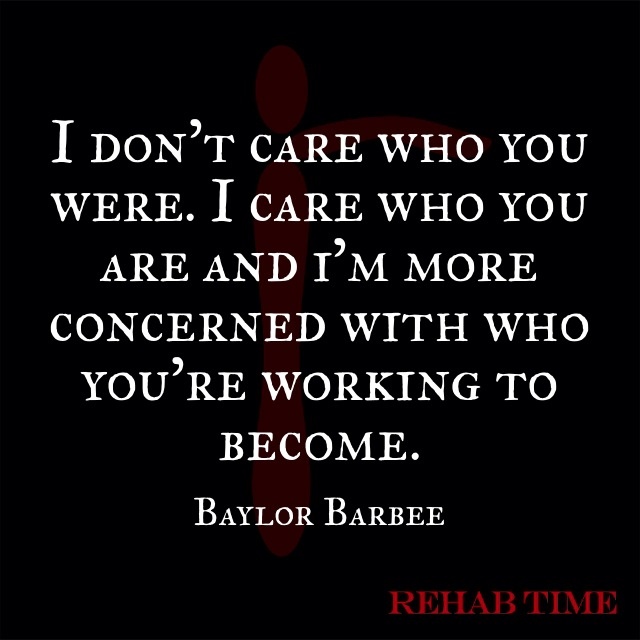
58429-self-reflection-quotes

Please join the conversation and leave your link below.


Celebrating Africa!

Find more celebration posts at Ruth's blog.

Find more celebration posts at Ruth’s blog.

Maasai-Jacob

Maasai-Jacob

maasai-boys-in-white-face-paint

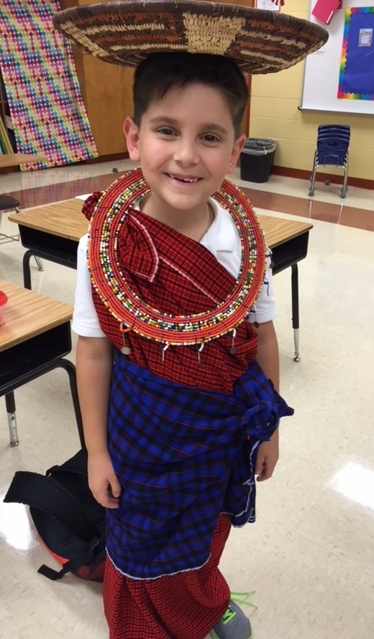
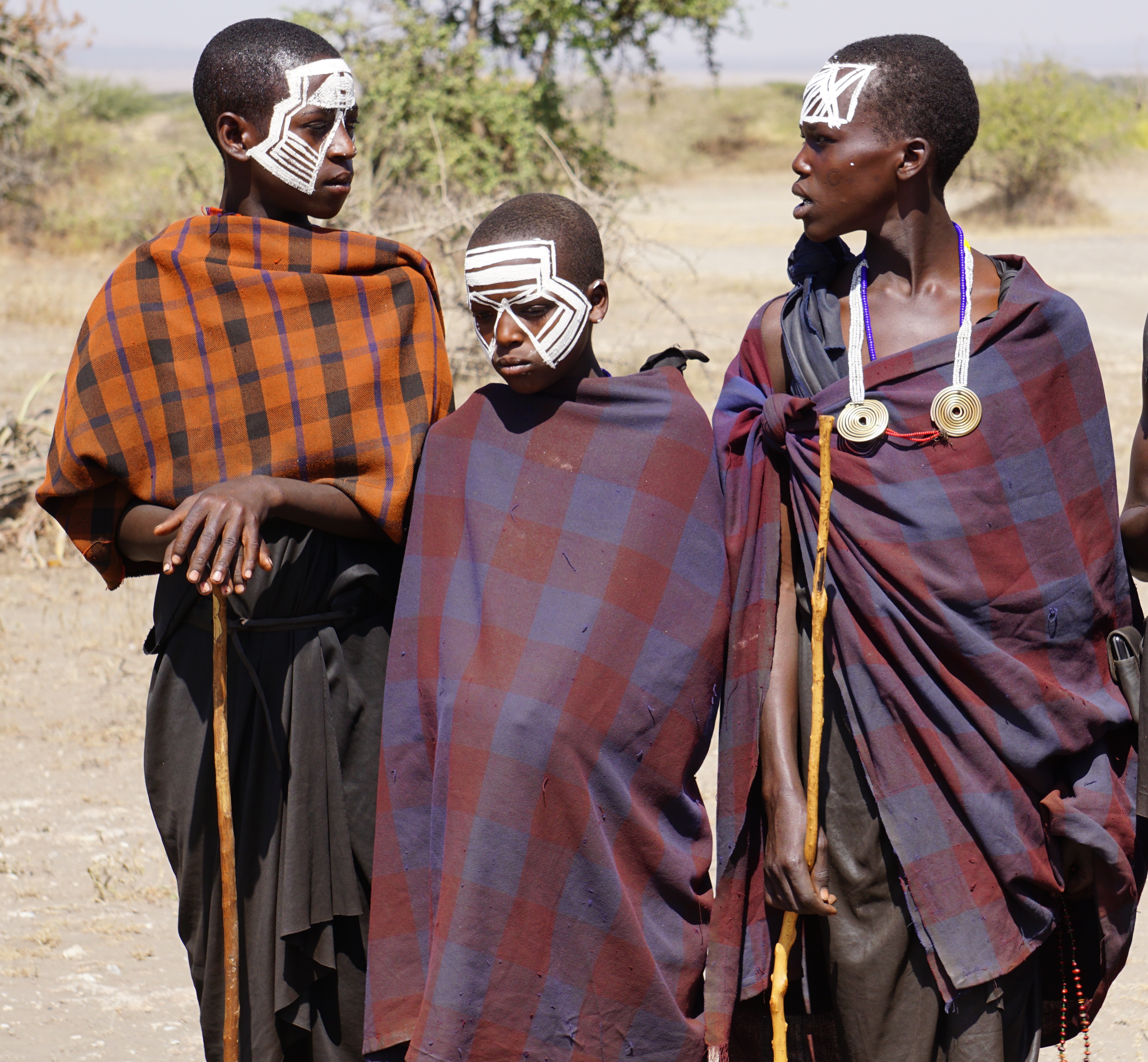
Jacob lives far away from these Maasai boys, but Minga (my mother-in-law) and I tried to give my students a small understanding of the place we visited this summer, Tanzania, Africa.

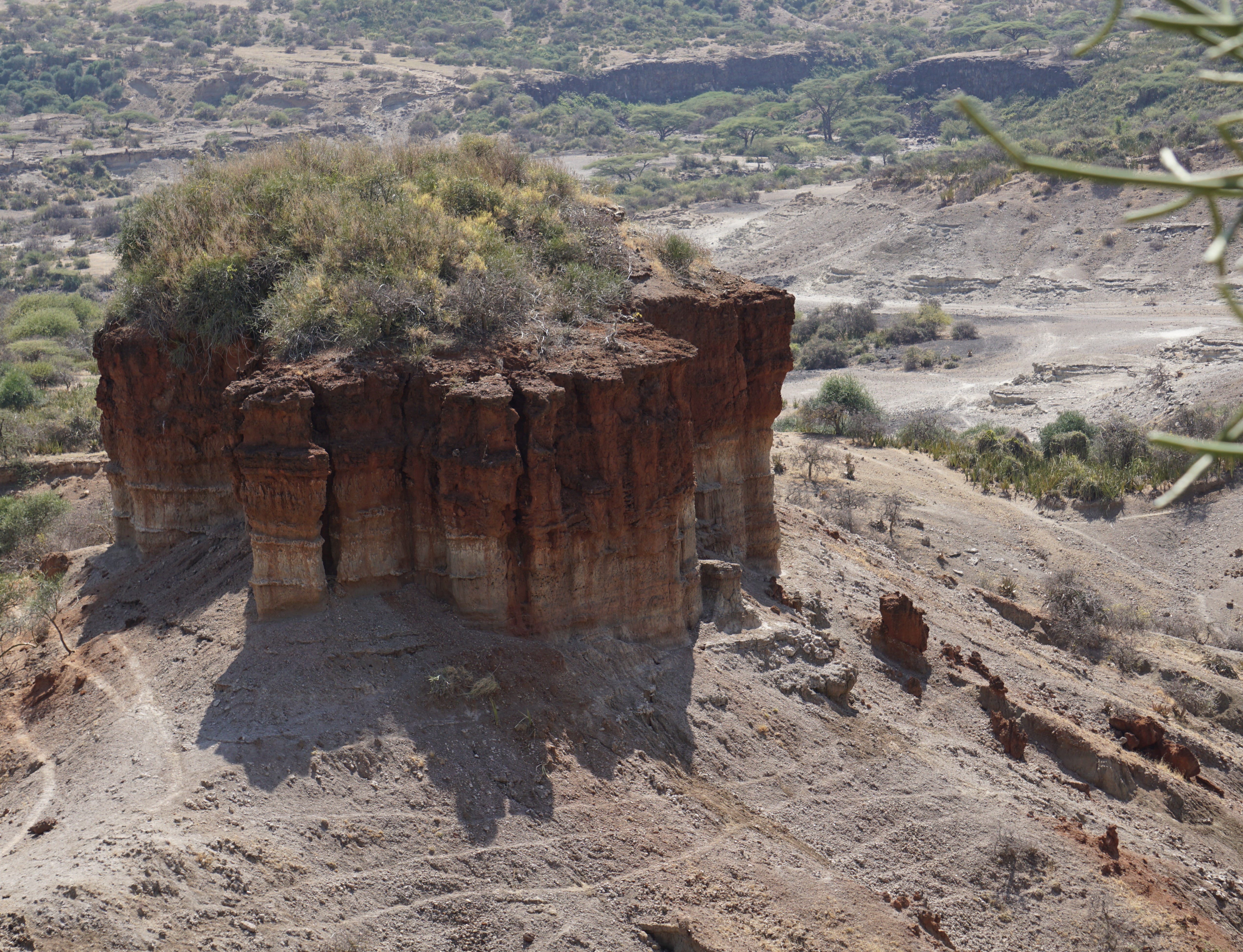
My students anticipated Minga’s visit for weeks. Over the long Labor Day weekend, I compiled a sampling of our 1000 photos into a Google slide show. I also included videos. I brought in watermelon and cucumber because, in reality, we ate fresh fruits and vegetables every day in Tanzania. We dressed the kids like Maasai. Minga talked about the discovery at Olduvai Gorge in the Ngorongoro crater of a new species of man Homo Habilis. The incredible long expanse of time is difficult to conceptualize, but she tried with a long rope. My sixth graders are studying this time period in their Social Studies class, a nice coincidence.

Mound at Oldupai Gorge where we can visibly see the layers of time.

Mound at Oldupai Gorge where we can visibly see the layers of time.

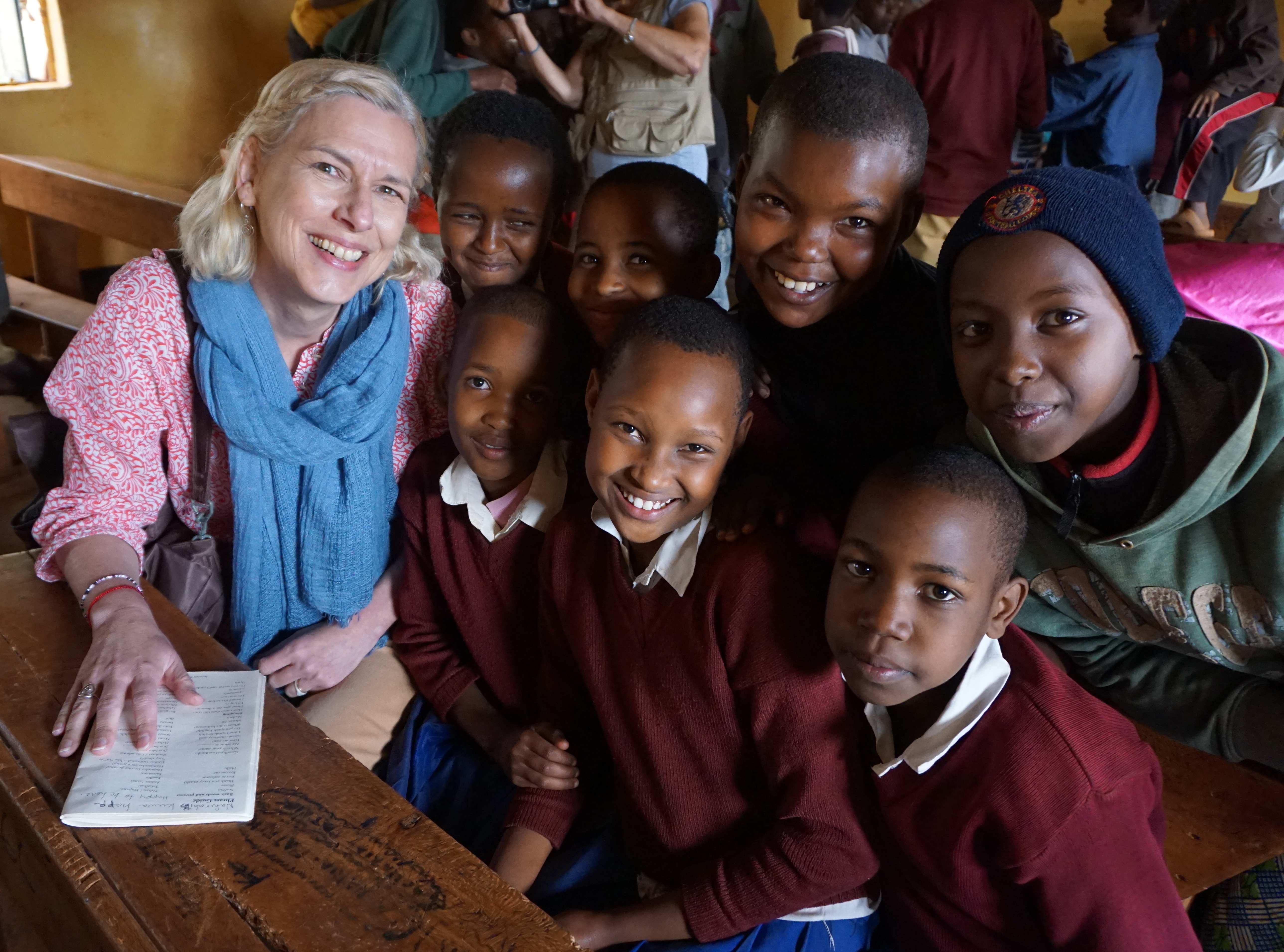
I had a surprise for my students…pen pals. When we visited Endoro School in Karatu, our guide suggested that I get the names of the children who surrounded me. I showed this picture and they proceeded to “claim” pen pals.

Visiting with school girls

Visiting with school girls

My students’ pen pal letters are as varied as they are. Erin sat at the computer and translated her “high-level” words into Kiswahili. At my suggestion, she made a key at the bottom of the page to help teach her pen pal the words in English.

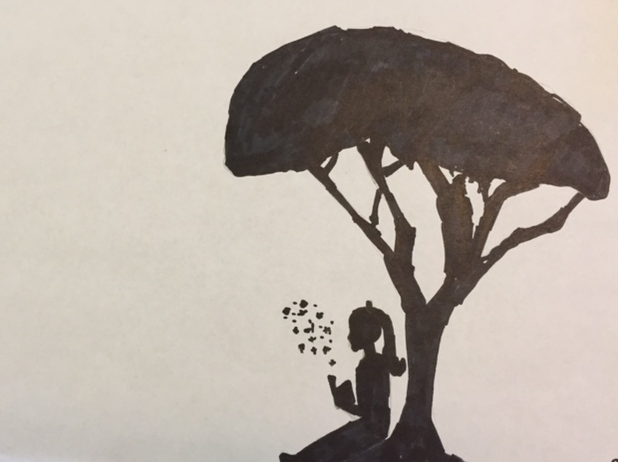
Emily wanted to share her art talent and decided to do a silhouette drawing of an acacia tree with a girl reading.

Girl reading under acacia tree by Emily, 6th grade.

Girl reading under acacia tree by Emily, 6th grade.

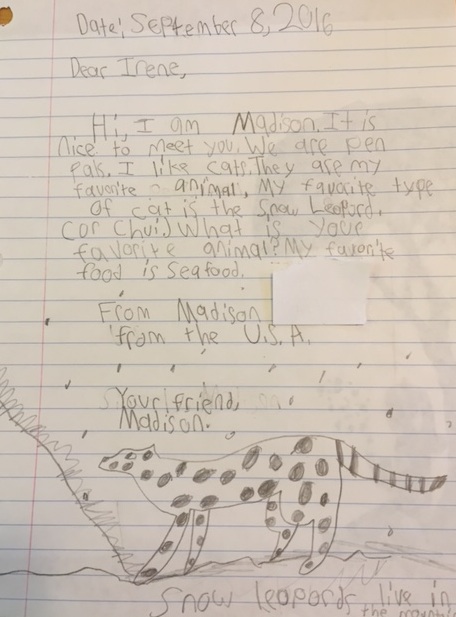
Here is Madison’s letter that is just so Madison!

madison-pen-pal

Poetry Friday round-up is with Amy at The Poem Farm.

Poetry Friday round-up is with Amy at The Poem Farm.

naomi-shihab-nyequotes

Naomi Shihab Nye visited our classroom this week.  We watched her video of Valentine for Ernest Mann.  Showing the video made it feel like she was right there with us having a conversation.  Then we read the poem again and again, talking about it at length.  This poem can start a classroom controversy over whether or not skunks are really beautiful.

I asked my students to re-read the poem again and find some words that speak to them and try out their own poem.  I shared my poem. (posted here)

Sometimes poetry magic happens.  It happened for Lani.  She sat quietly with her notebook for a while and came to me to share this poem. She was proud that she wrote the poem from the point of view of the poem.  I think she caught the golden fish on the first try.


You can try to look for me
and I won’t be there
I won’t be in a drawer or
in your pocket. I won’t be
on a shiny plate ready to
share. Since you can’t order
me like you order a
Big Mac at McDonalds
You will have to search for
me like archeologists search
for bones. It will take a
while to find me and
it won’t be easy if
I’m in your hair or in
a skunk’s eyes. You
just have to look. I can
be anywhere from the
outside to inside your home.
The most likely place that
I will be is in the back
of your mind, ready to
happen and be shared.

–Lani, 5th grade (after Naomi Shihab Nye’s Valentine for Ernest Mann)

Slice of Cleaning Out

Join the Two Writing Teachers blog for the Slice of Life Challenge.

Join the Two Writing Teachers blog for the Slice of Life Challenge.

This long Labor Day weekend was just the time I needed to clean out.  Usually it’s a summer chore, but this summer I traveled quite a bit, so I put it off.  In a month, my daughter is getting married.  We are hosting the rehearsal dinner at our house.  I want things to look nice.

Obviously, no one will be looking in my drawers, but I’ll know they are neat and organized.

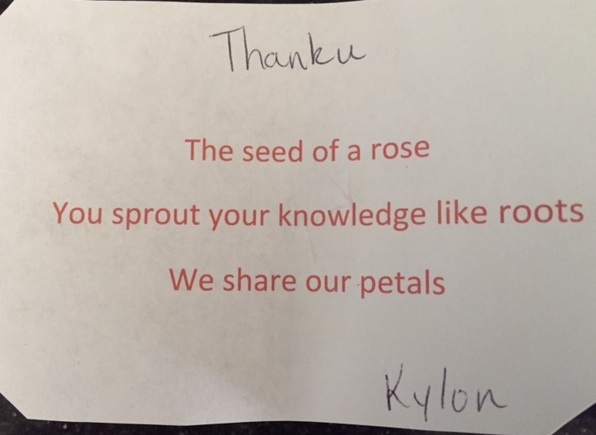
Cleaning out also leads to memories.  I found this Thanku poem written by Kylon when he was in third grade.  I think he’s in 8th grade this year.

thanku

I was thinking about the little gems and memories today when I wrote poetry with my students.  We were discussing Naomi Shihab Nye’s poem Valentine for Ernest Mann and how poems can hide.

Note: Kylon wrote this poem, but Kieran was the boy who cried on the last day of school.  Both were gifts in their own way.


Poems Hide

Sometimes when you aren’t even looking, you find them,
tucked into the junk drawer, sticking out,
saying, “Here I am; Read me aloud!”

That’s where I found this poem.
I was looking for something else,
a roll of tape maybe,
but what I found was this gift
from that last day of school
when you cried into your mother’s lap
because you would never be in third grade again
with me,
with Mr. Pants, the class guinea pig,
or with that desk
that had become your sacred space.

Things change, Kieran,
but memories live on,
Like poems
in the junk drawer.

–Margaret Simon


Find more celebration posts at Ruth's blog.

Find more celebration posts at Ruth’s blog.

I missed the Saturday Celebration post, so I am double-dipping today.

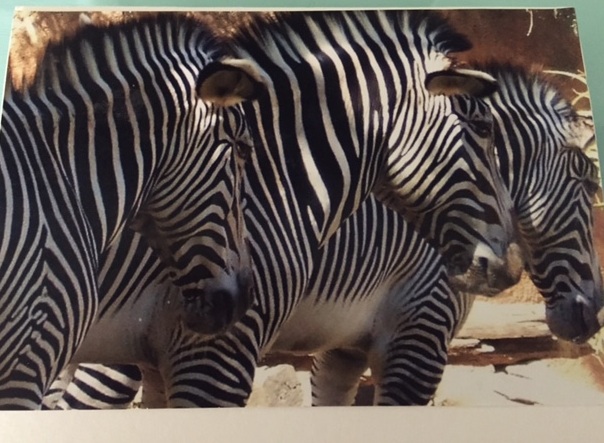
I want to celebrate good old-fashioned snail mail.  This week I received the invitation to my daughter’s wedding (coming up very soon on Oct. 1st), a #clmooc postcard from Karen Fasimpaur (she tells me she lived and taught in Tanzania?!), and a poetry exchange card from Joy Acey (make that 2 cards from Joy: the heart and the zebras.)

I celebrate the connections I have made through this blogging adventure that encourages me daily.

snail mailzebra card


Today is #DigiLitSunday.  I tweeted out the topic of #motivation.  This year is my tenth year teaching young gifted students.  I have redefined my role of teacher from someone who imparts knowledge to someone who motivates learning.  My students are way smarter than I am when it comes to a measurement of intelligence.  I am ineffective if I stand before them and tell them what to do.  It just doesn’t work.

I have learned the art of motivation.  And technology has been right beside me.  I love Animoto for its immediate access to cool designs and background music for video production.  I turned to Animoto this week to motivate my students to explore Wonders on Wonderopolis and to practice creating a thesis statement.

My students were motivated by choice as well.  Many of them find interest areas through their reading.  I Survived has become a favorite series.  Andrew wanted to know more about tsunamis after reading I Survived the Japanese Tsunami.  He watched videos, read a Wonderopolis post, and then branched out to search further questions.

https://animoto.com/play/n3d0IBO9cYPBika3Qvpsbw


Kaiden was inspired to learn about club foot from the book The War that Saved my Life.  

https://animoto.com/play/Zg4LoPd9OK0ic8DUZw003w

Some students were motivated by watching each other’s videos.  Jacob decided to research earthquakes after seeing Andrew’s video about tsunamis.  (Andrew and Jacob attend different schools, but they keep in touch on our Kidblog site.)

https://animoto.com/play/1HeO0cLG9UzW2zyqIqT0Ow


Motivation can come from me, the teacher, from other students, or from books, and even from conversations.  I went to Tanzania, Africa this summer and was chatting with Lynzee about the giraffes I saw.  She wanted to know why giraffes have such long necks. Wonderopolis answered her question.  Here is her video.

https://animoto.com/play/tDObOEEkWmOjbf1162Gzew

Obviously, I had a hard time choosing which video to share with you.  Another cool aspect of teaching with choice and technology is the variety of projects that are produced.  My students can now learn from each other as we post each video on our Kidblog site.

Please share your motivating #DigiLitSunday posts here.

August

Poetry Friday round-up  is with Penny. Yee Haw!

Poetry Friday round-up is with Penny. Yee Haw!

I am glad that August is over.  It was a rough month down here in South Louisiana, but the hummingbirds have come.  There is hope for fall, even though there is a hurricane in the Gulf and temperatures hit 95 degrees today.

Photo and poem by Margaret Simon

Photo and poem by Margaret Simon


Join the Two Writing Teachers blog for the Slice of Life Challenge.

Join the Two Writing Teachers blog for the Slice of Life Challenge.

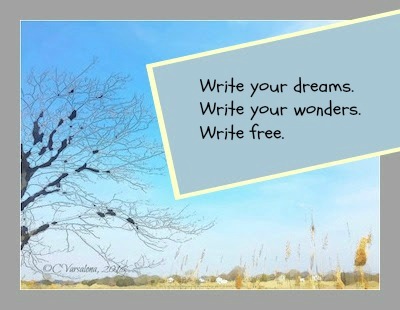
Write free

Thanks to Carol Varsalona for this image to add my words to.

Every time I walk by the kitchen window, I look toward the hummingbird feeder. I put it out after the flood two weeks ago. The rain had stopped.  A hummingbird flew to the window and hovered looking right at me, as if he was saying, “Where’s the sweet stuff?” It didn’t take me long to find the feeder and a storage of food in the cabinet, but he did’t return…for days. I wondered if he ever would.

He’s there now, and almost every time I look. I’ve come to depend on his appearance. Like he’s the rainbow after the storm. He’s the sign we all need that life goes on.


Photo by Margaret Simon

Last week I read aloud the essay “Joyas Voladoras” by Brian Doyle to a group of 6th graders. This is the first essay in Katherine Bomer’s book, The Journey is Everything: Teaching Essays that Students Want to Write for People who Want to Read Them.

In his essay, Brian Doyle crushes our own hearts by writing about the hearts of hummingbirds.

(Hummingbird) hearts are stripped to the skin for the war against gravity and inertia, the mad search for food, the insane idea of flight. The price of their ambition is a life closer to death; they suffer more heart attacks and aneurysms and ruptures than any other living creature. It’s expensive to fly. You burn out. You fry the machine. You melt the engine.

My students audibly gasped. Their reaction was pure emotion.

Katherine’s book leads us all on a quest for that reaction from our readers.

Watching my hummingbird, (Yes, he’s mine. I’ve named him Chuey), I realize that the smallest of beings, those minuscule moments, can bring about an emotional reaction.

However, to be open to these moments, I must be willing to write…every day.

Monday, I asked my students to start the class time sitting with their notebooks for 10 minutes and just writing. This freedom to express whatever was happening in their heads excited my young writers. There wasn’t a sound except the clicking of pencils for 10 minutes. Then they couldn’t wait to share!

  • Jacob wrote about a song he couldn’t get out of his head.
  • Noah wrote about imagining that everything was made of candy.
  • Madison wrote about the fire drill earlier in the school day.

To grow my young students into writers, I need to help them view their world as something worth writing about.  To show them, I join them.  I write freely and share the dribble that comes out on the page.  I talk to them about how we must weed through the dribble to find some good stuff.  To find those small moments worth savoring and sharing.

If you missed it, here’s the link to the storify for the #DigiLitSunday Twitter chat with Katherine Bomer.

Please use this button on your site for DigiLit Sunday posts

Please use this button on your site for DigiLit Sunday posts


Months ago, some friends in my virtual professional learning network (PLN) decided to read Katherine Bomer’s new book from Heinemann, The Journey is Everything: Teaching Essays that Students Want to Write for People Who Want to Read Them.  We read and wrote responses to our reading in Google Docs to share our ideas, a virtual book club.

I decided to contact Katherine Bomer about doing a Twitter chat later in the summer.  She agreed with the disclaimer that she had never done a Twitter chat.  I explained that I had never curated one.

So the journey of discovery began.  Reading the book was the easy part.  Katherine’s voice in her writing is like she is sitting next to you having a conversation.  Yet at the same time, she is full of wisdom about essays, about writing, and about teaching.  There is so much goodness in this book, it was difficult to choose quotes to use in the Twitter chat.

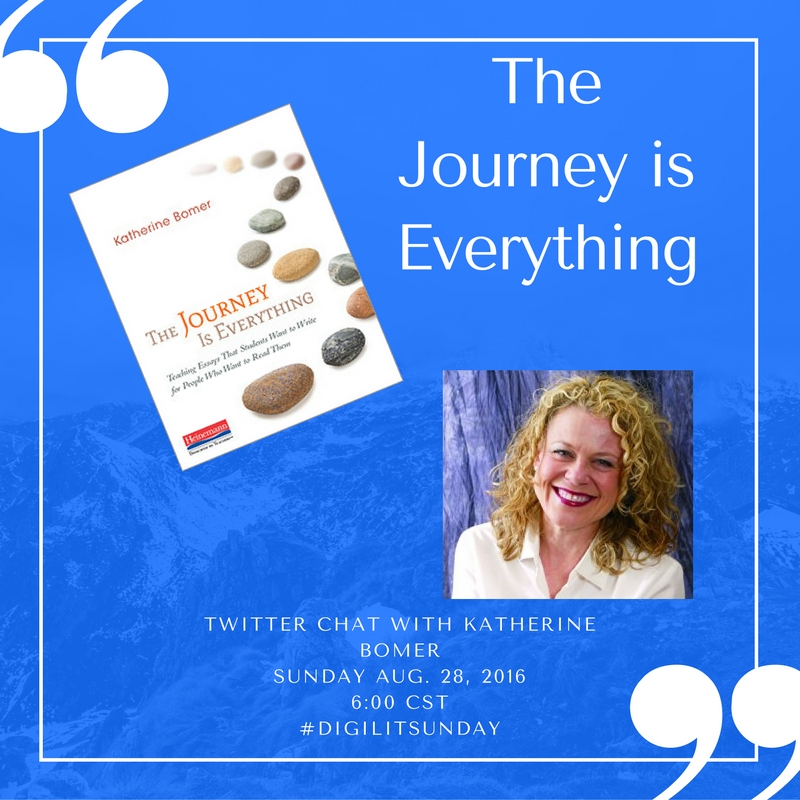
I’m getting ahead of myself.  The first thing I did was to create an ad for the chat. I wanted something eye-catching that others could tweet and retweet.  I used Canva.  Canva was recommended by Dr. Mary Howard, another wise voice in education today.  She leads a weekly Twitter chat for Good to Great (#G2Great on Thursdays at 7:30 PM Central). You should follow her. @DrMaryHoward

A few weeks ago I invited some friends to participate in brainstorming questions.  A Twitter chat is usually an hour and includes 7 questions evenly spaced out by about 8 minutes.  (Mary Howard sent me a schedule she uses for G2Great.)   Tara Smith, Fran McVeigh, and Julieanne Harmatz contributed ideas and questions to the Google Doc. It got rather messy which is the way this kind of work is: messy, thoughtful, and inspiring.

Then I listened to this podcast from Heinemann.  I took notes and thought of more questions.  Jan Burkins offered me the advice to try out the questions to see if I could answer them in 140 characters.  That’s today’s task.  I am also going to test out pre-tweeting using Tweetdeck. Tweetdeck is necessary for following a chat. (For tonight, enter #DigiLitSunday.)

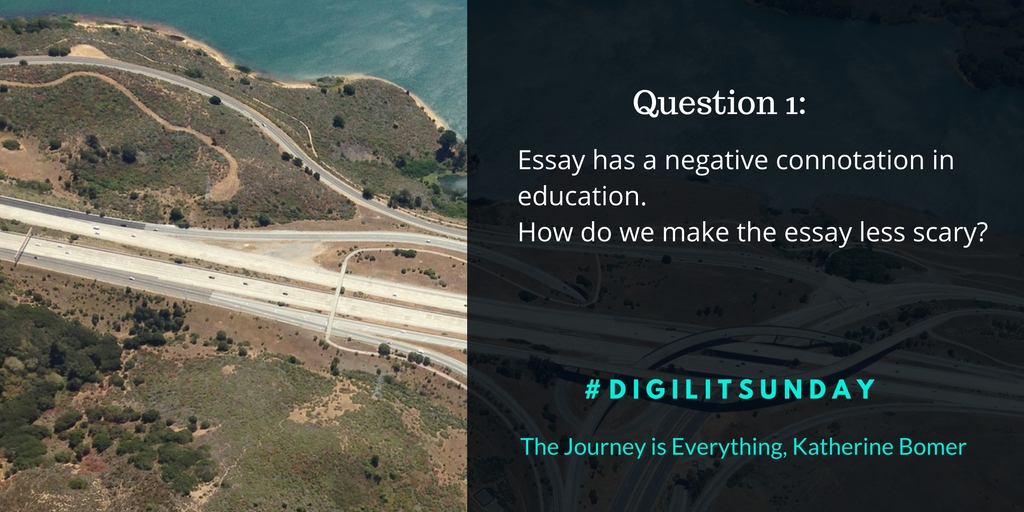
I spent a few hours putting the questions into a Canva Twitter background.  This way your questions can be longer than a tweet, but it also makes them attractive so they stand out from other tweets.  Here’s a sample question.

Journey Q 1

What is left to do is to make an image with all the questions to tweet out today before the chat.  This gives participants a heads up, time to think about their responses, and a way to participate more fully in the conversation.

Wish me luck.  I’m excited and nervous.  I have some great people backing me up.  I’m glad I’m doing this, but I don’t think we’ll chat every week.  Maybe once a month?

Please join us. Tweet and retweet. Share.

Twitter Chat with Katherine BomerSunday AUg. 28, 20166-00 CST (1) copy


Add your DigiLitSunday post to the links here.