Feeds:
Posts
Comments

This weekend our family gathered for the graduation of my youngest daughter from college.  What a whirlwind of events and emotions!  One of the treats for me was spending time with my nephew, Jack, who, at the end of his first grade year, is beginning to learn about the power of his words.  To my delight, his teacher uses writers’ workshop.  Prominently posted on the family refrigerator is Jack’s latest composition, a three-paged story about his two dogs.  He used words like “mischievous” and distinguished the two dogs as one is a “licker” and the other a “sniffer.”

Jack has his mother’s old iPhone.  Even with a cracked face, he enjoys using it to email.  So we started an email exchange.  He started with a typo that led to a little poem.  Being a poetry fan as well as a teacher, I prompted him on to create another poem.  I have transposed our exchange here.  Jack’s words are italicized.

I’m so gladys…

I’m so gladys, too, but mostly I love my Jacky.

I’m so gladys, too, but mostly I love you.

When we’re together,

We like to

Read, talk, and tell stories.

We tell our stories at night

When all is calm and quiet.

What is your favorite story?

Magic treehouse deep sea ocean.

I kind of gave up on the 30 Day Poetry Challenge, not intentionally, but life got in the way.  I got stuck on one challenge, then just plain refused to write a poem about a car, so I quit.  I did not, however, give up on challenging my students to write a different poetic form each day.  And I write with them, so technically I am still taking the poetry challenge.

In our classroom ABC daily poem challenge, we were on G on Thursday.  The only poetic form I could find for G was a Grossblank.  Grossblank is a poem with 12 lines of 12 syllables (a gross) written in blank verse, no rhyme.  Because I thought this form was particularly challenging, I allowed them to write a quarter Grossblank, 6×6.  Also to help bait the poetry fishing hook, I gave them lists of wordgroups, a technique introduced to me by my poet-friend-mentor Sandford Lyne.  So with groups of words in hand and fingers for counting, we got to work on our poems.

Once again, my students amazed me.  My fifth grader and sixth grader took the full challenge.  Kaylie is obsessed (and that’s putting it mildly) with Hunger Games.  Her poem, while it draws on the theme of the series, can stand alone.  Colby is new to my class, but he is slowly discovering his inner poet.  His poem draws a deeper meaning while he contemplates mirage and reality, a quite sophisticated theme, I think, for a sixth grader.  If you enjoy their poetry, please leave a comment that I can share with them.  They would love to hear from you.

But What’s to Come
by Kaylie
(inspired by and dedicated to the Hunger Games)

At sunrise, she runs, barefoot, in leaves of green, words
do not come to mind. She dunks under the fence, into
the woods, where stores are not seen, and hunger isn’t
abroad. Where no trespassing takes place. Into dreams,
she runs past men and voices, beyond the breaking
dawn, into a swirl of familiar places.
She lifts her bow at a rustle, her arrow finds
a home in a rabbit’s eye. She gathers berries
of the sweetest aroma, breath in the air, hush.
Out of the woods, names are called, unpromising to
the tributes, for they must survive to be victors.
Through the darkest times, many deaths will come alive.

The Magic Touch
by Colby
Along the road in the hot summer sun, a dog,
a mirage in the dust wandering in his wake.
The heat is unbearable with the sun floating,
unforgiving in the open. No shade in the still.
Starting to feel abandoned. Far, far, away. Fear
in his soul like a pup separated, detached
from its kin. The miraged dog leading the lonely.
Walking barefoot in along the trails through thick dust.
He walks and roams in spite of hunger and fatigue.
Still he follows the dog, his wake, his destiny.
The dog is getting closer. It’s close enough to
touch.The man speeds up inching ever closer. Touch. Oasis.

Read other Slice of Life writers at The Two Writing Teachers


For a long time, I have wanted to be a writer.  I recently found my teenage diary and in it I had written some really bad rhyming poetry.  But at the bottom of the page I found this.

"I would love to be a writer if only someone would give me confidence!"

When do we let go of our dreams?  The summer following this diary entry, I volunteered for a program called “Operation Life Enrichment.”  The program was designed to enrich the lives of underprivileged children who had difficulty with reading.  That experience led me to a path of becoming a teacher.  The writer in me did not go away, but she was buried deep within.

In 1995, I had the privilege of being selected for the National Writing Project’s Summer Institute.  We were a group of fellow teachers writing about our lives and learning from each other.  The motto of the NWP, “A teacher of writing is a writer,” went straight to my heart.

One of my favorite writing project events has been an annual “writing marathon” in New Orleans led by the Southeastern Writing Project.  For three days, teacher-writers gather to be practicing writers.  In the summer of 2009, the focus was on fiction.  I spent the days with two other women.  We wrote, read, revised, and each created a fiction short story.  I began to feel like a fiction writer.

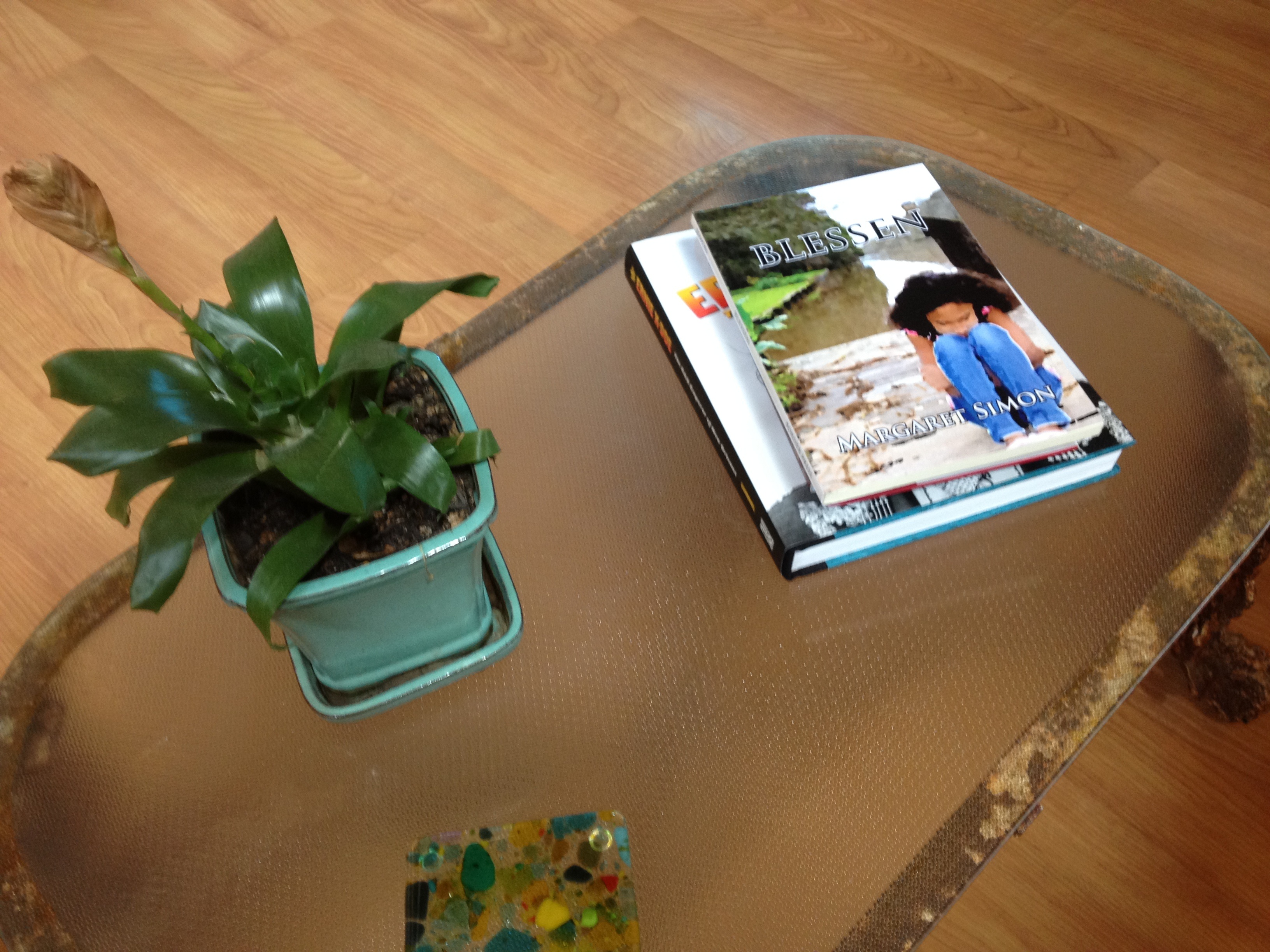
Not long after the New Orleans writing marathon, I attended a fiction workshop with Sharon Arms Doucet, author of Fiddle Fever and Alligator Sue.  The workshop took place an hour away.  As I drove Highway 31 along the Bayou Teche, the story of Blessen began in my mind.  I passed True Friend Road.  I saw a row of crape myrtle trees.

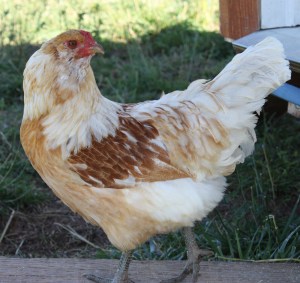
From where I stand next to the chicken coop, I can see Pawpee’s old house and the two rows of crape myrtles in full bloom lining the gravel driveway. Pawpee still trims those trees every fall with a cherry picker from his wheelchair. He says he’s topping the trees to make the blossoms fan out like a fiery bouquet.

While at the workshop, I wrote the first chapter.  On our lunch break, the owner of the restaurant retold a story that became the Piggly Wiggly scene for Chapter 2.

Fiction is born of real life, the stories we hear and the ones we imagine.  Over the years, I grew to know and love Blessen.   When I listened, she told me about her life.  I believe in her story.  I am so proud to have her come alive in my first young readers novel.  I hope one day you will come to know and love her, too.

Link to Blessen’s Facebook page.

Sunset in River

Ekphrasis: Poetry confronting a work of art.

I was first introduced to this poetry form by my mentor and Louisiana’s 2011 poet laureate Darrell Bourque.  In our workshops, Darrell would pass around a postcard collection of works of art and inspire us to write.  This was usually successful for me, so I have passed this process on to my students.  The book I use most is Heart to Heart, edited by Jan Greenberg. In her book, the poems are placed beside the work of art.  I use this book to model the different forms ekphrasis can take.  The ekphrastic poem can be a description loaded with imagery or a story poem in which the poet becomes a part of the painting.  Here is a link to my students’ poems on our classroom wikispace: http://gtallstars.wikispaces.com/Ekphrastic+Poetry

Today I wrote with my students as I usually do.  I have this beautiful book of the River of Words award winners. The painting I chose was titled Sunset in River.

by Khumar Gumbatova, age 13

The sunset becomes a rainbow
in fields where
silhouettes of trees
stand like soldiers
guarding this sacred land.

Sun reddens water
now a glowing sea where
hidden flowers grow.

Sometimes
at sunset I imagine
all life praises
God.

The 30 Day Poetry Challenge Day 23: Write a seven line poem that begins with “it’s true that fresh air is good for the body” (from Frank O’Hara’s poem “Ave Maria”) and ends with “this is our body” (from Gary Snyder’s “The Bath”).

It’s true that fresh air is good for the body.
Breathe with your eyes closed like the sleeping Tom;
Taste the sweet honeysuckle nectar
while the wind tickles your cheek,
and you listen for the distant call of the cardinal
red in his cocky plumage.
This is our body.

Buzz naps while I write. He inspires a line.

Catching up on the 30 Day Poetry Challenge:

Day 19: Imagine yourself performing any household task/chore, then write a poem using what you’ve imagined as an extended metaphor for writing: an Ars Poetica.

Ars Poetica on a Stained Shirt

Coffee spilled on my shirt,
early morning stain
I’d wear all day.
Cover it with a cardigan,
hidden and unnoticed.
Spray-n-Wash
launder clean
fresh and new.

Poem spills out on my notebook page,
early morning musings
I’d think about all day.
Scratch out words,
Incubate-launder
with revision.
Type onto a clean page
here for you.

Day 20: Write a narrative poem detailing a specific childhood memory.

Growing up Beside Purple Creek

A concrete slab becomes a waterfall.

A tree is a cabin in the woods.

Dirt-filled lots are caves for dolls.

A trampoline tarp makes an acrobat’s stage.

We put on another play for the neighbors in the garage.

Listen for the whippoorwill to call us home for supper.

Come home, come home, come home!

A Cardboard Box

30 Day poetry challenge: Day 17 Write a poem that employs a rhyme scheme.

Race me to the door in a speedy machine!

My sister has been posting for days about cardboard boxes that my niece and nephew have made into a variety of imaginary things.  Oh, the joys of childhood!  And hats off to my sister for allowing these huge things to remain in her living room for days.  I think we should collaborate on a children’s book or maybe I’ll just write a poem for the poetry challenge.  Wherever your imagination takes you.

What can we create with a cardboard box? I know.
A slippery sled to ride in the imaginary snow.
Maybe a spaceship the flies to the moon!
Or the basket part of a hot-air balloon.
I can imagine the most perfect thing.
Race me to the door in a speedy machine.
Before our momma throws it out
Let’s make a clubhouse and lounge about.
Be sure to bring your favorite book
To curl up with in my
cardboard box-spaceship-speedboat-reading nook.

Cardboard box-spaceship-speedboat-reading nook

Bad Poetry

30 Day Poetry Challenge: Day 14 Write a bad poem.

Yesterday I wrote about how my students and I write together:  The Knockout Punch.  One day a few weeks ago, my students and I were writing list poems.  What I started with was a list of poetic forms.  Then I tried to rhyme, which I am really bad at.  My student Matthew added a line. (Look for it in italics.)  All day in and out of classes, I worked scratching out, rewording, and asking their advice.  At the end of the day, I still had a bad poem.  Some days you just catch a boot.  I should’ve thrown it back in, but here it is, ready for today’s challenge.

A Poetry Lesson

Haiku,
Cinquain,
Limerick,
Acrostic,
What kind of poem will you write?
Can you feel the beat?
Will you be a poet or a rapper on the street?
Can you write like Robert Frost
or William Carlos Wiliams?
This is just to say,
you can write your own way.
Please don’t write like Poe,
Cause he gives me the chillins
Read it aloud
Or share it on a blog.
Fill the world with imagery,
metaphor or simile.
You can decide what poet you will be.
Don’t forget to sign your name,
and thank your teacher, me.

The Knockout Punch

30 Day Poetry Challenge: Day 13 Write a poem a child would like.

When I teach writing to students, we workshop our writing pieces.  I write when they write.  I pass out sticky notes. (Kids love colorful sticky notes.)  They label their notes with a plus, a question mark, and a triangle.  We call these notes “Criticycles.”  They are our way of critiquing.  The plus is something you like, the question mark a question, and the triangle a suggestion for a change.  When I saw the challenge for today, I thought, “That will be easy.”  All I needed to do was look through my school journal and find a page full of sticky notes that told me I had caught a good poem.  This poem I wrote in writing camp last summer.  (I am doing two this summer, so leave me a comment or send an email if you are interested.)

We take a writing marathon on one day of the writing camp.  On the marathon, we tour around town with writers’ eyes.  Most shop owners are happy to have us come in when we say we are writers.  On this day, we went into the downtown bookstore.  I had a discussion with one of my students and her mother about the book, “Heaven is for Real.”  Then I opened it up and stole a line.  This jump-started my poem.  The illustration shows the criticycles from my students, so I knew I had a winner.  Sometimes when fishing for poems, we catch one.  Sometimes, we catch a boot.  My students usually let me know loud and clear what I have caught.

The knockout punch is the one they didn’t see coming.
Like the wave that flips your peaceful float
Twirling you under the salty water
whipping you upside down

You can see the air, the reflection of sunlight calls you up
Can you find it?
Will you swim long enough to catch a breath?
Will you find the shore?

Relax.
Release tension.
Don’t fight the wave.

God will take you in His arms
and carry you home.

Lists of Spring

30 Day Poetry Challenge: Write a list poem.

A Perfect Spring Day

Mating call of a mockingbird
Rhythmic chimes faintly heard

A gentle breeze rustles the trees
Open blossoms fragrant sweet

Rippled stream, greenest green
Field of grass, fertile and clean

Far away song of a fisherman
Cumulus cloud hiding the sun

Days like these are far and few
Writing poems here with you

Darby’s Poem:

If I were a bird, I’d belong to the sky.
If I were a bird, I’d be fearless and brave.
If I were a bird, I’d do my own thing.
If I were a bird, I’d make my own song.
But most of all, if I were a bird,
I’d soar long, high,
and free.

Poetic Silence

Day 10: Pick a one-line song lyric to serve as an epigraph to your poem. Then, write the poem to accompany it. The poem need not be directly related to the song.


…my words, like silent raindrops fell
And echoed
In the wells of silence.

—Paul Simon

In silence, our poems live
In sharing, our poems grow.
Today was my first day to introduce the poetry challenge to my gifted students.   Their challenge:  Using ABCs of poetry forms, write a poem each day.  We started with Acrostics.  Tomorrow…Bio-poems.  I shared my acrostic poem from Day 1 of the 30 Day Poetry Challenge.
I enjoyed the results.  I told them that the poem should not be about them, but should use the initial letters from their names.  This was part of the 30 Day Challenge, and I was surprised at how well they did.  Here are a few:
Brooklyn
Batting at home place
Racing base to base
Outfield players catching pop-ups
“Out” yells the umpire when the batter has three strikes
Keeping your eye on the ball
Letting the time run from you
Yelling coming from the bleachers
Never getting defeated
Kaylie
Kindling the fire
Ablaze in the midnight sky
Yawns bounce with the light breeze
Locusts chirping
In a sweet melody
Entrancing