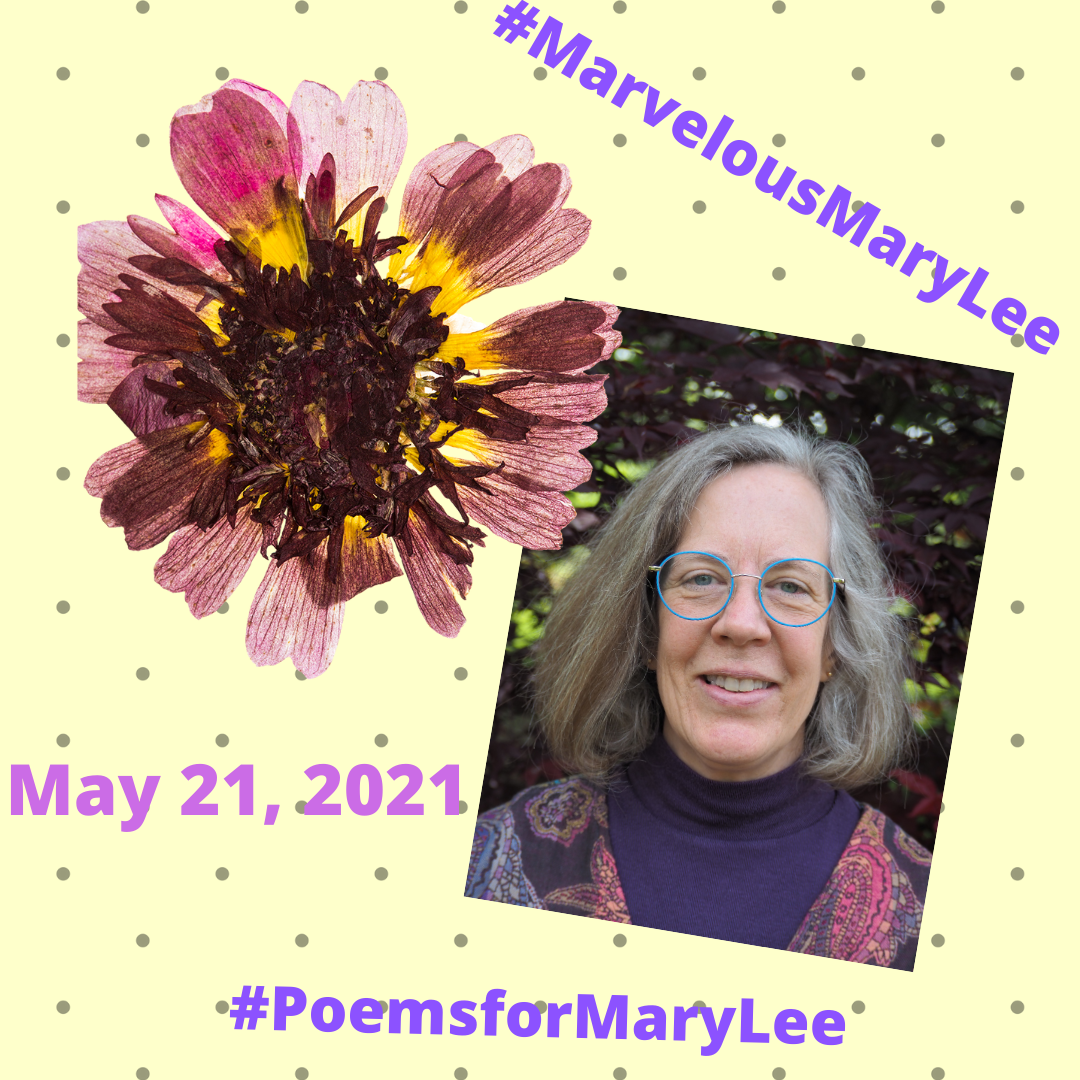
Today the Poetry Friday community is celebrating Mary Lee Hahn on the occasion of her retirement. Mary Lee is one of those behind the scenes worker bees. She keeps Poetry Friday going with periodic calls for hosting. She has served on multiple committees with the National Council for Teachers of English (NCTE). I’ve learned over and over from Mary Lee’s quiet wisdom.
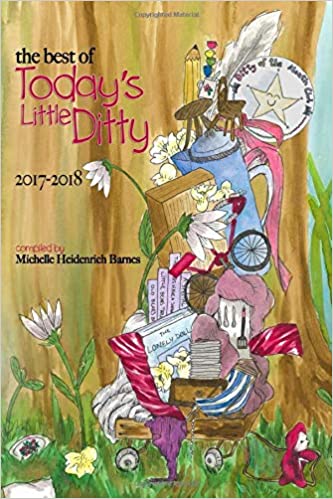
To find a way to honor her with a poem, I looked through the Ditty of the Month collections. I found an ars poetica poem by Mary Lee entitled “Peony Poem” in the 2017-2018 anthology. I borrowed her form to write this poem:
Another Peony
An idea seedling, set in soil, soggy and shifting sprouting in a spring garden.
A draft wobbly, wilting waits on new legs hoping to learn to grow.
A poem blooming, brilliant shines like a rose on a stem showing up on this special day.
Congratulations on your retirement, Mary Lee. “The trouble with poetry is that it encourages the writing of more poetry.” (Billy Collins) Just think how many poems you have spawned over the years, exponentially.
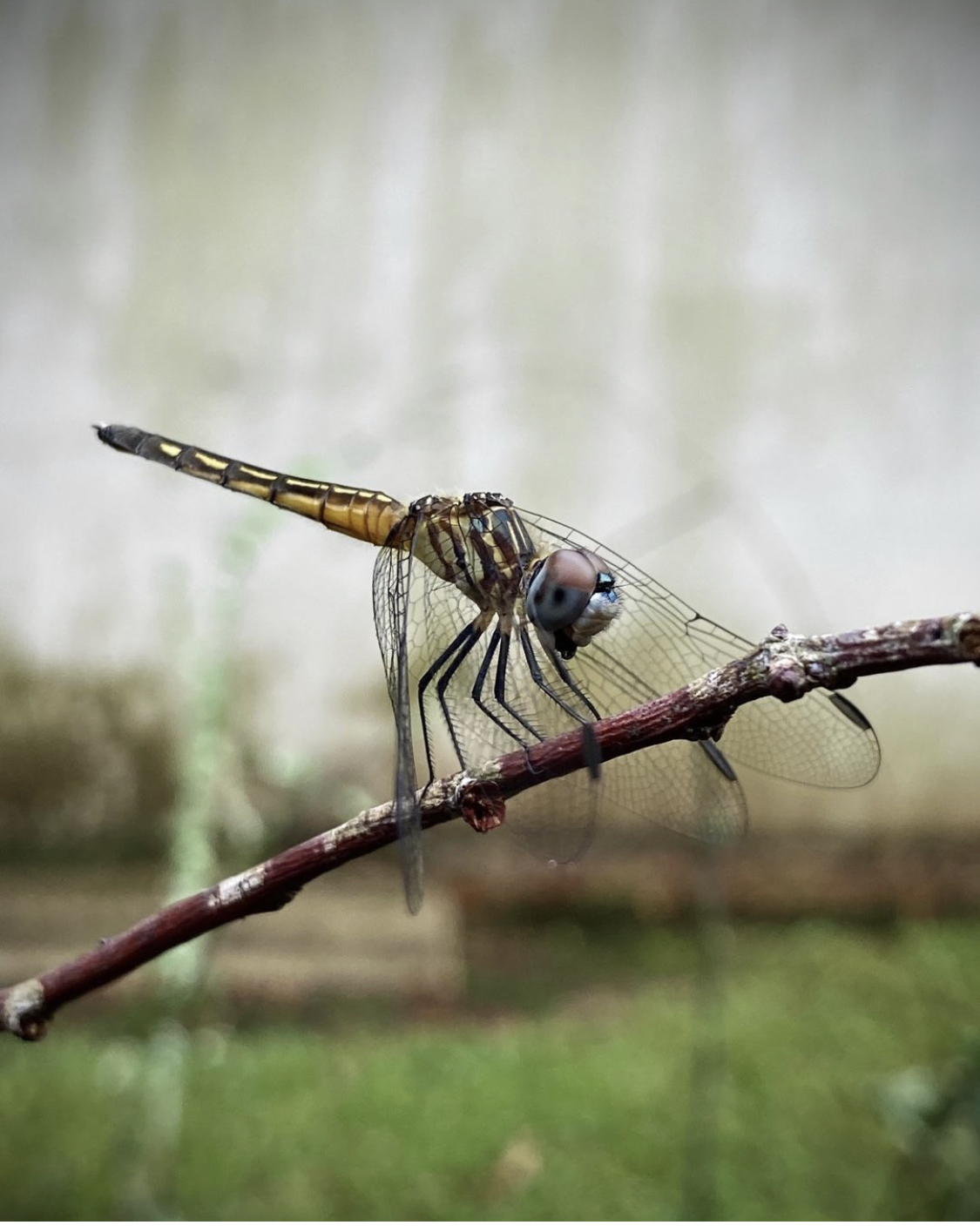
Spring is the season for dragonflies. This year we have them in abundance. It’s fun to watch them circling about. My neighbor, first grade teacher Lory Landry is a photographer. I was amazed by her recent Instagram photo of a dragonfly. It struck me in many ways. The close-up on the compound eyes makes the creature look more human (or alien). The wings are poised either in landing or taking off position. He (or she) just seemed to be asking for a poem.
Dragonfly by Lory Landry Instagram @loryla63
Last night in a Highlights mini-workshop, Laura Shovan talked about the skinny form. The rules: the first line can be any length, lines 2-10 each hold a single word (repeated word in 2, 6, and 10), line 11 uses the same words as line 1. Doing a quick search about the dragonfly, I scribbled out a skinny. Please join with a quick poem in the comments and encouraging comments to other writers.
Compound eyes look upon spring days. Iridescent wings spring branch to branch. Spring looks upon compound eyes.
Thank you to Two Writing Teachers for creating an amazing community of writers and a safe, welcoming space to write and share.
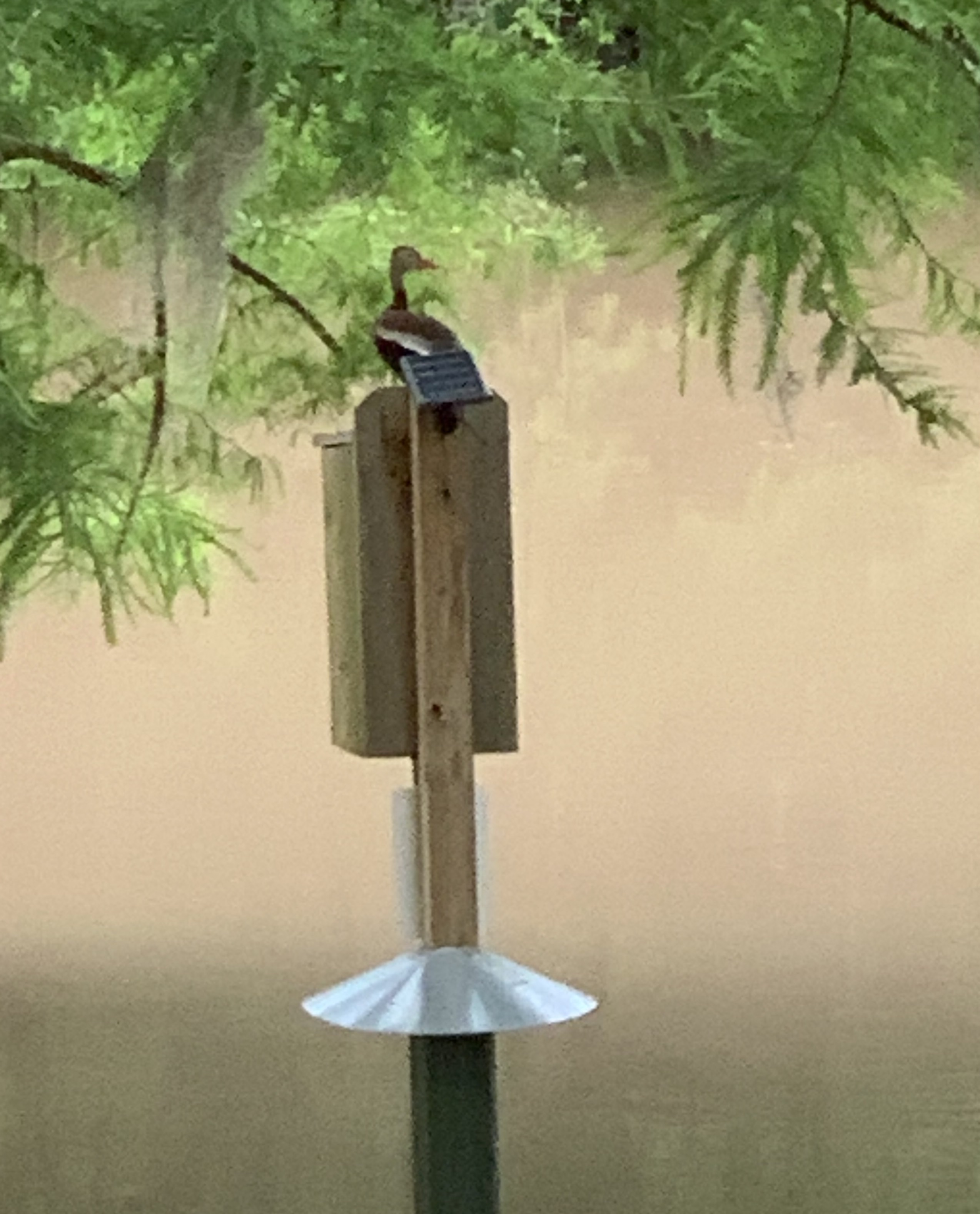
Black-bellied whistling duck on top of the wood duck nest box.
Through the magic of a Ring doorbell camera, we are watching the wood duck nestbox in our backyard on the bayou. During the months of March and April, we had a reliable wood duck hen sitting on a clutch of 14 eggs. On April 15th, 13 ducklings, barely 24 hours old, jumped out of the nestbox into the bayou. And off they went.
We’ve had a wet spring, so the bayou has been high. My husband pulled a canoe up to the nestbox, tied it there, and climbed a stepladder to clean out the nestbox. The next day we had shoppers, new wood duck couples swimming by, poking around.
We thought we had a new hen sitting. Day by day a hen would fly into the house and lay an egg. She seemed to start the incubation a week ago; however, her sitting was erratic. There one day, gone the next.
A few days ago, I noticed a larger, louder duck inside the wood duck house. Invaders! Squatters! Thieves! The ducks were what we call Mexican Squealers or Black-bellied whistling ducks. This duck is larger, with a bright orange bill, long legs, and a loud squeal. Two of them. How did they get in? Why? Did they lay an egg? It was actually hilarious to watch these ducks try to get back out of the house. Lots of noisy squealing and legs scrambling.
Since this incident, the hen has come back and settled in. She doesn’t leave as often and for as long. Maybe we can start counting days. We’ll see. Nature is not predictable. Even an innocent nestbox is not always peaceful.
You can follow me on Twitter and Instagram (@margaretgsimon) for updates on the wood duck house. On Twitter during May I am posting #poemsofpresence. Here’s the poem-of-the-day for Monday.
Rainy grey Monday, Watching new wood duck tenant nestle for sitting.
This week I started following Denise Krebs’ blog, Dare to Care. We met each other virtually through blogging. She introduced me to a poetry form called 4×4. Here are the rules copied from her post:
4 syllables in each line
4 lines in each stanza
4 stanzas
4 times repeating a refrain line–line 1 in the first stanza, line 2 in the second stanza, line 3 in the third stanza, and line 4 in the fourth stanza.
Bonus: 4 syllables in the title
No restrictions on subject, rhyme, or meter.
It’s a fun form to play with. I’ve combined it with using quotes or a stolen line as the repeated line. I have to admit this form has been tough for students to use. While teaching it to kids, I’ve written a few poem drafts this week. Here are two that I don’t hate.
Awareness is everything we need to know to stand for something.
Don’t fall for it. Awareness is looking deeply into your soul.
Answers will come to questions asked. Awareness is waiting for you.
No choice ever is possible until you know awareness is.
Margaret Simon, draft
Hang on to love. Find someone who cares for you most, holds you in trust.
Trust can be hard. Hang on to love anyway, ’cause you matter, too.
When hearts are turned to the sad news, hang on to love to get you through.
Not all sparkles or shiny smiles, for steady hands hang on to love.
Margaret Simon, draft
Last summer I wrote with the National Writing Project during a virtual writing marathon. My poem, Muses, is published in their online journal here.
Chloe wrote a 4×4 poem and read it on a Flipgrid video:
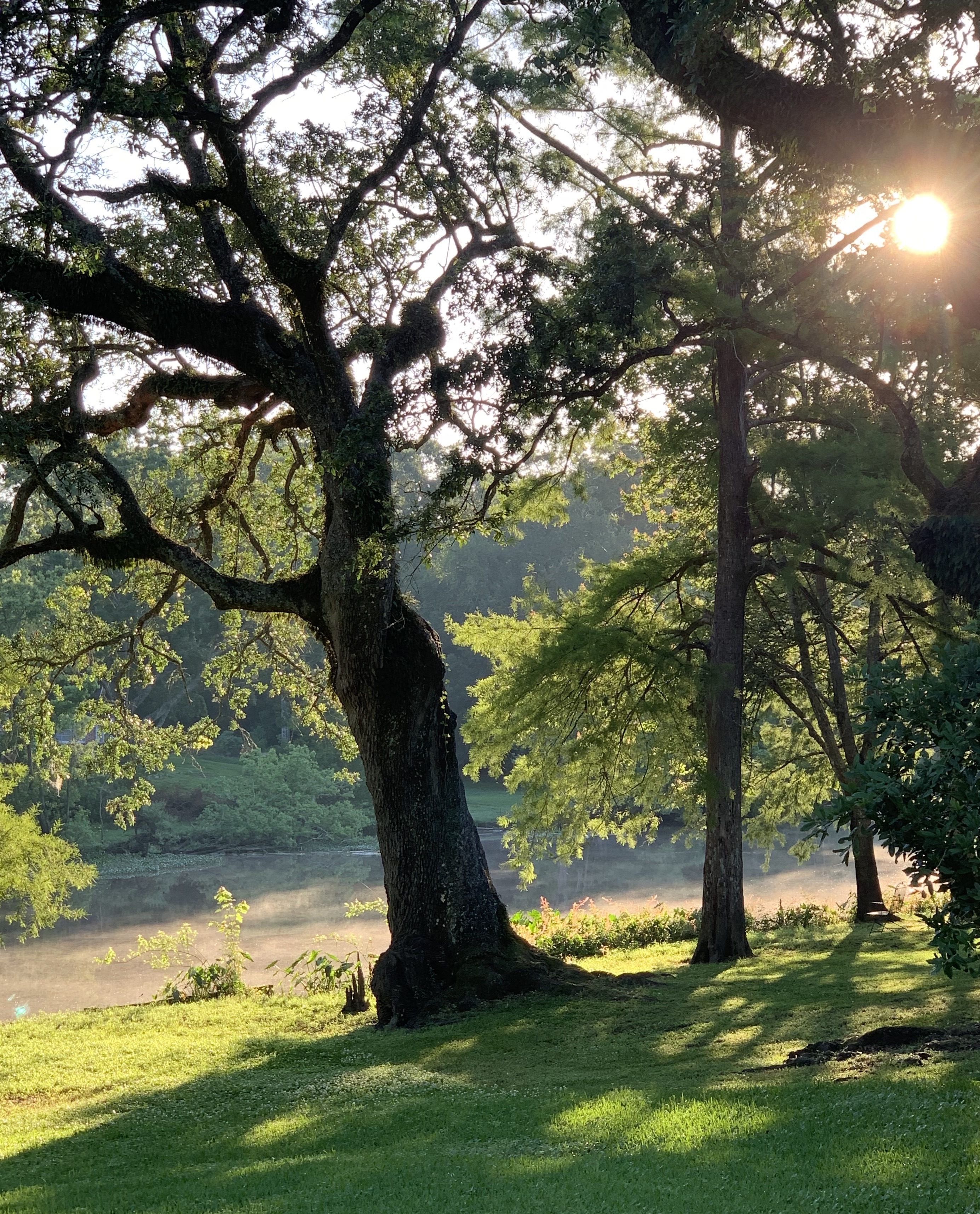
This photo was not taken today. Today I am waking up to more rain after all night thunderstorms. But last week one morning was glorious. The sunrise lit up the cypress and oaks and sent a line of light down the bayou. I try again and again to capture this morning light in a photograph or a poem. Anything I try is an imperfect approximation.
Morning sunrise on the bayou, Margaret Simon
How many ways does the sun rise?
How many days are you alive to bathe your face
in light?
Margaret Simon, quick draft
Consider writing with me today. Leave a small poem in the comments and post encouraging words for other writers. Join me on Twitter with #poemsofpresence.
Heidi Mordhorst has started a Facebook group Paradise, Paved for poets wanting a place to “park” their poems, for comment, critique, or just a safe place to land. She has been practicing writing in conversation with or after other poets. Like artists will copy a master painting, when poets copy a master, form frees expression. Magical, really.
I received a link to May Sarton’s poem, For my Mother, in an email from Poets.org. Using her poem as a mentor text, I wrote a poem for my mother.
For My Mother —after May Sarton
Once more I listen to the music of my past with harmony rising in my throat.
At the piano or stereo, from choir to opera, your notes entered my bones.
Keeping a distance, my ears remember the vibrations of the walls I closed myself in.
Your song brought us through flood waters. I remember laying out sheet music to dry. Then you made a home with new walls.
Today I find the box of cards you collected and choose one to send you.
Maybe you will recognize the paper, the handwriting, or the return address. Maybe not. It doesn’t matter. I remember your song and that is enough.
Spiritual Journey First Thursday is being gathered today by Carol Varsalona at Beyond Literacy Link.
Carol is gathering Spiritual Journey posts today around the topic Blossoms of Joy. When I first typed it, I wrote “Blossoming Joy,” which slightly changes the blossoms into action. I have come to believe that we are all in the process of blossoming. We never arrive because life is hard and good and disappointing and joyful all wrapped up on any given day.
I’ve been listening to Untamed by Glennon Doyle. It’s a book full of quotable quotes. This is one that spoke to me.
“I am here to keep becoming truer, more beautiful versions of myself again and again forever. To be alive is to be in a perpetual state of revolution. Whether I like it or not, pain is the fuel of revolution. Everything I need to become the woman I’m meant to be next is inside my feelings of now. Life is alchemy, and emotions are the fire that turns me to gold. I will continue to become only if I resist extinguishing myself a million times a day. If I can sit in the fire of my own feelings, I will keep becoming.”
My spiritual journey is the alchemy that keeps me blossoming. I’m in a constant revolution with my inner and outer selves. Outside I want to show I’ve got everything under control. No rocky roads here. Smooth sailing. I know what I am doing, and I am doing it.
Practically every day, someone in the halls will comment about my appearance. Whether it’s the cute Dr. Seuss “Teacher, I am!” mask or the shoes I’m wearing, someone will say something. I know. I know. This is how women interact. I find myself doing it every day.
In fact, one day a little kindergarten girl was rushing in the hallway. She said, “I have to go to the bathroom,” and rushed by me. Then I heard from her little sweet voice, “But I love your hair!”
Perhaps she genuinely had noticed and liked my hair. But it struck me that even our young girls are trained to greet another girl with a compliment about her looks.
I’m not saying this practice is one I would change so much as notice. Our society trains girls at a very young age that how you look matters. Is this healthy?
Lucille Clifton is one of my favorite poets. Years ago I had the privilege of hearing her read at the Dodge Poetry Festival. Her poem “roots” was the poem of the month for A Network of Grateful Living. I loved the voice and cadence so much that I wrote beside her. Literally placed the poem on a document and wrote my own beside her. Glennon’s words and my own inner thoughts led me to this poem.
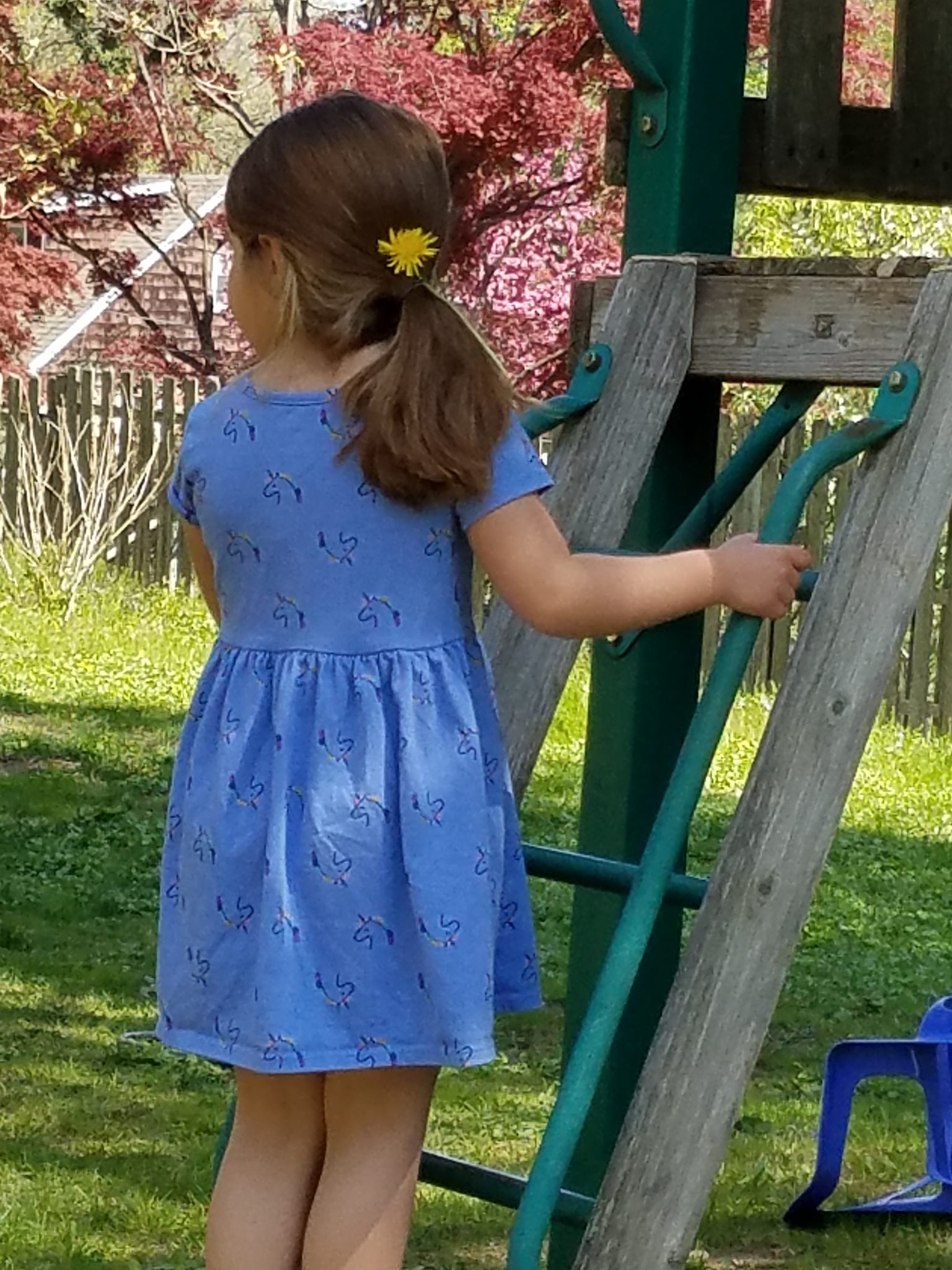
Leo, my 2 year old grandson, likes to scroll through my photo library. Mostly he wants to watch videos. Janet Fagel, a fellow poet grandmother, posted a picture on Facebook that I downloaded to use today. When Leo scrolled by this photo, he wanted to “play” it. I had to explain that it wasn’t a video. Beyond the idea that we are raising a new generation, a group of littles who know how to tap a screen and make it do things, I was fascinated by his fascination with this image. What did his little eyes see?
Later as we were walking in the garden, he tried to put a flower behind his ear. I placed it there for him and set the phone to selfie so he could see what he looked like. Phone as mirror.
Dandelion bow, photo by Janet Fagel
When I wear my unicorn dress, and a dandelion for a hairbow, I can be whatever I want to be.
Margaret Simon, with a nod to Cinderella, my favorite childhood movie
Please leave a small poem in the comments. Consider joining #PoemsofPresence on Twitter for the month of May. Encourage other poets with your comments here and there.
This week I was humbled and surprised to have one of Sylvia Vardell’s students create an amazing poem video of Zen Tree from Hop to It: Poems to Get You Moving. Garrett’s soothing voice, the calm music, and the amazing images all came together to show something beautiful. I am honored by this creative expression of my words. Thanks to Sylvia for organizing the project with her students. See more at Poetry for Children.
Michelle Schaub has been posting poetry videos all month on her blog Poetry Boost. My video of “Peep Eye” was featured this week.
Michelle Kogan finished up the Kidlitosphere Progressive Poem with a final line as well as a delightful illustration. The poem will be archived here.
I’ve been writing poems each day in response to prompts on Ethical ELA. I share these prompts with my students. On Wednesday, I struggled over the prompt. I shared the struggle with Chloe. She started writing me notes with topic suggestions. One of these notes said, “Me.” Then the pen flowed.
Fifth Grade
She comes in the room with an attitude that testy mood of preteen silliness and suggests I write a poem about her.
As if I know her well enough to write her down in words.
What I know is she grins loudly in braces. She writes notes on paper and crumples them like the crunch of a chip bag in the trash– Schwoop! Perfect shot!
But this poem will not be a perfect shot. There are no shots left on her page of excuses–the “not my fault” dissolves into “I just can’t.”
I wonder aloud “When will you believe in yourself?” When did I believe in myself? Have I ever?
This poem can’t end like this. I must write something encouraging to make all this white space worth it.
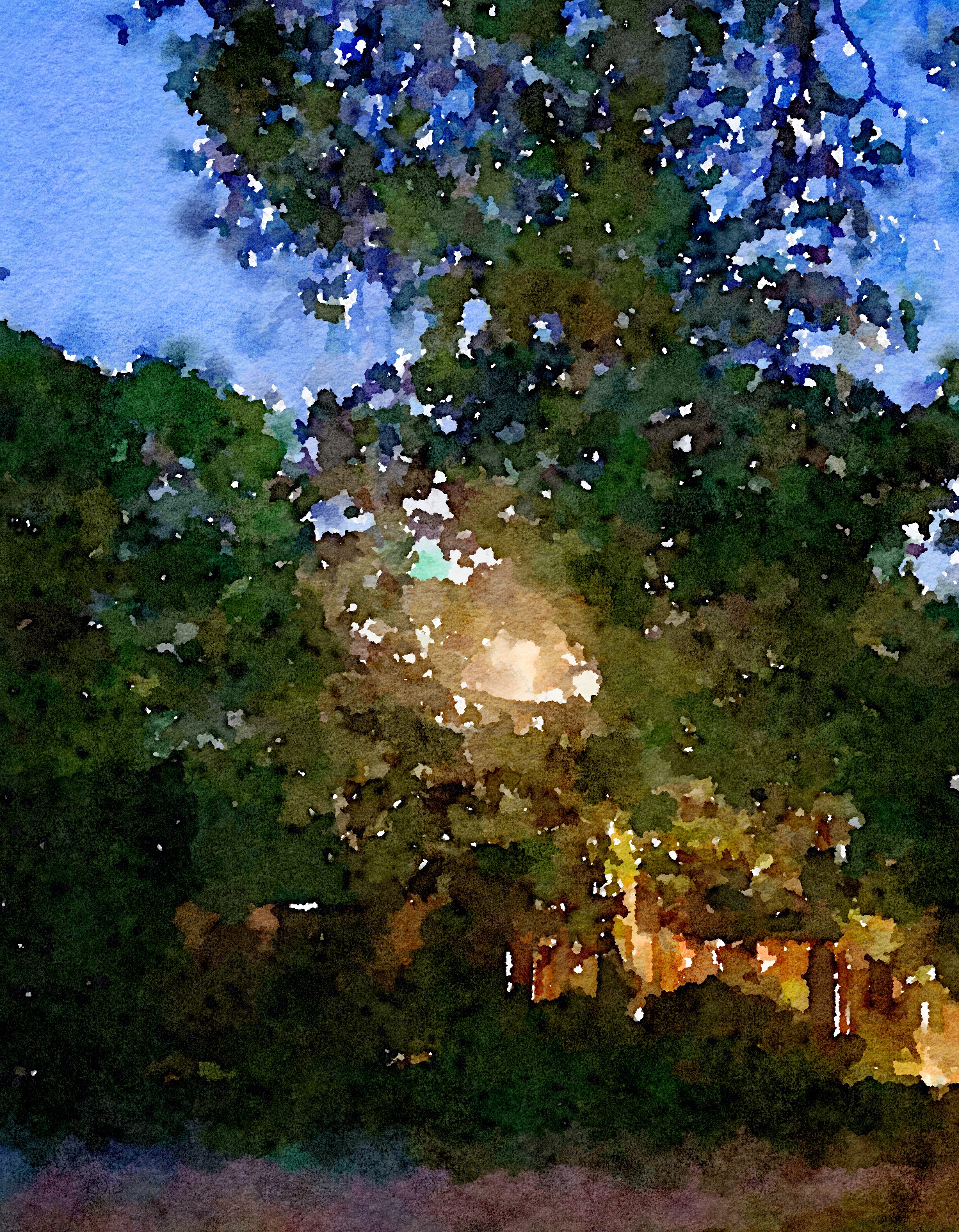
Spring is in full swing and many of my phone photos are flowers, but last night was a marvelous super pink moon. The phone camera didn’t really capture what I saw, so I took the photo through the Waterlogue app just to see what I would see. The negative space shows up, the sky that is blue with the nightlight of the moon and the white spaces in the trees. Makes me think about negative spaces and chiaroscuro, the light we don’t see until the perspective is changed.
Chiaroscuro, in art, is the use of strong contrasts between light and dark, usually bold contrasts affecting a whole composition.
Silent light Curves through darkness Under a full moon Revealing the sky’s Open door
Margaret Simon, draft
Please leave a small poem in the comments. Write a comment for other writers.
Margaret Simon lives on the Bayou Teche in New Iberia, Louisiana. She is a retired elementary gifted teacher who writes poetry and children's books. Welcome to a space of peace, poetry, and personal reflection. Walk in kindness.









 Reflections on the Teche