This is the first week of the National Writing Project’s Write Out, running from Oct. 11th through 25th. Teaching virtual gifted enrichment, this “writing marathon” gave me days of writing prompts. Yesterday we watched a video prompt from Sequoia & Kings Canyon National Parks.
Ranger Makenzie asked us to write about what trees may say to each other. Rylee, 3rd grade, wrote this adorable little story.
I played around with a Zeno poem and posted this on Twitter:
Please join me in offering a #smallpoem in response to this amazing tree. Post in the comments. On Twitter or Instagram, use the hashtags #ThisPhotoWantstobeaPoem, #poeticdiversion, and #writeout. Tag me, @MargaretGSimon and Christina, @ChristinaNosek.
Marvelous giant Canopy of protection Messenger of peace
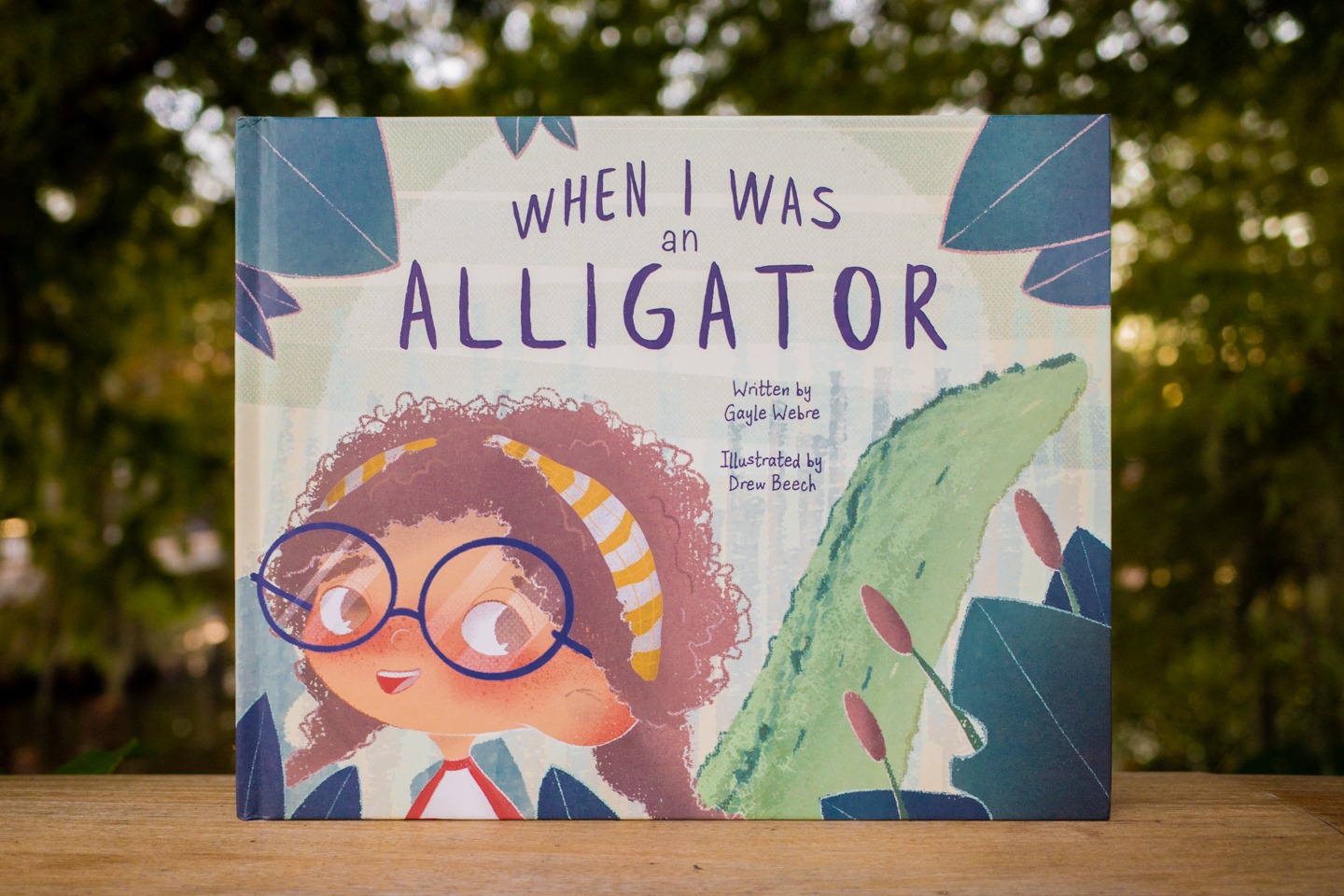
Since I joined the local SCBWI, I’ve had the privilege of watching a few books go from idea to draft to published. I met Gayle Webre a few years ago as we were both attending our region’s critique meeting. We had the teaching of gifted students in common. But Gayle was hiding another talent, picture book writer. I remember the first time she read this manuscript aloud I loved it. Now when I have it in my hands, the charm of her imaginative story has grown with the addition of illustrations by Drew Beech.
Drew has taken Gayle’s idea and created an adorable Cajun girl who wears glasses and wonders what life would be like as different animals in the swamp. The wide round glasses appear on each animal to help our young readers understand that this Cajun girl was once an alligator, a heron, an opossum, and more.
I invited Gayle to answer some questions about herself and her writing process.
What was your path to becoming a writer?
As a student I was pretty good at writing. My teachers and professors encouraged me, yet I didn’t consider writing as a career. I stumbled into a career as a teacher and loved it. I wrote lesson plans, letters of recommendation, and grant proposals. I read lots of children’s literature. Still I did not consider writing for children. When I retired, I thought I might give it a try, and I had no idea where to begin. By “chance” I found our local SCBWI group who offered support, encouragement, and friendship.
What do you do with your time?
I read, host gatherings for family and friends (pre COVID), travel, visit my kids and grandkids in the New Orleans area, and ride my trike. And I try to write!
What inspires you?
People inspire me. Their stories, their struggles, their personalities, their histories, their approaches to life….
What book would you recommend?
For adults? I just read The Girl with the Louding Voice by Abe Dare. Set in Nigeria in 2014, it’s a beautifully told story of a young girl’s struggle to survive incredible hardships and get an education.
Tell us about your journey from idea to published book.
When my 5th grade students and I met with scientists at the National Wetlands Research Center in Lafayette, I was impressed with the importance and fragility of our coastal wetlands. We learned about the severity of coastal land loss and the work being done to mitigate it. (Nutria tracking was a favorite!) A few years later, four-year old Sawyer walked into my house and spouted, “Aunt Gayle, when I was an alligator…” A few years after that, the idea to write When I Was an Alligator surfaced.
SCBWI helped me with the polishing and submitting process. I sent the manuscript to publishers and got lots of rejections. Finally Devon Lord and the team at UL Press saw the potential, let me choose an artist, and now we have a book!
Why do you write?
I enjoy the creative process; writing is fun and challenging. And I think I have some stories that need to be told.
Describe your writing habits.
I don’t think it could be called a habit. When I get an idea, I jot it down and write a pretty bad first draft. (Ask the SCBWI critique group!) My research for When I Was an Alligator took lots of time. I can spend half an hour choosing one word. I enjoy the whole process.
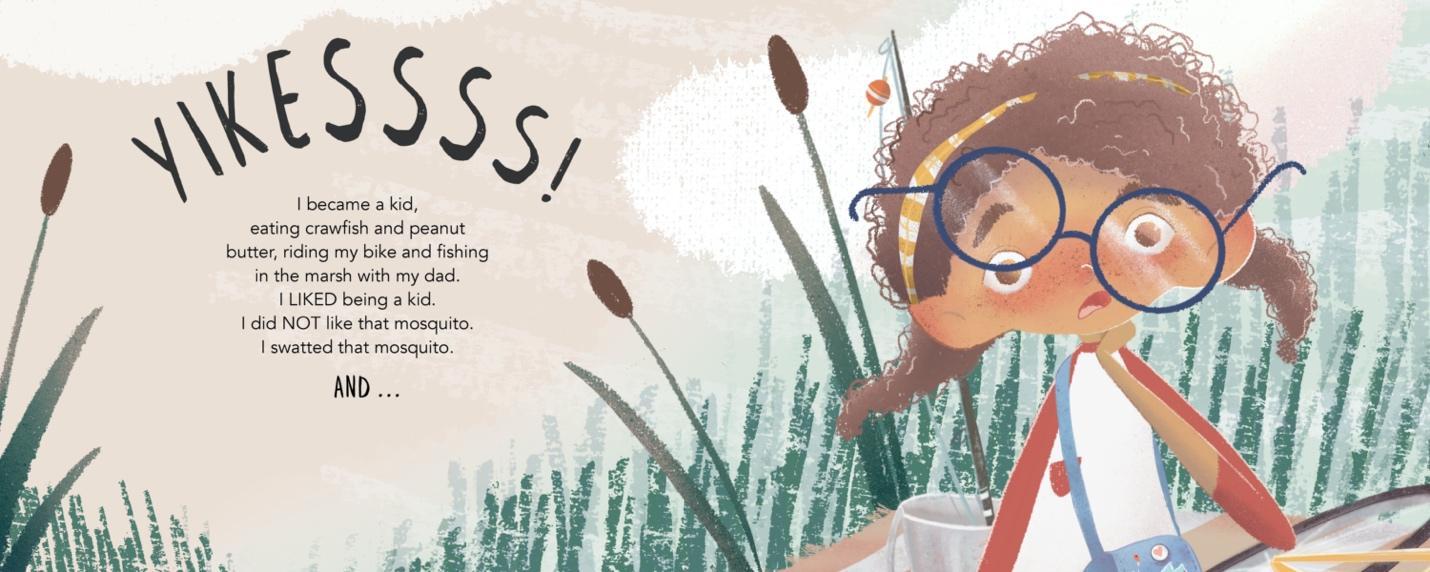
What is your favorite spread of your book and why?
Drew did a great job on all the art, so it’s hard to pick one spread. I especially like this one. After all the curious Cajun kid has been through, she’s more than a little flustered, and she finds that she likes being herself!
How much, if any, communication did you have with the illustrator?
I met Drew at an SCBWI regional conference in New Orleans. Drew now lives in Chattanooga, so we’ve not met in person to work on the book, but we had lots of interaction through the whole process. In fact, we are still working together.
What is the best advice you’ve ever gotten?
The answer to that changes often. Today it’s: “O, small beloved person, it is not all up to you.”
What advice do you have for writers?
Make time to write, find some folks who support you, and join SCBWI if you are writing for children.
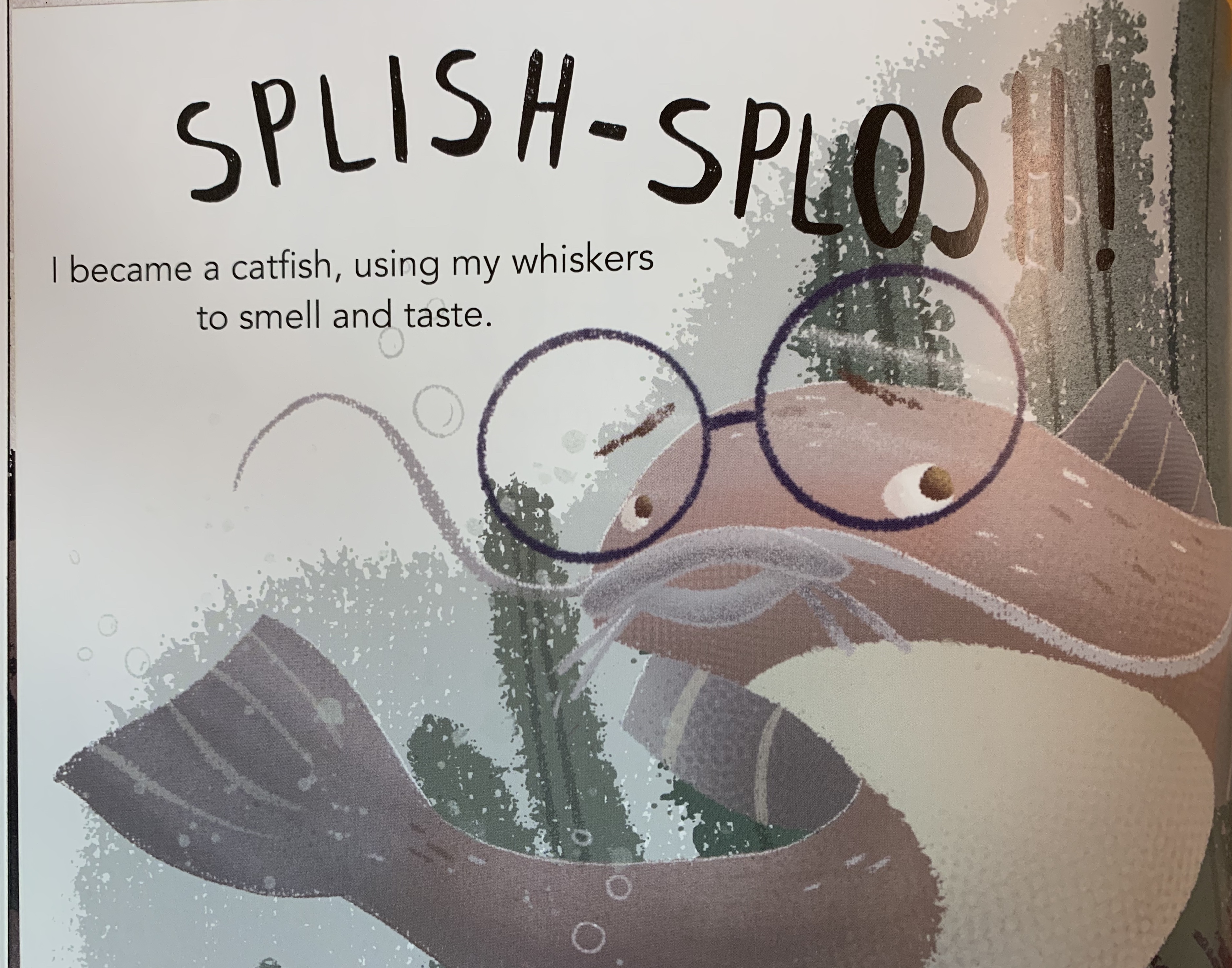
Finally, I have a teaching idea for you. With books like Gayle’s, students can find a pattern working throughout. A student can use this book as a mentor text to write their own imaginative book. What animals do you wish you could be? Using onomatopoeia to describe what it would be like to turn into that animal.
Page from When I was an Alligator by Gayle Webre
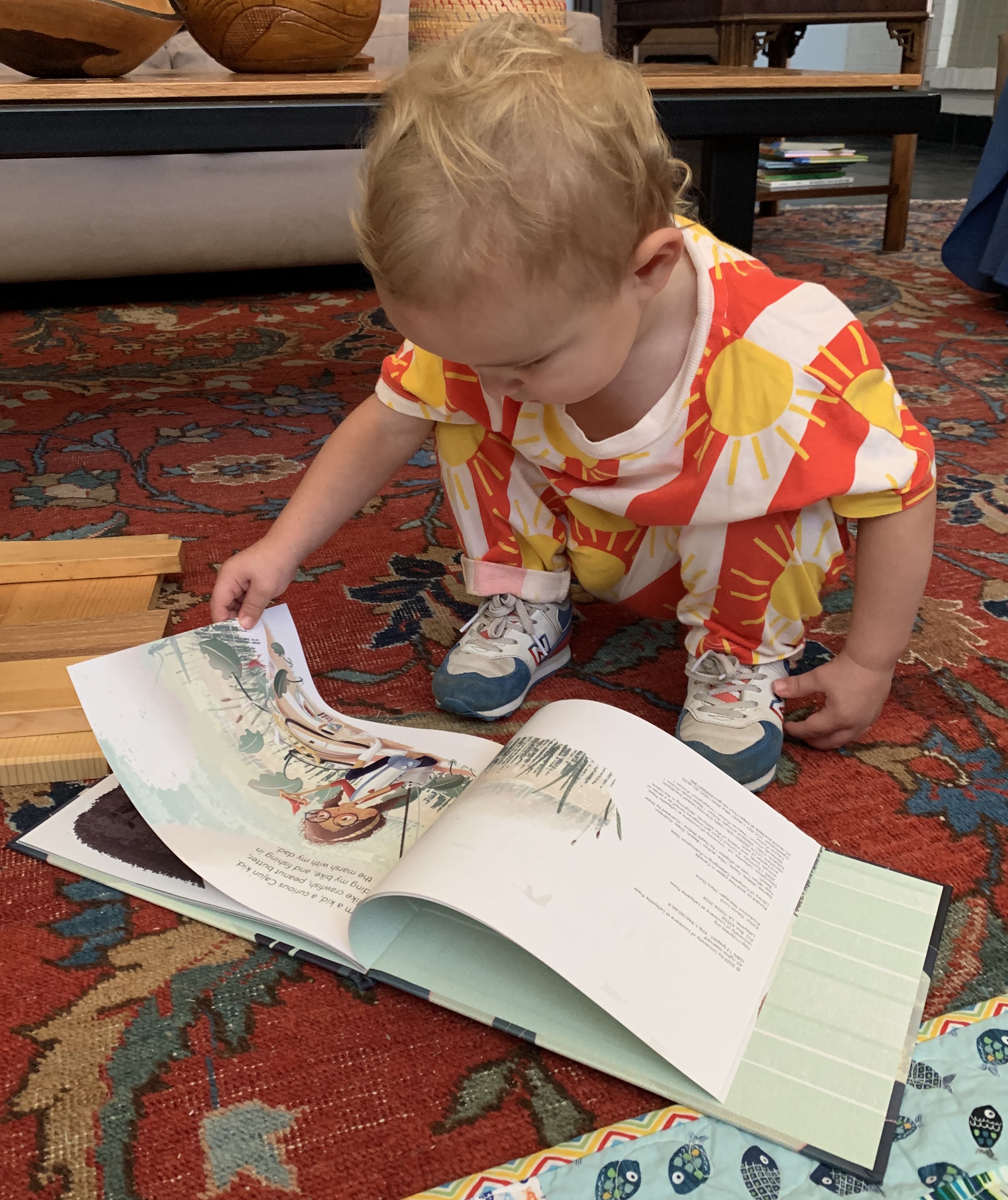
Leo, 22 months, is also a curious Cajun kid who loves crawfish and peanut butter. He says, “crawfish, yum!” and “Ba-butter” for peanut butter.
Pablo Neruda was the master at writing odes, skinny poems of praise that would go on and on, metaphor after metaphor, describing the most ordinary thing. With my student Chloe, we read Neruda’s Ode to My Socks. We discussed metaphor. Then I asked her to write a skinny ode about something she cares about. Gymnastics came to mind right away. She made the connection between the uneven bars and a tree, and off she went.
Ode to the Uneven Bars
A high twig it holds me. I’m a feather. Cartwheels on air that bring me higher, my hands are explorers that discovered a path to the wonderful world of magic.
I hold up my invisible hands that reach from island to island. My hands are telescopes that help me see the world. My arms wrapping around trees, my hands out of control going everywhere. Suddenly they fly high, higher than the trees that wait for me.
When we write poems to a photo, we enter a process of collaboration. A meeting between the photographer and the poet, the image and the words. In collaboration, one can have a conversation, an inquiry, or a conviction. Do your beliefs about the world come through in your poems? Are you communicating or responding? Are you participating or letting the muse take control?
I invite you to reflect on your process today as you write. Leave a small poem in the comments as well as a reflection of your thoughts.
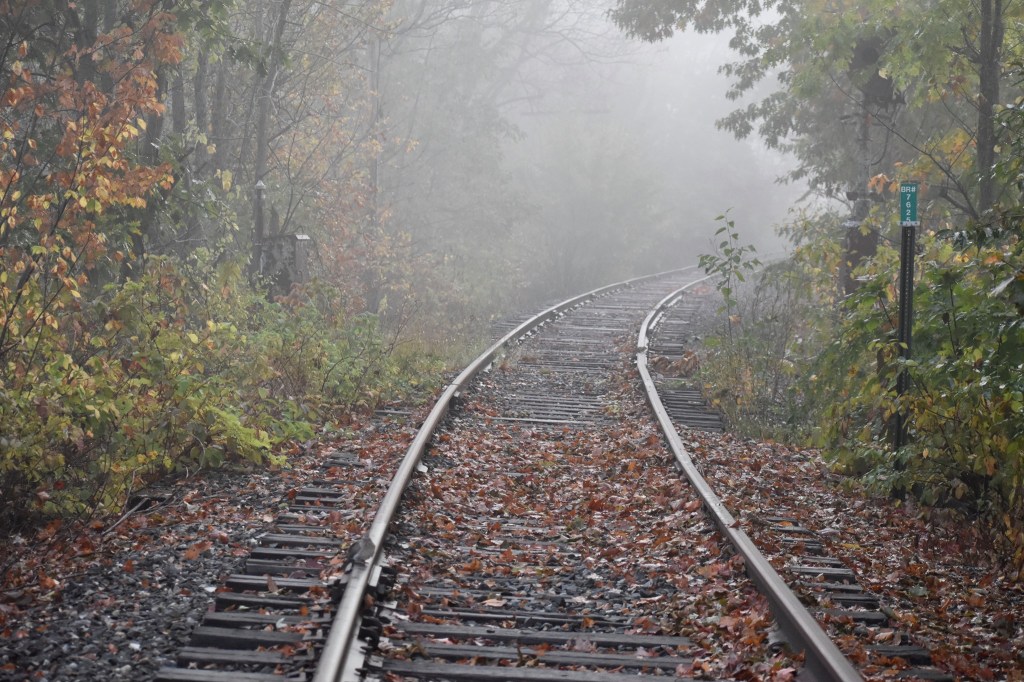
photograph by Molly Hogan
Perspective
The tracks rise to a point on the horizon disappearing into a mist.
We know beyond the page, the path goes on and on.
Margaret Simon, draft
My reflection: Perspective is something an artist has to learn. If you draw two parallel lines, they must converge to give the impression of a continuing road. Our horizon line is not a finite place. The earth is round. When I think about this in a spiritual, metaphorical sense, I think of our own path through life. There is a mirage of an end, but there is always another turn to make.
Note to my readers: We are in the path of Hurricane Delta. School has been cancelled for today and tomorrow. We are preparing. We have a strong house (and a friendly generator named Sparky). I appreciate your thoughts and prayers.
Poetry Friday round-up is with Tabatha at The Opposite of Indifference
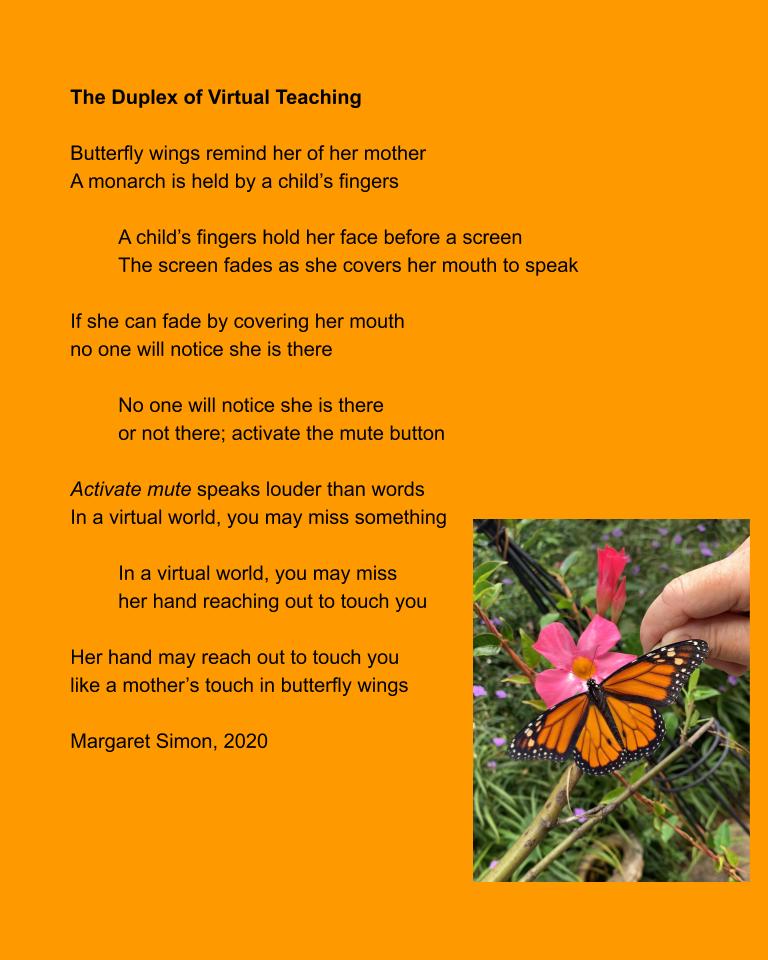
I have become enamored of the duplex poetry form, a modern take on a ghazal + sonnet + blues poem invented by Jericho Brown, the Pulitzer Prize Poetry Winner for 2020. I’ve read the description in this article over and over, and every time I see something new. In other words, it’s complicated.
Here are the boundaries:
Write a ghazal that is also a sonnet that is also a blues poem of 14 lines, giving each line 9 to 11 syllables.
The first line is echoed in the last line.
The second line of the poem should change our impression of the first line in an unexpected way.
The second line is echoed and becomes the third line.
The fourth line of the poem should change our impression of the third line in an unexpected way.
This continues until the penultimate line becomes the first line of the couplet that leads to the final (and first) line.
For the variations of repeated lines, it is useful to think of the a a’ b scheme of the blues form.
Jericho Brown
I decided to challenge my writing group, The Sunday Night Swaggers, with the form. Challenges help to get us moving. (I hope my partners aren’t throwing eggs at this blog post.) I enjoyed this process. The repetition with the permission to vary it led to new discoveries.
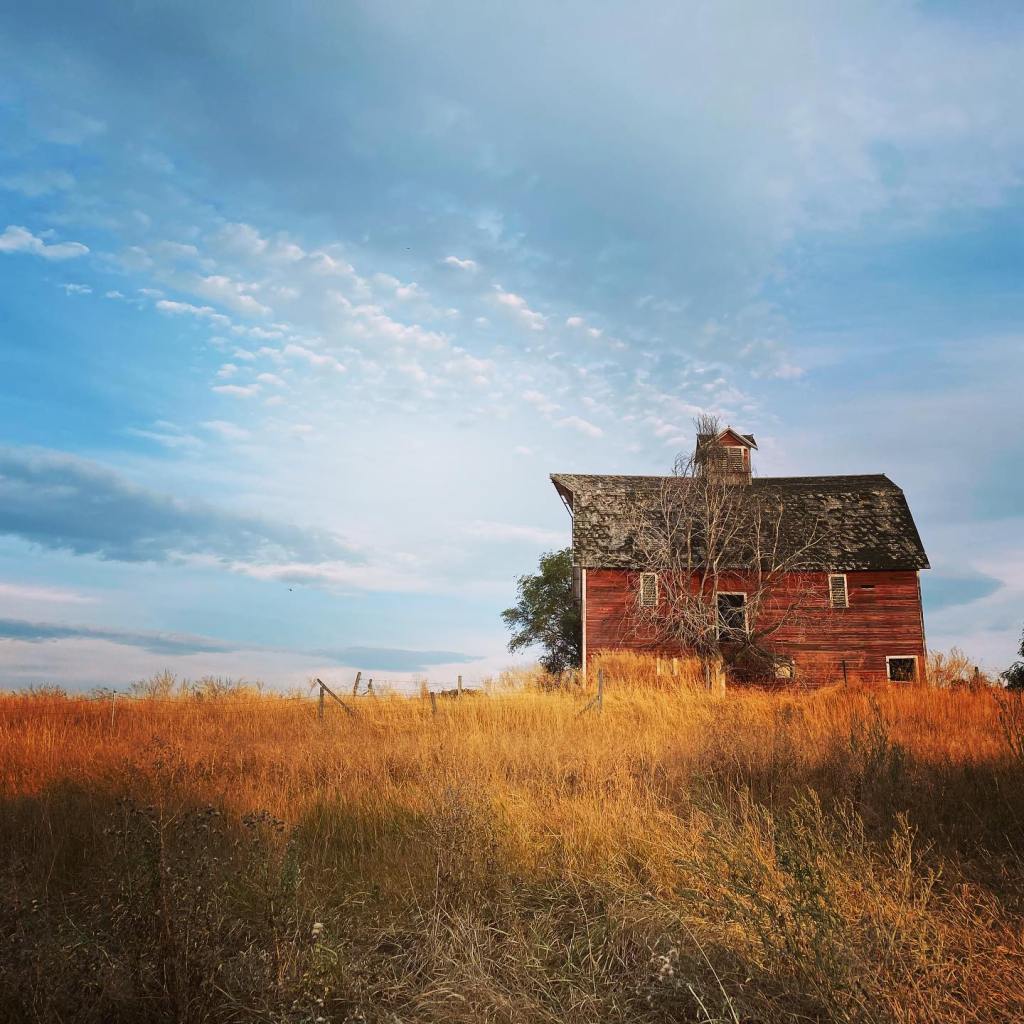
Old barn between Kalispell and White Fish, Montana by Jan Risher
How many of us have wanderlust? After pandemic shut downs have kept us homebound with theaters, museums, and art galleries closed, many of us have suffered from the strong desire to go somewhere else. My friend, journalist Jan Risher, hit the road a few weeks ago with her husband. Finding travel somewhat doable again, she posted picture after picture of our amazing country.
I was drawn in by her pictures of Montana. We were there only a few summers ago and enjoyed a train ride from Seattle to White Fish. To see more of Jan’s pictures, follow her on Instagram. To read her article about her trip, click The Advocate.
If the spirit moves, write a small poem in the comments. Please encourage other writers with kind comments. I’m sorry this post is late today. I discovered that I can access my blog on my school computer, but I can’t edit or publish the post.
Here where land reaches up to sky with a hand on the heart of America… We see sacred space.
I am hosting the link up of Spiritual Journey First Thursday posts. Link up with Inlinkz.
In Holy Love, our sense of separateness dissolves, and we know ourselves as arising from the brilliant light of Divine Love that creates and sustains the universe.
Understanding the Enneagram, 62
I carry around bits and pieces of poems in my head. Today I was working with a student on the vocabulary word tempest. I said to her, “It’s in a poem or song or something. Tempest-tossed.” Right then and there I had to Google it. Ah, yes, The New Colossus:
Send these, the homeless, tempest-tost to me, I lift my lamp beside the golden door! Emma Lazarus
And when I read the opening quote about Divine Love, I thought:
Whoever you are, no matter how lonely, the world offers itself to your imagination, calls to you like the wild geese, harsh and exciting- over and over announcing your place in the family of things. Mary Oliver, Wild Geese
I want to keep these thoughts of peace, of belonging, of being a part of the whole. I feel it most when I am in nature, but lately, I feel it when I am teaching. I was away from teaching for a long time. I thought I was doing fine without it. I was, but sometimes, a calling is unexplainable. Sometimes I feel myself unworthy of the calling. Sometimes a calling is holy.
The wild geese are my students, on screen and off. They call to me every day and announce my place in this crazy world.
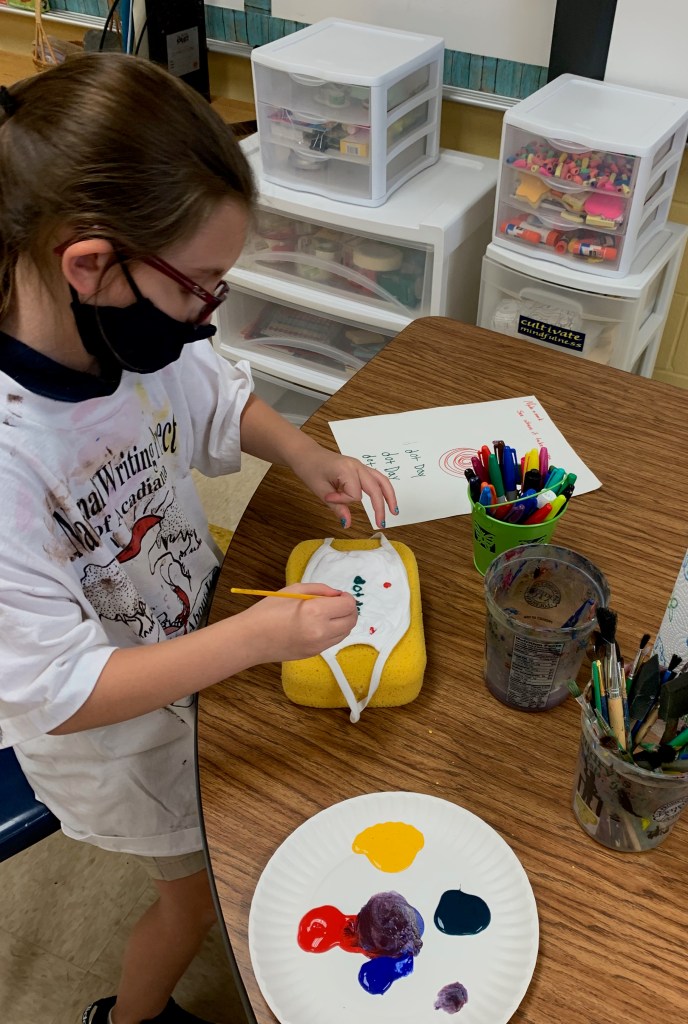
Rylee painting a Dot Day mask.
If you wrote a Spiritual Thursday post, link below.
Thank you to Two Writing Teachers for creating an amazing community of writers and a safe, welcoming space to write and share.
I know school looks different for most teachers this year. For me, I spend my whole day in one building. For the last 12 years, I’ve been an itinerate teacher, traveling to 3 schools each day. Now I travel through a screen to different students. I’m providing virtual gifted services for students who’ve chosen the virtual option. I’m learning very quickly what kinds of writing activities work well and which ones do not in this virtual setting.
Last week I presented a question for quick writing. Yesterday I used a different approach. I presented a poem and asked students to take a line and write from that line. It seemed to go well; however, the kids were not throwing their hands up (or turning their mikes on) to read what they wrote. This is the part I can’t quite figure out. Do they just need more time or is this how it’s going to be?
I still believe in writing alongside my students, so I wrote a poem with them. The poem we were reading together came from Teach this Poem from Poets.org, Cento Between the Ending and the End. The lines I took frame the poem. Before sharing my poem, I explained that when we write together in quick writes, we often write about whatever is on our mind at that moment. My youngest daughter is getting married in our backyard in 3 weeks. As plans begin to finalize, I am getting excited about the family (immediate family only) that with gather with us.
Unopened Gift
Everyone we love is gathered around the bride and groom. Side by side, their eyes glow.
We understand this kind of love, tender and new, like a gift waiting to be discovered.
We hold their hearts in our hands, bless them with all that we have. Send them to the blue sky brimming with golden light.
With my 6th grader, Daniel, we wrote back and forth (in a shared document), adding lines to create a Cento* poem. When the first stanza turned out to rhyme, it was a challenge to keep it going. We were both pleased with the results.
I soar to the sun Look down at the sea Bloom how you must, wild Until we are free.
I wish I could share All that’s in my heart. It’s like the world That keeps us apart.
Everyone we love Gathered at the lakeside Marble-glow the fire A new one inside
I wish I could live The body whole bright- Of the day beautiful, Honeyed light.
Cento from I Wish I Knew by Nina Simone and Cento Between the Ending and the End by Cameron Awkward-Rich
*From the Latin word for “patchwork,” the cento (or collage poem) is a poetic form composed entirely of lines from poems by other poets.
Poetry Friday round-up is with Jone at her fresh new blog site.
A few weeks ago Jone asked the Poetry Friday gang to post poems using mathematical structures. She listed the Arun form. I was curious about this form, but a Google search of forms continually came up with nothing. I finally went back to Jone’s post and followed the link to a blog by Girlgriot. On this site, Girlgriot writes about the form and its rules.
An Arun: a fifteen-line poem in three sets of five lines. Each set of five lines follows the same syllable structure: starting with one syllable and increasing by one (1/2/3/4/5 — 3x).
Girlgriot, March 21, 2017
More digging led me to this post in which Girlgriot reveals that she invented the form. And why not?
It still doesn’t seem possible that I created a form. That really should be, must be, someone else’s domain. But here we are, with the arun. “Arun” means “five” in Yoruba (according to The Google), and the name was chosen by popular vote in a little blog poll I put up. It’s not super sophisticated, but I like it.
GirlGriot, March 22, 2017
When I talked to my student Chloe about the form, she suggested that we write one together about “Back to School.” This is our collaborative poem:
Back to School
Masks line the hallways to class, but it’s not Halloween Day yet.
My teacher switching in style with a cart but we stay in place.
One by one take it slow better be safe and not stuck at home.
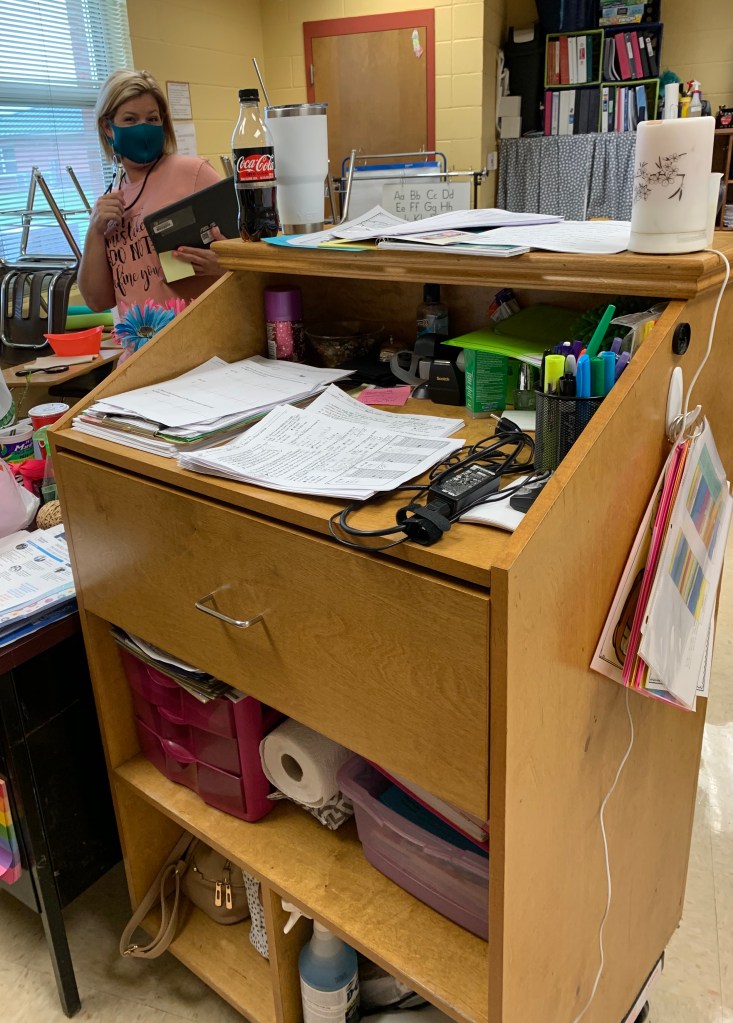
To help you understand the stylish carts, I took a picture of my across-the-hall colleague and her cart. As you can see, it’s like the teacher carrying her whole desk from room to room.
I’m in my second week of teaching, and it’s going pretty well, despite the weather which has been churned up by Tropical Storm Beta. Dreaming of travel, I took notice of Paula Bourque’s pictures from Maine. She’s taking day-adventures with her husband. This was her message on Sunday:
Mornings are filled with meaningful lessons. They show me that everything changes and moves on. If I can embrace that, I can be open to new wonders and stop wishing for what was, to always be. Life is change. Sunday sermon over.
Paula Bourque, Facebook post
Paula is the author of Spark! Quick Writes to Kindle Hearts and Minds in Elementary Classrooms. We met at NCTE last year when I was the “chair” of her round table session. She presented ways to use images to prompt quick writes in the classroom. So here I am, full circle, using one of her photos as a prompt for a quick write.
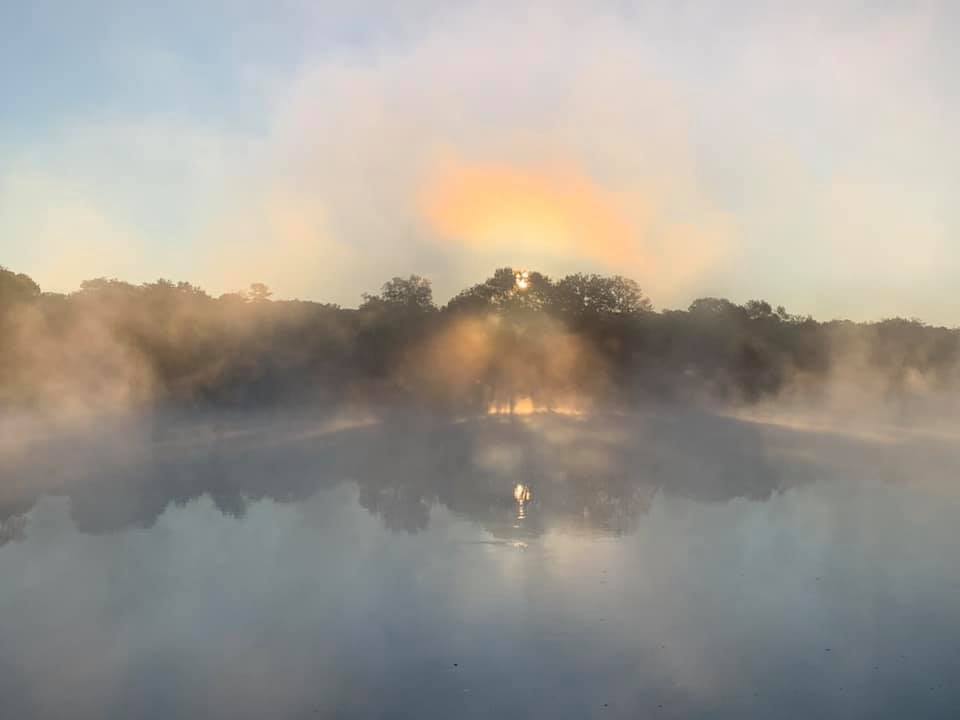
Sunrise at Gardiner Landing by Paula Bourque
Leave a small poem in the comments or jot one in your journal. If you share, please respond to other writers with encouraging words.
I would like to be remembered* as someone who softened things like the still, blue surface of a lake at dawn.
Margaret Simon, draft
words from a Ruth Bader Ginsburg quote, “I would like to be remembered as someone who used whatever talent she had to do her work to the very best of her ability.”
Margaret Simon lives on the Bayou Teche in New Iberia, Louisiana. She is a retired elementary gifted teacher who writes poetry and children's books. Welcome to a space of peace, poetry, and personal reflection. Walk in kindness.








 Reflections on the Teche