Today is the first Friday of a new month, October, and time for an Inklings challenge. I asked my writing group friends to exchange photos for an image poem. I invite you to participate in image poetry every Wednesday right here with This Photo Wants to be a Poem.
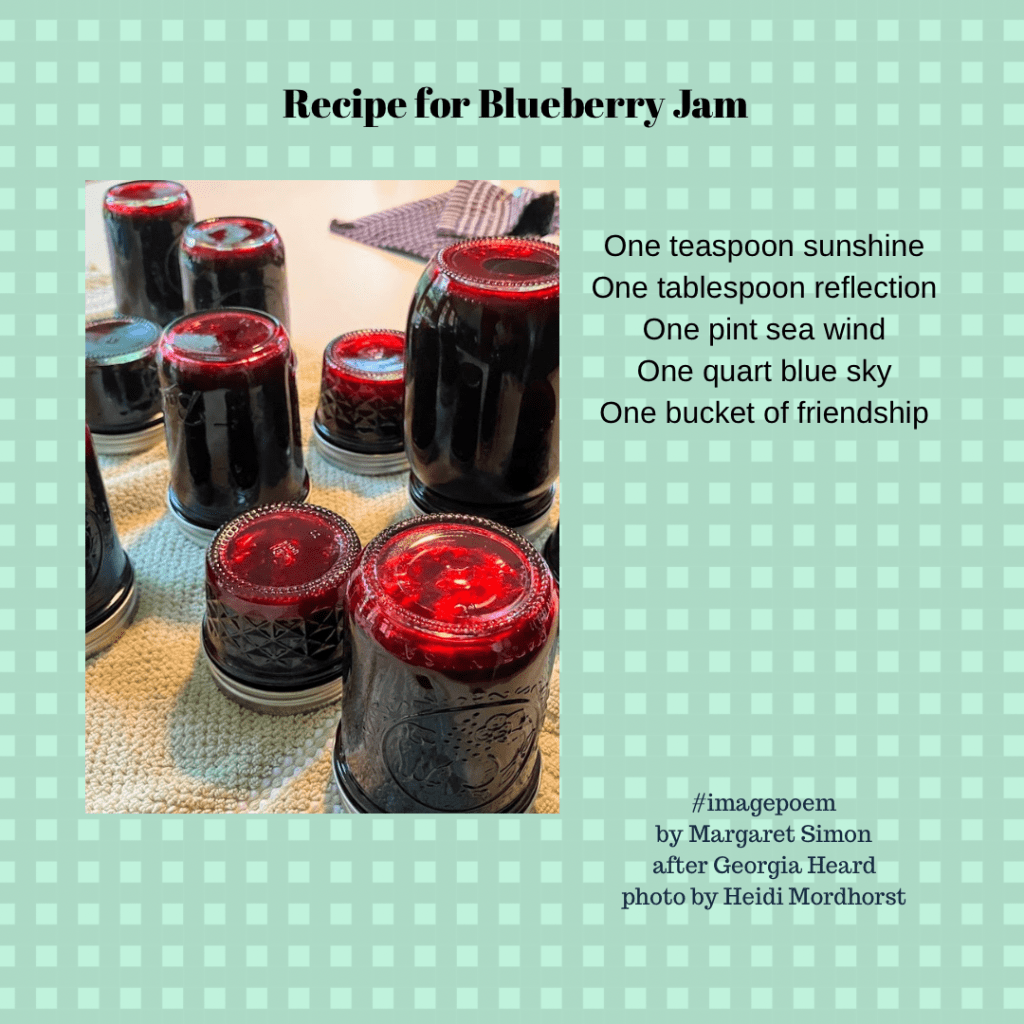
My exchange partner was Heidi. She had the opportunity to visit fellow Inkling, Molly, in Maine this summer. I am quite jealous that they all made blueberry jam together. I could not resist the delicious collection of jars in Heidi’s photo.
Georgia Heard inspired my poem by sending her own recipe poem through her newsletter.
Click on each link below to see other image poem posts from Inklings.
Poetry Friday is hosted today by Denise Krebs at Dare to Care.
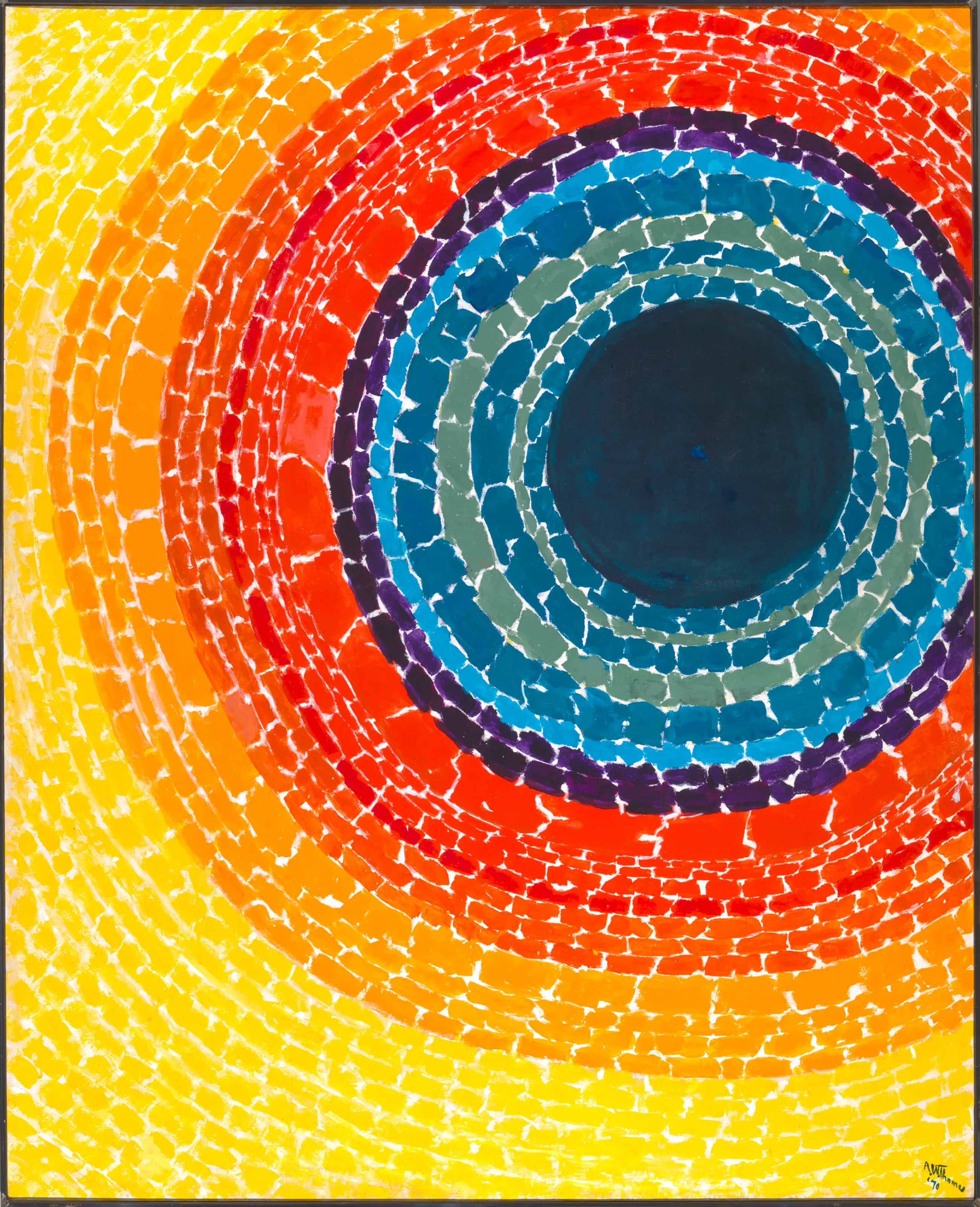
Alma Thomas, The Eclipse, 1970, acrylic on canvas, Smithsonian American Art Museum, Gift of the artist, 1978.40.3
Each day this month I have written a poem. I know that this sounds impossible. It certainly feels impossible to me. I joined a group of like-minded poets arranged by Laura Shovan to celebrate her February birthday with poetry. Writing in a community can feel impossible. How can I meet the standards? Who am I to believe I am a poet?
But I did it, every day. This makes me believe that impossible things are possible. I have hope that we can exist in a world where poetry brings solace, hope, and community. Today, Heidi Mordhorst posted a similar art piece to compare our group to a circle of stars. I went to the linked page and found The Eclipse. There are different perspectives from each person in our galaxy. Some may see a circle, some see the dots of paint, and some focus on the dark center. However you view art, poetry, or time is yours alone. You get to decide.
But as Heidi so wisely said, “Some days, our circle was a parachute, lifting or sinking, catching or launching you. Some days our circle was the deepest well or mirrorest puddle, and maybe there was a day when our circle was a black hole of obligation, until the next day when you caught sight of a certain name, a certain voice, and our space became a sequin of possibility again.”
Tomorrow I will begin another writing journey, the annual Slice of Life Challenge from Two Writing Teachers. Today it feels impossible to write a blog post every day in March. If you read my blog, you are always welcome to swipe left and delete it. But I hope you’ll stick with me, cheer me on, and remind me that impossible means “I’m possible.”
Learning to write can seem impossible to a 6 year old. As I watch my grandson develop his reading, writing, and drawing skills, I am amazed at the capacity of our brains to learn. Here is a poem I wrote this month beginning with the space we make between words.
What space are you giving to yourself? How are you doing impossible things?
This month Mary Lee Hahn challenged the Inklings to write after Joyce Sutphen‘s poem Next Time. Sutphen’s poem has a dreamy quality to it, that if-only-I-could-do-it-again thought process. I was drawn to her lines “Next time I won’t waste my time on anger…Next time, I’ll rush up to people I love, look into their eyes, and kiss them, quick.”
I write about grief a lot. Why is that? Grief settles after a while but is always there waiting to be released again and again. It can be set off by a song, the familiar sound of a bird, or my grandson saying “I want to Facetime Pop.” We have to remind him (at age 5) that Pop died. When I sent this poem to fellow inkling Heidi Mordhorst, she said, “You write again and again about grief because you are still learning exactly this.”
Abby Wambach said recently in “We Can Do Hard Things” that she has made friends with her grief. “grief has become a friend to me, in that I am developing a real true relationship with it, because it’s the access point to all of the most intense feelings that I feel, the most intense sadness, the most intense anger.” So, here I am again and again, writing a grief poem.
I’ll avoid the cut grass where the snake eggs lie. I’ll check the mailbox for menacing wasps. Next time I’ll be wary when the cat calls to me in mournful mews.
Next time I won’t stray from the well-worn path. I’ll acknowledge wisdom of ancestors who learned, felt a spiritual guide. Who denies their purpose?
Next time I’ll read the book start to finish, underline passages in pencil, notes in the margin. Next time I’ll know death comes. It will not surprise me. Gut me.
Next time I’ll answer the call on the first ring. I’ll be there by your side, holding your hand in mine. I’ll let love keep its promise, be my purpose.
Last weekend was my birthday. I was blessed with a visit from all of my children and their children. Our time together was full of fun. Then school started in full force for me on Monday. There is no tired like the tired of the first week of school. So I didn’t have anything to offer for today’s post.
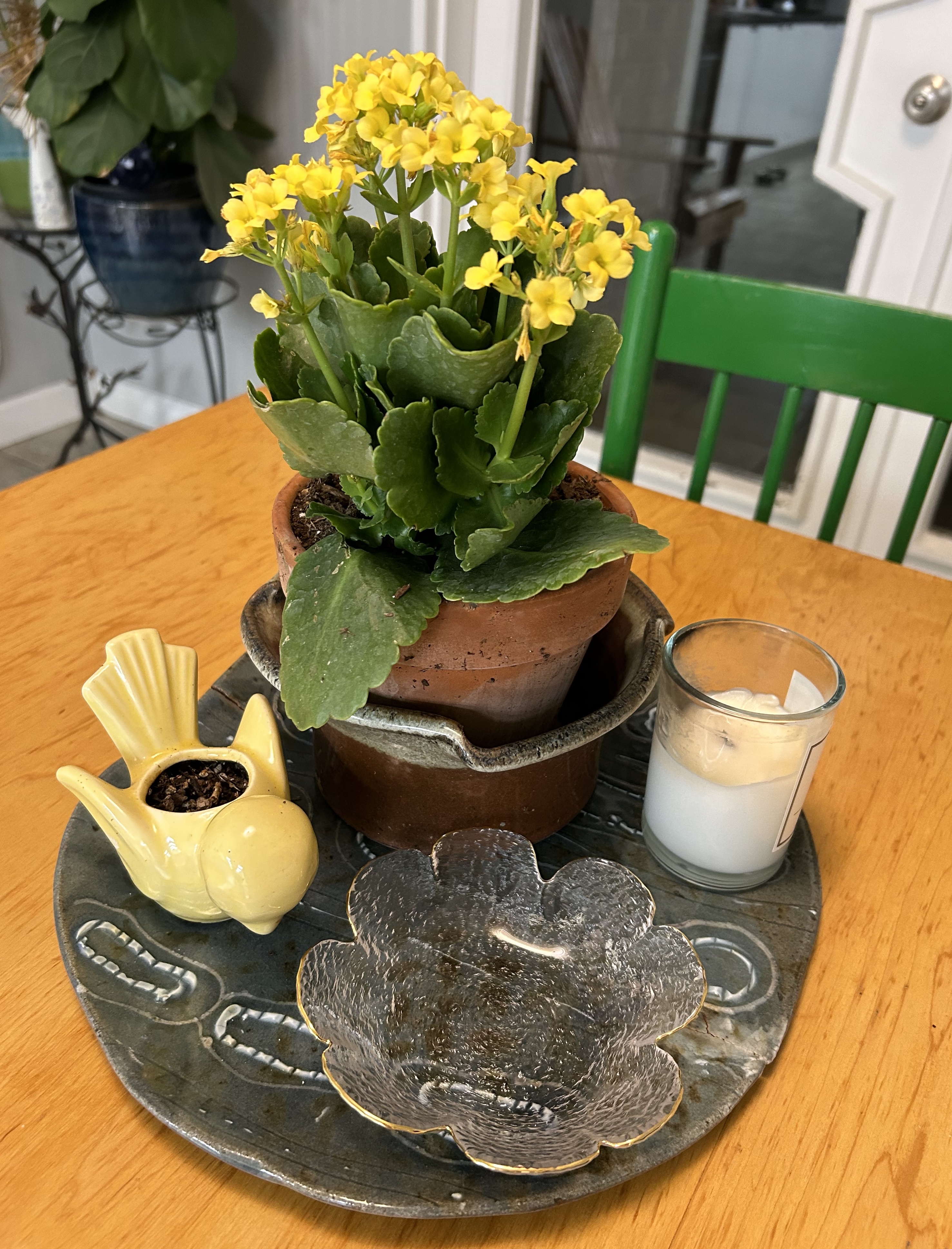
When I opened my email, I had a word-of-the-day from Merriam-Webster that included one of my favorite words to say, Tchotchke. Looking at my kitchen table where I am writing, I see a dish sent to me from my daughter’s mother-in-law. It touches me that in the midst of cancer treatments she had the thoughtfulness to send me a gift. It may just be a knickknack, but the deeper meaning is the love it was sent with.
I turned to the definito form created by my friend and fellow Inkling Heidi Mordhorst. A definito is a poem for children with 8-12 lines that defines a lesser known word. The word is given in the last line of the poem.
Simple Gift
For a birthday gently placed in a small bag tissue paper wrapping a glass dish– dappled, dainty, daisy– a little something to hold a little something decoration, knickknack, trinket simple reminder of a friend’s love...Tchotchke. Margaret Simon, draft
Thank you to Two Writing Teachers for creating an amazing community of writers and a safe, welcoming space to write and share.
Leigh Anne Eck has invited Slicers to come to a blog party about words. Where would poets be without words? I am not a word nerd, but I am a word collector. I love to play with sounds in poetry, especially alliteration. I subscribe to two word-of-the-day emails, and work with gifted students on how words are created and carry different meanings. Words are fun for me.
Here are some suggestions for activities to do with students around word play.
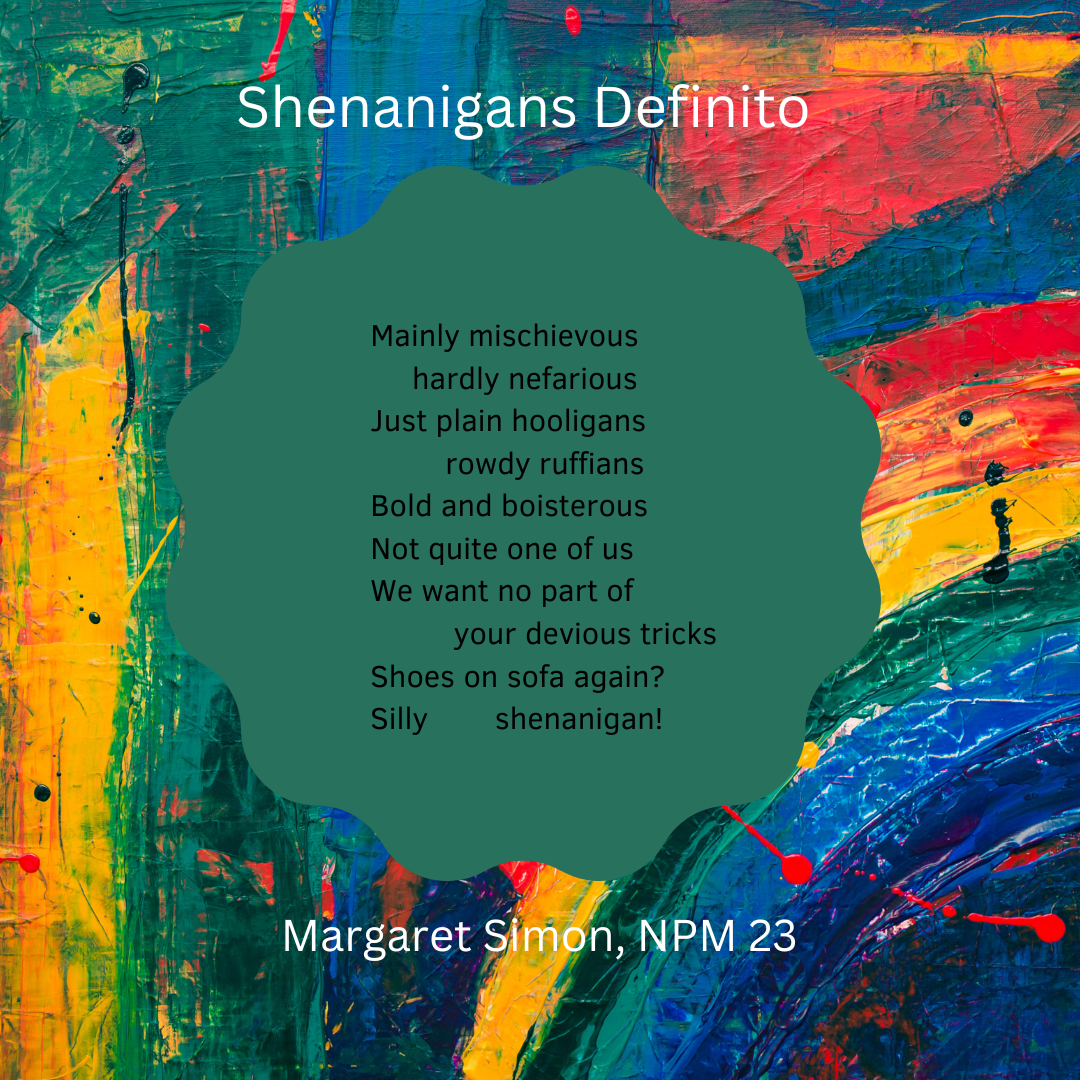
Definito poem: My friend and fellow Inkling (writing group) created this form. The poem form is 8-12 lines written for children that defines a word. The defined word appears in the last line. I wrote a definito last year during National Poetry Month around the word shenanigans.
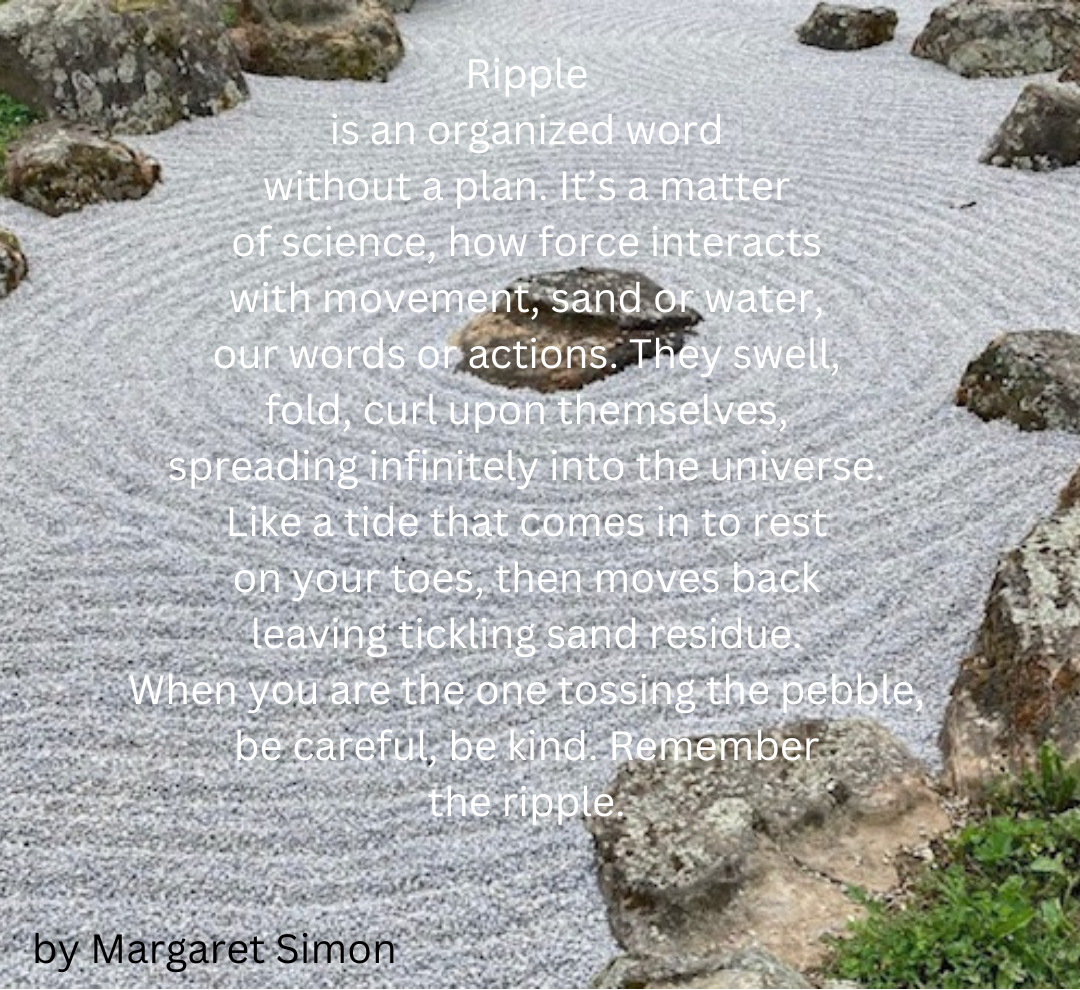
2. Wandering Word Poem: I first learned about this word exploration form from Nikki Grimes in this Today’s Little Ditty post. Take a word for a walk, exploring all the ways it can be used, literally and figuratively.
3. Pi-ku: On Pi Day each year (3/14) we write pi-ku which is a poem with the syllable count of pi: 3.14159…
I played with the sounds of p-words.
P-popping words popularly drop perpetuity
Margaret Simon, pi-ku
How do you “play” with words in your writing? If you work with students, I hope you can use the forms I’ve shared here and just let them play with poetry.
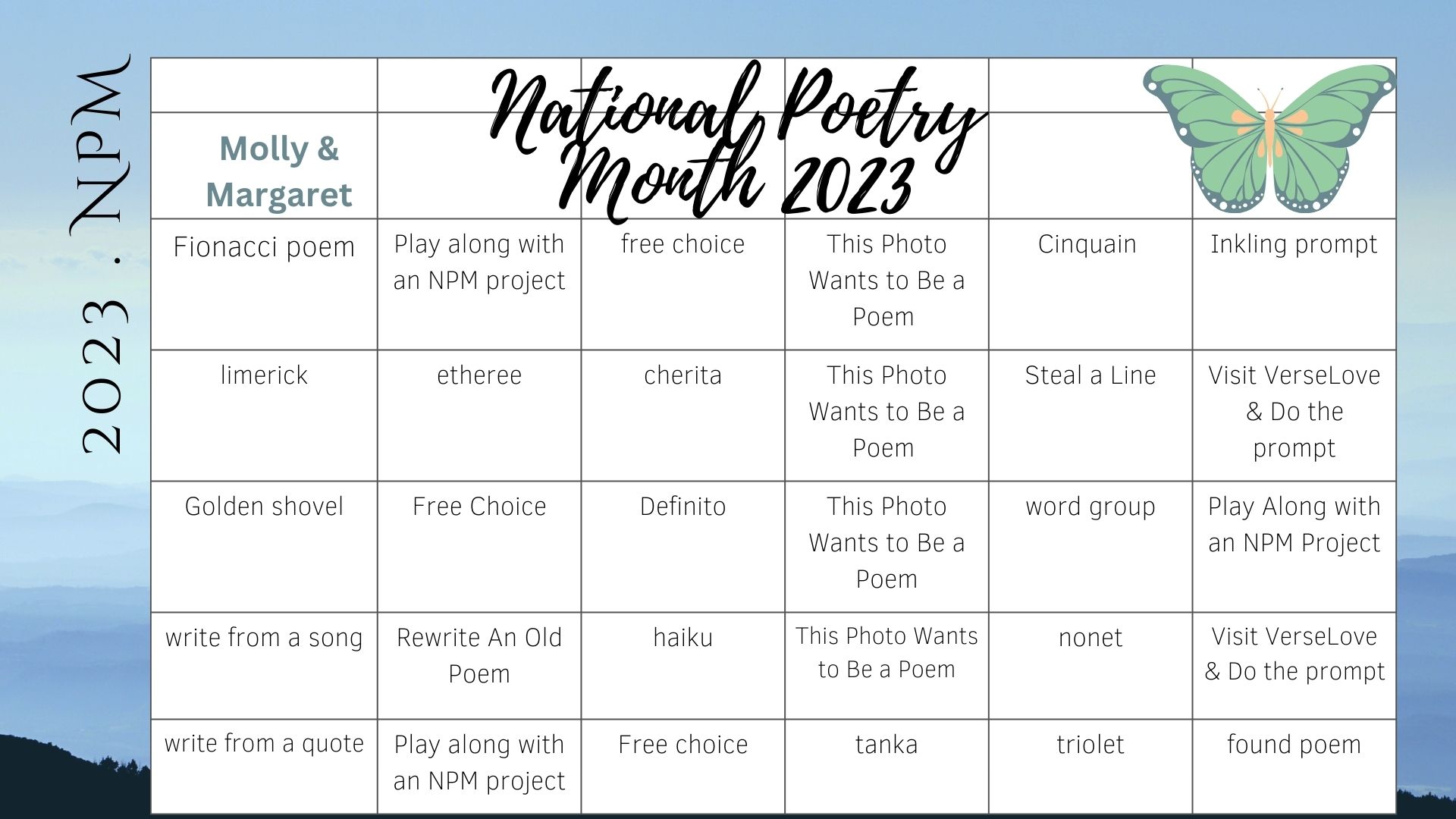
I got sidetracked from using the daily calendar that Molly and I created for our National Poetry Month Project. Even though we decided it was flexible and not a commitment, I wanted to check off another form with today’s poem.
One of my favorite forms for playing around with words is Heidi Mordhorst’s Definito. What a clever form! It’s a poem for children of 8-12 lines that uses word play to define a word. I had a draft started about the word Shenanigans. Isn’t that a fun word to say? After spending a night with grandson #2, I was taken back to it.
Thank you to Two Writing Teachers for creating an amazing community of writers and a safe, welcoming space to write and share.
I don’t think you should call me a word nerd, because at my age, I have trouble finding them hiding way back in the recesses of my brain, especially names. Last night I was trying to tell my husband about a place, and I said “It starts with an H.” Then it came to me a few minutes later “Rawhide!”
“That starts with an H, right?”
But seriously, who doesn’t love a good word for something. I wanted to start a collection of good words, so I decorated a marbleized journal and subscribed to the daily Word of the Day from Merriam Webster. Today’s word is gallivant. What a great word. I love the way it sounds. Out of the confines of Covid, I think many of us would love to gallivant around the country, freely wandering from place to place. It just sounds like such a regal and carefree word, doesn’t it?
My friend and writing partner in my writing group, the Inklings, Heidi Mordhorst, invented a wonderful poetic form for defining a word and playing with the sounds of it–the definito.
The definito is a free verse poem of 8-12 lines (aimed at readers 8-12 years old) that highlights wordplay as it demonstrates the meaning of a less common word, which always ends the poem.
One of the wisdoms I have gained as a writer is that writing with others creates strong friendships because writing is such an act of vulnerability. It is true for the classroom, for writing workshops, and for critique groups. My group, the Inklings, are true friends. They listen, respond with integrity, and encourage me as a person as well as a writer. We live far away from each other, but we used Zoom long before the pandemic, and see each other twice monthly. This is all to say that when my father died, they did what they do best, and sent me a book of poems. I sat alone with these poems and let the comfort and wisdom of words wash over me. I offer a video today of me reading each poem sitting out by my beloved bayou. It’s 8 minutes long.
When I was growing up, I wanted to be an Olympic swimmer. As an introvert, swimming was a sport I could do. But the flip turn alluded me. I gave up when competitions required a flip turn.
My oldest daughter swam competitively from 7th to 12th grade. Our lives were consumed with practice and meets.
When Sarah Donovan of Ethical ELA put out a call for sports poems, I drew on these experiences and wrote a duplex poem about swimming, First Heat. The poem was accepted and is now published alongside Inklings Heidi Mordhorst and Linda Mitchell, as well as admired authors like Nikki Grimes, Laura Shovan, and Padma Venkatraman. You can purchase a copy of Rhyme & Rhythm: Poems for Student Athletes at Archer Publishing’s website.
The Poetry Sisters challenge this month was to write a tanka in conversation with another sister’s poem. I chose Heidi’s poem from Rhyme & Rhythm, Cleatless about dancing.
My feet didn’t beat until they stepped in time with yours, right-together-
right, left-together-left two step, twirl face-to-face with you.
Poetry Friday round-up is with Janice Scully at Salt City Verse.
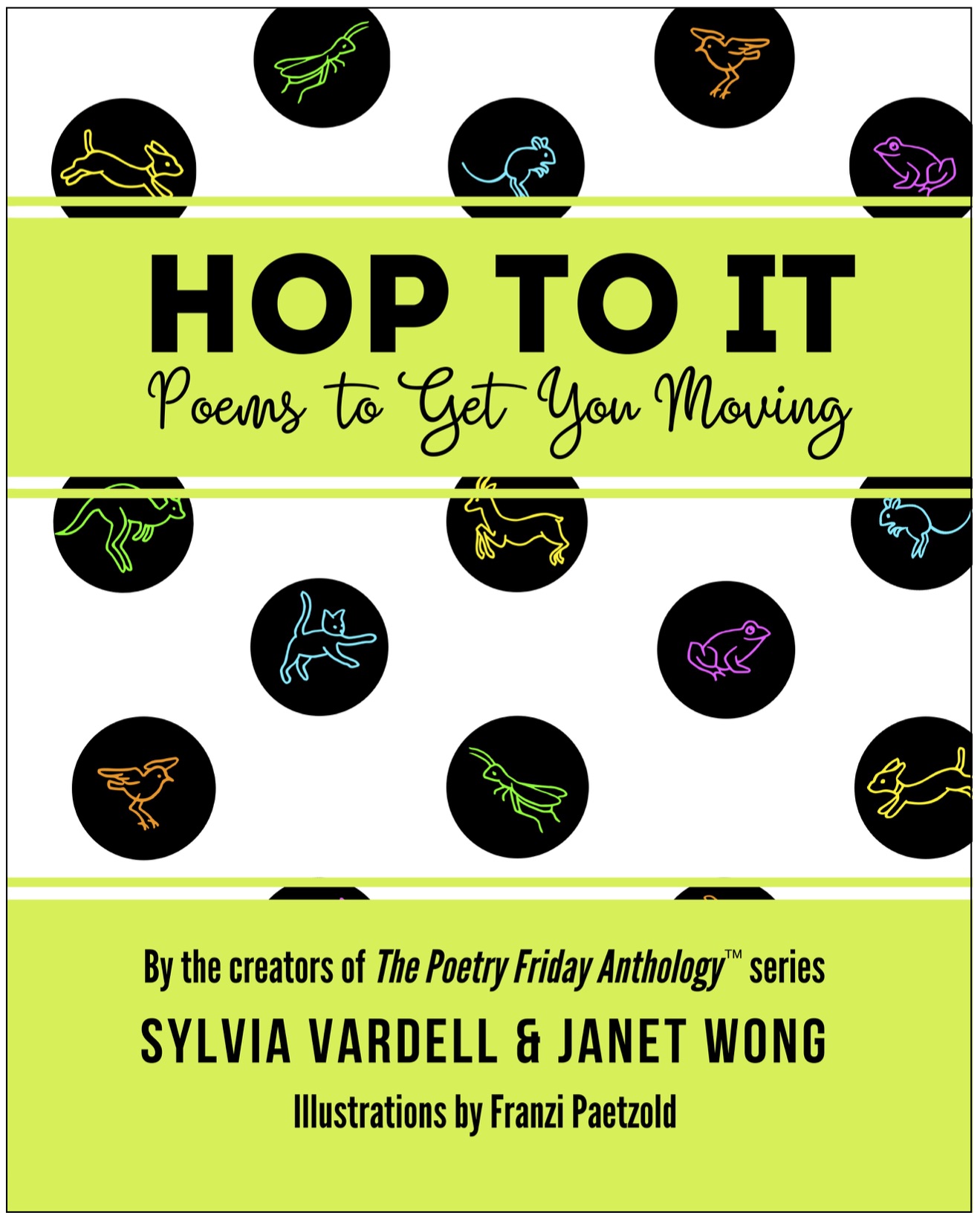
Today I am thrilled to be a stop on the blog tour for Hop To It: Poems to Get You Moving, the latest anthology from the dynamic duo, Sylvia Vardell and Janet Wong of Pomelo Books. The call went out earlier this year for poems that children can experience with their bodies. When the pandemic hit, Sylvia and Janet, who are known for responding to world events with poems, gathered pandemic poetry as well. This book is an inspiration for poets, teachers, and children.
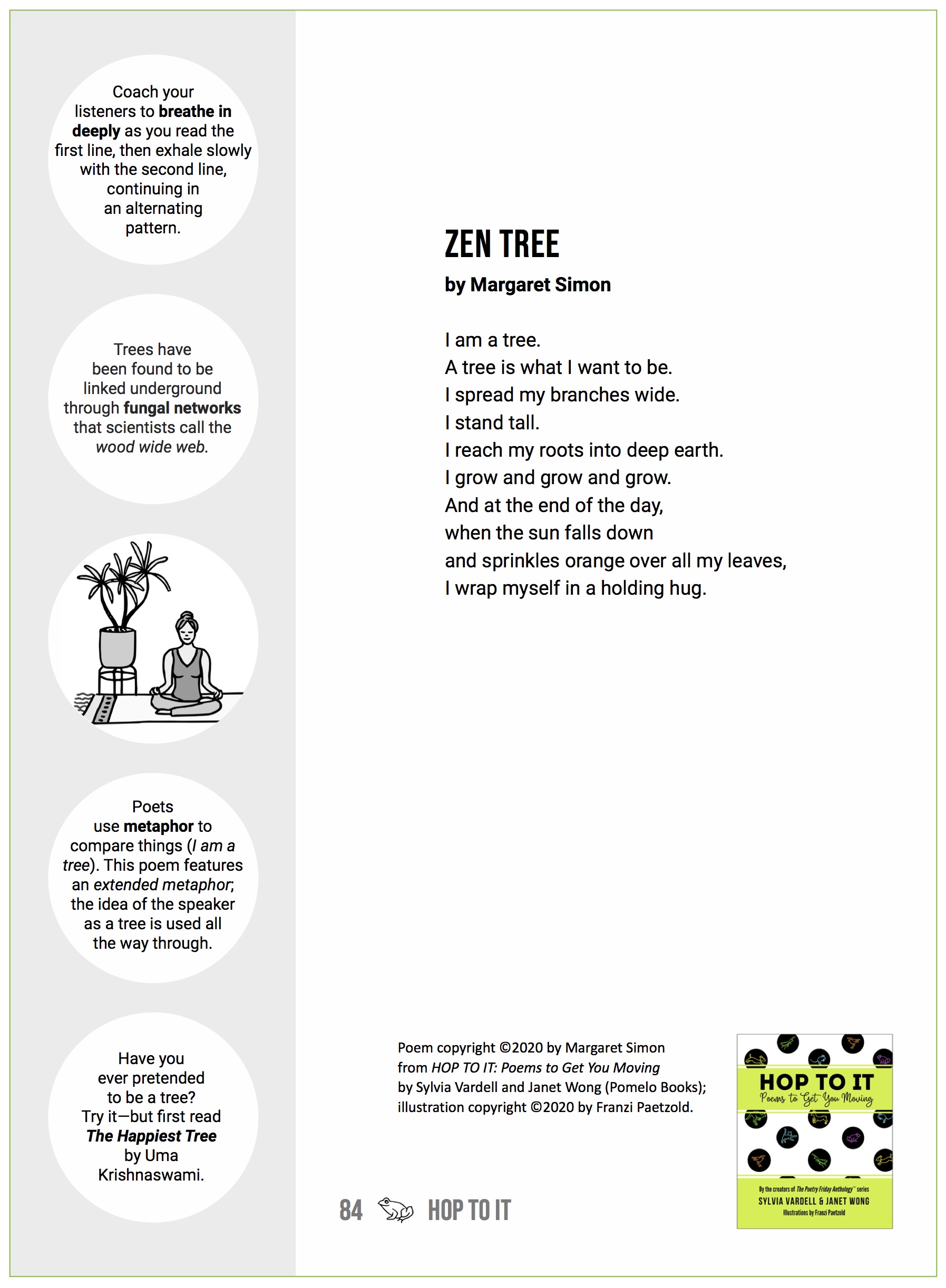
I have written a collection of mindfulness poems that have yet to find a home, so I submitted a few to Sylvia and Janet, who selected Zen Tree. I absolutely love how the side bar bubbles give more information as well as a paired poem. This added touch is what makes Pomelo Books unique and teacher-friendly.
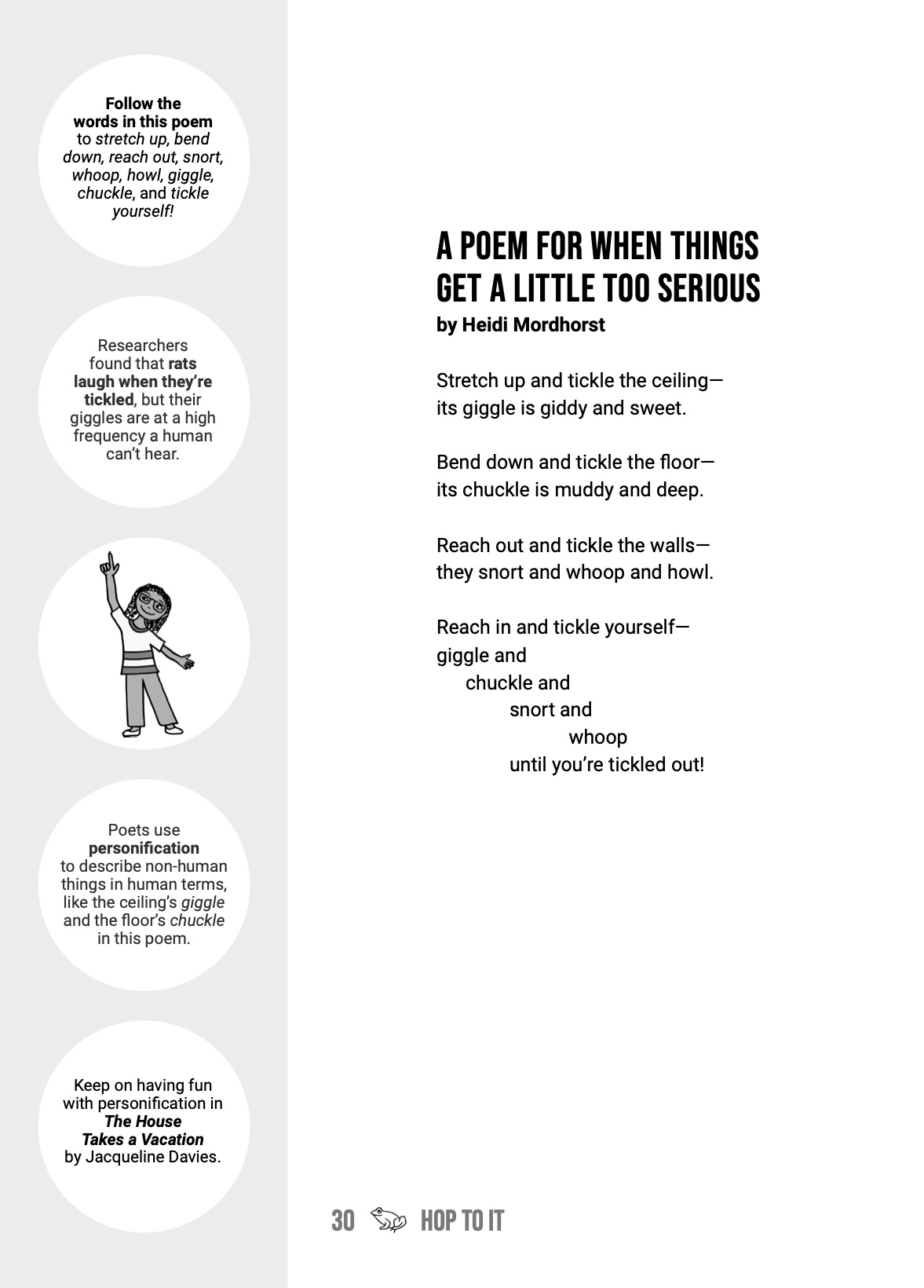
Heidi Mordhorst and Catherine Flynn, two friends from my Sunday Night Swaggers writing group, also have poems included. Catherine’s birthday is today, so hop over to her post to wish her Happy Birthday and to read her Mental Floss poem. Heidi gave me permission to share hers here. We are bouncing, flossing, tickling, and breathing along with 90 poets. What an amazing party!
Next stop Poetry for Children, blogspot for Sylvia Vardell, for more fun news about this book.
Margaret Simon lives on the Bayou Teche in New Iberia, Louisiana. She is a retired elementary gifted teacher who writes poetry and children's books. Welcome to a space of peace, poetry, and personal reflection. Walk in kindness.












 Reflections on the Teche