Feeds:
Posts
Comments

Posts Tagged ‘National Poetry Month’


Dig poetry


My friend who doesn’t write sent me the joke poem above.  My response was “You understand me. I dig deep.”  I have committed myself to write everyday this month about poetry.  I am not promising an original poem each day (but who knows?). To share our poetry activities this month, we are using #digipoetry.  Leigh Anne (@teachr4) made this button for our blog posts.  Feel free to use it, too.


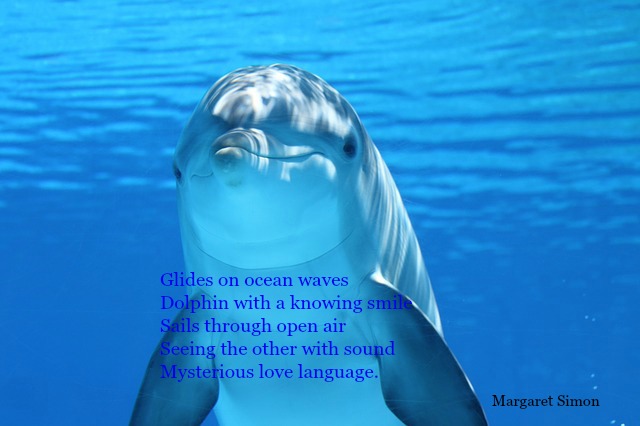
DigiPoetry buttonWednesday is a good day to wonder.  I wandered over to Wonderopolis and found a wonderful article about dolphins and echo-location.  To think about writing a poem, I collected words and phrases from the article.  After many false starts (rough drafts), I read about Nikki Grimes’ tanka contest.    Nikki Grimes’ contest for kids in grades 3-6: Tanka writing

Sometimes when writing doesn’t come easily, a form gives you the structure you need to create.  A tanka is similar to a haiku. There is no rhyme and a syllable count of 5, 7, 5, 7, 7.   Nikki Grimes has a book coming out in May, Poems in the Attic, which includes tanka.  (Click the link for more information.)

I used PicMonkey to create this image poem.

dolphin-203875_640


Read Full Post »

Slice of Life Tuesday

Slice of Life Tuesday

In celebration of National Poetry Month, I am teaching my students a different poetry form each day. Because of all the interruptions, (testing week, field trips, etc.) we are only on the letter I. Today we wrote I am From poems. The I am From form originated with a poem by George Ella Lyon entitled, “Where I’m From.” Alan Wolf writes about the form in his book, Immersed in Verse. We begin by analyzing Lyon’s poem which uses some wonderful literary elements, specificity, imagery, alliteration, metaphor. Then the students make their own lists of sites, sounds, and tastes from their own lives. The challenge comes when you want to make the poem go beyond the personal to the universal. I have tried this form several times, and I’m never totally happy with the results. For last year’s attempt and some student samples, click here.

My students are continuing to post on their Slice of Life kidblog
, so click the link to read some of their poems. Be sure to leave a comment.

I am from Sunday drives to Morton,
kisses from Grandmother, Aunt Laurie, and Sister,
picking pecans, and the musty smell
of homemade quilts and old tobacco.

I am from Beechcrest Drive,
running behind the sno-cone truck,
catching fireflies, and roller-skating
on the driveway, cartwheels in the grass.

I’m from climbing Paw Paw’s pink mimosa tree,
listening to loud opera,
From jumping on the trampoline
singing “Shimmy, Shimmy, my playmate,
Come out and play with me!”

I’m from loyal companions Loopy then Lucky,
from Bless-this-food-to-our-use
at every supper, surrounded by yellow-flowered
curtains in a bay window.

I am from the solid soil of Mississippi,
deep roots of oak and pine,
legacy of patience and drawl.

c) Margaret Simon

Easter photo with me, the oldest sitting, my brother and my younger sister.

Easter photo with me, the oldest sitting, my brother and my younger sister.

There are so many great poetry month happenings in the blogoshere. Today, I am the guest blogger at Caroline Starr Rose’s blog site, Caroline by Line. Please stop in and leave a comment. Check out the progress of the progressive poem by clicking on the date in the right side bar. I am following Greg Pincus at GottaBook. He posts a poem each day. Heidi Mordhorst is building a poem at My Juicy Little Universe, 30 days, 30 words. She chooses a different word from the comments each day to add to the poem. An interesting process. Happy Poetry Month!

Read Full Post »

Join Poetry Friday with Diane at Random Noodling

Join Poetry Friday with Diane at Random Noodling

G is for ghazal. I am no expert in poetry. I have a degree in elementary education and a masters for teaching gifted. I have only studied poetry on my own through workshops, reading, and internet research. My list of publications in poetry is short. But I do enjoy trying out new forms. One of the ways I try out writing new poems is by consulting with an expert.

My chosen expert for ghazal is J.K. McDowell. Jim published a book of poems that were all written in the ghazal form. I met Jim at a poetry reading last year and again at a wordlab a few months ago. We are now Facebook friends.

To write this ghazal, I read Jim’s book, Night, Mystery, & Light, published by Hiraeth Press. I used his style of 3 lines that together form a unit that could stand alone as a poem. I collected some of his lines and words. When I later researched on the internet, the definition confused me.

From Poets.org “The ghazal is composed of a minimum of five couplets—and typically no more than fifteen—that are structurally, thematically, and emotionally autonomous. Each line of the poem must be of the same length, though meter is not imposed in English. The first couplet introduces a scheme, made up of a rhyme followed by a refrain. Subsequent couplets pick up the same scheme in the second line only, repeating the refrain and rhyming the second line with both lines of the first stanza. The final couplet usually includes the poet’s signature, referring to the author in the first or third person, and frequently including the poet’s own name or a derivation of its meaning. – See more at: http://www.poets.org/viewmedia.php/prmMID/5781#sthash.zcpOLhm5.dpuf”

Jim McDowell's book

Jim McDowell’s book

I asked Jim about the couplet and rhyming that I didn’t see in his style. This was his response: “The tradition form is two lines of 18. This can be rough in English, so Bly does three lines of 12. Six stanzas is also a Bly innovation, but common. Hafiz has some pretty long ones, he is the Master of the ghazal but not the Ladinsky translations, they are more free form. My limited understanding is to not rhyme but repeat a special word. Also the last stanza can refer to or address the poet. In a higher form the poem even begins and ends with the same word. I still think the most important is that each stanza be a stand alone poem, the leaping and multiple threads and flow the most powerful.”

Now both of these definitions sound rather scholarly and may be too much for you, and for that matter, for your students. But I gave it a good ole college try. I kept to the Bly tradition of 3 lines, six stanzas. Each stanza could stand alone, and each ends with the same word. I also refer to myself in the final stanza. Let me know what you think. I have to say I had fun with this exercise.

…writing bad poetry

A glass of white wine, maybe red, or some pale ale
smears my day’s end like a phantasm of words
echoed in sounds of prayerful poetry.

Charlie barks at a passing squirrel, pulls hard.
Loosen the leash, make release for his chase.
Mary Oliver, meanwhile, would write poetry.

I want to believe more deeply in pure joy,
sip coffee and look into your eyes for truth.
This delicate awareness becomes my poetry.

Mark time with a toast to events of the each day,
Symphony Day, Iris Blooming Day, Waltzing Day.
Give notice to the day that finds poetry.

I know this hunger that no food or drink subsides.
Will the sunset reveal a sepulcher of secrets?
Do these rambling scribblings mimic poetry?

Historians liken Margaret to a queen who waves
from high upon the royal steed. Did any
Margaret you know turn blue writing bad poetry?

–Margaret Simon, all rights reserved
NPM2013_logo_350

Read Full Post »

Happy Birthday, William Wordsworth!

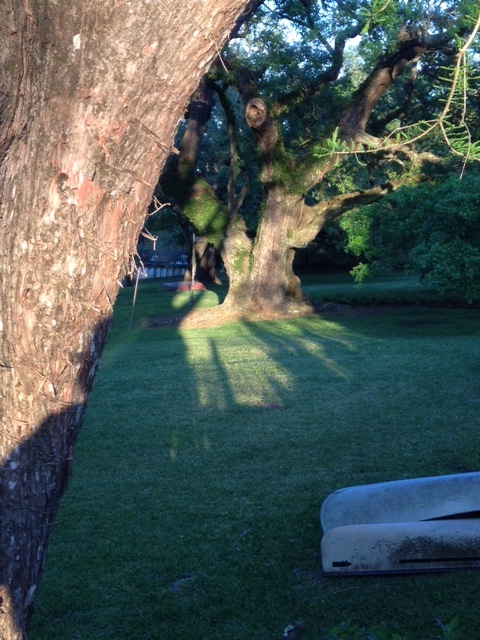
The triolet form works well when stealing lines from other poets because that perfect line repeats 3 times. I feel privileged to combine my own words with William Wordsworth. The light of this evening invited poetry. Shadows and light created quiet calm and a sacred time.

A line taken from It is a Beauteous Evening, Calm and Free

Evening Light Triolet

A beauteous evening, calm and free,
The holy time is quiet –
When light makes shadows of the trees;
A beauteous evening, calm and free.
Reflections long to sit with thee
and mellow our day with silence.
A beauteous evening, calm and free,
The holy time is quiet.

Setting sun elongates shadows and illuminates the grandmother oak.

Setting sun elongates shadows and illuminates the grandmother oak.

Read Full Post »

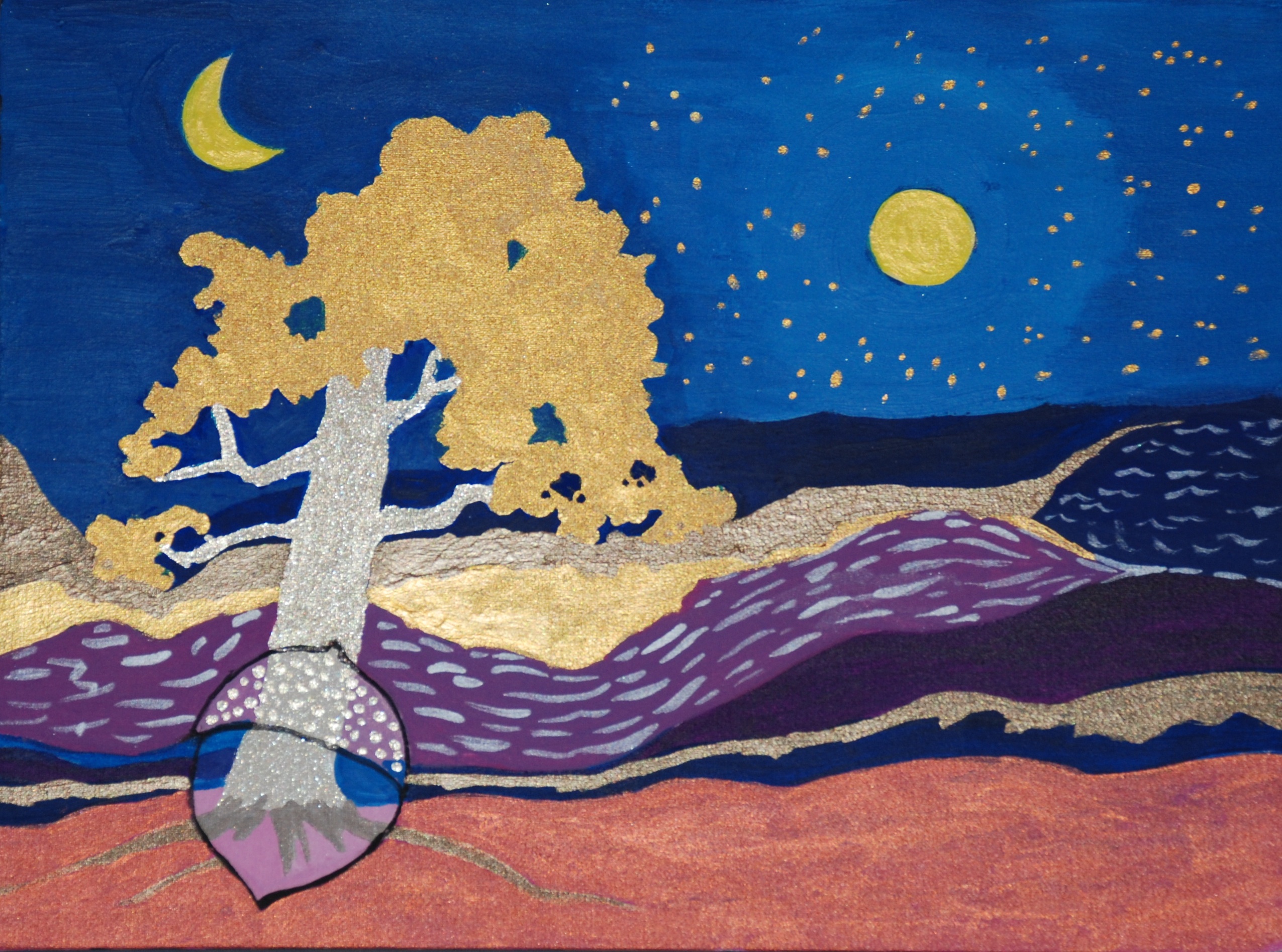
E is for Ekphrasis. This is one of my favorite styles of poetry. I like to use art for inspiration. If you’ve followed my blog, you know this and have seen many poems I’ve written to go with art.

Today is April 7th, and I’m only on the 5th letter of the alphabet. I’ve had to give myself permission to not fulfill my own assignment. This next week is state testing. I may be a little grumpy, so I am going to write what I want to write. The students will not be coming to my class, so our daily poetry exercise is suspended until next week. We will take up where we left off.

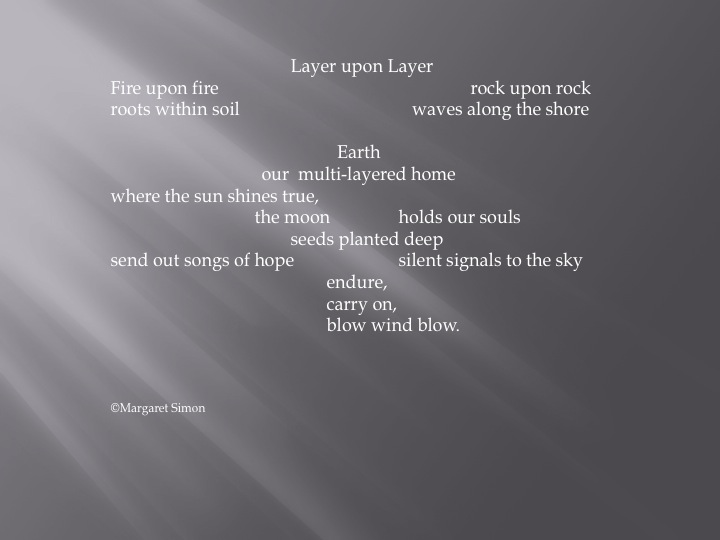
My friend, fellow teacher and artist, Cathy Mills sent me images of some of her paintings. Today I am writing to another in her series of Stories. This one I wanted to play with the visual as well as the words, so I captured it as an image.

"Layer upon Layer" by Cathy Mills

“Layer upon Layer” by Cathy Mills

Slide1

Read Full Post »

Slice of Life Tuesday

Slice of Life Tuesday

B is for the blues. This form required some research on my part. I listened to “Cross Road Blues” by Robert Johnson. I read about 12 bar blues and some poems of Langston Hughes. (The rhyming has gone to my head:) But all the while I was researching, my cat was crying outside the door.

Bill and Buzz are outside cats. They have been living outside for almost a year now, but they still think they can come inside, especially Bill. He’s the most affectionate and wants to rub and be rubbed. So Bill became the subject of my blues poem.

I patterned the poem after an AABa pattern from the 12 Bar Blues pattern. The first and second line repeat. The third line is a response, not rhyming. Then line 4 rhymes with 1. I struggled with this for a while. I hope my students don’t have too much trouble with this form. They will be posting their blues poems today at their kidblog (Slice of Life Challenge) which will remain open until the end of the school year.

bill

Tomcat Bill comes to sing the blues.
My grey cat Bill sings blues.
Whether winter or spring, that cat will sing.
Crying in high-pitched mews.

Meow, Me-oo, let me come in.
Meow, Me-oo, let me in.
Cat food’s on the windowsill; your song’s too shrill.
Who knows where you’ve been.

Come on, Mama, don’t you hear.
Mama, don’t you hear.
I want to get the lovin’, some simple human cuddlin’
Open the door, let me near.

Stop your whining at the door.
Cat, stop your whining at the door.
Go climb a tree, nip at a flea
I don’t want to hear you no more.

NPM2013_logo_350

Greg has a poem a day “3o Days, 30 Poets” on his site GottaBook.

Read Full Post »

bluebonnet

Happy National Poetry Month! I have set a goal to write a poem a day for this month. I will also be featuring classroom poets and other fun poetry happenings. I’ll be part of the Progressive Poem, so hit the link on the sidebar to see how the collaborative poem is progressing. Greg at GottaBook is posting a poem a day. Today is a delightful spring poem from Mary Lee Hahn.

As we drove home from Austin yesterday, Easter Day, I enjoyed the blankets of bluebonnets that line the highway between Austin and Bastrop. An acrostic poem is one in which the lines begin with the letters that spell a word, usually the theme of the poem.

Blanket of blue
lines the highway
under a cloudy Texas sky.
Every pod pops
blue topped with promise
of more blossoms
nudging up, nodding to the day,
nestled with fiery Indian paintbrush,
elegantly announcing
the arrival of spring.

NPM2013_logo_350

Read Full Post »

Slice of Life Challenge Day 29

Slice of Life Challenge Day 29

Passion is energy. It’s the power that comes from focusing on what really excites you. When we live with enthusiasm, we fully engage our brains and bodies in our activities, building new pathways that foster health and wellbeing. –Oprah and Deepak, 21 Day Meditation Challenge

I am looking forward to the month of April. Don’t you just love the sound of the word, “April?” I love poetry. Actually some people (namely my husband) think I am obsessed. I can’t help sharing this enthusiasm, passion, obsession with my students. And what better time to celebrate poetry than the month of April! National Poetry Month

Last year I decided to teach a poetry form for every letter of the alphabet. It was a challenge to find one to fit each letter. However, with state testing taking one week, and spring break another, we ran out of days before letters. I want to do this again. I have discovered so many new forms from the triolet to the rondelet, and even a clogyrnach. We will try ghazals and pantoums, sonnets, and ekphrasis. See an alphabetized list on Poets.org.

I plan to continue our Slice of Life blog page for posting poems each day. If you or your class would like to follow us, click here.

I will write alongside my students as I always do and share the results with you here on my blog. I have joined the kidlitosphere progressive poem. See the schedule in my sidebar.

Shh, don’t tell, but we plan to post poems all around the school, secret poems, so we can have everyone reading poems throughout their day.

I am still toying with ideas for a final product. Last year we transformed old books into our own poetry books using a technique called altered books.

Do you have any plans? ideas?

If you teach 7th-10th grade, your students can participate in the Dear Poet Project.
NPM2013_logo_350

National Poetry Month

Poems will echo in the halls,
be pasted on walls,
carried in pockets,
and shared out loud.

Listen to the words
of Naomi Shihab Nye.
Rhyme silly with Shel Silverstein.
Rap with Nikki Giovanni
and imagine like Jane Yolen.

It’s a national phenomenon,
this month of poem fun.
Come on in!
The writing’s fine!

Join Mary Lee at A Year of Reading for more Poetry Friday

Join Mary Lee at A Year of Reading for more Poetry Friday

Read Full Post »

« Newer Posts