Feeds:
Posts
Comments

Posts Tagged ‘National Writing Project’

Please use this button on your site for DigiLit Sunday posts

Please use this button on your site for DigiLit Sunday posts


Please join in this meme designed to share our digital learning and challenges. Just as a teacher of writing needs to be a writer, a teacher of digital literacy needs to be a digital learner. Use this button on your blog post and leave a link with Mr. Linky. Please read and comment on other posts. That’s how connectedness and collaboration begin.

Reflection is another means to apply the Connected Learning principles of being Interest-Powered and Production Centered by considering what you’re making and interests are now, and what your orientation is for the immediate future. –Chris Butts, CLMOOC team

clmooc

I have jumped right in to the waters of two digital challenges: The Thinglink Teacher Challenge and National Writing Project’s Making Learning Connected, a.k.a. #clmooc.
summer_challenge8

Yesterday’s email from the CLMOOC team asked us to make a list of three things and to reflect on two questions.

1. What I’ve made so far…

How to pick blueberries: Thinglink
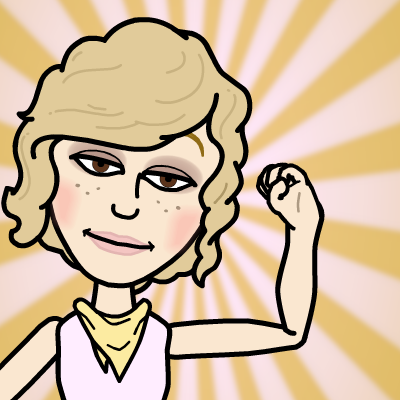
Self avatar: Bitstrip
profile_pic

Digital Self: Thinglink

How to be water: Animoto/YouTube

2. What I’m working on:

Poster about writing in Canva: This is a higher learning curve than other apps I tried this week. I struggled and gave up. But I am determined to try again and conquer this!

3. What I want to work on:

Prezi is a presentation site that I am daunted by. I have seen others do great things with it, and I’m sure my students would love it.

Reflections:

What did you learn from what you’ve already made? I learned to be more confident in my digital self. The Thinglink challenge for this week was to make a digital self. I thought I had to draw something. I started working on my ipad with a new stylus and became quickly annoyed. Then I googled avatar and low and behold, there’s an app for that! I was surprised how easy it was. So many online apps can make you feel stupid, but some, like Bitstrips, made me feel smart.

What do you see as the purpose of making this week? The purpose for me always goes back to my teaching and being able to support my students in their digital learning. However, I also discovered that making was fun, and I was compelled to share (and show off). I want to invite you to take the plunge. Jump in the deep end because there are lots of supportive floatie people out there.

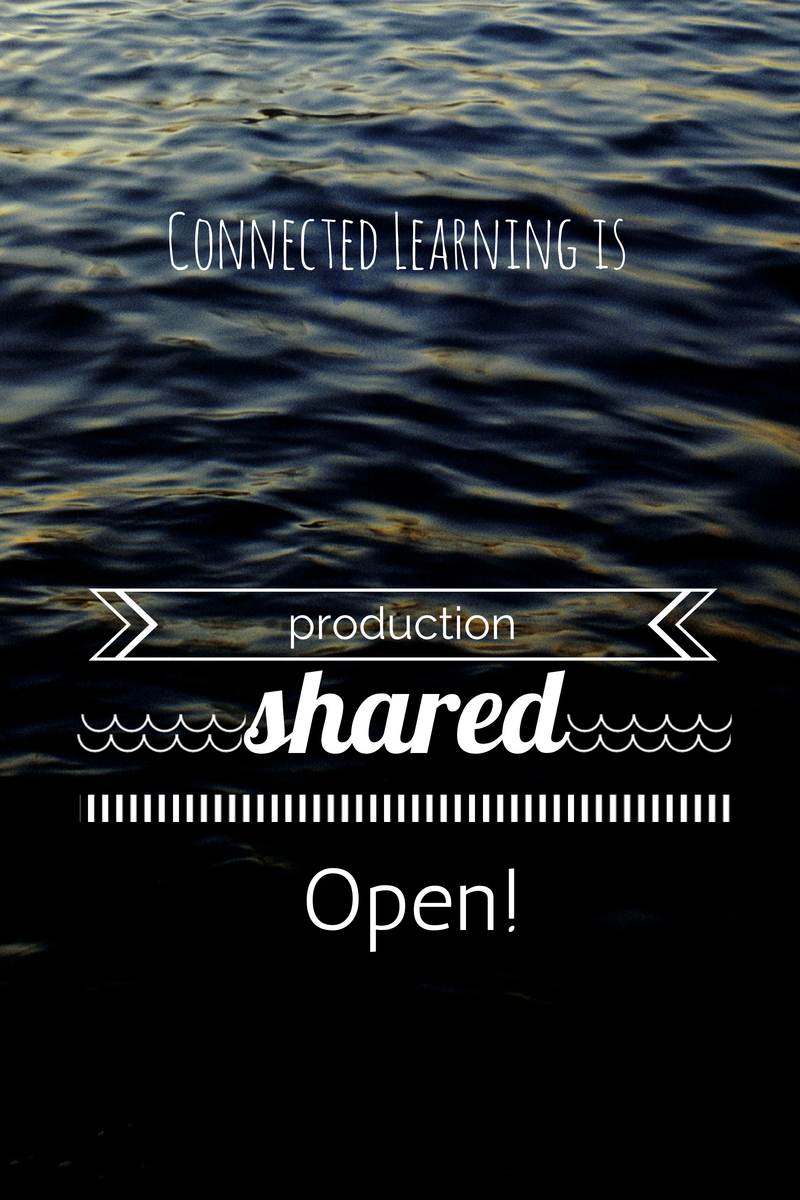
I wanted to make a blog icon for the Connected Learning values, so after writing this post, I tried Canva again. It worked better for this purpose. You should try it.
Connected Learning

Read Full Post »

See more Poetry Friday with Katya at Write. Sketch. Repeat.

See more Poetry Friday with Katya at Write. Sketch. Repeat.

How do you write a poem? Where do you begin? I learned long ago from working with children writers that they are full of ideas. I wrote an article for the National Writing Project journal The Quarterly in 2005 when it was still in print titled “Writing with William.” (I was pleased to find it on a Google search.) In the article, I described a tutoring experience that led me to understand young writers need tools, not ideas, structures, not prompts. When I was talking with Ava Haymon, our state poet laureate, last weekend about writing ideas for students, she said a technique that she likes to use is repetition.

Using Ava’s poems as models, I introduced this structure to 6th graders at our monthly enrichment day we call WOW (Way out Wednesday.) “The Child Born” begins each line with the same three words, “The child who.” I asked the students to listen for the details. Following the reading, we did a memory test. “What did you remember?” While they didn’t quite understand the poem, they did remember almost every line, especially “The child who bites cuticles instead of fingernails,” and “The child who sucks her hair at night.” Details are memorable. Another model I used was Betsy Franco’s “Fourths of Me” from The Poetry Friday Anthology for Middle School.

Then I gave them the assignment: Write about whatever you want to, but begin each line or each stanza in the same way. Examples: Before, Everybody, As long as, The child who, Anyone, Who, Why, I am. The students also added beginnings to the list.

This was a successful lesson because everyone wrote a poem. Even the kid who said he hates writing poems. Even the one who said she has never written a poem before. After writing, we shared and did a memory test for each other’s poems. They realized the importance of using specificity and original ideas to draw a reader’s attention.

What Do You See?

When you see the stars, you see the sky
But when I see the stars, I see the days passing by.
When you see the beach, you see grains of sand.
But when I see the beach, I see a place untouched of man.
When you see the ocean, you see fish and pearls.
But when I see the ocean, I see an underwater world.
When you see a child, you see a small man.
But when I see a child, I see a gift from God’s hands.

–Kaley

Before and After

After the sun sets at night,
After the bud blooms,
After the plane takes off in flight,
I’ll go home to my room.

Before the sun rises at dawn,
Before dew forms on the flower,
Before the bird lands in its nest,
The king will give up his power.

This time I will not stay silent,
This time I will speak.
This time I will not be shy,
This time I’ll be bold.

–Ethan

My Dream

I am the frail one.
I am the fragile one.
I am the annoying one.
I am the one in the back of the classroom.
I am the new student.
I am the one no one wants around.
I am the dumb one.
I am the one nobody talks to.
I am the runt of the litter.
I am the timid one
Only in my dreams.

–Jack

Read Full Post »

« Newer Posts