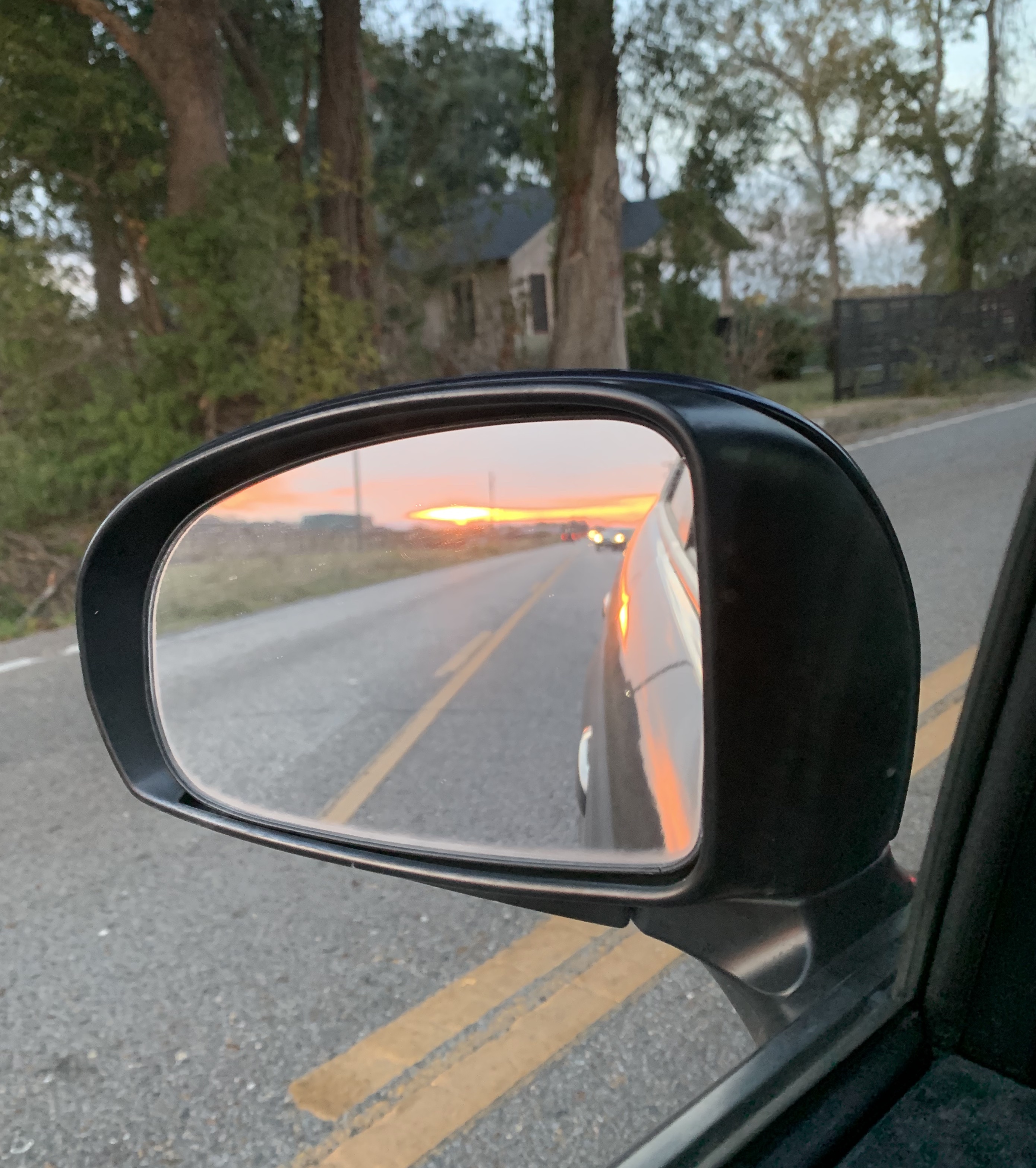
December is a time of diminishing light. Days are getting shorter. Sunrise is later in the morning. Sunset is earlier in the afternoon. The change of light leads us to winter solstice with more darkness, cooler temperatures. Do you feel the change? Does your mood change? What does diminishing light in the rear view mirror symbolize to you?
Rear view window on a country road (Coteau Road)
Driving on the Coteau Road rushing toward my day,
I looked in the rear view mirror, noticing the rising light.
Beacon to feel the past push me toward future with healing hope.
Margaret Simon, draft
My poetry writing happens early in the morning when the hum of the heater makes me want to pull the covers up and sleep. For This Photo, I draft directly into the post. I accept whatever comes. I hope you will give yourself a moment of meditation and write a small poem draft in the comments. Meet yourself where you are, without judgement. Leave your draft in the comments and encourage each other as writers who give a piece of themselves to the page.
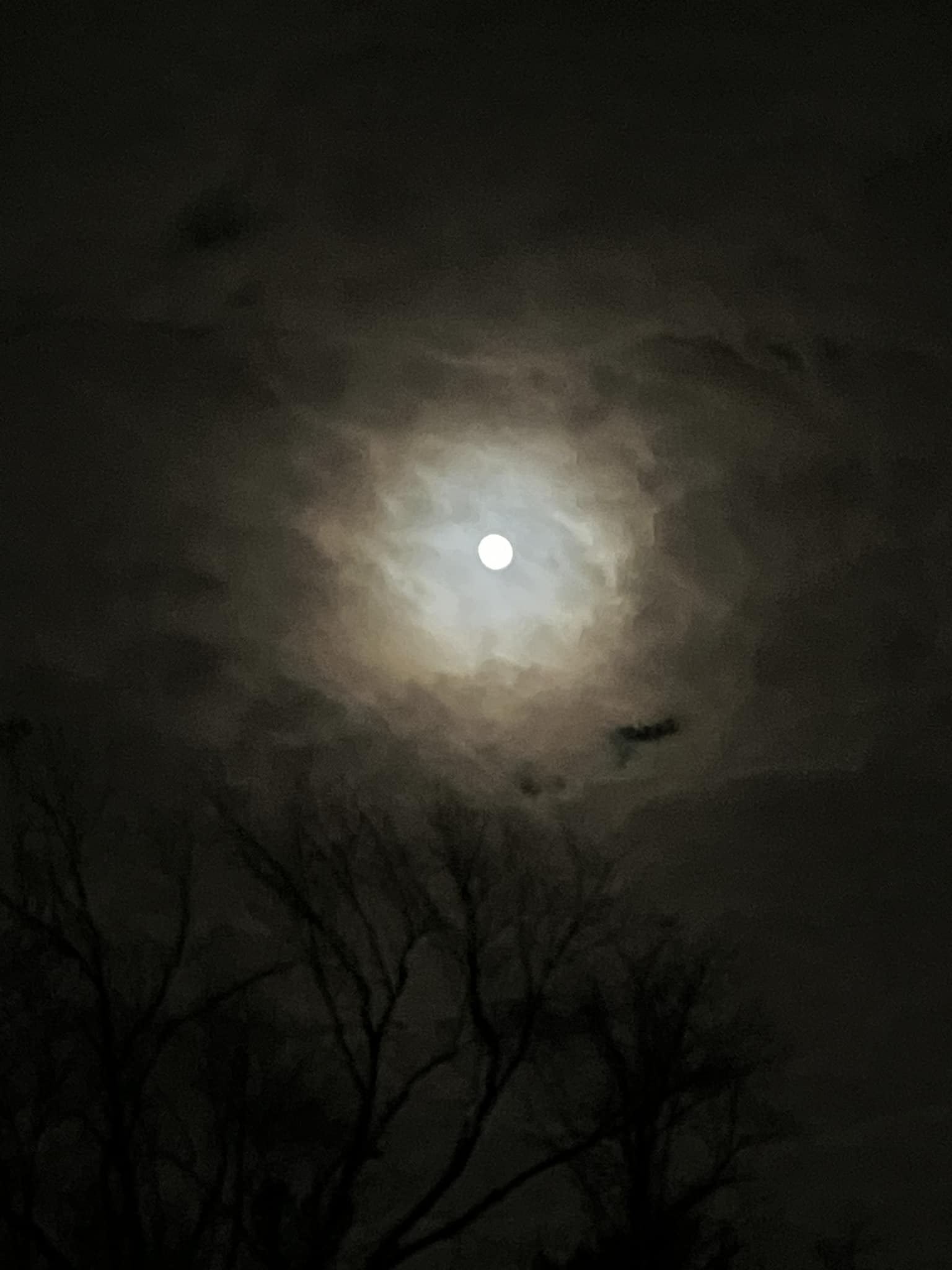
Leigh Anne Eck has been naming moons. I was taken by this photo she posted and her commentary about it:
I have been naming skies for a few months now. Typically I capture the morning sky on my way to school. Tonight I captured this one on my way home from a basketball game.
I have named it “perspective.” Sometimes when we look at something from another perspective, our eyes and hearts become open to new possibilities! I hope you see something with new eyes this week!
When I was walking in the early morning on Tuesday, the sky was a deep blue with the moon glowing its heart out before the sunrise. We are often mused by the moon, I know, but I hope you will write another time and another about this mysterious and magical being. Leave a small poem in the comments and write encouraging words for other writers. Your vulnerability is safe here.
I’ve been listening to The Book of Common Courage by K. J. Ramsey. She writes poems and prayers as she is going through a healing journey. I loved the term “holy margins” and borrowed it here to write a luc bat short verse.
Sometimes clouds bloom above clouding the image of your light. An orb of love this night you fold in my tears, tight and true with holy margins blue.
Karen Edmisten is gathering Poetry Friday posts here.
I am still riding the wave of a silent retreat last weekend. I wrote about it for Slice of Life and This Photo Wants to be a Poem. Our guide, my friend Susan, gave us a small notebook. The jottings I made are feeding my poetic soul while I busily prepare for NCTE next week.
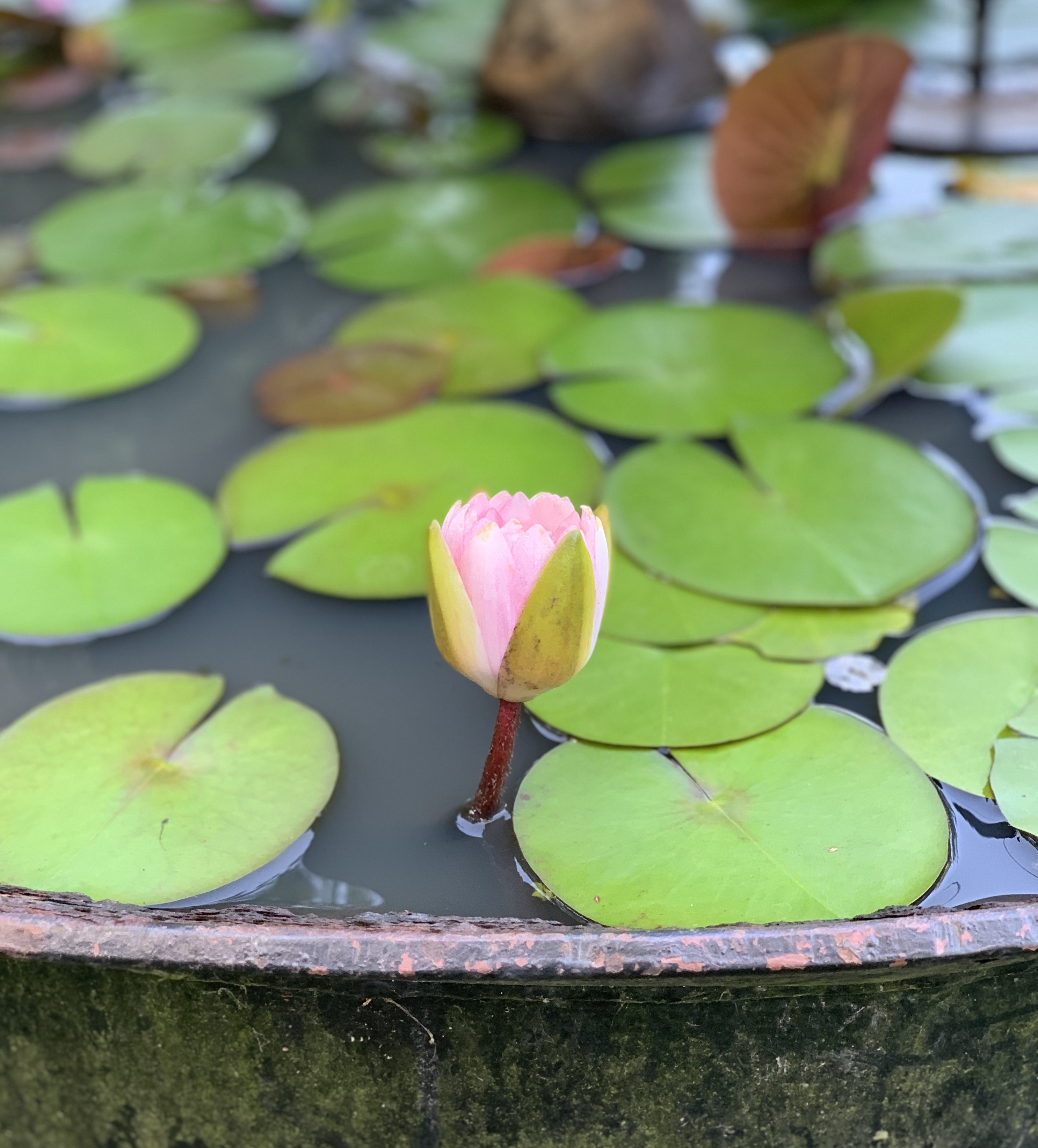
One of the meditations took place around a lotus pond.
The Lotus Pond The lotus is a flower that grows in muddy ponds and swamps. It is a symbol of spiritual growth and enlightenment. In the midst of difficult or chaotic circumstances, one can remain grounded and find inner peace and clarity.
photo by Margaret Simon, lotus flower in a sugar kettle.
Lotus Water
Mindful listening gazing every moment-change Nothing can be forced
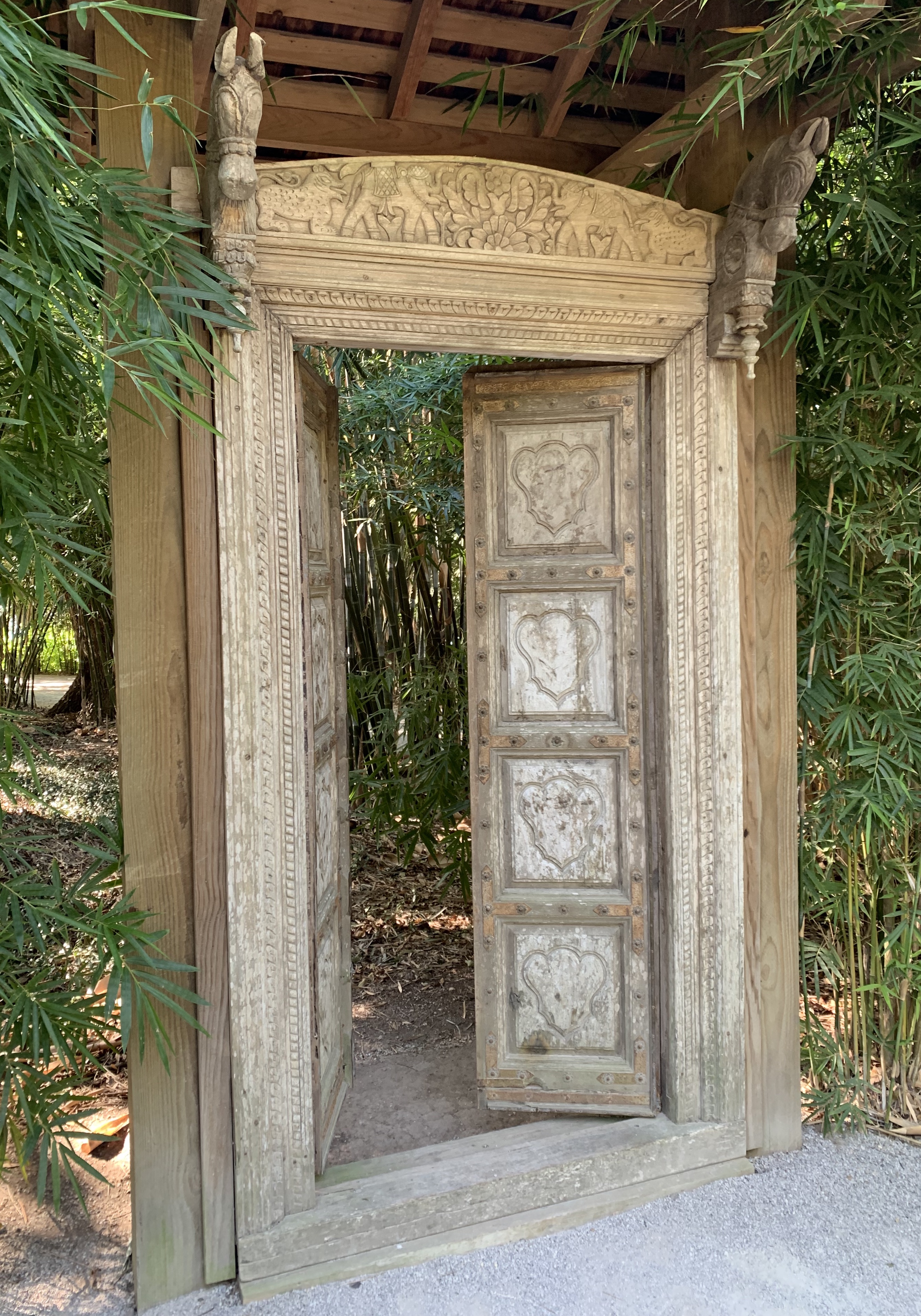
Last Saturday I attended a silent retreat at Jefferson Island. I wrote about the retreat here. This photo is an ancient doorway to nowhere. It is set in the gardens near an old wishing well. There is not much need for context today. Meander in your mind and find this doorway. Where does it lead you? Is it a place of rest? Is it a challenge to pass through? Is it guarded, or left open?
I recently came upon a new to me form called a luc bat.
The luc bat is a Vietnamese poetic form that means “six-eight.” In fact, the poem consists of alternating lines of six and eight syllables. This poem is interesting in its rhyme scheme that renews at the end of every eight-syllable line and rhymes on the sixth syllable of both lines. You can find a graphic on the Writer’s Digest. My own model draft took longer than usual to write. Rhymezone is my friend.
Retreat Door
Today I release need– Unmet purpose to feed my worth. This ancient door will birth new sight into our earth’s strong care. Inner eyes long to share wisdom carried from there to here. Look in my new seer, a vision that is clear and pure.
I wrote about finding beauty yesterday for Slice of Life and Spiritual Journey. Along with the post, I wrote a haiku based on the scientific name for Goldenrod. I enjoy writing with word play. For the haiku, I embedded the name into the words of the poem. The form is similar to taking a word for a walk posted on Ethical ELA here by Anna J. Small Roseboro. She suggested taking an abstract word and writing it as the first word in the first line, second word in the next line, and so on until the word becomes the last word in the line. Six lines of six words each.
Of course, as always, you are welcome to enter this prompt in any way that works for you. Please leave a small poem in the comments and encourage other writers with your responses.
Solidago*
Meadow soul soother I turn toward your day light Don’t go. Don’t go.
Margaret Simon
*scientific name for goldenrod, solidus meaning “to make whole”
This is the poem I wrote for the word walk prompt:
Sympathy begins with sad eye contact. Then sympathy reads your sad thoughts. I express sympathy for your loss. You may scorn sympathy as insincere. But I see you, sympathy, walking along the worn road of sympathy.
What is bringing you joy? In her newsletter The Good Stuff, Maggie Smith wrote about finding beauty. She called it a “beauty emergency.” An abundance of beauty is available to us everyday if we choose to notice. Even on my sickest days this summer, I could look out my window to find the great white egret who daily feeds across the bayou. Even now I can see a flash of white as he flies by. Sometimes I watch him slowly wade through the water. Something about that presence of purity renews me.
Renewal happens even if we forget to ask for it. God knows how to renew all life.
“To find a new world, maybe you have to have lost one. Maybe you have to be lost. The dance of renewal, the dance that made world, was always danced here at the edge of things, on the brink, on the foggy coast.”
― Ursula K Le Guin
I am still in the process of renewal, walking a fine line between dark and light. I have to find the strength each day to see the light, to look for it, all the while knowing darkness is close by. Illness does that to a person. The fear of it all coming back again is real. I notice the fear, name it for what it truly is, then let it go. I must do this to bring joy to the forefront. And renewal comes as I find beauty in ordinary days.
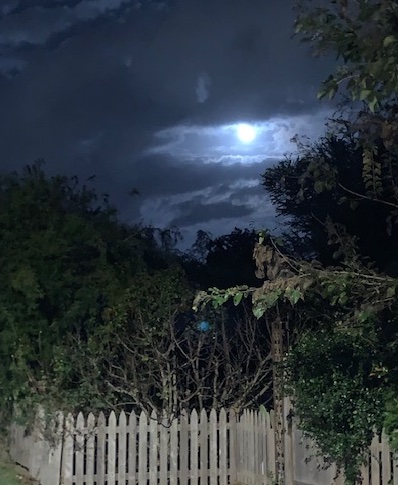
Full moon peeking out from the clouds
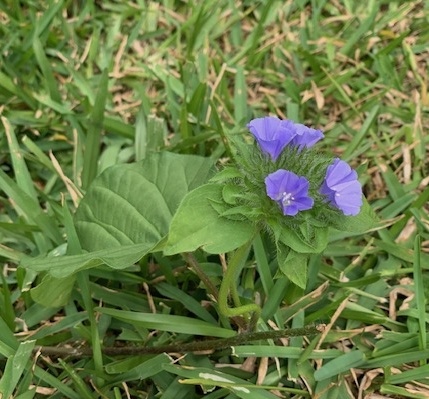
A colleague complained to me about an incessant vine that climbs her brick walls. “The guy has to come every 3 months to deal with it, even in this drought.” We can complain about the onslaught of weeds in the yard, or we can take pictures of them and find their beauty, their life, the way they insist on being here.
Weed in the grass insists on being noticed!
I believe that God gives us access to beauty all the time. We are meant to feel curious, to wonder about ordinary things, to be present and renewed, touched by beauty and joy.
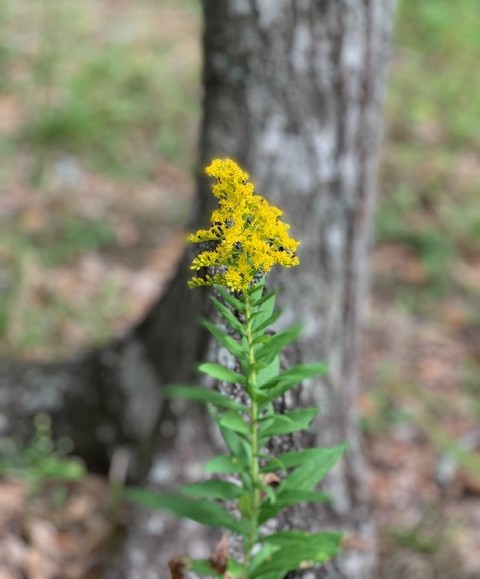
Goldenrod, photo by Margaret Simon
Solidago*
Meadow soul soother I turn toward your day light Don’t go. Don’t go.
Margaret Simon
*scientific name for goldenrod, solidus meaning “to make whole”
In her weekly newsletter, Maggie Smith asked the question, “What can a poem do?” Her conclusion is a poem can remind us of us, of who we are as humanity. We need poems now as much as ever. When times are hard, look to the sky and see poetry.
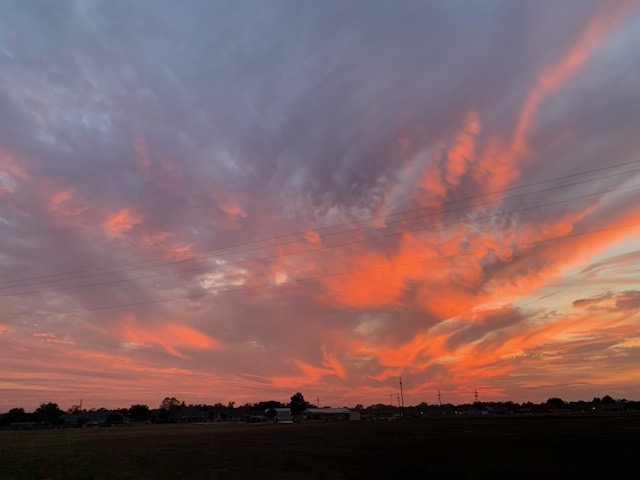
Last weekend while my husband was driving us home one evening, we saw the sky light up at sunset with this amazing cloud formation that disappeared into the night within minutes. I rolled down the window to take the picture. I saw an octopus. What do you see?
Octopus sky by Margaret Simon
Oh, octopus, octopus of the sky, what do you see as you pass by? A world of creatures down below Chasing time and on the go.
Oh octopus, octopus of the sky, what wisdom lies in your eyes? I stop to watch your tendril glow, breathe in deep, heart beats slow.
Margaret Simon, draft
Take a minute to breathe and see what you may see. Use your imagination to tell a story with a poem. Respond to others who are writing vulnerably today. Encourage with your comments.
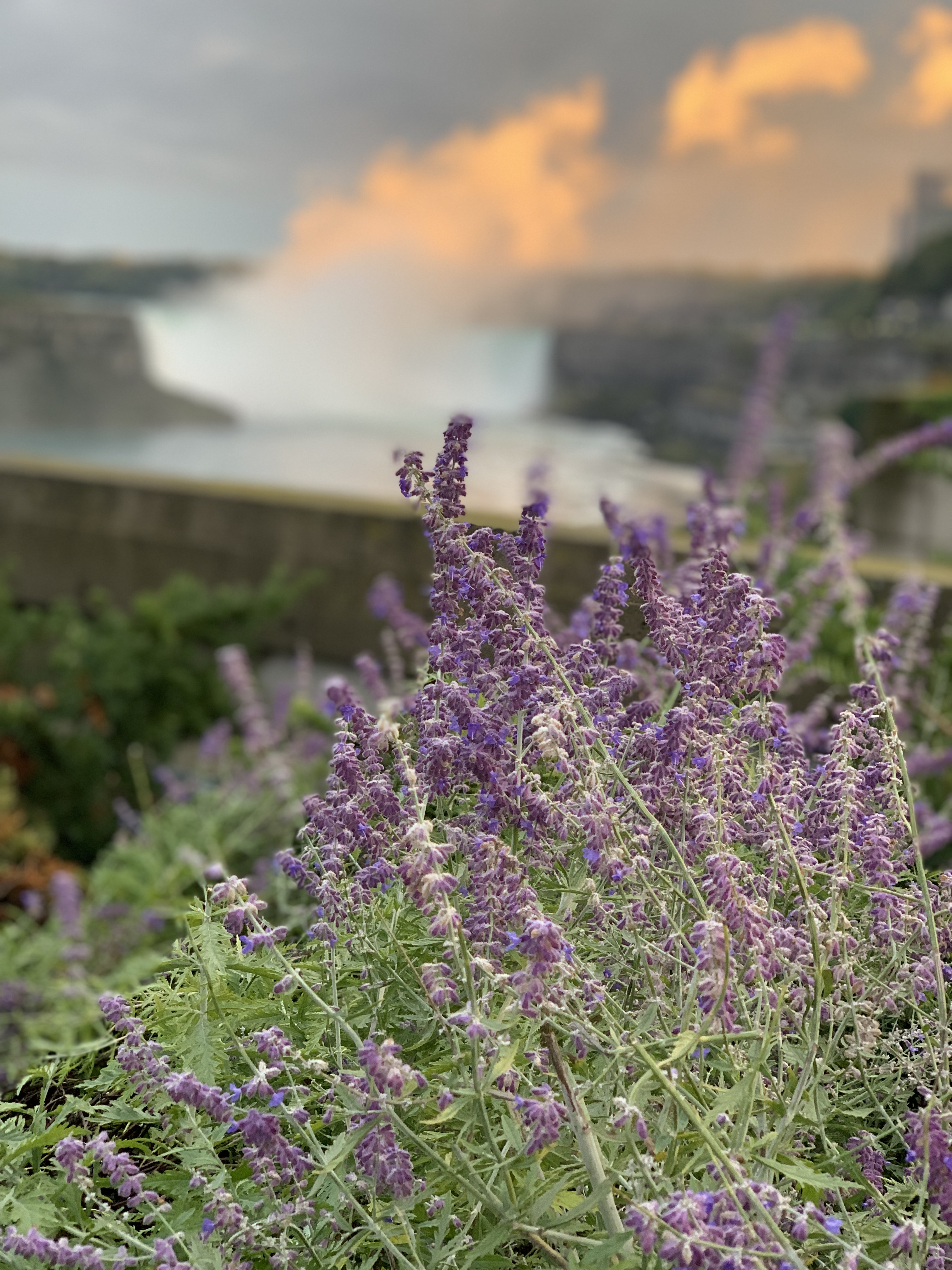
For Fall break, my husband and I visited Niagara Falls. This trip was a bucket list item for me. The Falls did not disappoint. They are an amazing feat of nature, the kind that cannot be captured in a photo or video. You have to be there to hear the sounds of hundreds of thousands of gallons of water falling each second. I took a lot of pictures, but when I look at them now, they pale in comparison to the real live event. I’m so happy we did this trip. I highly recommend it. If you are planning to go, let me know. I have suggestions.
This morning’s Poem-a-Day from the Academy of American Poets was by Emily Lee LuanThe warble of melting snow is the river. I borrowed her form for my own poem. I find that using a form helps me get out of my head and allowing creativity to do its magic.
The chant of rocks is the falls (after Emily Lee Luan)
is the rush of gravity is the impulse of water* is the pull of a mother… child is the everlasting light of the sun is the building of power is the electricity of ages is the reflection of rainbows is the promise of peace is the waking of a dream is the shift of river to fall.
Margaret Simon, draft
When you are inspired to write, please leave your poem in the comments so we can share. Write encouraging comments for other writers.
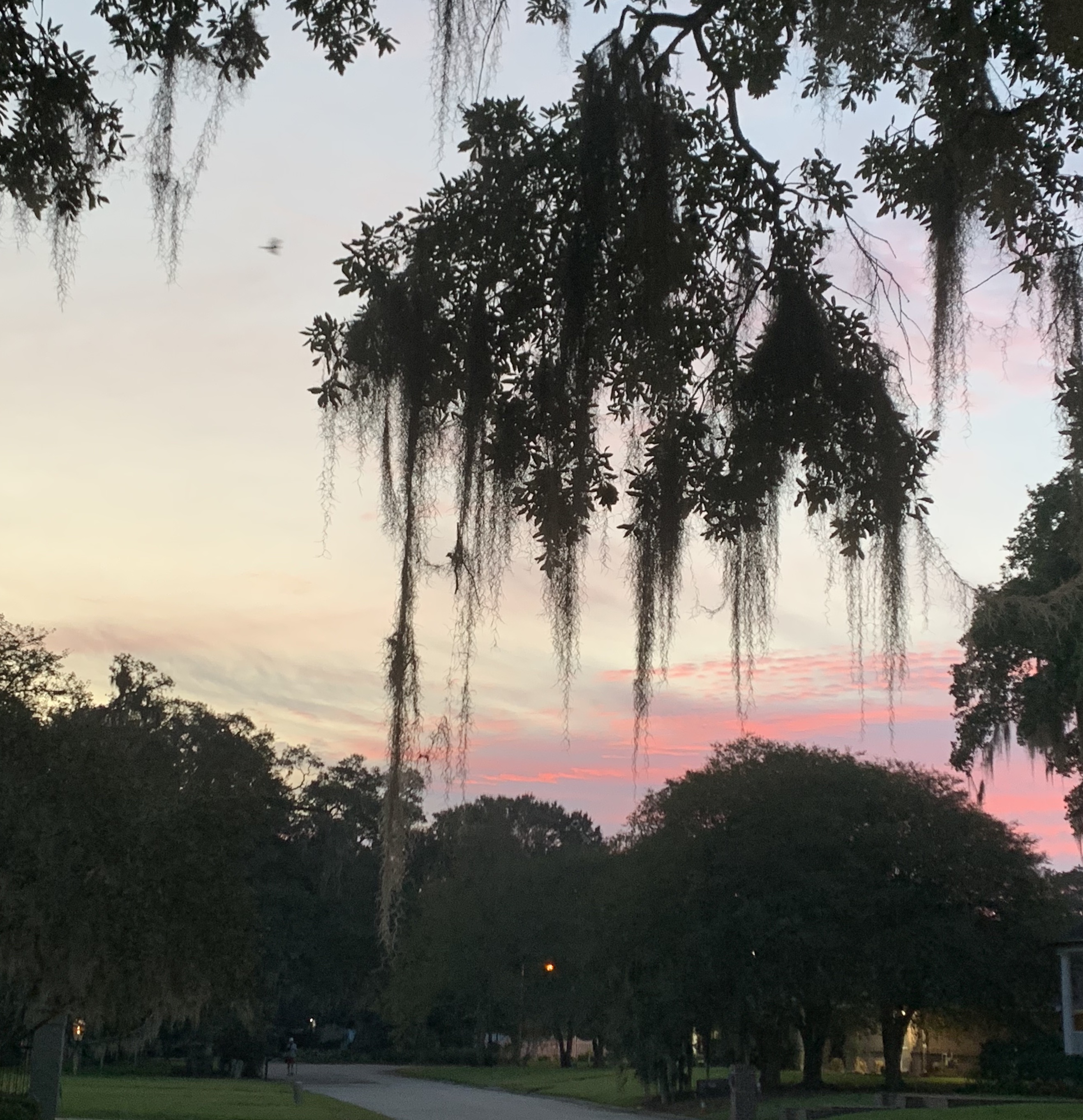
Most mornings I take a walk in my neighborhood. As the days get shorter, I am usually headed home by the time the sun begins to rise. The neighbor’s oak tree drapes over the street and I was drawn to the mossy tendrils hanging. It’s getting close to Halloween, so spooky is on the brain. But maybe this image isn’t spooky at all. Maybe it’s comforting, a sign of almost home, a signature of southern oaks.
My students and I have been writing short poems, haiku and six-word stories, the first two days of Write Out. What I’ve realized and shared with them is that short forms mean every word has to count. On the Write Out poetry page, I found a video by Rich Novack about found poetry. He suggests using nonfiction text from National Park trails to collect words for poetry. For my poem, I googled Spanish Moss and collected a list of words to use in a haiku.
Mother nature braids her harmless silver ghost– Sunrise silken shade
Margaret Simon, draft
Consider joining me and my students in writing outside today, observing nature. Perhaps you will find a text to build a poem from. Have fun! Leave your poems in the comments. Encourage other writers with your comments.
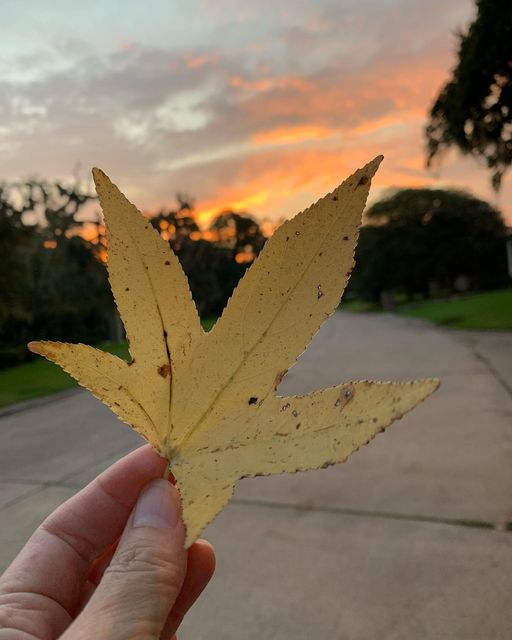
Fall here in South Louisiana doesn’t offer much color change of the trees. The oaks stay green. The cypress turn brown. Crepe myrtles are still blooming. I found this yellow beauty near a sweet-gum tree. I picked it up and pressed it into my notebook.
I invite you to think about fall with all your senses.
One of my favorite forms is the zeno created by J. Patrick Lewis. Based on a mathematical sequence, the syllable count is 8,4,2,1,4,2,1,4,2,1 with all the single syllable lines rhyming. I usually decide on the one syllable rhyming words and write the poem around them.
As sun’s glow fades through purple clouds, I walk alone seeking fall. A yellow leaf beneath sprawls, beckons to hear barred owl’s call.
Margaret Simon
Write your own musings in the comments and leave encouraging comments to others. With my students, today I plan to make Zeno Zines. Here’s a video of me sharing a Zine.
Margaret Simon lives on the Bayou Teche in New Iberia, Louisiana. She is a retired elementary gifted teacher who writes poetry and children's books. Welcome to a space of peace, poetry, and personal reflection. Walk in kindness.



 Reflections on the Teche