Feeds:
Posts
Comments

Posts Tagged ‘#writeout’

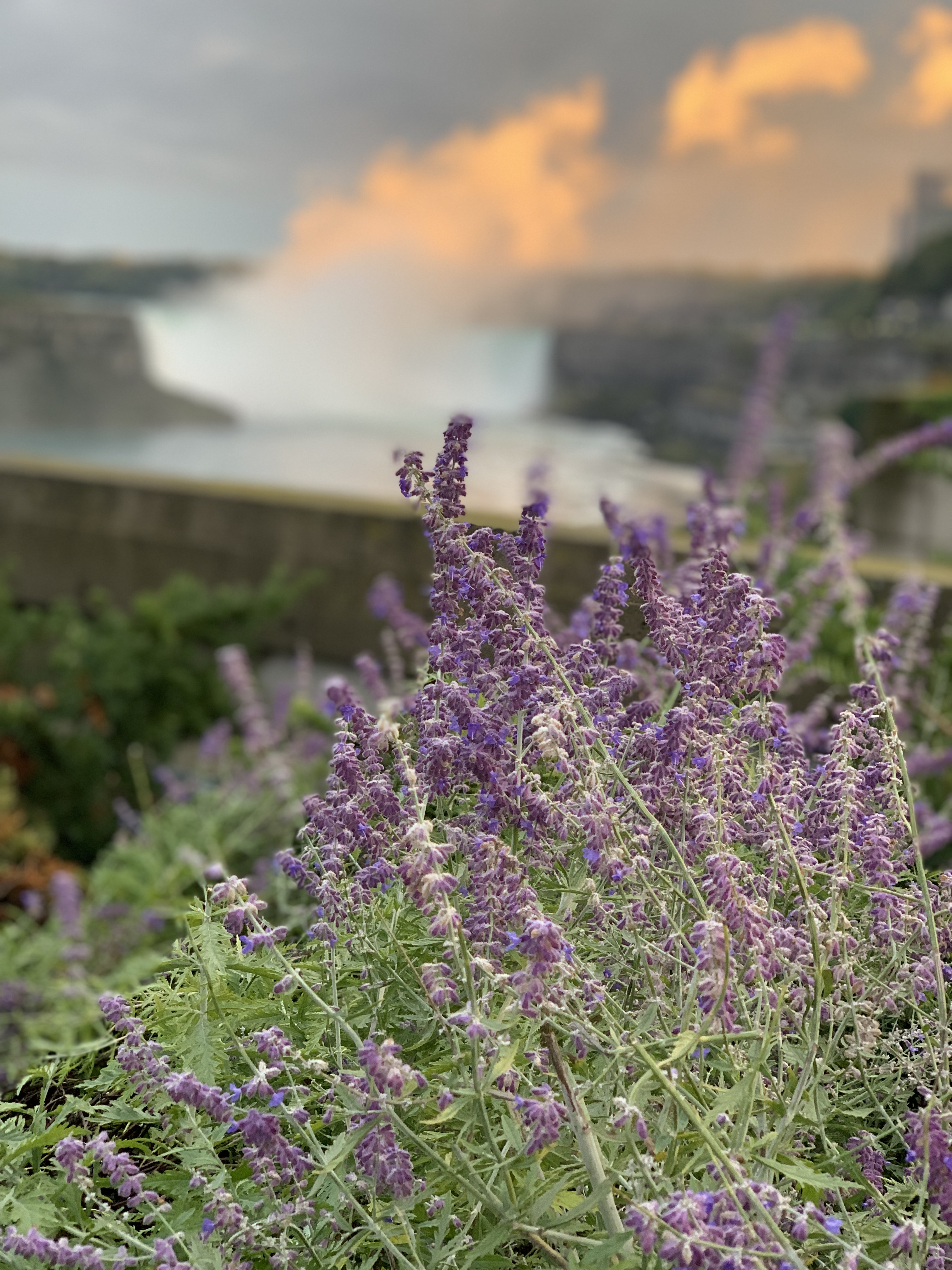
Wildflowers at Niagara Falls, Oct. 2023

For Fall break, my husband and I visited Niagara Falls. This trip was a bucket list item for me. The Falls did not disappoint. They are an amazing feat of nature, the kind that cannot be captured in a photo or video. You have to be there to hear the sounds of hundreds of thousands of gallons of water falling each second. I took a lot of pictures, but when I look at them now, they pale in comparison to the real live event. I’m so happy we did this trip. I highly recommend it. If you are planning to go, let me know. I have suggestions.

This morning’s Poem-a-Day from the Academy of American Poets was by Emily Lee Luan The warble of melting snow is the river. I borrowed her form for my own poem. I find that using a form helps me get out of my head and allowing creativity to do its magic.

The chant of rocks is the falls (after Emily Lee Luan)

is the rush of gravity
is the impulse of water*
is the pull of a mother… child
is the everlasting light of the sun
is the building of power
is the electricity of ages
is the reflection of rainbows
is the promise of peace
is the waking of a dream
is the shift of river
to fall.

Margaret Simon, draft

When you are inspired to write, please leave your poem in the comments so we can share. Write encouraging comments for other writers.
Read Full Post »

Rich Novach in this video led us on a trail to writing found poetry. My students and I selected a National Park to research and “find” text that can be placed into a poem.

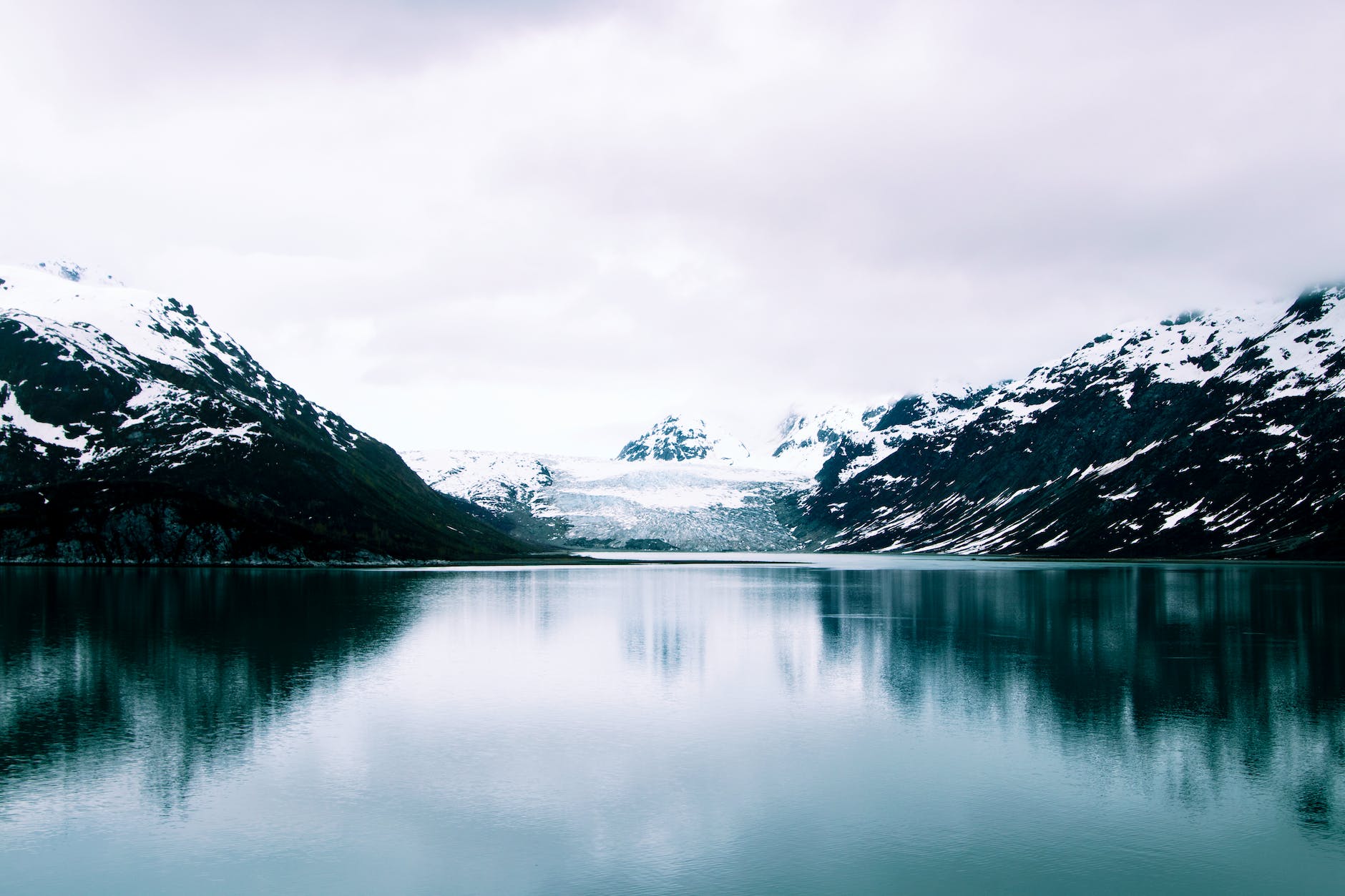
I visited Glacier National Park a few years ago, and the experience has stayed with me. I found my poem on the park’s website. I wrote it in the form of a nonet, 9 lines with each line using a syllable count of 9,8,7,6,5,4,3,2,1.

Ya-qawiswitxuki*

A place where there is a lot of ice
of meltwater irrigation
ice flowing under its weight
alpine meadows showcase
adventurous wild
carved paradise
history
melting
ice

*Kootenai word for Glacier National Park

Margaret Simon, found on the trail
Photo by Tiffany Bumgardner on Pexels.com

To view some of my students’ poems and leave comments:

Kailyn: Hot Springs National Park

Carson: Olympic National Park

Avalyn: Yellowstone National Park

John-Robert: Hawai’i Volcanoes National Park

The roundup is with Catherine at Reading to the Core.

Read Full Post »

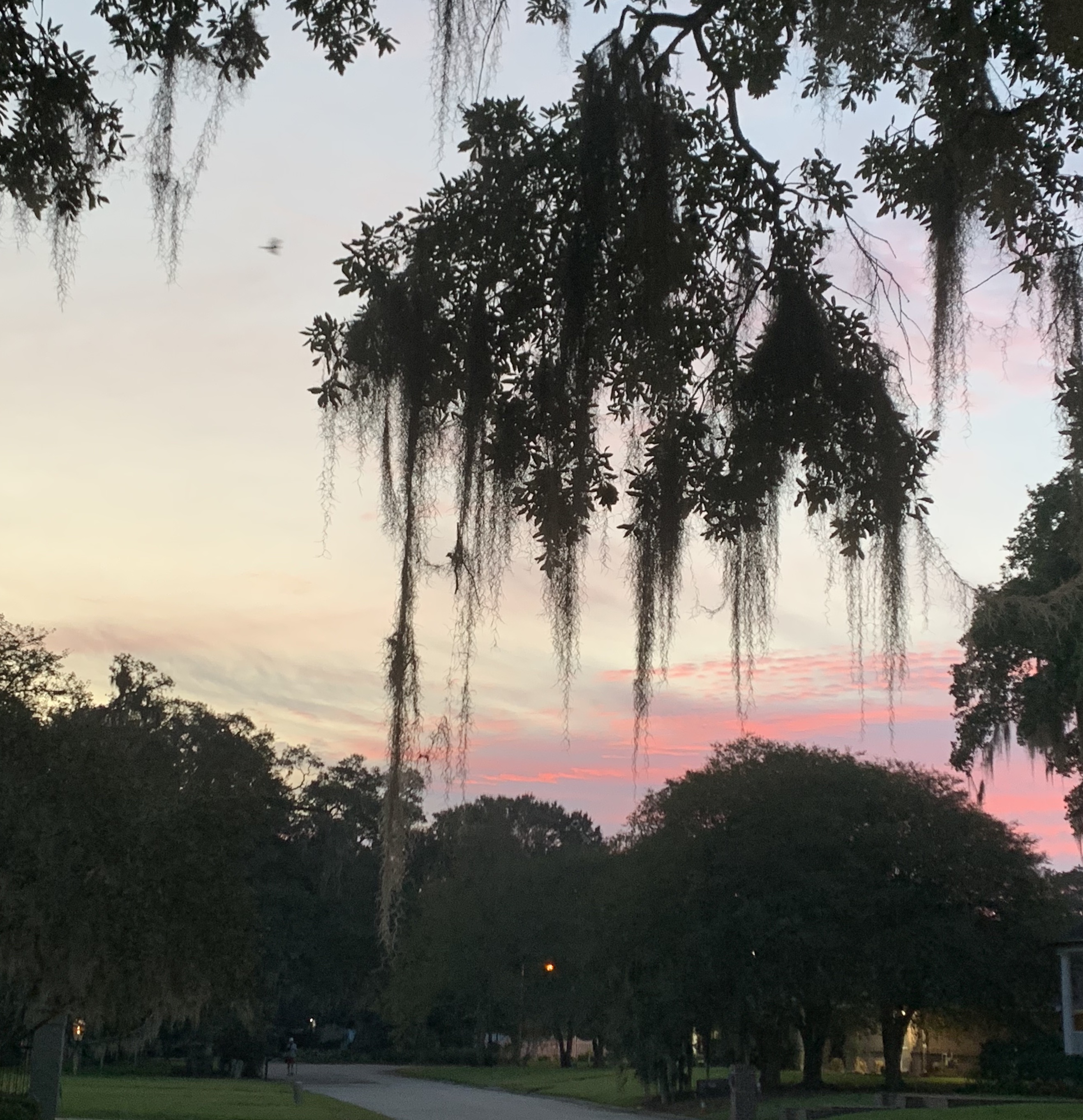
Mossy Sunrise by Margaret Simon

Most mornings I take a walk in my neighborhood. As the days get shorter, I am usually headed home by the time the sun begins to rise. The neighbor’s oak tree drapes over the street and I was drawn to the mossy tendrils hanging. It’s getting close to Halloween, so spooky is on the brain. But maybe this image isn’t spooky at all. Maybe it’s comforting, a sign of almost home, a signature of southern oaks.

My students and I have been writing short poems, haiku and six-word stories, the first two days of Write Out. What I’ve realized and shared with them is that short forms mean every word has to count. On the Write Out poetry page, I found a video by Rich Novack about found poetry. He suggests using nonfiction text from National Park trails to collect words for poetry. For my poem, I googled Spanish Moss and collected a list of words to use in a haiku.

Mother nature braids
her harmless silver ghost–
Sunrise silken shade

Margaret Simon, draft

Consider joining me and my students in writing outside today, observing nature. Perhaps you will find a text to build a poem from. Have fun! Leave your poems in the comments. Encourage other writers with your comments.

Read Full Post »

Thank you to Two Writing Teachers for creating an amazing community of writers and a safe, welcoming space to write and share.

My students and I have been looking forward to the National Writing Project’s Write Out, a writing event that takes place in October. NWP partners with the National Parks to create videos and writing prompts designed to get kids outside to write. Last Friday, I handed each student a 5×7 blank book and told them it would be their Write-Out notebook. What is it about having a new clean colorful book that makes you want to write?

After watching a short video from Ranger Chris from the Delaware Water Gap National Recreation Area, we went outside to the playground to observe nature and write haiku poems. I wrote alongside them. I shared how I sketch in my notebook. Sketching is low-stakes art. Sketching helps to motivate and enhance writing while making their notebooks a safe place to explore.

Back inside, students were enthusiastic about sharing their poems. Because I teach multiple groups at two different schools, we use Fanschool for sharing our writing.

If you have a minute, it would be exciting to my students if you wrote comments on their first ever haiku poems:

Max wrote “The Daytime”

Kailyn wrote about a butterfly in the grass.

We found moth caterpillars near the trees. Adelyn and Sadie wrote about them.

Carson wrote about the sugarcane field.

John-Robert’s poem.

Give yourself some time today to be outside and observe nature. Share your haiku with us.

I am sharing my poems on Instagram.

Photo by Ricky Esquivel on Pexels.com

Read Full Post »

Poetry Friday gathering is with Bridget at wee words for wee ones.

Every year around the date of October 20th, the National Writing Project announces the Day on Writing along with the prompt, “Why I Write.” I avoid this question, mostly because it intimidates me. Who am I to say I am a writer? If I make that claim, will I be magically transported to the land of authors? Do I belong? Will I meet the standard? I’d rather stay in the closet. It’s easier to claim to be a teacher, a profession that has degrees behind it, credibility, and many years of service.

The problem is I want to write. I want to share my words with you. I want to connect with you through writing. The value in that connection is gold.

In my email inbox, I receive endless blogs and poems to read. I hesitate to delete them, so they build up, and the whole thing becomes unmanageable. However, I never know what may inspire me to write. One reliable set of prompts for me are Ethical ELA’s monthly Open Write. Each month we write together for 5 days. The prompts are written by people like me who juggle teaching and writing every day.

This last week Carolina Lopez drew inspiration from Richard Blanco’s poem “Since Unfinished,” asking us to steal his first line and write. “I’ve been writing this since…”

When we get right down to it, writing makes us ultimately vulnerable. If we are true to ourselves, we put our feelings all out there. This poem structure led me to more memories of my father.

Since You’ve Been Gone

I’ve been writing this since
I learned to walk
holding onto your pointer finger
since driving the circular block
hearing you warn “turn signal”
“stop sign”
“slow down.”

I’ve been writing this since “slow down”
meant thinking, means remembering,
meant crying when I reach for the phone
to call you with the news.

I’ve been writing this since
you pointed to the clock
(after your stroke) to remind us
to get Mom back for lunch.

I’ve been writing this since
I held your dying hand
your pointer finger blue and bruised
no longer pointing me
in the right direction.

Margaret Simon, draft

Read Full Post »

Poetry Friday is hosted today by Matt at Radio, Rhythm & Rhyme 

My students and I have been participating in the annual Write Out sponsored by the National Writing Project and the National Parks Service. Each day this week we’ve watched a video from a park ranger and followed a writing prompt. We made special #WriteOut notebooks following Sheri Edwards’ model found here.

We’ve gone outside to observe the trees and written a script of two trees talking to each other.

We’ve drawn from observing architecture and written about the significance of the building.

We’ve imagined the day in the life of a bird as it interacts with human environments.

Each day there is a new surprise. I hope I can find a way to continue this enthusiasm for writing after the two weeks of Write Out are over.

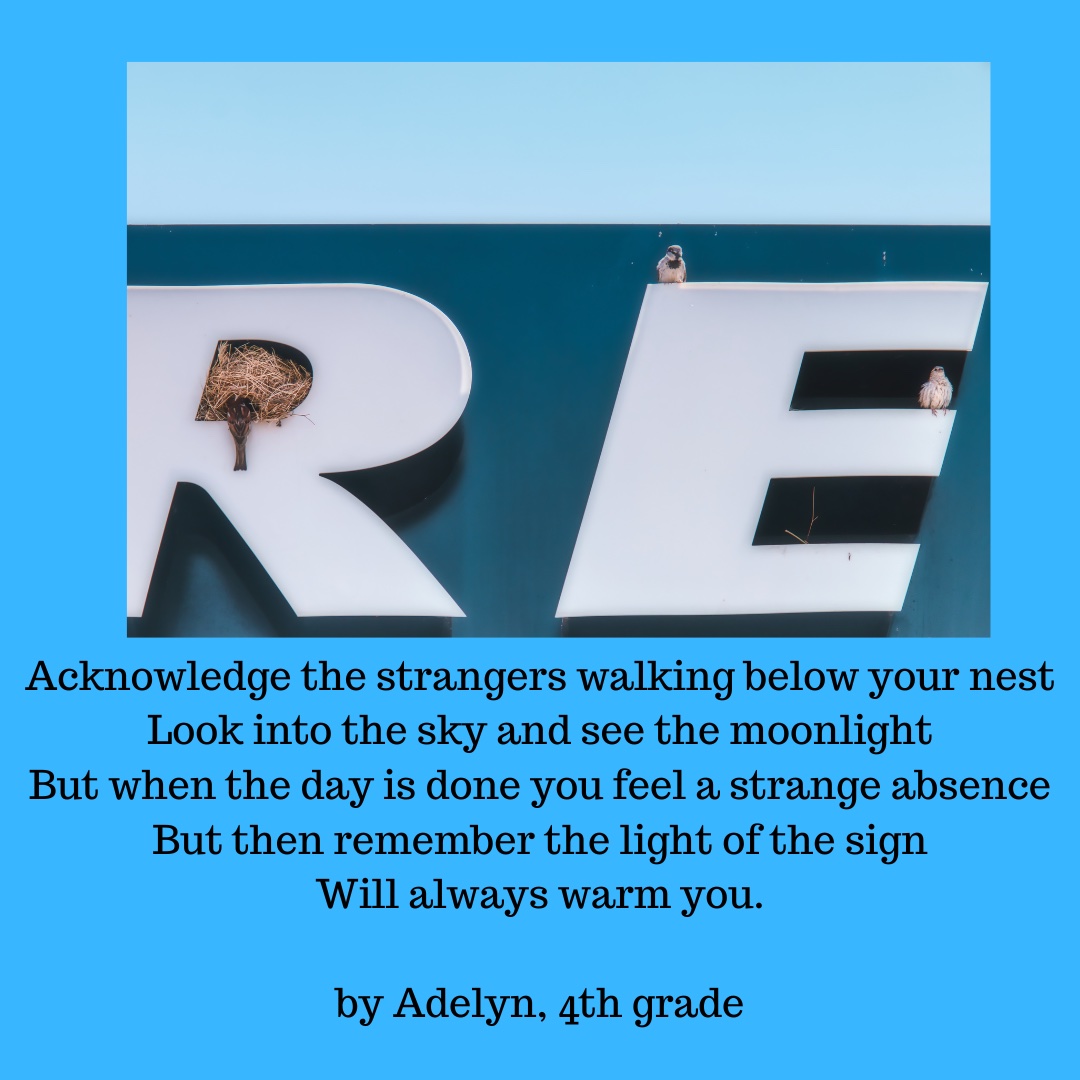
The Write Out prompt I chose on Thursday included a Rita Dove poem. We discussed the poem and collected words to use later in a poem of our own. Today I am sharing two student poems written after Rita Dove.

A stranger in a cool breeze,

the moonlight,

animals with odd habits

this is what nature is.

A singing wren 

while almost sun-rise,

become a statuary figure roaming

in the night. 

Relax

and you’ll see

how happy you can be. 

by Avalyn, 3rd grade
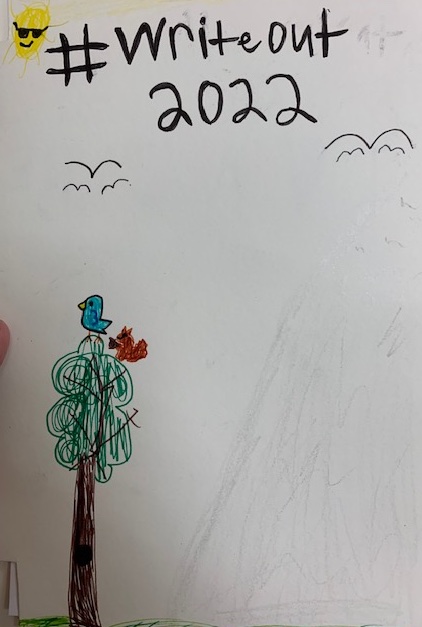
Adelyn’s Write Out notebook

Read Full Post »

Thank you to Two Writing Teachers for creating an amazing community of writers and a safe, welcoming space to write and share.

The last two weeks have offered a wealth of writing inspiration as we participated in #write0ut, a National Writing Project and National Park Service collaboration. Teaching gifted kids challenges me to find quality writing activities that will inspire, motivate, and engage my young students. #Writeout 2021 did not disappoint. And the resources will remain available on the website here.

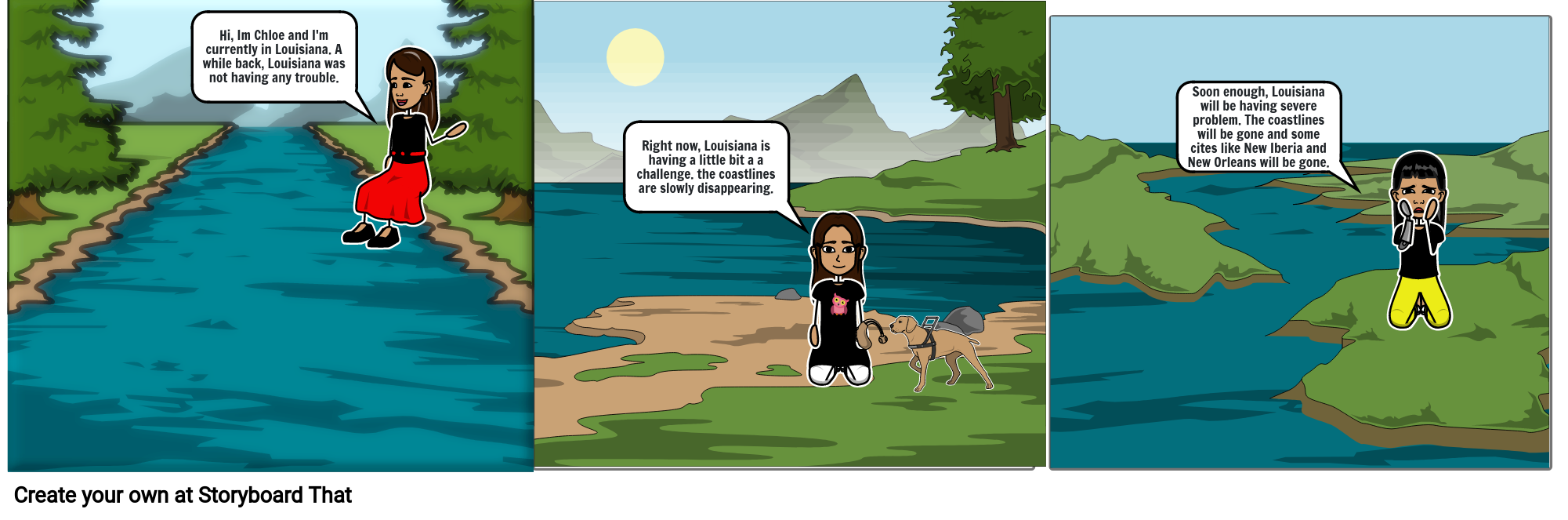
My students have created storyboards with Storyboard That about geological changes over time.

Chloe’s storyboard about Louisiana’s loss of wetlands.

They wrote poetry. Things to do if you’re a puppy by Avalyn:

Pound on a window when you want
to go on a walk, purr when you want pets.
Go outside and dig when you’re bored.
Lastly 
only bark when you’re in danger.

Avalyn, 2nd grade

On Friday, we ventured outside to the playground. At one school, there is a large live oak. My students sat underneath the tree for writing inspiration and gathered natural materials to create an art piece.

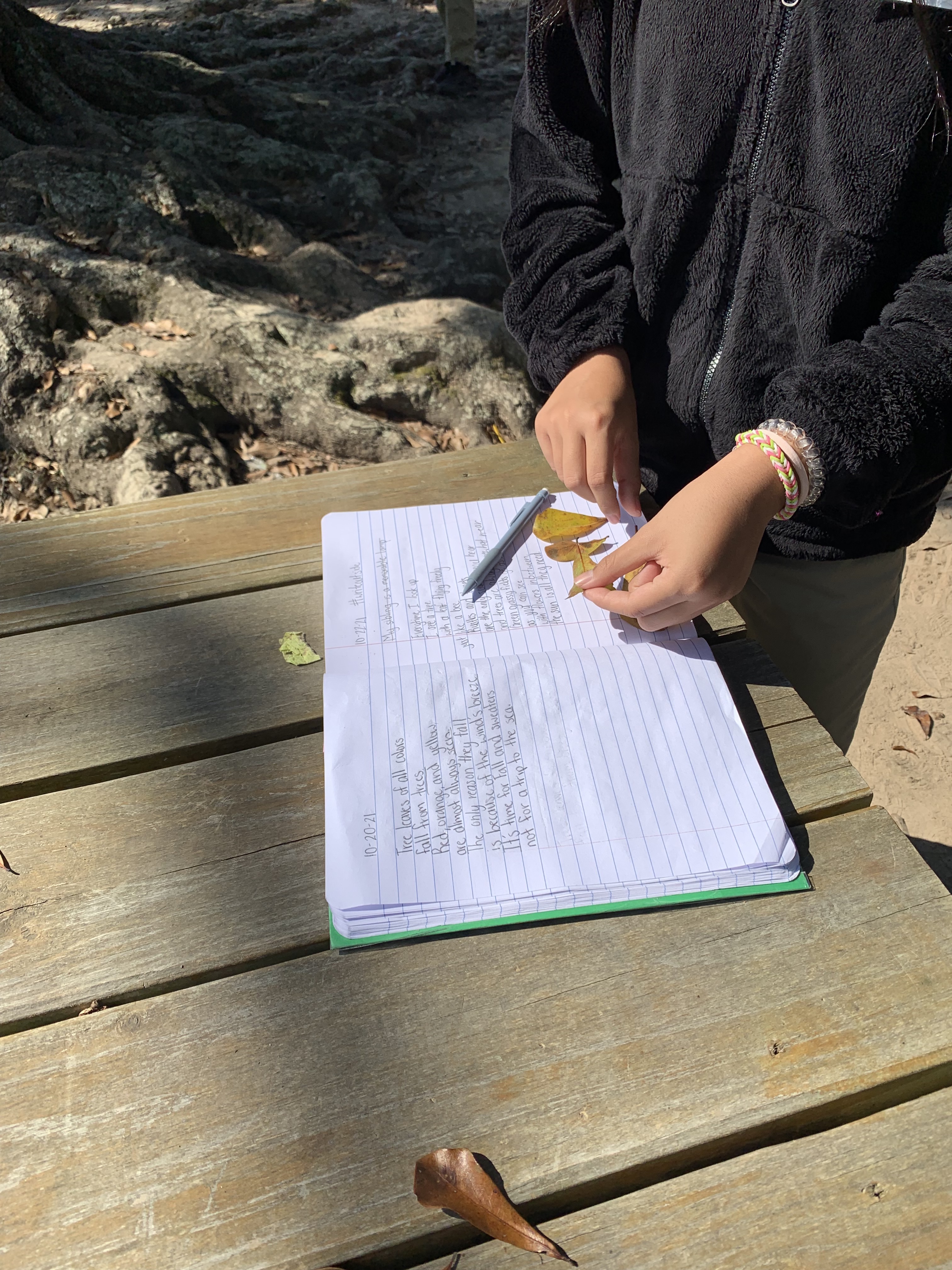
Katie gathers leaves for her notebook.
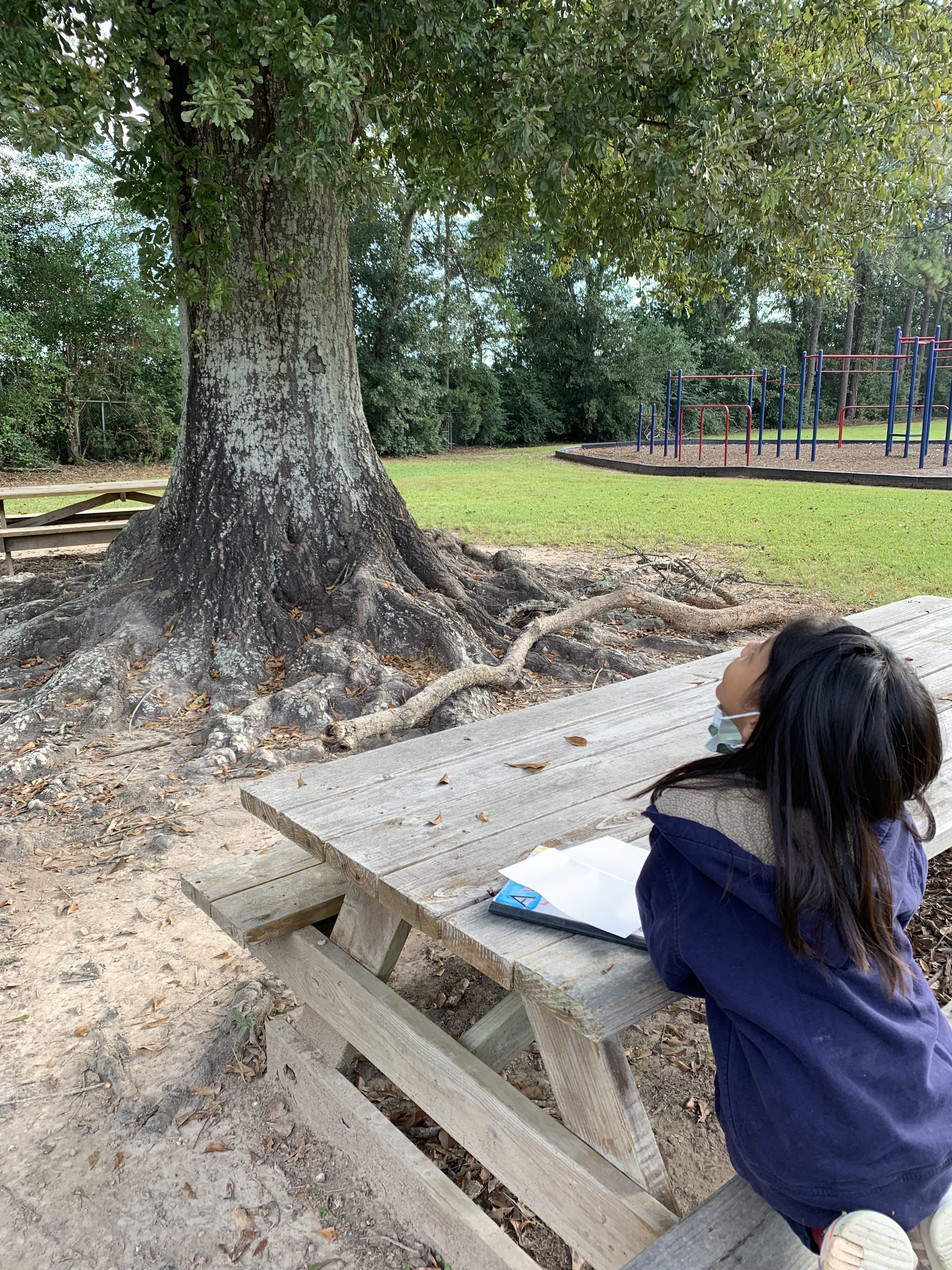
Avalyn observes a live oak tree.
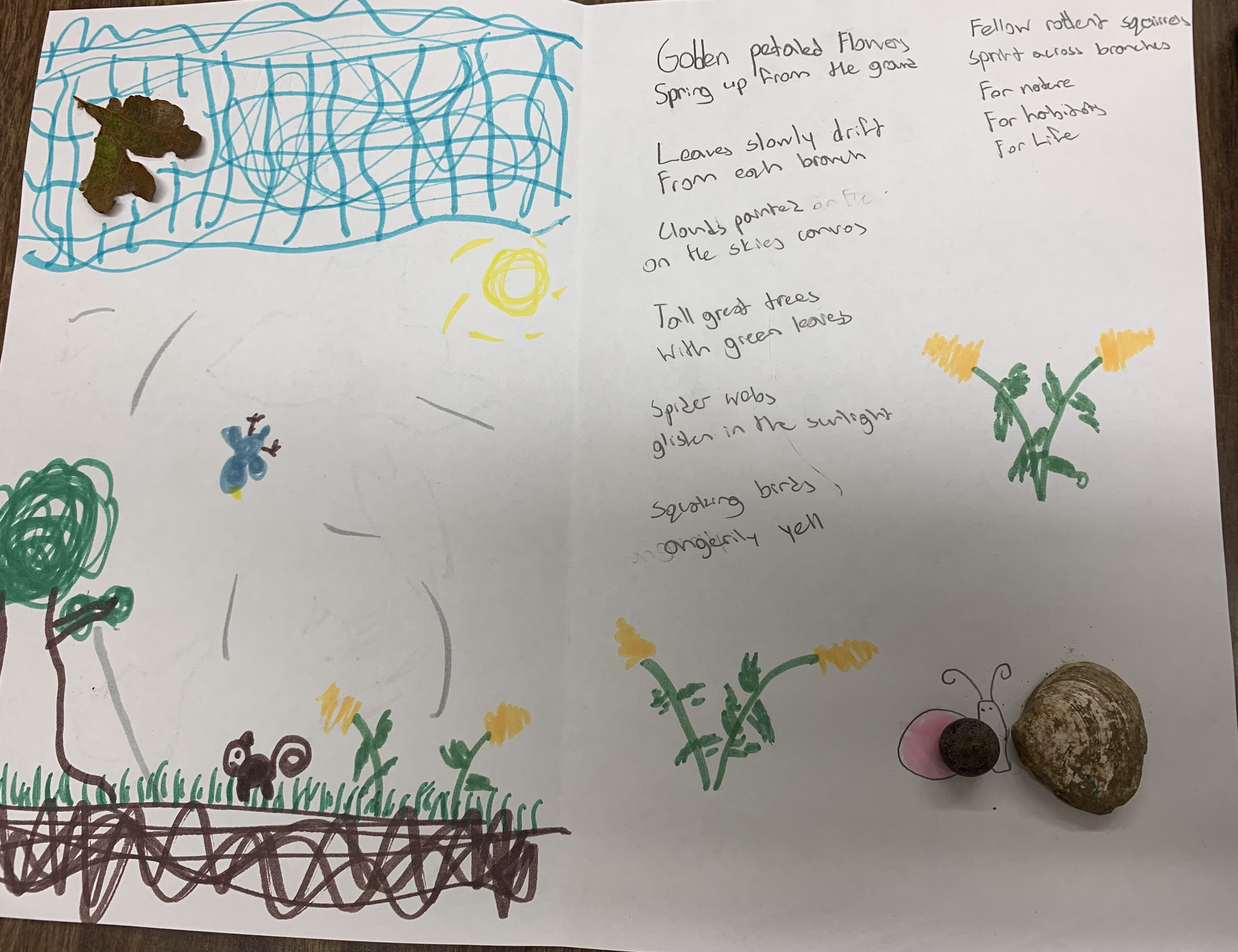
Jaden’s are collage and poem

Golden petaled flowers
spring up from the ground

Leaves slowly drift
from each branch

Clouds painted
on the sky’s canvas

Tall great trees
with green leaves

Spider webs
glisten in the sunlight

Squawking birds
angrily yell

Fellow rodent squirrels
sprint across branches

For nature
For habitats
For life

Jaden, 6th grade (form inspired by Irene Latham)

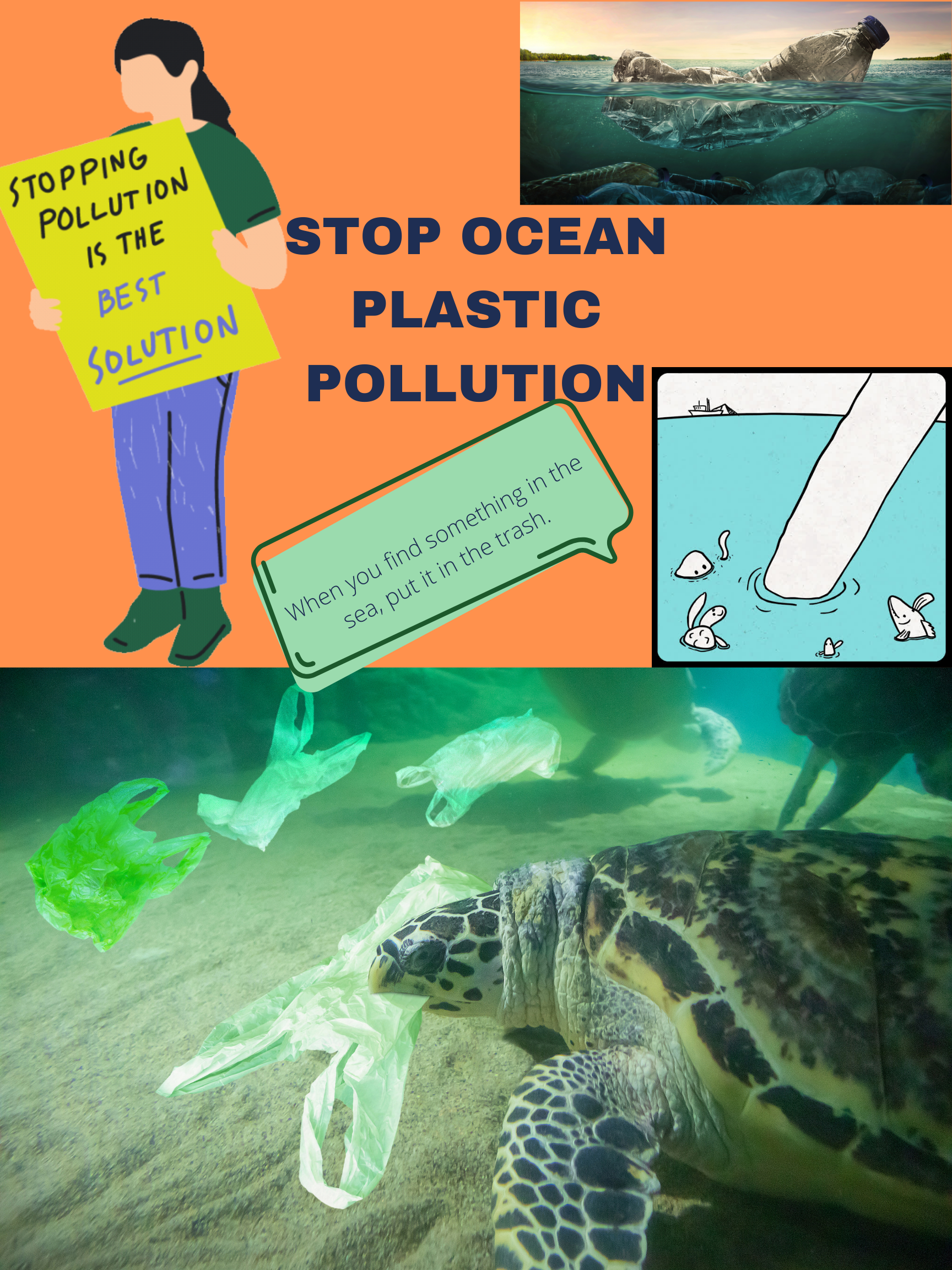
Another #writeout prompt asked students to make a poster. We used Canva and Adalyn create this one. On Canva it’s animated. You can view the animated version here.

Created by Adalyn, 3rd grade using Canva

Read Full Post »

Thank you to Two Writing Teachers for creating an amazing community of writers and a safe, welcoming space to write and share.

#WriteOut sponsored by the National Writing Project in partnership with the National Parks began yesterday with a wonderful video and prompt from Golden Gate National Recreation Area. My students and I had a productive day of writing in response.

As a teacher of writing, I am interested in prompts that lead to creative and imaginative writing. This first prompt did the job. Because there was a way into the story (a character enters a portal), students created a variety of different responses. Each one carried their character through the portal in interesting ways. Avalyn, second grade, chose herself as the character who finds the portal on the monkey bars and travels to the desert, then the rainforest, and back home where she lives happily ever after. Her story is here.

Katie and Jaden, 6th graders, chose to be animals in their stories. I think their chosen animals say a little about who they are. You can read their stories on Fanschool here and here.

Chloe’s story reminds me of a book I read this summer on Netgalley, Once Upon a Camel by Kathi Appelt. It’s a book to grab up if you teach middle grades. It’s a lovely story of a camel who saves tiny twin kestrels from a dust storm. I loved all the characters in this book and love that it weaves in a history of camels in Texas. Chloe hasn’t read this book yet, but the creative magic wand waved over her with these words:

Once in a desert, a camel walked into a purple glowing light. He knew it was a portal. He shifted and swayed until he stopped, opened his eyes and saw a horse running around a castle that had the words “Mississippi Land” on it.

Read the whole story here
Join Write Out!

I wrote alongside my students and may work on my story for a regional Louisiana picture book idea. There, I put it in writing. I know it needs a lot of work, but what do you think about a mosquito and banana spider that take a ride through the swamp on a brown pelican?

The Write Out prompts and resources will be remain available on NWP’s website, so even if you don’t have time to work them into your lessons now, tuck them into a back pocket. They are gems!

Read Full Post »

Poetry Friday round-up is with Catherine at Reading to the Core.

This month, Inkling Mary Lee Hahn challenged the group to write a poem to define or exemplify a poetic device or form. She was inspired by two books, The Craft of Poetry by Lucy Newlyn and Inside Out by Marjorie Maddox. I remembered a set of poems I wrote using the definito form to define a poetic device.

Another Inkling partner Heidi Mordhorst created the definito form which is a poem written for children in 8-12 lines that defines a word. The word appears as the last word of the poem. Today’s poems define alliteration, imagery, personification, and meter.

Photo by Kaboompics .com on Pexels.com

Poetic Devices Definitos

Letters, linked
and lively,
Lindy-hopping-
Notice how
some sounds repeat
Tongue twister
Word sister…alliteration.

Make a movie
in your mind
Imagine all
that tastes, feels, sounds–
hands gripping,
feet slipping,
Writers show me
how to see
with imagery.

If the wind waves
If flowers wink
If hummingbirds tell a tale.
A thing you know
A thing you love
becomes a person
real and alive
walking across the page
personification.

Can you tap out a beat?
ta da, ta dum, ta dee!
Count the upbeats?
one, two, three
A poem may rhyme
but the rhythm is clear
Iambic, 
dactylic,
pentameter
words for the beat
Tap, tap…meter.

Margaret Simon, 2021

Other poems for this challenge:

Heidi @ My Juicy Little Universe
Linda @ A Word Edgewise
Catherine @ Reading to the Core
Mary Lee @ A(nother) Year of Reading
Molly @ Nix the Comfort Zone

https://writeout.nwp.org/

Write Out 2021 (#writeout) is getting ready to launch this October 10th and will run through the 24th. This year’s theme—Palettes, Storyboards, and Cadences—is meant to support you as you explore the natural world and public spaces around you, while engaging as writers and creators who share in a connected virtual community.

This summer I worked with the National Writing Project on creating prompts for writing with Write Out. This two-week event encourages you to get outdoors and write. A number of National Parks have created videos for students to inspire writing. You can sign up at the NWP website to receive updates.

Read Full Post »

Poetry Friday round-up is with Jama today.

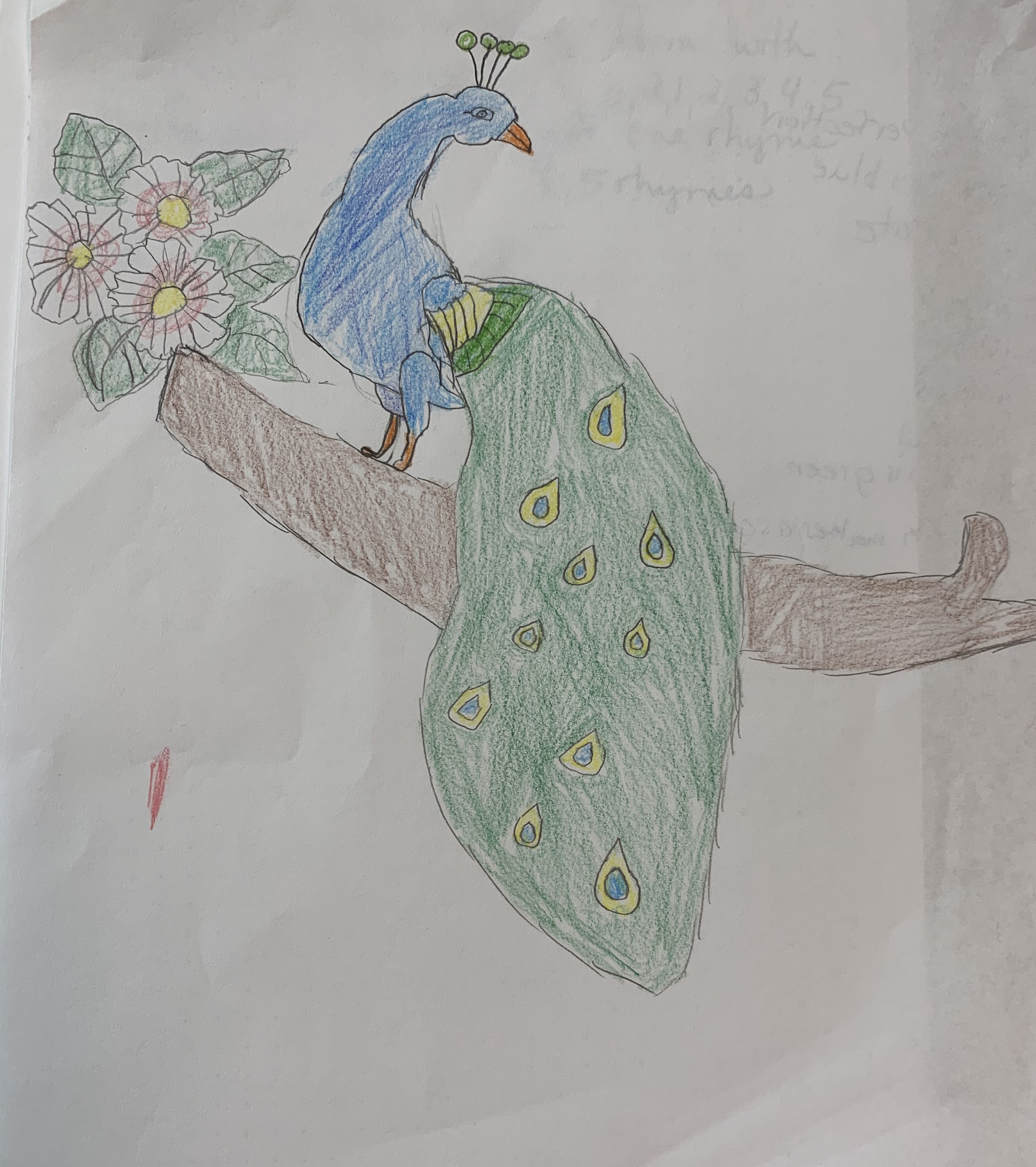
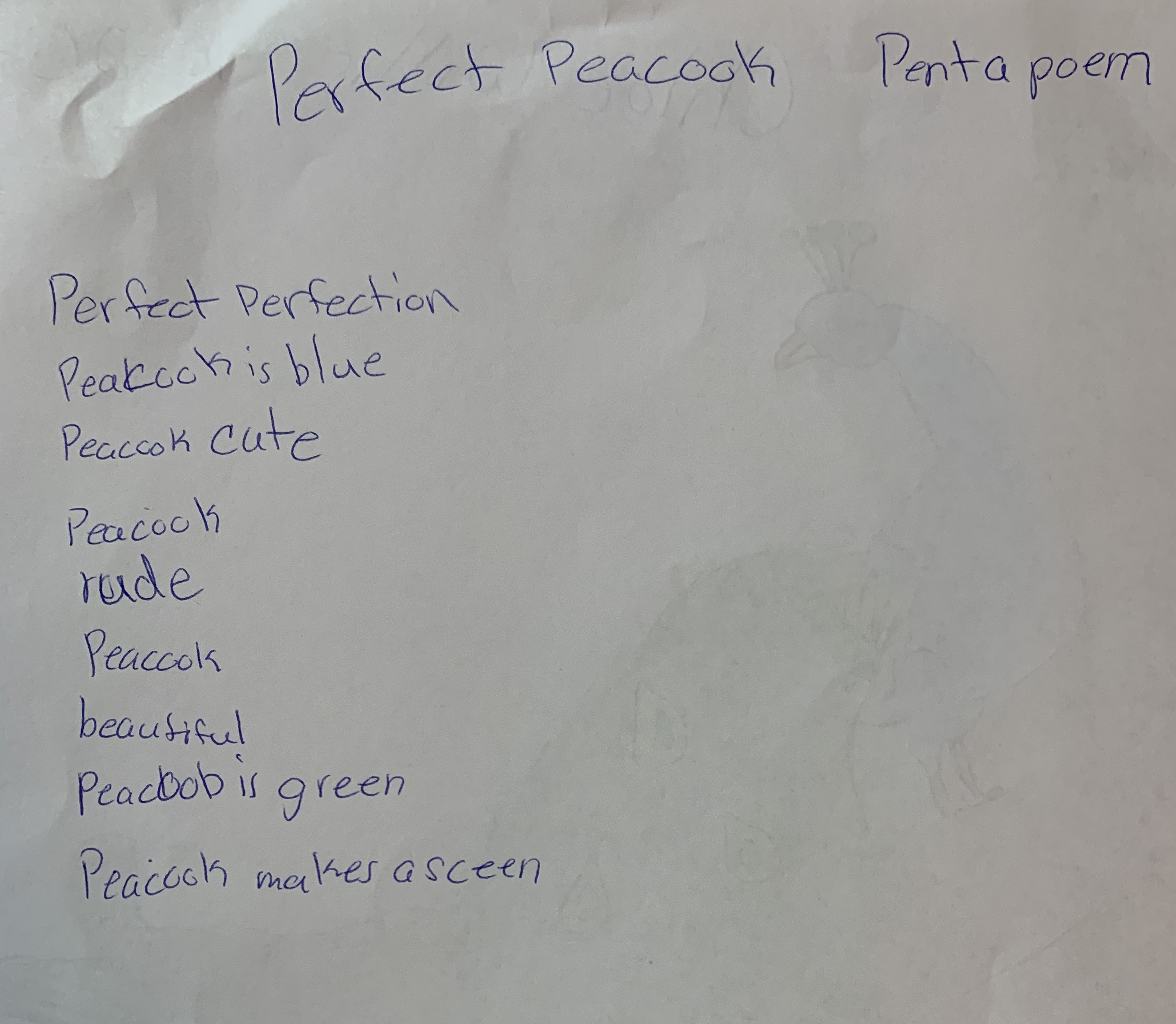
I enjoy playing with a new form, and this week I had a few to try out. One was invented by my very own student Chloe. This has happened only a few times in my teaching career when students become so comfortable with poetry that they venture into creating a new form. Chloe was writing to a prompt from Write Out, a collaboration between the National Writing Project and the National Park Service. The prompt asked students to draw a bird and write a journal entry for a day in the city. Chloe decided to draw a peacock. Then she wrote a very P heavy peacock poem. The aha came when she realized there was a distinct rhythm to her words. Voila! A new form!

Her form uses the syllable count of 5, 4, 3, 2, 1, 2, 3, 4, 5. We talked about the number five and decided that Penta-poem (more P words) had a nice ring to it. There is an optional rhyme scheme.

Peacock by Chloe, 5th grade
Peacock Penta poem by Chloe, 5th grade

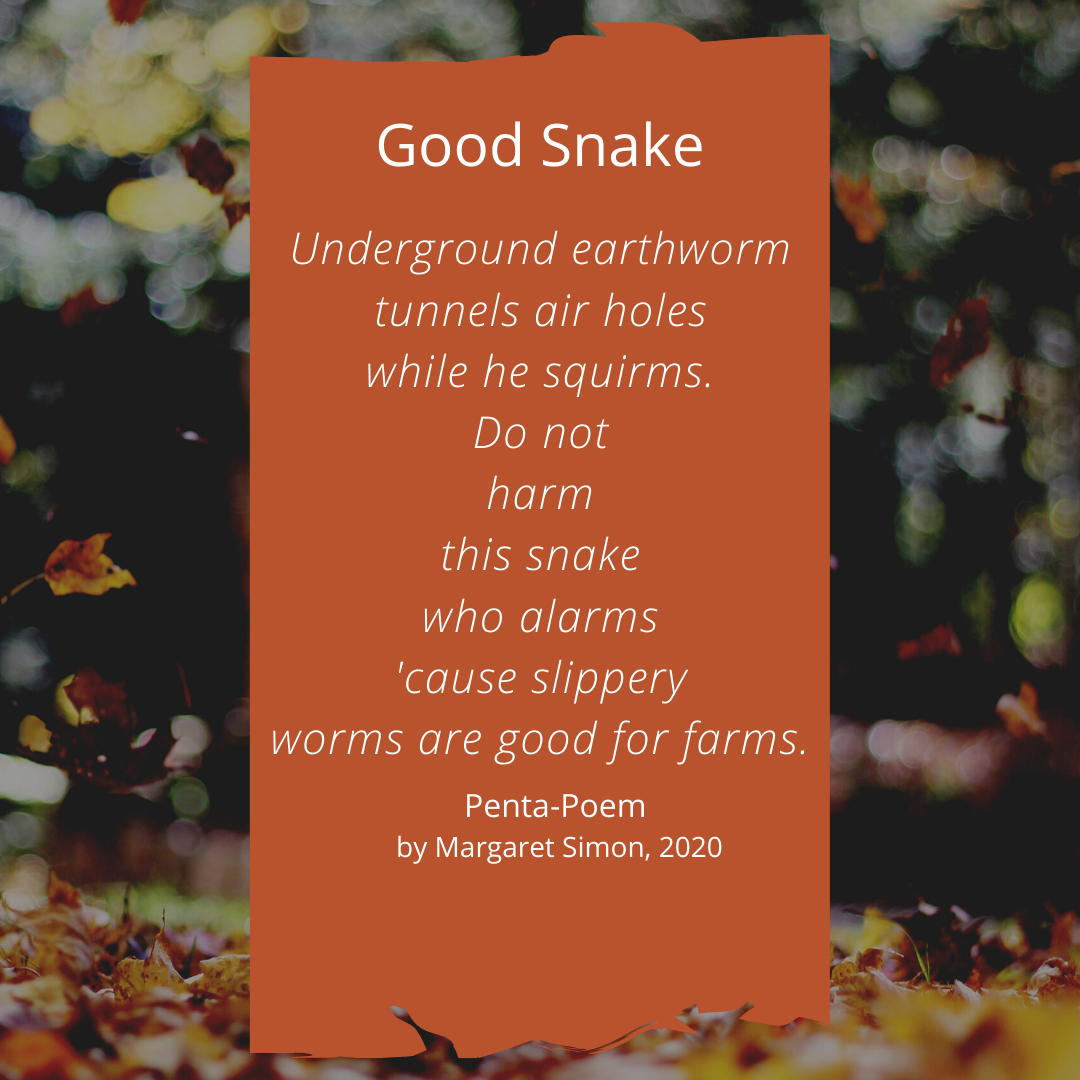
I used another Write Out prompt to play with Chloe’s form. This prompt asked us to write from the perspective of an underground creature.

Some of our Poetry Friday peeps have also tried the Penta-Poem: Responses to This Photo Wants to be a Poem and Linda Mitchell uses a variation with a found poem.

I was introduced to a few other new-to-me forms on Ethical ELA Open Write this week. Anna J. Small Roseboro presented “Take a Word for a Walk” like the 5-finger exercises that pianists use. Writing to a daily prompt is exercise for the poet. Read Anna’s prompt here.

Why Worry?

worry that I’m not good
enough to worry about myself when
I give in, worry for the sake
of all my silly worry lists
waiting for nothing but for worry.

Margaret Simon, draft

Read Full Post »

« Newer Posts