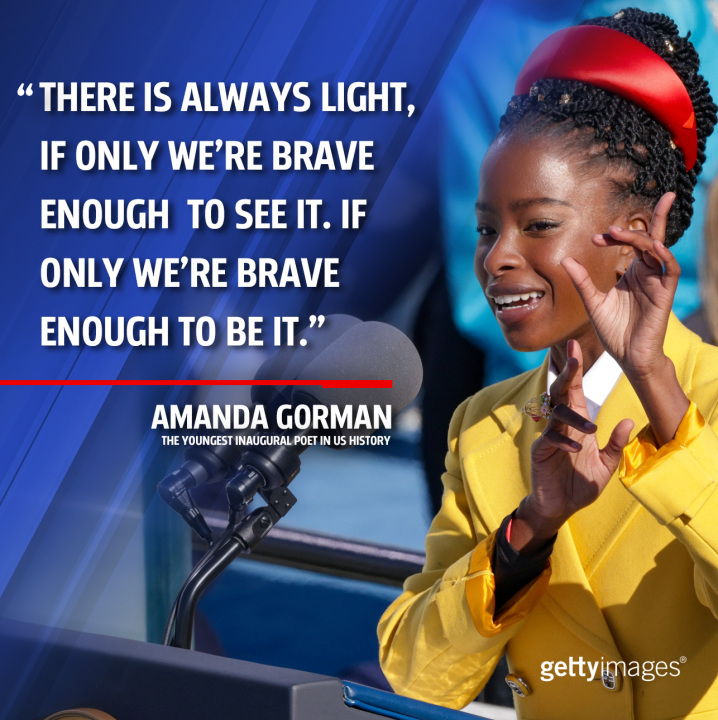
Last Friday I posted poems from my two fifth grade girls who responded to Amanda Gorman’s powerful words with their own poems. Their poetry prowess has not stopped. On Thursday, Kaia announced that she had written another poem. She explained to me that she saw Beldam, the Other Mother in Coraline. She googled it and found a poem by John Keats, La Belle Dame sans Merci. As she’s telling me this, she is writing and googling and writing and asking me about the Queen and how tall she is. Where is she going with this? In the end, it all led to an original ballad-esque poem.
I told her, “You are doing the work of a poet.”
Her face (her eyes, for she was wearing a mask) lit up. “Really, why?”
I explained that as a writer, we seek inspiration and research it and then write from it. Amanda Gorman explained in an interview with Anderson Cooper that she read other inaugural poets and researched inspirational speeches to write her poem, The Hill We Climb. “You are doing this kind of work. You are not just writing from my prompts anymore. You are actually a poet.”
Those words inspired her to write another poem. I will post a stanza here. She said, “I love how in poetry, you can write about anything. I can write about your desk, that pen, the Kleenex box.”
“Yes, you can.” I thought to myself, a dream come true. Or my One Little Word, Inspire, at work.
I’d like to find a place to send some of her work. If you have any ideas, please leave a comment.
The Work of a Poet
As you pick up the pen, you wonder what to write Thinking this way and that way, until you see a light A shining and glistening rhythm it sets off And helps you to the end of the paper, as fast as a cough
Like the nation, I have fallen head over heals in love with Amanda Gorman, the youngest inaugural poet ever, and a heroine to many young girls just like the ones I teach. All girls, no matter their race, can now dream of being a Vice President someday. As much as I admire Kamala Harris and her accomplishments, the star of Inauguration Day was young Amanda Gorman. I couldn’t wait to present her to my students this week.
We started on Tuesday with her poem “In this Place (An American Lyric)” written for Tracy K. Smith’s inauguration as Poet Laureate in 2017. (This post from the Library of Congress contains the poem and a video from the reading.) As Kaia heard that poem, she was writing. And after class that day, she sent me two more poems. Amanda lit a fire in her, a flame for words.
There’s a poem in this place after Amanda Gorman
Not here nor there But there’s no need to look everywhere tug and pull on my hair Hoping that this poem, has time to spare
There’s a poem in this place While i’m in disgrace Of finding my lyric That belongs in this place
There’s a poem in this place Still not being found Is it in a dog hound? No, it weighs more than that one pound
There’s a poem in this place While the wind is hitting my face Being withdrawn due to lack of space Without leaving any sign of a trace
There’s a poem in this place Where could it be? Wait, I have found it! It’s in YOU and ME.
Kaia, 5th grade
On Thursday, we used Pernille Ripp’s generous gift of a slide show to visit and discuss “The Hill We Climb.” While the message of this poem was powerful, I was drawn to Amanda’s effective word choice, how they sound and how their meanings change with usage. Combinations like just is and justice, arms, harm, and harmony, and tired, tried, and tied. Chloe’s poem below is her good effort to play with word sounds like Amanda.
There’s a poem in sight Too bright To fight It takes flight To the world of an artist Who’s never artless Who just started to harness The sharpest words That bring out The creativity With a twist And a big Dream to Feel like They exist
Because friendship is such a universal topic, most young students have experience with it, so the tough puzzle of a golden shovel was eased somewhat. I’m sharing a few results today.
To write a Golden Shovel, borrow a line or phrase by someone else, and use each of their words as the final word of each line in your new poem. You must keep the original order of the words intact, and you must credit the author of the original line or phrase. Peter Kahn
Friendship
When you need help, andwhen
you are in trouble, he
will be the one who is
going to help you. And when you are silent,
he will know that your
mind and heart
are in trouble. He ceases not
to understand your emotions. He loves to listen
to what you have to
say. His
love for you is as big as your heart.
by Daniel, 6th grade
Friends are there for you in sprinkles and the storm. They are the dew that softens hardness of the darkness, like a little sunshine when things get tough. The best friends know your heart. The true friend finds a way to reach you even when its a dark time, offering morning to your night, and assuring you all is refreshed.
Thank you to Two Writing Teachers for creating an amazing community of writers and a safe, welcoming space to write and share.
This is the week of five days of open writing with Ethical ELA. Sarah Donovan has created a safe place for teacher-writers to “play” with poetry. One of her prompts this week asked us to consider what we give. Along with many of you, I give instruction for writing every day, but it’s not every day that I witness success. But when I do, I find Joy. This poem celebrates all teachers who wave their wands every day, whether or not there is magic inside.
Magic Bean
How a writer is made some think comes from a magic bean– it just is this writer can’t help but write & write, but I know better.
I know a writer comes from the magic wand of a teacher who told her she was.
A teacher finds magic in the light of a child’s words, rubs the lantern again & again. She knows the power of waiting, of how a seed of an idea can sprout if you give it nourishment & time.
I love most the smile of realization “Wow! I wrote that!” Pride from my wishing which, in the end, is me working magic, still unknown, still a mystery.
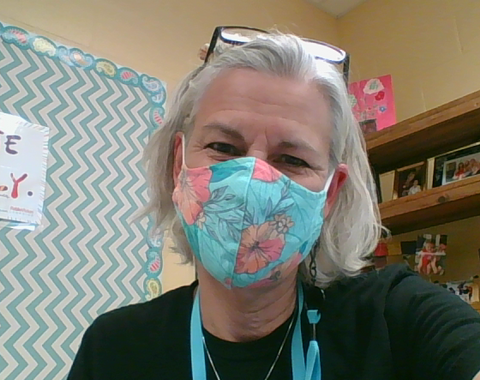
Months and months virus spreading mouth to mouth. We wear our love on a mask. Ads on Facebook led me to a Vera Bradley style, flowers of peach on a teal green background. Flowers light up my face like rouge on my cheeks or lipstick on my lips.
I smile beneath this garden. Can you see it in my eyes? My love My faith My hope
My flowers are a bouquet for you on a Hallmark greeting card. I breathe in their sweet perfume.
Let’s take a walk outside and smile with our eyes.
Thank you to Two Writing Teachers for creating an amazing community of writers and a safe, welcoming space to write and share.
Teaching through a screen is hard. I can’t tell what my students are doing. Their mikes are muted; their personal icon doesn’t move. Trying to have a book discussion was like talking to a mirror. The only good thing about that was I could see my face getting more and more exasperated. Why weren’t they answering me? The questions weren’t that hard.
To relate to the main character’s discovery of Langston Hughes’ poetry, we watched a video of Langston Hughes reading Weary Blues.
I read aloud Hughes’ “Homesick Blues.” And tried to talk about what makes someone feel homesick. I was talking to myself, or so it seemed. After I gave up, I set the timer for a 5 minute writing time. In the chat, I wrote 5 different lines from Langston Hughes’ blues poems. I admit I didn’t have high expectations.
As always I asked for volunteers to read. Lashawn’s mike turned green and his soft voice said, “I’ll read.”
The silver lining, the golden thread, my poet heart pattered with emotion and joy. Lashawn gave me permission to share his poem.
My Body’s Feeling Wrong
I feel as I need to do better do better just do better. that’s all I need to do. But why can’t I do it? is something distracting me? Am I filled with bad luck? I get blamed but it’s not me. no explaining can help me. I tell the truth not a fib at all. but a liar is what I get called.
I feel like they are talking about me. It’s just no use for me. Change my look to let everyone know. Just a smile is what everyone else needs. not me though. I get asked if I’m fine and alright. No I’m not fine. Because if I was, my body would have looked right.
I feel a bit empty just a friend all I need. I lay down at nighttime. I was bullied by online Meanies. I watch some anime but nothing can heal me. At least I didn’t lose my life to sadness. I’ll still be here even If i’m sad. But hey as I shed a tear. I just made some people laugh. As more tears come down I smile it out.
My body may look wrong but I make other people feel bright. Thanks to my friends for being by my side. I’m happy I made all of you smile.
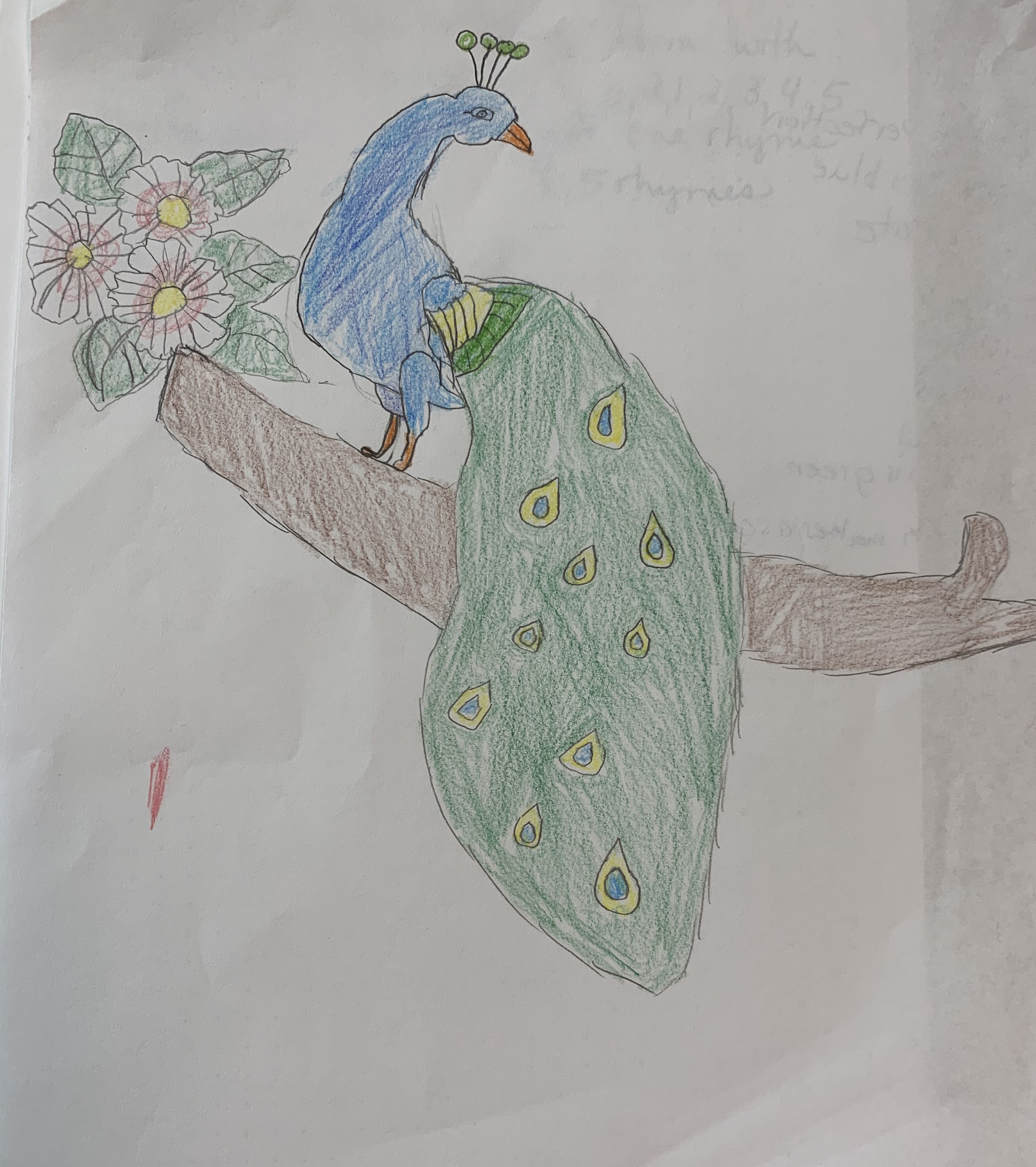
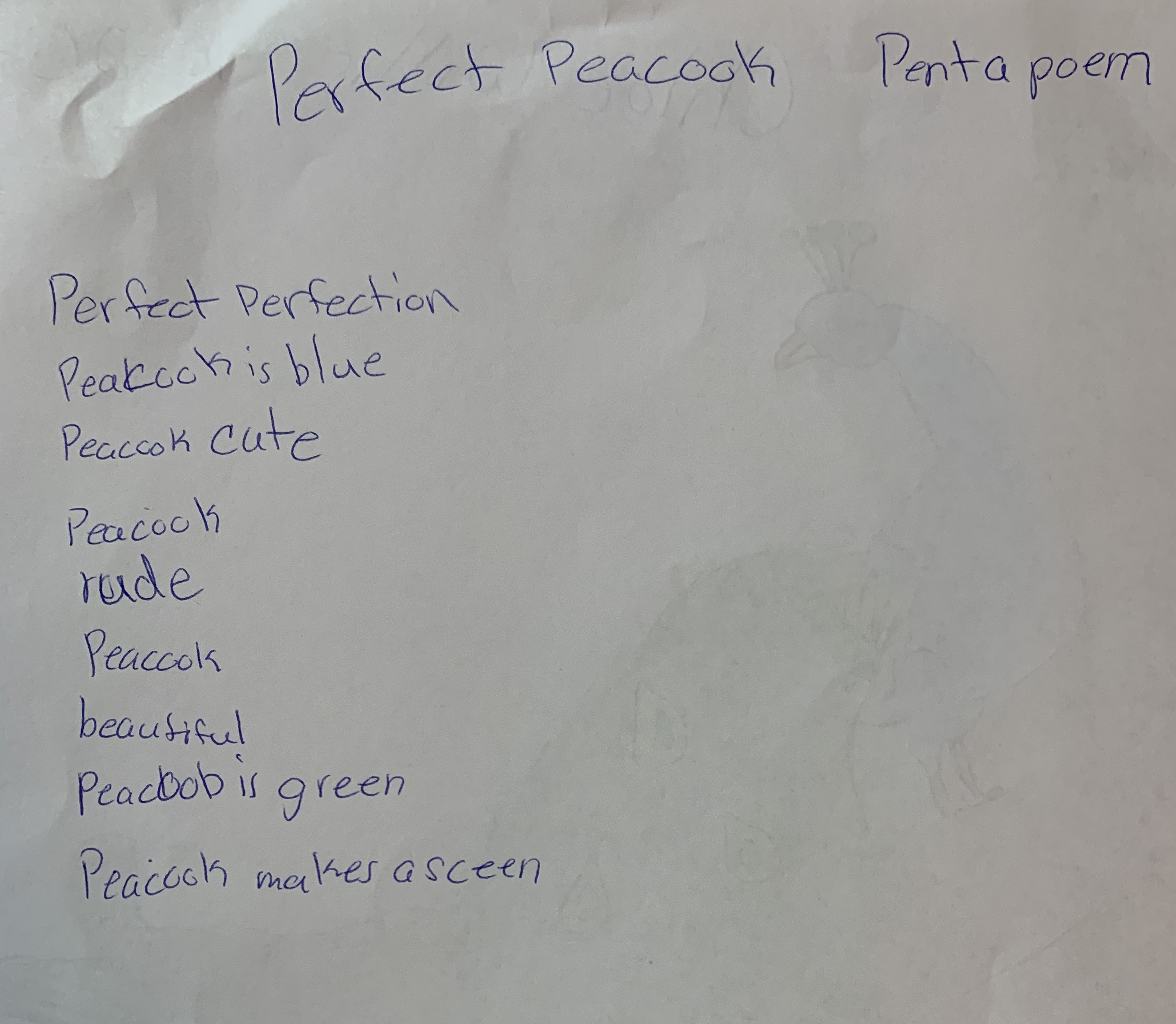
I enjoy playing with a new form, and this week I had a few to try out. One was invented by my very own student Chloe. This has happened only a few times in my teaching career when students become so comfortable with poetry that they venture into creating a new form. Chloe was writing to a prompt from Write Out, a collaboration between the National Writing Project and the National Park Service. The prompt asked students to draw a bird and write a journal entry for a day in the city. Chloe decided to draw a peacock. Then she wrote a very P heavy peacock poem. The aha came when she realized there was a distinct rhythm to her words. Voila! A new form!
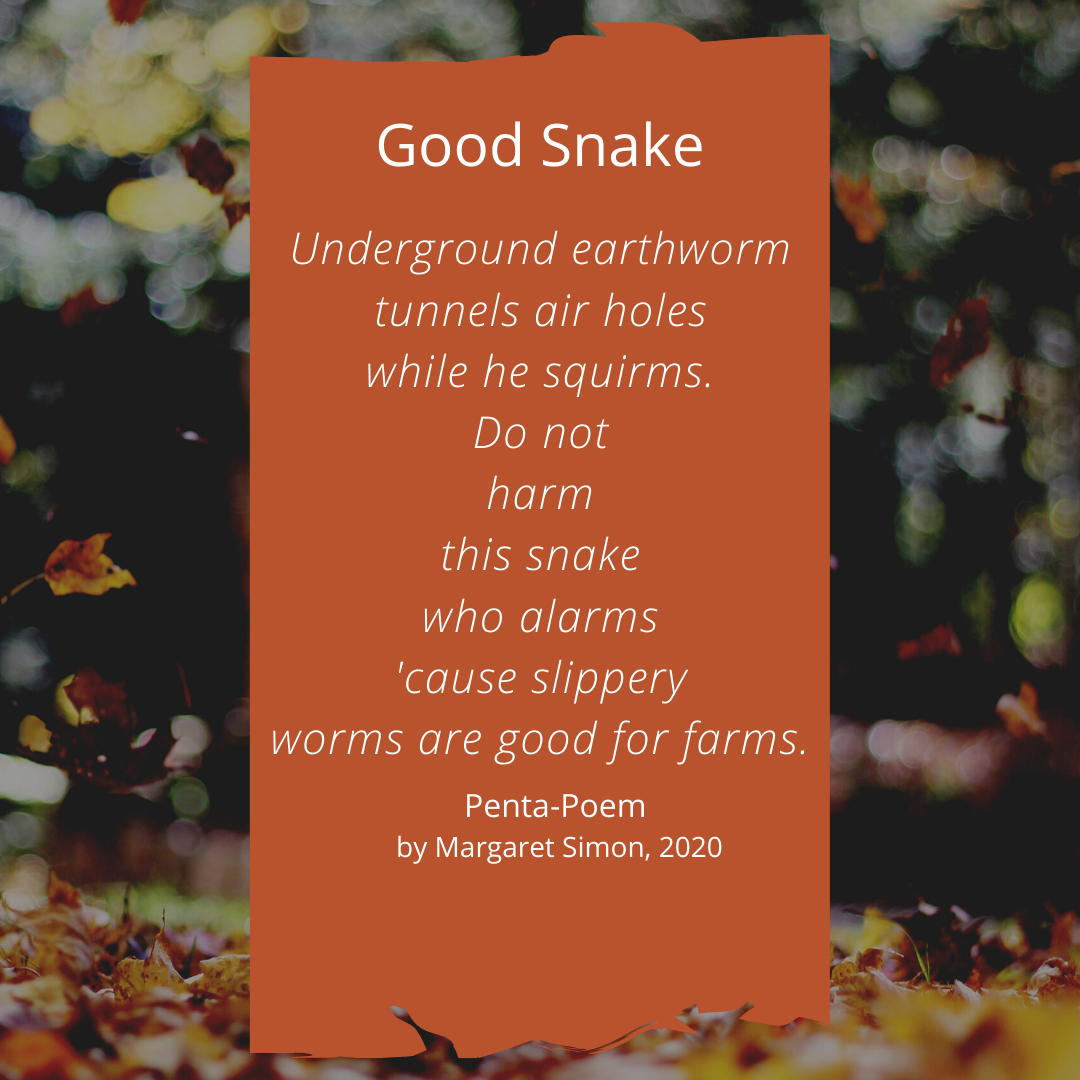
Her form uses the syllable count of 5, 4, 3, 2, 1, 2, 3, 4, 5. We talked about the number five and decided that Penta-poem (more P words) had a nice ring to it. There is an optional rhyme scheme.
Peacock by Chloe, 5th gradePeacock Penta poem by Chloe, 5th grade
I used another Write Out prompt to play with Chloe’s form. This prompt asked us to write from the perspective of an underground creature.
I was introduced to a few other new-to-me forms on Ethical ELA Open Write this week. Anna J. Small Roseboro presented “Take a Word for a Walk” like the 5-finger exercises that pianists use. Writing to a daily prompt is exercise for the poet. Read Anna’s prompt here.
Why Worry?
I worry that I’m not good enough to worry about myself when I give in, worry for the sake of all my silly worry lists waiting for nothing but for worry.
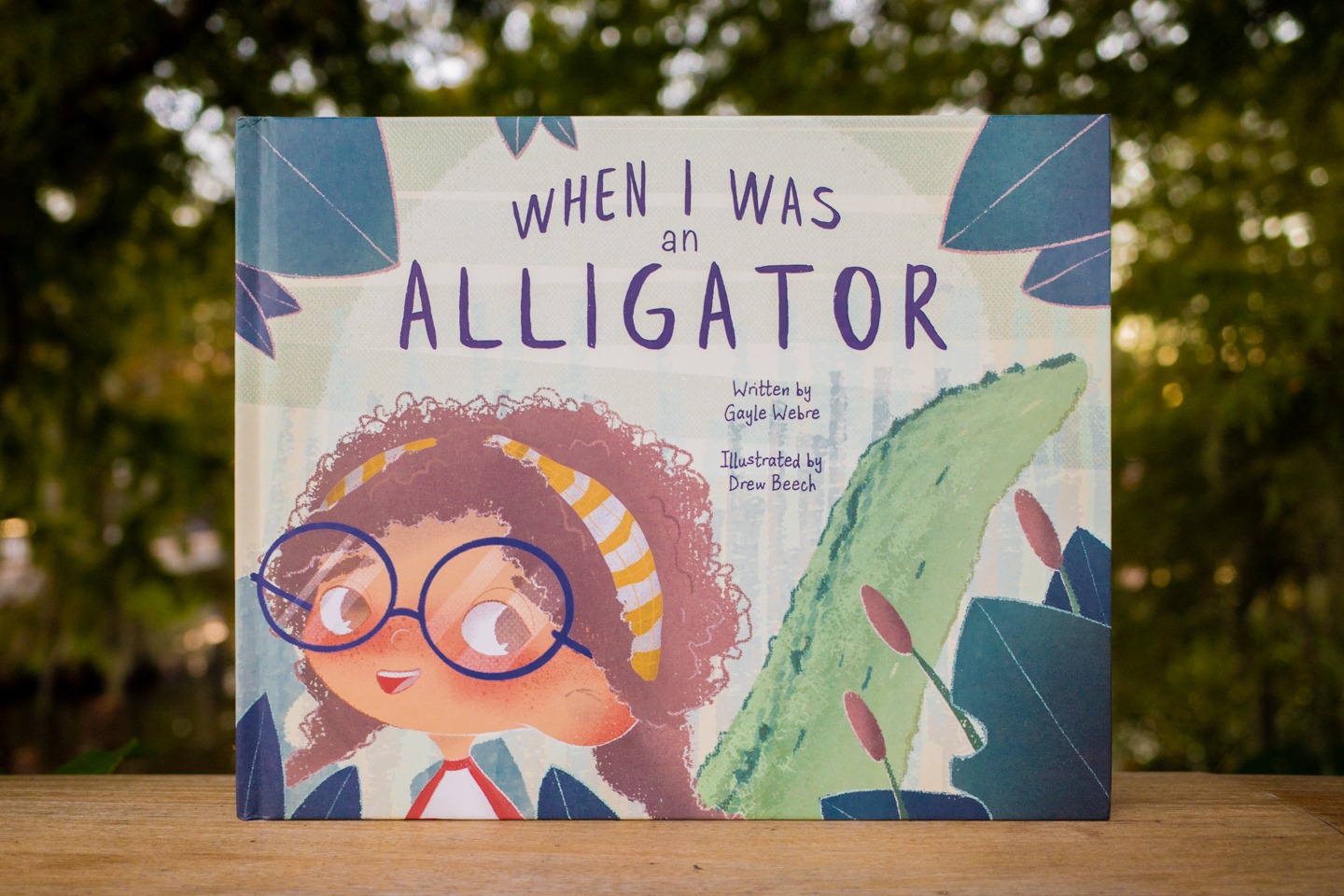
Since I joined the local SCBWI, I’ve had the privilege of watching a few books go from idea to draft to published. I met Gayle Webre a few years ago as we were both attending our region’s critique meeting. We had the teaching of gifted students in common. But Gayle was hiding another talent, picture book writer. I remember the first time she read this manuscript aloud I loved it. Now when I have it in my hands, the charm of her imaginative story has grown with the addition of illustrations by Drew Beech.
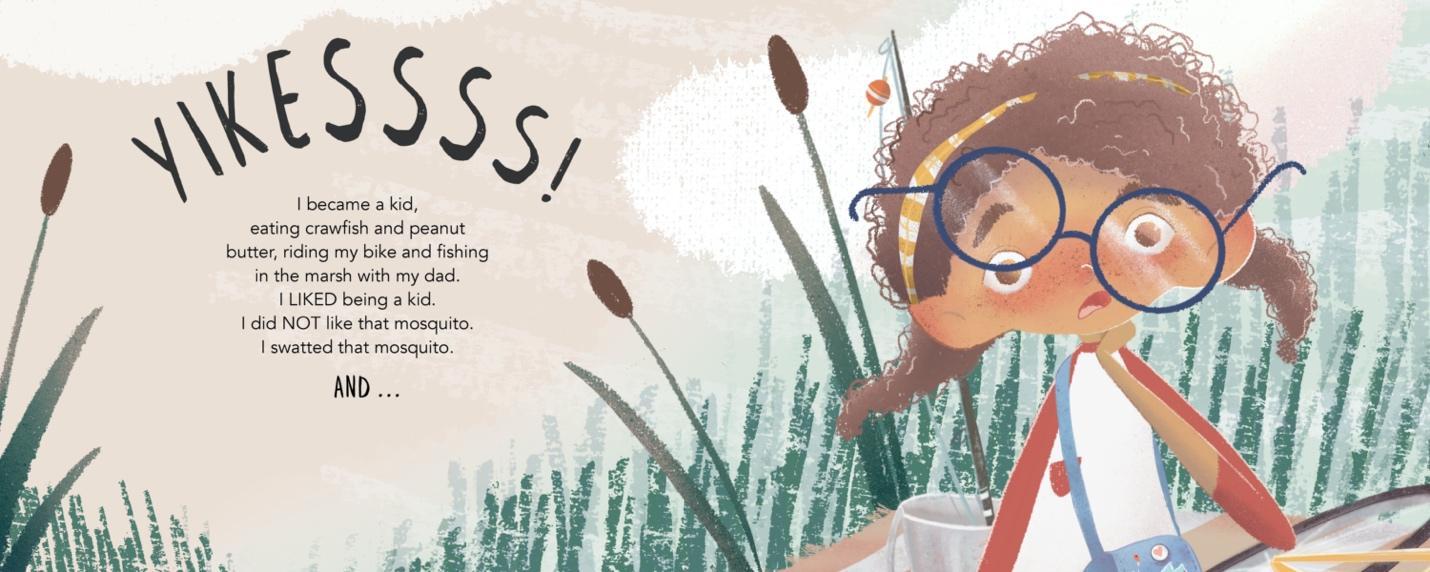
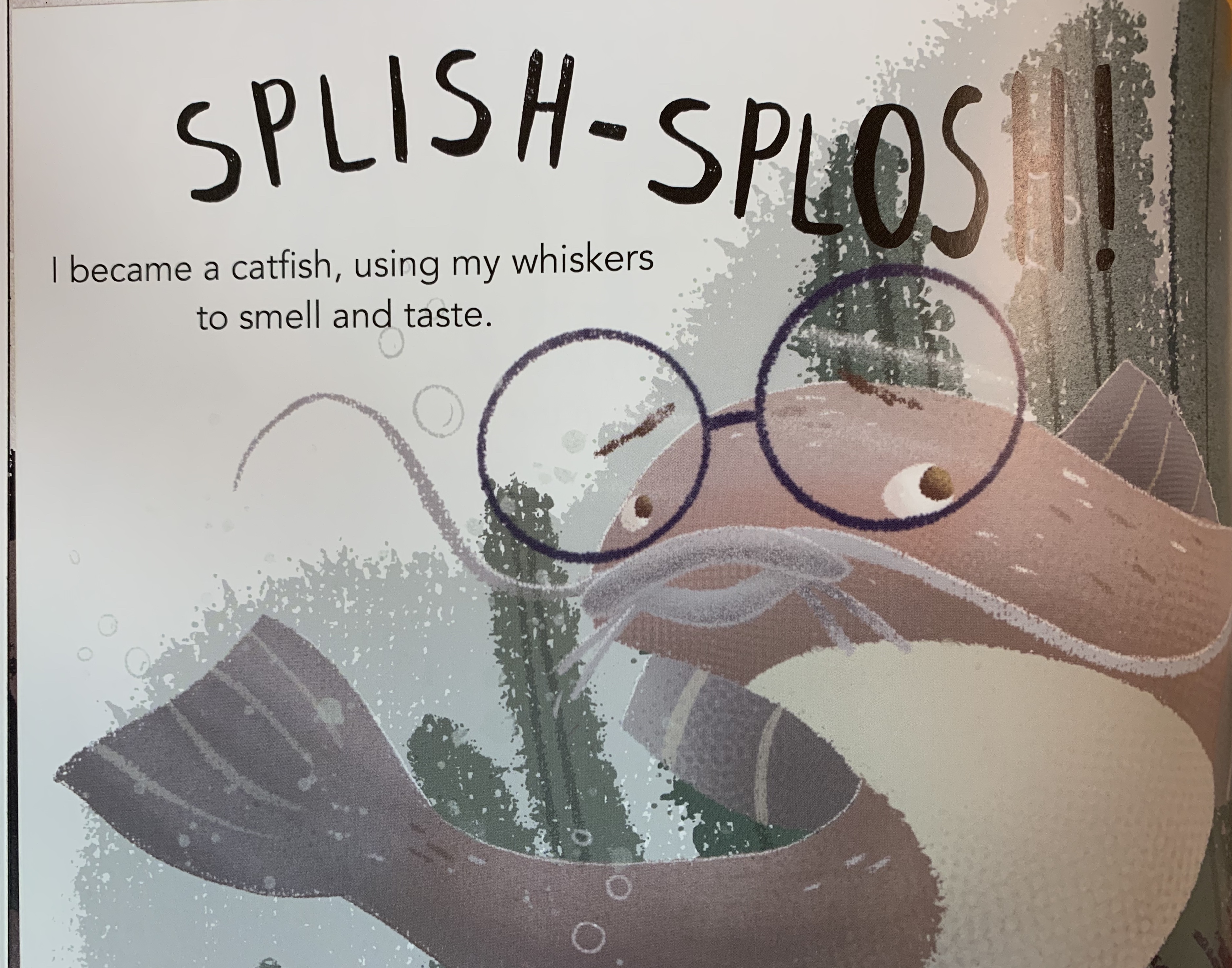
Drew has taken Gayle’s idea and created an adorable Cajun girl who wears glasses and wonders what life would be like as different animals in the swamp. The wide round glasses appear on each animal to help our young readers understand that this Cajun girl was once an alligator, a heron, an opossum, and more.
I invited Gayle to answer some questions about herself and her writing process.
What was your path to becoming a writer?
As a student I was pretty good at writing. My teachers and professors encouraged me, yet I didn’t consider writing as a career. I stumbled into a career as a teacher and loved it. I wrote lesson plans, letters of recommendation, and grant proposals. I read lots of children’s literature. Still I did not consider writing for children. When I retired, I thought I might give it a try, and I had no idea where to begin. By “chance” I found our local SCBWI group who offered support, encouragement, and friendship.
What do you do with your time?
I read, host gatherings for family and friends (pre COVID), travel, visit my kids and grandkids in the New Orleans area, and ride my trike. And I try to write!
What inspires you?
People inspire me. Their stories, their struggles, their personalities, their histories, their approaches to life….
What book would you recommend?
For adults? I just read The Girl with the Louding Voice by Abe Dare. Set in Nigeria in 2014, it’s a beautifully told story of a young girl’s struggle to survive incredible hardships and get an education.
Tell us about your journey from idea to published book.
When my 5th grade students and I met with scientists at the National Wetlands Research Center in Lafayette, I was impressed with the importance and fragility of our coastal wetlands. We learned about the severity of coastal land loss and the work being done to mitigate it. (Nutria tracking was a favorite!) A few years later, four-year old Sawyer walked into my house and spouted, “Aunt Gayle, when I was an alligator…” A few years after that, the idea to write When I Was an Alligator surfaced.
SCBWI helped me with the polishing and submitting process. I sent the manuscript to publishers and got lots of rejections. Finally Devon Lord and the team at UL Press saw the potential, let me choose an artist, and now we have a book!
Why do you write?
I enjoy the creative process; writing is fun and challenging. And I think I have some stories that need to be told.
Describe your writing habits.
I don’t think it could be called a habit. When I get an idea, I jot it down and write a pretty bad first draft. (Ask the SCBWI critique group!) My research for When I Was an Alligator took lots of time. I can spend half an hour choosing one word. I enjoy the whole process.
What is your favorite spread of your book and why?
Drew did a great job on all the art, so it’s hard to pick one spread. I especially like this one. After all the curious Cajun kid has been through, she’s more than a little flustered, and she finds that she likes being herself!
How much, if any, communication did you have with the illustrator?
I met Drew at an SCBWI regional conference in New Orleans. Drew now lives in Chattanooga, so we’ve not met in person to work on the book, but we had lots of interaction through the whole process. In fact, we are still working together.
What is the best advice you’ve ever gotten?
The answer to that changes often. Today it’s: “O, small beloved person, it is not all up to you.”
What advice do you have for writers?
Make time to write, find some folks who support you, and join SCBWI if you are writing for children.
Finally, I have a teaching idea for you. With books like Gayle’s, students can find a pattern working throughout. A student can use this book as a mentor text to write their own imaginative book. What animals do you wish you could be? Using onomatopoeia to describe what it would be like to turn into that animal.
Page from When I was an Alligator by Gayle Webre
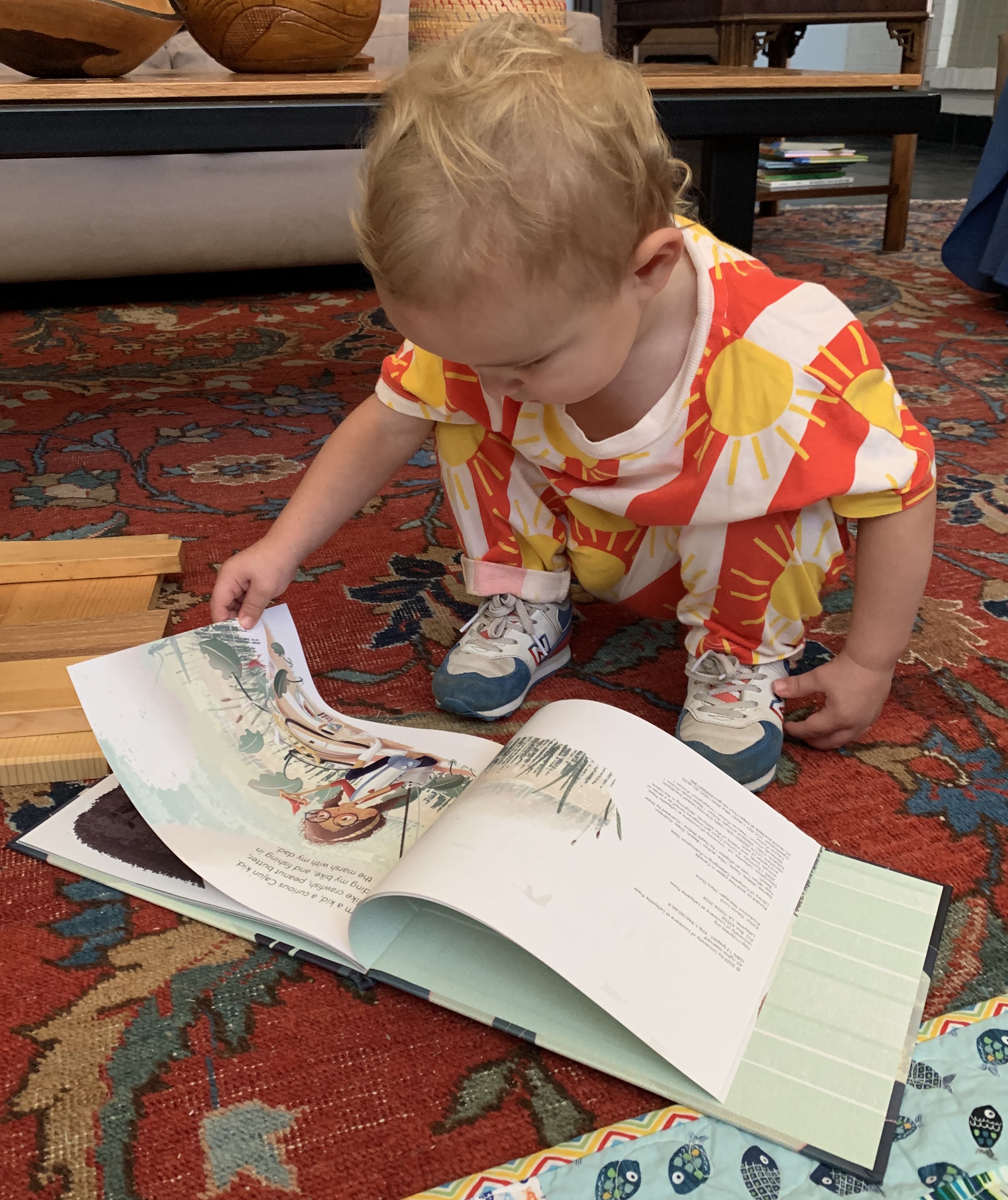
Leo, 22 months, is also a curious Cajun kid who loves crawfish and peanut butter. He says, “crawfish, yum!” and “Ba-butter” for peanut butter.
Pablo Neruda was the master at writing odes, skinny poems of praise that would go on and on, metaphor after metaphor, describing the most ordinary thing. With my student Chloe, we read Neruda’s Ode to My Socks. We discussed metaphor. Then I asked her to write a skinny ode about something she cares about. Gymnastics came to mind right away. She made the connection between the uneven bars and a tree, and off she went.
Ode to the Uneven Bars
A high twig it holds me. I’m a feather. Cartwheels on air that bring me higher, my hands are explorers that discovered a path to the wonderful world of magic.
I hold up my invisible hands that reach from island to island. My hands are telescopes that help me see the world. My arms wrapping around trees, my hands out of control going everywhere. Suddenly they fly high, higher than the trees that wait for me.
Poetry Friday round-up is with Tabatha at The Opposite of Indifference
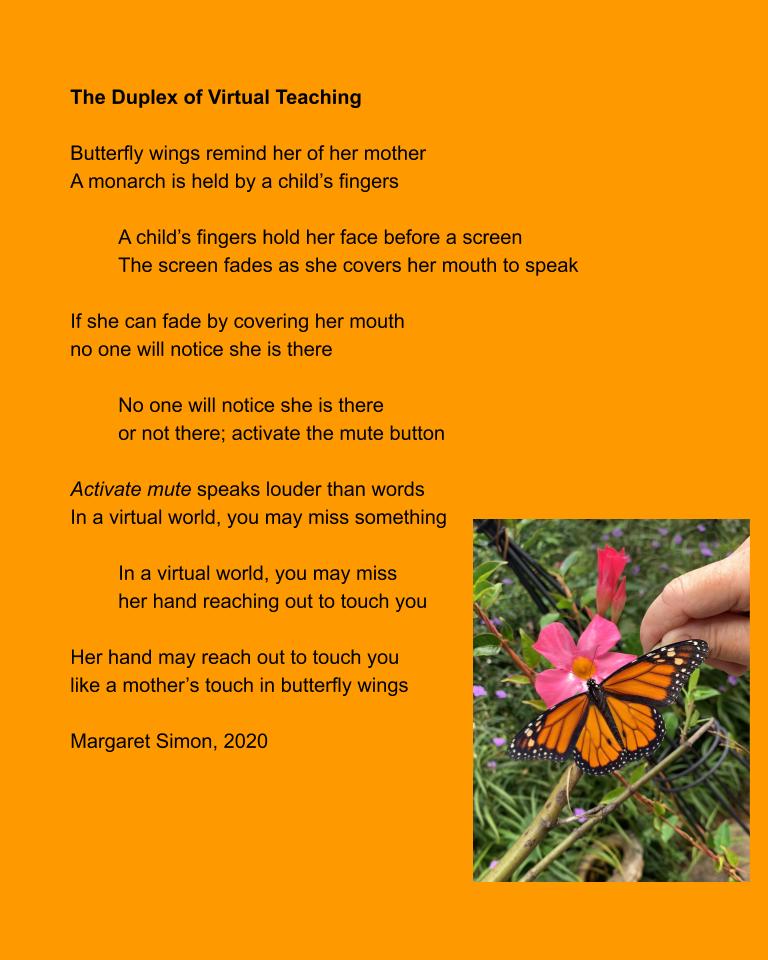
I have become enamored of the duplex poetry form, a modern take on a ghazal + sonnet + blues poem invented by Jericho Brown, the Pulitzer Prize Poetry Winner for 2020. I’ve read the description in this article over and over, and every time I see something new. In other words, it’s complicated.
Here are the boundaries:
Write a ghazal that is also a sonnet that is also a blues poem of 14 lines, giving each line 9 to 11 syllables.
The first line is echoed in the last line.
The second line of the poem should change our impression of the first line in an unexpected way.
The second line is echoed and becomes the third line.
The fourth line of the poem should change our impression of the third line in an unexpected way.
This continues until the penultimate line becomes the first line of the couplet that leads to the final (and first) line.
For the variations of repeated lines, it is useful to think of the a a’ b scheme of the blues form.
Jericho Brown
I decided to challenge my writing group, The Sunday Night Swaggers, with the form. Challenges help to get us moving. (I hope my partners aren’t throwing eggs at this blog post.) I enjoyed this process. The repetition with the permission to vary it led to new discoveries.
Margaret Simon lives on the Bayou Teche in New Iberia, Louisiana. She is a retired elementary gifted teacher who writes poetry and children's books. Welcome to a space of peace, poetry, and personal reflection. Walk in kindness.








 Reflections on the Teche