Feeds:
Posts
Comments

Archive for the ‘Teaching’ Category

Find more Poetry Friday at Miss Rumphius Effect.

Find more Poetry Friday at Miss Rumphius Effect.

As one of my students called out,”You love to connect us with authors.” They know me well, and they know that when I tell them we are going to learn a new poetry form, writing will happen, they will be supported, and it will be challenging. Last Friday, Michelle Heindenrich Barnes featured J. Patrick Lewis on her site. Pat put forth a challenge with a new form that he created called a zeno. The zeno is based on the hailstone sequence. This is the kind of math I enjoy. Math poetry: repeated syllable counts. My students were fascinated. They couldn’t wait to share with their math teachers. Matthew said, “I think I can use this in a magic trick.”

I have been playing with Emaze for presentations. I was so taken with the poems my students created in the morning group that I made an Emaze to teach my afternoon group. Later, I added some of their poems to the presentation. I encourage you to try this with your students. If you want to use the Emaze presentation, let me know.

Click the link below to go directly to the presentation.

http://app.emaze.com/882076/zeno-poetry

writing secrets

Read Full Post »

Join Jama for Poetry Friday at Jama's Alphabet Soup.

Join Jama for Poetry Friday at Jama’s Alphabet Soup.

This week my students and I were wondering about Aerodynamics. I love framing my weeks with so many wonders at Wonderopolis. We learned about jet streams and lift. We watched some cool time-lapsed videos.

Since we were wondering and wandering around in the clouds, I found some cloud poems to share. From The Poetry Friday Anthology for Middle School, I read Racing the Clouds by Jacqueline Jules (p. 45) and Biking Along White Rim Road by Irene Latham (p. 109). From The Poetry Friday Anthology For Science, I read Clouds by Kate Coombs (p. 85) and Tropical Rain Forest Sky Ponds by Margarita Engle. (On a side note, I am thrilled that my students are learning the names of wonderful Poetry Friday poets.)

My students noticed metaphors, personification, onomatopoeia, rhyming, and more. The Poetry Friday anthologies suggested the website Clouds Appreciation Society. (Is there a website for everything?) I pulled up a cloud picture on the board to inspire writing. Even though some of my young students go back to the acrostic form, their writing was richer, emoting more sense of tone, and embedded with metaphor. Models, models, models, teachers. They work!

Coming together
Like a school
Of fish
Under the big blue sky
Disaster, waiting to strike

Couldn’t be better
Laying under the sun
Once it was peaceful, no clouds
Underneath, we are the unsuspecting victims, of the next
Deadly hurricane
–Tobie
(To leave comments for this poet, go to his post.)

In Vannisa’s poem, you will see words and phrases borrowed from the poems we read, mixed together with her words to create a new poem.

Over Afganistan
sunlight is hidden,
for it is somewhat forbidden.
Because this is the clouds,
the round, puffy, white clouds.
The cloud of wish,
the cloud that is as flat as a dish.
They are all lakes in the sky.
Whether it is a flat, small pond,
or a fat navy ocean,
there are no
empty spaces.
–Vannisa (To leave comments for this poet, go to this post.)

Dear Emily was moved to make her poem into an Animoto video. Prepare for tears. Her poem is dedicated to Amy Ludwig VanDerwater. Amy knows why.

Read Full Post »

Discover. Play. Build.

Ruth Ayres invites us the celebrate each week. Click over to her site Discover. Play. Build. to read more celebrations.

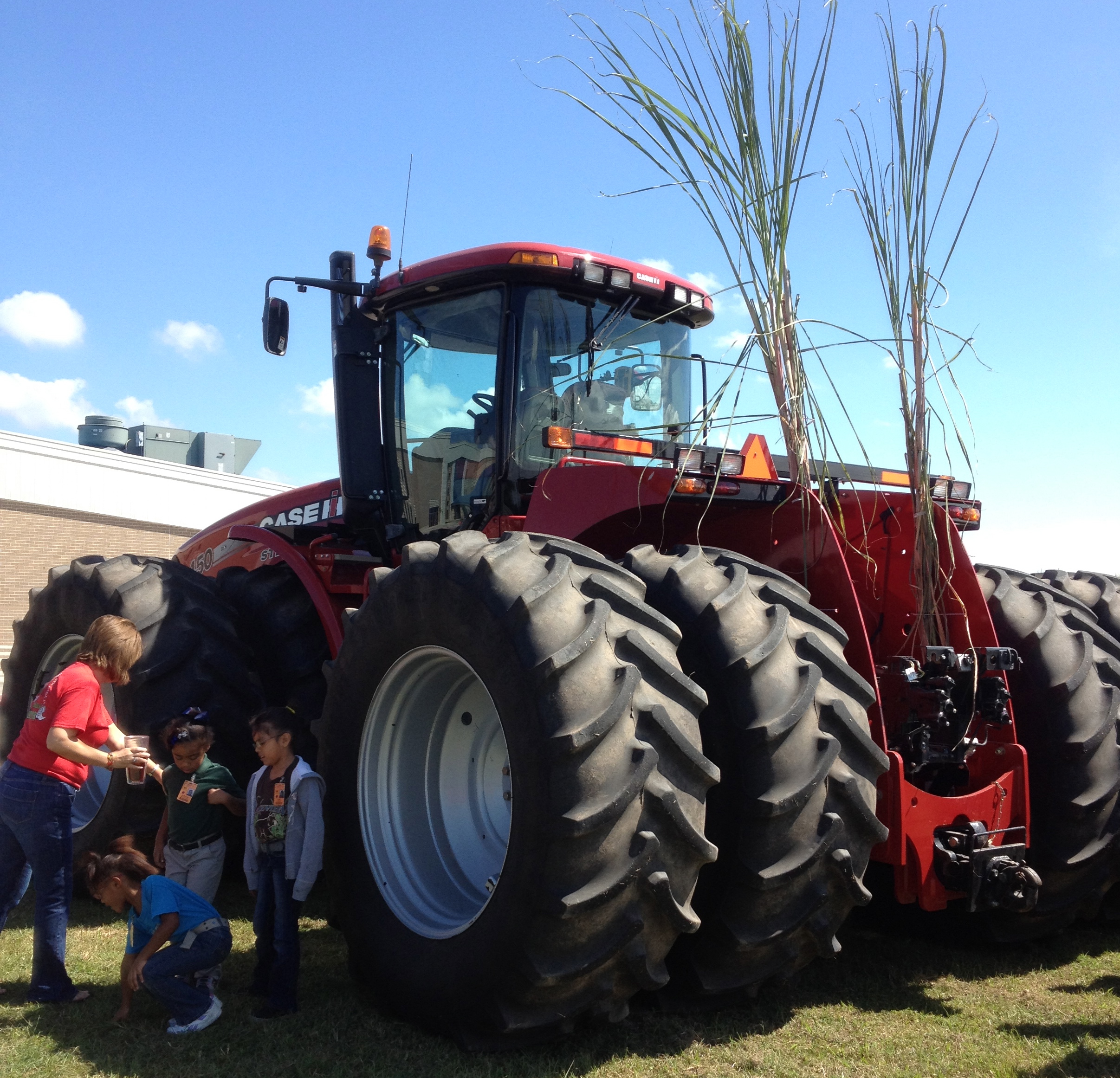
Sugarcane tractor on display at school.

Sugarcane tractor on display at school.

It’s Sugarcane Festival, y’all! This is the annual celebration in New Iberia to open the harvest season. I love this season. The cane is getting tall. The air is getting cooler. And there are parades galore.

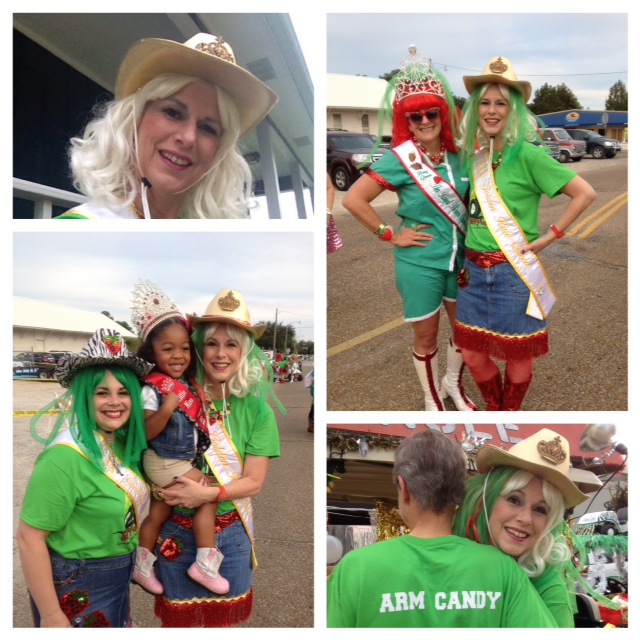
I am involved in The Berry Queens, so named because New Iberia is sometimes called “Da Berry.” Last night we inaugurated our very first Candy Toss Parade. About 30 golf carts were blinged up with lights, decorations, and shiny Berry Queens. What a fun time! Here are a few pictures.

Candy Toss parade

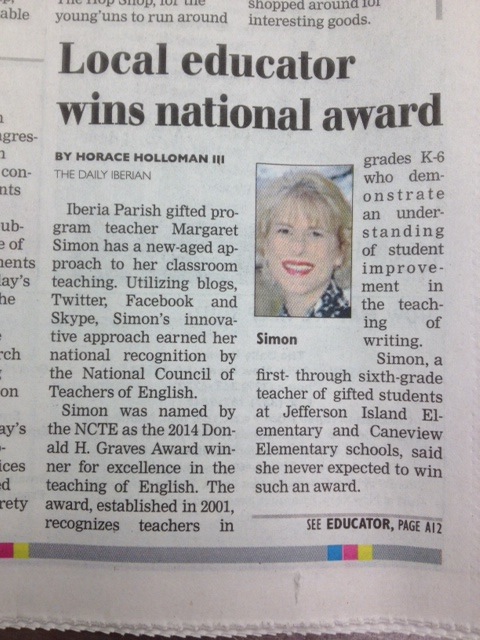
I’m still basking in the glory of the NCTE Donald Graves Award. My local paper did a feature article that appeared on the front page on Friday. I’ve had so many wonderful congrats from our community– The local parks director grabbed me in the parade, a neighbor yelled from his car while I was walking Charlie, and a longtime teacher friend came to my front door this morning. I am impressed by the number of people who are taking the time to read my essay. I have pretty strong convictions about the teaching of writing. I am humbled that my own beliefs are touching so many.

photo (82)

Read Full Post »

Art Heals

  Join the Two Writing Teachers Slice of Life Challenge.

Join the Two Writing Teachers Slice of Life Challenge.


Untitled

My little Emily is an artist. She is a fragile leaf fluttering in the wind. She blew through the classroom Monday quietly creating. I read aloud the book Emily’s Blue Period by Cathleen Daly. In this story, the character Emily is sad about her parents’ divorce. She uses art to express her feelings. That is how my Emily expressed her feelings. It was her first day back at school following the death of her mother.

I don’t want to become an expert at this, but Emily is helping me discover the best way to handle the death of a child’s parent. Be present. Be flexible. Let the child lead you to what she needs. Do not deny the death. Talk about it. Let the other students express their love. Be patient. Cry. Hope.

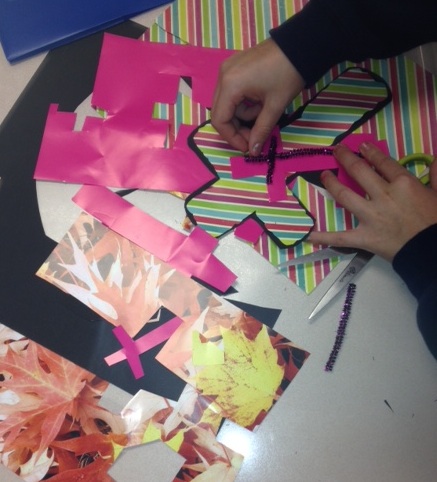
This is the collage project she created on her own. She gathered different papers from my box for journal decorating. She patiently used a ruler to make smaller and smaller crosses, nesting them together. The final cross is covered in black yarn glued in a swirl.

Emily needed space. She needed art. She needed freedom. I think I heard her singing.

Emily cross

I am posting my schedule for NCTE. Please join me if you are there.

NCTE Schedule:

Thursday, Nov. 20th from 4:30-6:00 PM: Elementary Section Get Together: I will receive the 2014 Donald Graves award for the teaching of writing, an amazing honor. Read about it here.

Friday, Nov. 21st from 12:30-1:45, I am presenting with colleagues from the National Writing Project: From Poetry To Picture Books To Polemics: We Write and We Teach Writing: A Story of Cross-curricular, Cross grade-level Collaboration Among National Writing Project Teachers.

Saturday, Nov. 22nd Two Writing Teachers Slice of Life dinner. I can’t wait to meet my virtual friends face to face.

Read Full Post »

Join in the fun of nonfiction picture books at Kid Lit Frenzy.

Join in the fun of nonfiction picture books at Kid Lit Frenzy.

Layout 1

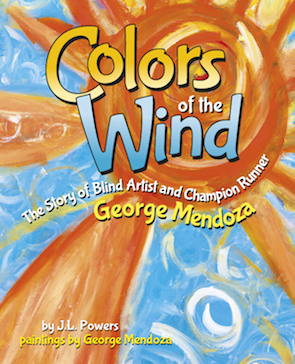
I am determined this year to get more nonfiction and more reading aloud into my daily class time. This new book about the life of George Mendoza by J.L.Powers helped me inspire my students for their dot painting on Dot Day. (See Tuesday’s post.)

By the time George Mendoza was 15, he was legally blind. But George’s blindness was unique. He didn’t totally lose his sight. His condition caused him to see colors in an unusual way, like a kaleidoscope. This true story is inspirational on many counts. George became an Olympic athlete, setting world records as a blind runner. Later, he took up painting. A priest once told him to paint what he sees. The book is full of George Mendoza’s amazing, colorful paintings.

I paired this book with Peter Reynold’s book The Dot which tells the story of Vashti becoming an artist. Through both of these books, my students could see that anyone can be an artist. All you have to do is try. Both George and Vashti’s stories waved a creative magic wand over my students. They were primed and ready to make their own mark.

Colors of the Wind is written for an early reader. The sentence structure and word choice are easy to read. Some sentences are repeated throughout. An early reader would enjoy being able to read the words as well as look at the colorful images. As a read aloud for older students, I included the back matter, the last two pages that tell the whole story. Whichever part you read, this book will fascinate the inner artist.

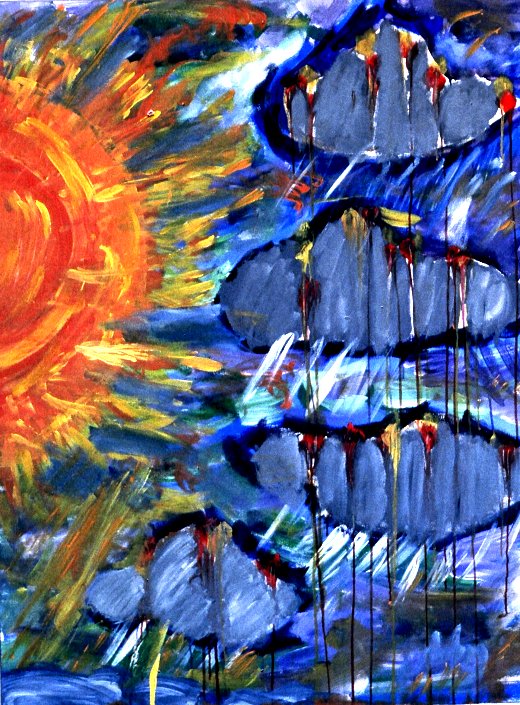
"Sometimes, George uses paintbrushes.  But most days, he fingerpaints, using heavy work gloves with gobs and gobs of paint."

“Sometimes, George uses paintbrushes. But most days, he fingerpaints, using heavy work gloves with gobs and gobs of paint.”

Read Full Post »

  Join the Two Writing Teachers Slice of Life Challenge.

Join the Two Writing Teachers Slice of Life Challenge.

Oh, how my students love Dot Day! Do you celebrate? Peter Reynolds is the brilliant creator of this amazing, phenomenal day. This year 1.7 million have registered to participate. That’s a lot of dots!

I wore my Dot Day skirt. We read The Dot (again) and watched The Dot video. This year a new song was released by Emily Dale. What a catchy tune! We sang along and kept singing as we made our dots. There is nothing more fun than painting on a Monday. My students experimented with mixing colors. They tried out new designs. Not one of them said they didn’t know what to draw. I love that about Dot Day. Vashti shows us that even a jab of a pencil is worthy.

You can still celebrate Dot Day. The official day is Sept. 15th but Peter tells us that it is Sept. 15th-ish. I say any day could be Dot Day. Make your mark. Make it matter.

Many resources are available on FableVision.

Read Full Post »

Please use this button on your site for DigiLit Sunday posts

Please use this button on your site for DigiLit Sunday posts

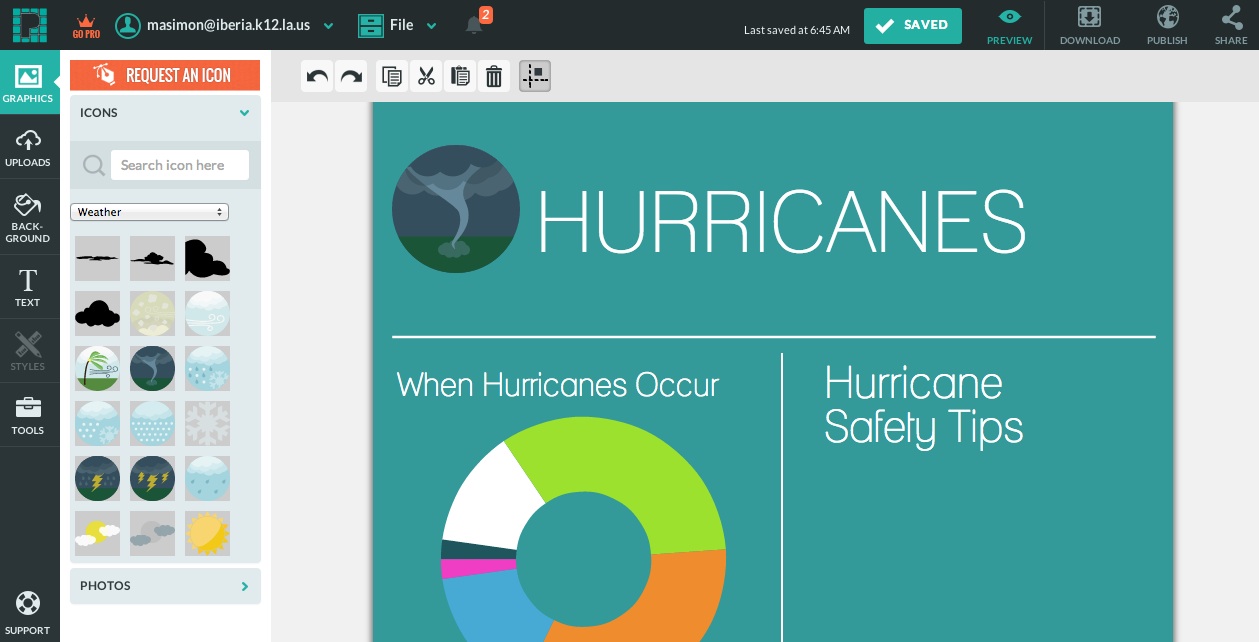
I enjoy trying out new apps online but not as much as my students do. On Friday morning I had meetings, and my students had French class and hearing testing, so we were running behind in whole class time. Not the best atmosphere for teaching a new skill. (Did I mention it was Friday?) I was determined to have something new to write about today for DigiLit Sunday, so with only half an hour left for our class time, I showed them Piktochart.

Piktochart 2

Last week’s Wonder theme was Hurricanes, so for this first try at an infographic, I suggested they work on hurricanes. We brainstormed information we could find: categories, safety tips, cost of hurricane damage, and location. I paired off my kids, but with an odd number, I told Vannisa I would work with her. I sat next to her at the computer and watched her go to work.

First she chose a template that she liked. The template had a circle graph. We discussed what kind of information would fit in a circle graph. We found a web site showing the number of hurricanes that occurred within each month of the 6 months of hurricane season from 1988-present. Together we worked on the data chart. Here we quickly had to figure out what data went where. Vannisa was more skilled than me.

The short time that Vannisa and I were working together I was fascinated by how quickly and easily she jumped right in to the app. She was motivated to find more information. She kept saying, “Look at this,” and “I love this,” and “Let’s find more information.”

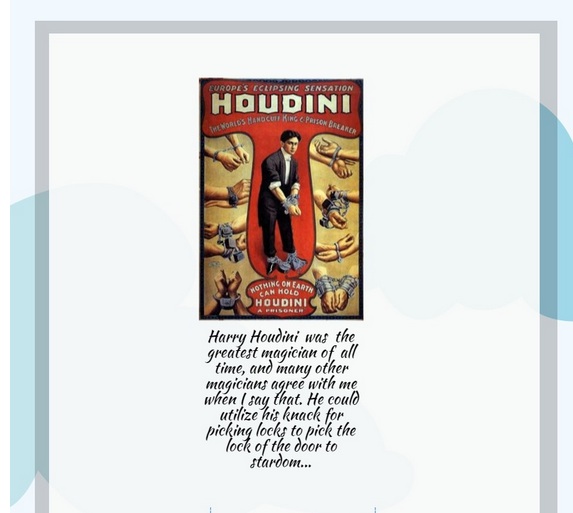
Matthew stayed late in class because he decided to make an infographic on Houdini. He is a bit obsessed with magic and just finished a biography of Houdini. When I told him he could use the Piktochart to make his reader response on the book, he hugged me.

Houdini Piktochart

I can’t promise hugs, but I know your students will be motivated by Piktograph. I plan to introduce it to another group of students this week. I look forward to seeing what they will do and how much fun learning can be.

If you have a digital literacy post, link up!

Read Full Post »

Renee at No Water River is hosting the round up today.  Click here to join in.

Renee at No Water River is hosting the round up today. Click here to join in.

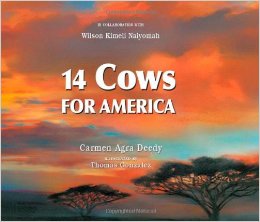
14 Cows
In the past I have avoided the subject of the tragic Sept. 11th with my young elementary students. Yesterday, fellow blogger Holly Mueller posted about using the book 14 Cows for America to teach empathy on Sept. 11th. So I looked in our school library first thing in the morning, and she had the book. I took it as a sign. There was also an accompanying YouTube video about the story of the 14 Cows. I showed the video and read the book aloud. I have to admit I was fighting back tears the whole time. This day affects me deeply as I am sure it does many of you.

14 cows cover
Following the read aloud, I asked my students to write for a few minutes. I was amazed by the profound nature of their writing. They can all be found on our class kidblog, but I wanted to share a few.

Point of View

Looking at a plane,

directly in front of you,

coming closer, closer, closer,

finally, you run. But you’re too late.

It has already hit. Shards of glass graze your skin,

you’re blinded by dust. Finally, you’re out.

You wipe your eyes and see…nothing.

Fire, smoke, and debris are where you just were.

The other tower, just south of the first, is hit.

The first collapses, and you know anyone inside is gone.

–Matthew

Cows are the grass that sways.
Cows are the roads we drive on.
Cows are the great buildings standing tall.
Cows are the stars in the sky.
Cows are life.

–Vannisa

Hope

passion,desperate

loving,wishing,believing

It is in you.

Wonder.

–Tyler

Read Full Post »

  Join the Two Writing Teachers Slice of Life Challenge.

Join the Two Writing Teachers Slice of Life Challenge.

ChristianEyeOfProvidence

I think I may be crazy, but I’ve decided to try a new strategy for my formal observation. This is the observation that is announced. My principal and I met for our pre-observation interview on Friday. I told her that I had never taught this skill before. She said, “Oh, we usually advise that you don’t do that, but I’m sure you can handle it.” What was I thinking?

In pre-AP training this summer, I learned about a strategy for poetry analysis called TP-CASTT. Then when I was perusing the Guidebooks for the state curriculum, I found it was used for advanced fourth grade. I have gifted 5th and 6th graders, so this should be right on target for them. We are going to analyze Natasha Trethewey’s poem, Providence. I can relate to this poem because I was a child living in Jackson, Ms in 1969 when Hurricane Camille struck the Gulf Coast. I think adding in my personal experience as well as my passion for Natasha Trethewey’s poem will come through in this lesson.

I also searched online and found a great graphic organizer on Read, Write, Think. I plan to use this organizer to help us collect our thoughts. I have the poem ready on ActiveInspire to project on the Promethean, barring no computer tech problems.

So, what am I worried about? I got this, right?

I will probably lose some sleep worrying about my evaluation. I will give my students a little lecture about behavior before my principal comes in; however, lively conversation with student interaction is actually a good thing on the rubric. I can be sure my students will be engaged.

So cross your fingers and say a little prayer because I am probably in the midst of this lesson as you read this post. I am preaching to myself, “Evaluation is a good thing. You are a good teacher. Be calm and teach on!”

Read Full Post »

Please use this button on your site for DigiLit Sunday posts

Please use this button on your site for DigiLit Sunday posts

My students have gotten the blogging fever. I did not expect this and am silently cheering. I am sharing our kidblog site with a colleague whose students are also posting. Also, two former students who are now in middle school are joining in. The site is getting lots of activity.

On my simple rubric for kidblog, my students have four requirements, each worth 10 points: Post 3 times, GUMS (Grammar, Usage, Mechanics, Spelling), 3 comments, and comments must be thoughtful and constructive. Here are the highlights:

1. Lots of posts! What are you reading? Slice of Life stories. Poetry Friday. My students are writing a lot. This must be good for them. I have seen great strides in just these first three weeks of school. They are adding details. They feel like their writing matters. They are using sentence structure and humor to make their writing more interesting.

2. I am using their posts to teach grammar, either in whole group or one on one. This is working. My students are realizing that grammar matters to the reader. They are noticing when other writers are not following grammar rules.

3. Sharing and caring! My students are getting to know the other students posting on our blog. They are relating, connecting, wondering.

How do I turn this activity into data? In this day of data-driven instruction, I want to find a way to track and analyze the progress of my students. I know it’s happening, but how do I prove it? I welcome your responses.

To read some of the many student blog posts, click here.
Please link up your own digital literacy post with Mr. Linky.

Read Full Post »

« Newer Posts - Older Posts »