
Ruth Ayres invites us the celebrate each week. Click over to her site Discover. Play. Build. to read more celebrations.
Marilyn Singer is a master poet. At NCTE in the fall, I had the pleasure of meeting her. I was also a lucky participant who won a copy of Follow, Follow. Marilyn invented the reverso poem and has published 3 books of them, two based on fairy tales and her latest Echo, Echo based on mythology.
On Today’s Little Ditty, Michelle Heindenrich Barnes interviewed Marilyn Singer and offered a ditty challenge to use the word echo in relation to a poem. I was determined to try the reverso form.
With my students as cheerleaders, I worked hard and produced something worthy of being called a reverso poem. The process began when we watched this video together.
I asked my students to select an insect to be in a mask (or persona) poem. I selected this image to inspire my writing.
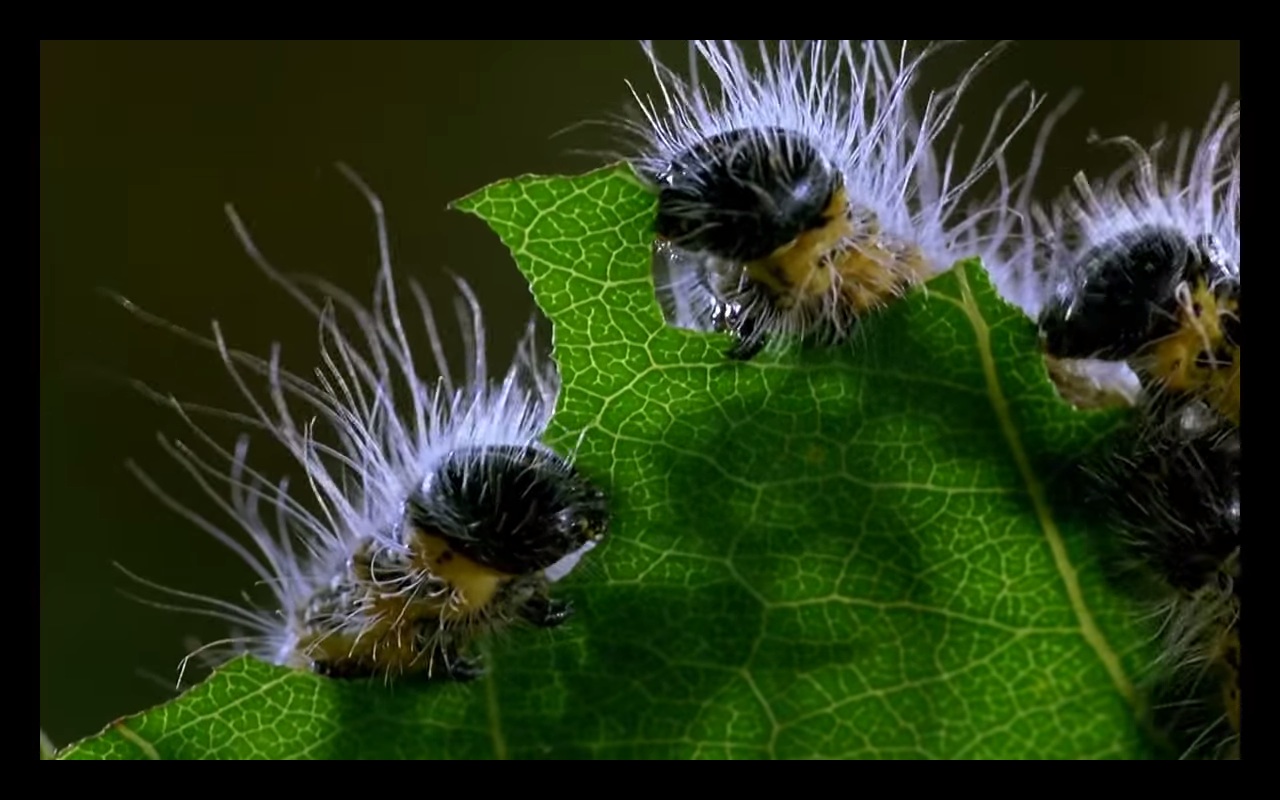
screenshot from the film Microcosmos by Jacque Perrin.
Then I did some caterpillar research. I wrote “zig zag stitch” and then discovered that caterpillars excrete a silk line as they crawl in addition to using the silk to create a chrysalis.
Creepy crawly caterpillar
munch munch
munching milkweed
at tremendous speed.Life changes
slowly
creeping, crawling
leaf to leaf.Sunlight glimmers
on fuzzy bristles.
I zig-zag stitch
a silkthread path
leaf to leaf.Leaf to leaf
a silkthread path
I zig-zag stitch
on fuzzy bristles.Sunlight glimmers
leaf to leaf.
Creeping crawling
slowly.Life changes
at tremendous speed.
Munching milkweed
Munch, munch
creepy, crawly caterpillar.
This is a tough form to get just right. I don’t think mine successfully creates a different meaning in reverse. But my students liked it, so I am celebrating it none the less.


 Reflections on the Teche
It’s terrific, Margaret. I feel like you could read that second part as if it’s a human, even the end makes sense, our lives crawling along. Just my interpretation and I loved reading it aloud!
I think the sound of it is what my students loved because I read it aloud. Thanks for this perspective.
I think it is wonderful! I admire you for taking on such a difficult kind of poem. I am always in awe to read these!
I have attempted this form and have never been successful. Actually I get frustrated and then put it away. I like Linda’s idea of reading the second part from a human’s perspective. Beautiful words…as always! This is truly a celebration!
I love Linda’s interpretation and your kiddo’s support. This such a fascinating, but difficult form. You are so brave to venture here.
Margaret, I’m also celebrating your poem, and YOU for being brave enough to give this form a try! Reading it aloud, you really managed to capture the “munchiness” with your rhythm and word choices– you can hear those caterpillars chowing down from beginning to end. Well done! Let me know if you want to put a title on it for the wrap-up, or just leave it untitled.
What fun! Kudos for tackling a new form and doing it with your students. I bet they were extra proud of you. I just picked up Echo Echo from the library, but haven’t had time to read it yet. Singer amazes me with her reverso poems!
What a great poem! I think reverso poems are so fun. Thanks for sharing the video and pictures too. I want to play around with a reverso poem. I just haven’t had time yet.
I am always astounded by Marilyn Singer’s reverso poems. I have often thought it would be quite a challenge to create one. Congrats on finishing one. 🙂 Thanks for including the link to that post about Marilyn.
“Zig zag stitch” I love that association with caterpillars. This was such a fun poem. I’m sure your students enjoyed writing one too.
I am in awe! Well done! A reverso is one form I have yet to gather the courage to try.
I like your reverso poem, Margaret. You are right. It is a difficult form to get just right. I am attempting mine. Starting with “zig zag stitch” was a great idea.
Margaret, this is wonderful! I’ve been playing along with reverso poems as well and I also think the hardest part is capturing a new meaning in reverse. Love all those caterpillar-y words you highlighted! Thanks for sharing!