Today is another gratitude post. I am so grateful to be a part of a wider world of poetry for children. Pomelo Books with NCTE Excellence in Poetry Winner Janet Wong along with her always enthusiastic poetry partner Sylvia Vardell were awarded Every Child a Reader Children’s Book Award for Hop to It. My poem Zen Tree is one of the 100 poems in this book. The award was for the best book of facts. For every poem, there is a side bar with factual information. I love that the facts next to Zen Tree include how trees communicate with each other through their root system. Congratulations to Janet and Sylvia and all of us jumping for Joy!
We are continuing daily gratitude poems in my classrooms. This week at both schools, there is a “Santa Store” set up in the library. Students can buy gifts for their families. There is such joy around buying gifts for others. My students and I expressed that joy in our poems this week.
As we quickly approach Christmas, I hope you are finding much to be grateful for. I am also grateful for you, my underground root system. Your support helps me to keep standing (and writing).
This month’s Inkling challenge is from Molly Hogan. She asked us to try a form we’ve been wanting to try. One of her form suggestions was a tricube. Matt Forrest Esenwine wrote about the form here. Matt said the form seems simple, yet it is challenging to say what you want to say in so few syllables. The form uses a mathematical sequence of three, cubed. 3 syllables, 3 lines, 3 stanzas. I wrote one here for my daughters after they treated me to a wonderful birthday weekend.
In my classroom, the gratitude poet-tree has been such a success that we decided to keep it going in December with a Christmas poet-tree. One of my students lost her beloved dog over the break, so I was thinking about how grateful I am for my walking companion Charlie. Charlie is 14 and has a heart murmur, but he still loves to go out for walks with me in the morning.
Charlie+Me=Perfect Cadence
On Monday, my two students came in chatting about their break. They were talking about how their friend had left the school. Katie said she cried, but she would not admit that to anyone but me. She said, “You’re my closest teacher.” This made my heart swell. Trying to capture this emotion in a tricube.
Happy Black Friday, a day I am celebrating with another family gathering around our newest grandchild Stella. She is turning one on Tuesday. There will be the traditional day after Thanksgiving gumbo as well as cake and presents and lots of wildness from her toddler brother and cousin. The best kind of Black Friday ever.
In the meantime, I wrote a quick ode to join the Poetry Sisters challenge for this month.
Ode to Autumn
Something in the way you move attracts the wandering eyes of this watcher– a tapestry of yellow and red settles my wild mind.
Something in the way you move blows a soft whisper to my weathered cheek not warm like a kiss but tickles just the same.
Something in the way you move stirs my soul to memory, opens the stored-away box of photos releasing a scent of amber and wood.
You move quickly, Autumn, dropping by with a basketful of acorns and satsumas, sweet sugarcane cigar, then leave on a storm cloud.
Take my grief with your wind and turn my heart to joy.
Margaret Simon, draft For Molly, who lost her dear father on Thanksgiving Day
This prompt came to me in an email from Poets & Writers, The Time is Now. When my Inklings saw this poem, Mary Lee thought the prompt was surely In Gratitude by Abigail Carroll which was featured on this episode of The Slowdown. I love how the universe is like that sometimes, synchronous, speaking to each other. I join the conversation with my own ode to a single letter.
Ode to Letter M
But I love the M, mountainous- hill-valley-hill-valley signed with 3 fingers hugging a thumb, the way milk-full infant fingers grip my thumb and hold on tight.
I love the M handed down on grandmother’s tea towels, embroidered like the sign of the cross on my forehead. I baptize you in the name of Margaret.
I stand with the Roman numeral (M) confident in her thousand mornings musing on the mimicry of a single mockingbird.
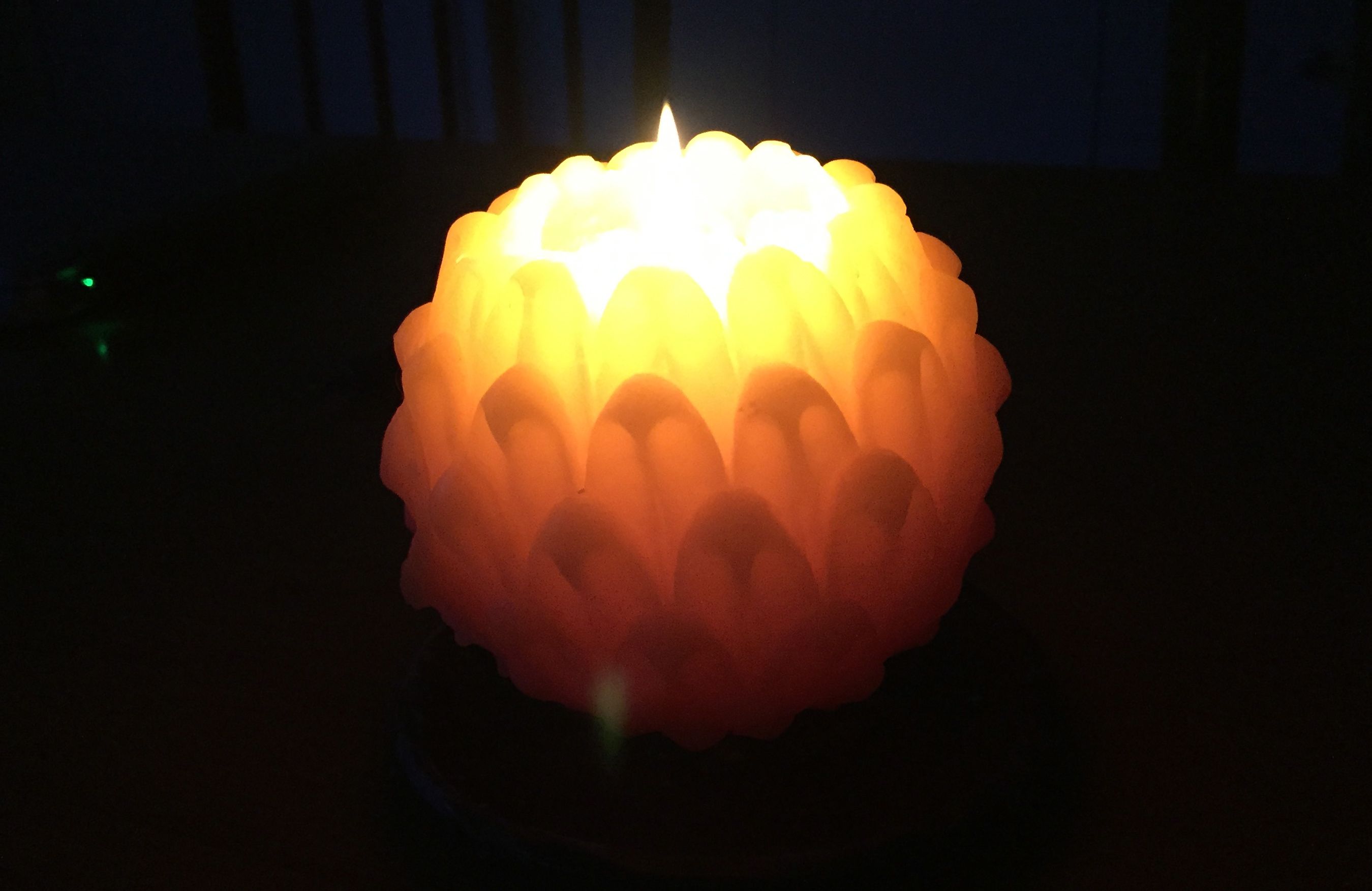
Scent of magnolia fills the room from the lit candle, like a warm May breeze that blows homemade cards, memories, and a rainbow handprint identifying me as Mamère, as someone to love.
Three months ago I said, “Sure!” when my friend Stephanie asked me to participate in a poetry reading. I figured I had plenty of time. And here we are less than a week away. The poetry night is in conjunction with a Water/ Ways traveling Smithsonian exhibit. Stephanie, the assistant at the Bayou Teche Museum, wrote the grant and wanted to add arts into the presentations. I asked her, “Do you realize I write for children?”
The topic is water, so I plan to read from Bayou Song, a swimming poem from Rhymes and Rhythm, and two yet-to-be published poems from Swamp Song. There will be three poets laureate reading alongside me. I’m excited to meet the newest state poet laureate Mona Lisa Saloy. I’ve seen her present on Zoom, but this reading together will be in person.
Darrell Bourque is a mentor of mine. He was poet laureate in Louisiana from 2007-2011. And Jonathan Mayers is coming from Baton Rouge. He is the city’s poet laureate. Melissa and I have been friends since our writing group days in the 90’s. We will support each other as the two non-poets laureate.
In my classroom, the gratitude “Poet-Tree” is filling up with leaves of grateful poems. Yesterday a few teachers stopped by to tell me they were reading the poems and one even said she wanted to write her own and put it on our tree. Spreading poetry love!
The Inklings challenge this month comes from Linda Mitchell. She charged us with writing “a poem that includes the idea of percentage or percent. Percentages are all around us in recipes, prices, assessments, statistics. Include the idea of percentage in your poem in some way.”
I put off this challenge for a while until a muse slapped me in the face from Brain Pickings (which is now called The Marginalian). This article is beautifully written: Every Loss Reveals What We Are Made Of by Maria Popova. Incorporating inspiration from Maria Popova and a quote from Maria Mitchell, I crafted a poem container of loss, aging, and rebirth.
The way we stand at the mirror and see strands of hair overnight lose their color, devoid of fresh light gone gray in the way a leaf loses the green of chlorophyll.
We lose our vigor.
The way I collapse on the sofa after the grandchildren leave– how it sags from years of holding us.
The way, like branches, we reach forth and strain every nerve, but we seize only a bit of the curtain that hides the infinite from us.*
How 96 percent of the universe is dark matter invisible to us, how can we know what tomorrow will bring?
The way we shed more color, fall to the ground, crush into mulch, then hatch from darkness and find light find light find light.
*Maria Mitchell
Margaret Simon, draft
Below are links to my fellow Inklings and their responses to the % challenge:
Reading has begun for Cybils Round One. I am judging once again in the poetry category. This is such a treat, to read new poetry books and select my favorites. Stay tuned…
This week we had a special visitor in my 6th grade gifted classroom. One of those serendipitous things about blogging and connecting with authors is exposing my students to real authors doing the work. Taylor Mali joined us on Tuesday. Prior to the visit, he sent a package of create-your-own metaphor dice. Here’s a link to order some. We struggled with deciding which words to put on our own set of dice. We made lists in our notebooks of concepts, adjectives, and objects. I’m glad we had a little struggle because we could ask questions of the master.
Jaden asked, “What is the difference between a concept and an object? Isn’t “father” an object?” Taylor was quick with the answer. He explained that many people like to write about their fathers and mothers in a metaphorical way, more like a concept than an object. He went on to tell the story of a student of his who wrote about their father as shattered glass. “I can still see myself in the shattered pieces.”
We shared our own metaphor poems and he offered feedback. One of the things he noticed in my students’ poems was the absence of their own lives. He talked about how poetry should be beautiful language, yes, but also should be the truth. He suggested ways that they could put more of their own life experience into the poems they wrote.
I tried this idea myself with a roll of my own homemade metaphor dice. The roll I got was “The past is a soft wind.” I was pleased that Taylor’s advice to my kids resonated with me, and I tapped into a true story from my childhood.
The Past is a Soft Wind
blowing wind chimes in the old cypress tree, ringing like a distant train that left the station years ago.
The year we drove to Morton, Mississippi for Thanksgiving and gathered pecans with great grandfather. We thought he was 100 years old. He knew things–
How to crack pecans in the palm of his hand and how many minutes from the engine to the caboose. We stood together watching, counting, waving to the conductor who, as that red house rounded the curve, always waved back.
Bridget Magee, our Poetry Friday hostess, just released an anthology around the number 10. I ordered it from Amazon and received it yesterday. I jumped right in and read poems from many of my Poetry Friday friends. Here is what Bridget wrote about her motivation for curating and publishing this anthology:
As the TENTH child born into a family of TEN children in the TENTH month, I am fascinated by the number ten. Add TENACITY to that fascination and the idea to create this anthology was conceived.
Every week I post a photo that begs to be a poem here on Reflections on the Teche as well as on my classroom Fanschool space. This week I was particularly struck by how the photo of a close-up of dragonfly wings inspired metaphors. Stained glass, mosaic art, prehistoric maps are a few that appeared in the small poems in the comments.
I was able to grab the student’s own writing to teach and reinforce the concept. Children can use figurative language long before they have a name for it.
dragonfly wings by Amanda Potts
Avalyn wrote “like a chandelier” in her notebook, and I took the opportunity to teach her about what she had just done. She had created a “simile.” I told her she could use the colored markers to underline it in her notebook and write the word simile in the margins. Her next line was “a clear shower curtain and the outline of your window.” I directed her to choose another color to mark the metaphor. Then I read her my poem and allowed her to mark my poem with the same colors. I was almost giddy with delight to be able to notice and note a gem in my second grade student’s writing.
This experience makes me wonder about photography and writing. Did the writing change if I told the children the photo was dragonfly wings? I told Jaden what the image was before he wrote, so he decided to google “dragonflies” and included a science fact in his poem.
Wings like glass designs shedding light zipping through the sky 30 wing beats every second bzz-bzz the dragon fly slips by.
by Jaden, 6th grade
I’ve been thinking a lot lately about retirement. I envy my poet-teacher-friend Mary Lee Hahn who has a poem about retirement today. But moments like these in my classroom writing alongside such gifted and talented writers inspires me and makes me a better person. I think I’ll stick with it a little longer.
I am judging the first round of Cybils Poetry this fall. If you have a favorite poetry book or verse novel that was published between October 16, 2020 and October 15, 2021, consider nominating it here.
In her poem “Taking Out the Trash,” the late poet Kamilah Aisha Moon, who died at the age of forty-eight last week, takes a seemingly mundane task and makes the activity profound. Write a poem about a daily chore or everyday task that brings attention to your body. Try, as Moon does in her poem, to take time describing the movements of your body.
I often write poems on my daily walks. Maybe I’m building a collection of these? Today’s poem is in conversation with Kamilah Aisha’s poem Taking out the Trash. It is definitely in drafty draft stage.
Viking Funeral after Kamilah Aisha Moon
On trash Monday when the men of the house rush out to fill the can with white bags bulging with detritus of our lives, I turn my pace against the wind, watch toilet paper streamers (is it homecoming?) grow into ghostlings dancing beneath old oaks. They mound like fairy mushrooms in a circle around bulging roots. I gather my dog’s waste into a green bag, flip it around my hand like a glove. The neighbor stops her barely awake car, rolls down the window to say thank you for being a responsible pet owner. I guess not everyone does this. Some leave their trash where it lands to rot and rest until the soaking rain washes it out to sea. Place me in a canoe for a Viking’s burial, my husband says. There will come a time to say goodbye, to lay our bodies down to fire, but let me be breathing today, again and again, not ready to release air into fire.
Margaret Simon, draft
Sign of the times, Trash on my walk photo by Margaret Simon
Ever since I read Naomi Shihab Nye’s collection Cast Away with poems about trash, I pay more careful attention on my walks. I pick up things I can carry and create my own poems about trash.
Irene has the round-up today. She has an amazing collection of poems about art called Artspeak. I asked my second grader to choose a poem to read today and copy. She chose Why Roses. We copied the form on the board like this:
Why ____________
because…
because…
because…
because…
I am __________________
Here is Avalyn’s debut poem on my blog about the Van Gogh painting Starry Starry Night.
Why Starry Night! after Irene Latham
because our solar system has stars because the stars are in the Milky Way because the moon looks like a face because stars make constellations I am the galaxy.
This month, Inkling Mary Lee Hahn challenged the group to write a poem to define or exemplify a poetic device or form. She was inspired by two books, The Craft of Poetry by Lucy Newlyn and Inside Out by Marjorie Maddox. I remembered a set of poems I wrote using the definito form to define a poetic device.
Another Inkling partner Heidi Mordhorst created the definito form which is a poem written for children in 8-12 lines that defines a word. The word appears as the last word of the poem. Today’s poems define alliteration, imagery, personification, and meter.
Letters, linked and lively, Lindy-hopping- Notice how some sounds repeat Tongue twister Word sister…alliteration.
Make a movie in your mind Imagine all that tastes, feels, sounds– hands gripping, feet slipping, Writers show me how to see with imagery.
If the wind waves If flowers wink If hummingbirds tell a tale. A thing you know A thing you love becomes a person real and alive walking across the page personification.
Can you tap out a beat? ta da, ta dum, ta dee! Count the upbeats? one, two, three A poem may rhyme but the rhythm is clear Iambic, dactylic, pentameter words for the beat Tap, tap…meter.
Write Out 2021 (#writeout) is getting ready to launch this October 10th and will run through the 24th. This year’s theme—Palettes, Storyboards, and Cadences—is meant to support you as you explore the natural world and public spaces around you, while engaging as writers and creators who share in a connected virtual community.
This summer I worked with the National Writing Project on creating prompts for writing with Write Out. This two-week event encourages you to get outdoors and write. A number of National Parks have created videos for students to inspire writing. You can sign up at the NWP website to receive updates.
Margaret Simon lives on the Bayou Teche in New Iberia, Louisiana. She is a retired elementary gifted teacher who writes poetry and children's books. Welcome to a space of peace, poetry, and personal reflection. Walk in kindness.