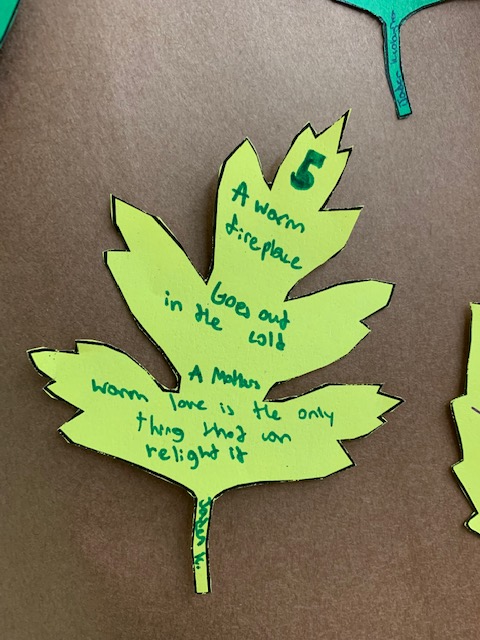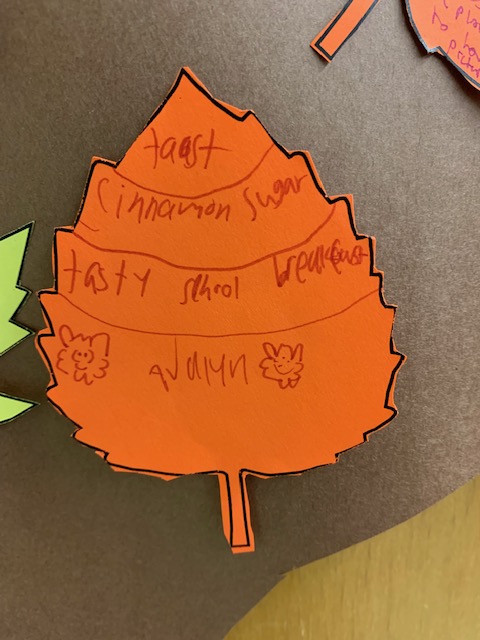
Laura Purdie Salas has been a writing mentor in my classroom for years now. Her books and poetry speak to children ( and to this adult). A few weeks ago she posted this poem on her blog. I used it with my students for a beginning-of-the-school-year writing prompt. I did not require the precise rhyme and rhythm pattern; they got the gist of making a list of favorite things.
I, however, took on the challenge of getting into the right meter and rhyme-scheme. I don’t think I’ve nailed it (I’m missing a verse and one of the rhymes is too slanted) but each revision gets closer to it. Rodgers and Hammerstein were musical geniuses. I played a video of this favorite scene from The Sound of Music, a classic that many children are unfamiliar with. They know this version better–the Lays commercial with Anna Kendrick. It’s fun to watch, too.
What was I thinking when I challenged my Inklings writing group to write a ghazal for this month’s challenge? Woah, who knew there were so many rules/ guidelines? I had attended the Poetry Foundation’s Summer Teachers Institute and watched a presentation about using repetition in poetry. The presenter talked about two poetry forms, the villanelle and the ghazal. So I said to myself that in order to teach these forms, I needed to write in these forms.
The ghazal is an ancient Arabic and Persian language poetic form. It has couplets (two-line stanzas) that end with repeated end words or phrases. You can also add that traditionally the author’s name appears in the last couplet.
Looks easy, right? Well, this definition was somewhat incomplete. At Poets.org, there is this more complete definition. And Molly directed us to this guidance on Tweetspeak. The most help, as always, came from the Inkling group’s dedication to the craft of poetry and to each other. Their critique was invaluable.
I wanted my poem to say something, to express my longing as a grandmother for the grandmother I never knew. This portrait of her was painted in the 1940’s when my mother was a young girl. It now hangs in my dining room, life-size.
Grandmother’s Song
She never held me in her arms long to sing. Death took her breath–she was not wrong to sing.
Within her eyes a lullaby still stares from a frame to invite me along to sing.
Her portrait-hands caress violin strings; Like the songbird’s voice, they echo strong to sing.
Now I wonder if an angel sings to me. I want to know whose song to sing.
I have her name–Margaret–a spelling tune, like a young child, I know I belong to sing.
Margaret Simon, ghazal, all rights reserved.
Click on the links to read more ghazals by our amazing poetry group.
For the end of the month Poetry Sisters challenge, Mary Lee posted this call to write deeper wisdom poems in the form of Jane Yolen’s What the Bear Knows. I recall a similar challenge from Michelle Barnes’ interview with Joyce Sidman on Today’s Little Ditty. I used this form in my book Bayou Song to write about the black-crowned night-heron.
On this anniversary of Hurricane Laura that devastated Lake Charles, Louisiana last year, we are once again bracing for a storm, Tropical Storm Ida that is predicted to come in around New Orleans as a Category 3 hurricane. We are preparing and watching news closely. Please keep us in your prayers. We know how to do this. I’ll post updates as I am able on Instagram/ Facebook. Thanks!
I’ve gotten woefully behind in reading a poetry book each day for #TheSealyChallenge, and that’s because school has started. My focus has shifted. So to create a post for today, I sat down with Late Father by Taylor Mali, a gift from Janet Fagel for the summer poem swap. I got lost in the poems that lead us through his life with candor, humor, and grief. Then I googled him and found his website and a link to his Facebook page where I watched a video…In other words, I took too long on this post.
I’ve heard from a few poets that giving the title some of the heavy lifting can be helpful in writing a poem. Irene Latham does this often in This Poem is A Nest. I noticed it in Elizabeth Acevedo’s verse novel The Poet X. (Title: “Another Thing You Think While You’re Kneeling on Rice That Has Nothing to Do with Repentance”) And here it is again in Taylor Mali’s book. Time to pay some attention to this craft move.
From Late Father by Taylor Mali
I’ve Already Worked too Long on this Post
Praise be the poet who, having written a poem every day this week, opens her docs and plops one into a blog post and calls it Poetry Friday.
She must know that I will read it again and again and call myself a faker. Berate the time I spent watching “Outer Banks” rather than writing this poem.
(I got this.)
She must know that poetry can be a playground with a swingset anchored for cloud viewing–even if now there’s rain– the memory of a vision is enough to build a poem on.
LaMiPoFri* by Margaret Simon
*Last minute poetry Friday form coined by Kat Apel.
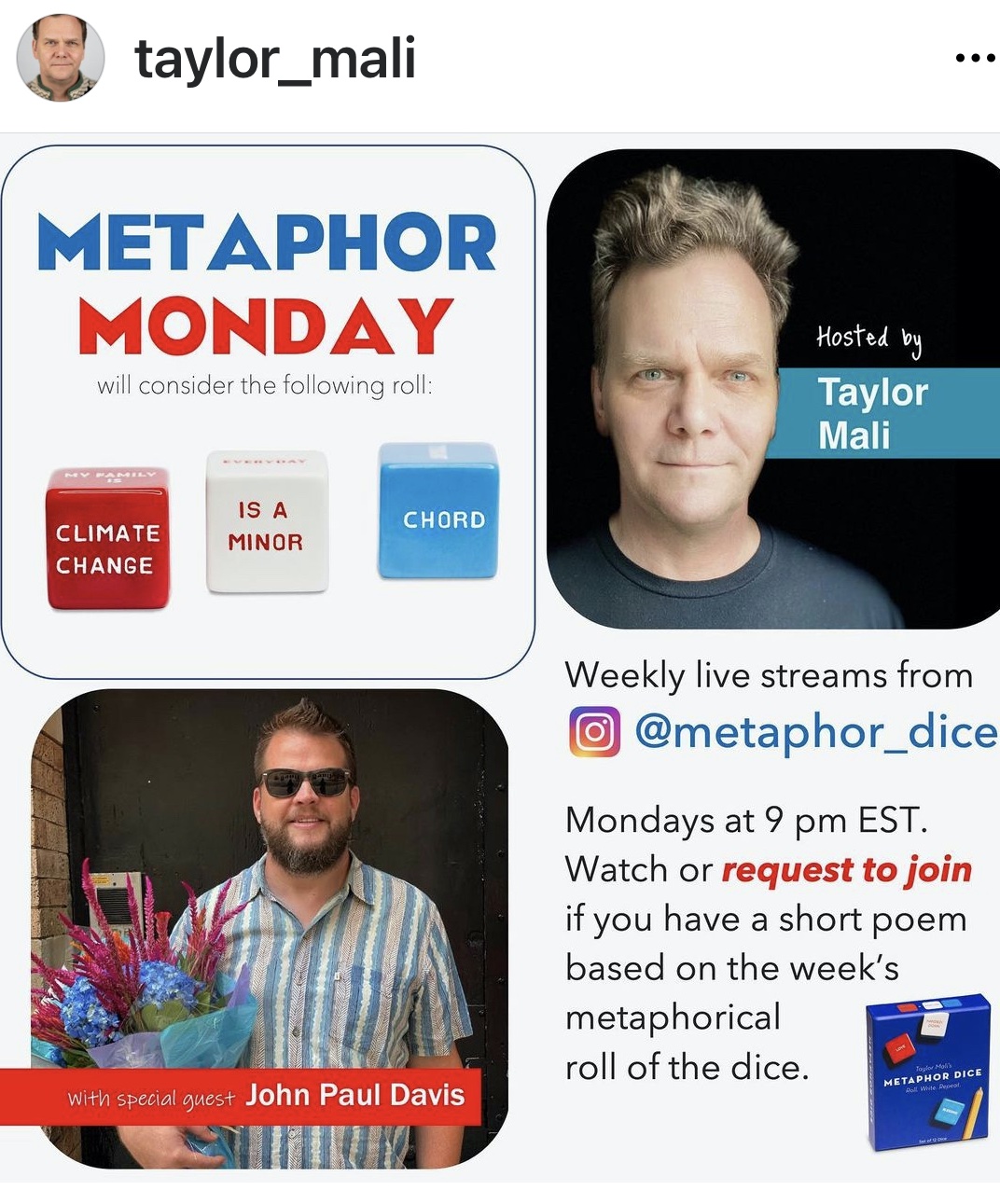
Just as my school year started, I received my final Poem Swap gift and poem from Janet Fagel. It was all about Taylor Mali, the inventor of Metaphor Dice. She’s friends with him. (Swoon!) She sent me his book Late Father, which I added to my Sealy Challenge stack, and a signed print of his poem Undivided Attention. Janet’s poem for me came as a found/black out poem from this poem. I don’t know if it was intentional or not, but the poem arrived just in time for my 60th birthday.
Earlier in the summer I received a poem swap from Mary Lee Hahn. She made an oracle deck from my own words, phrases she had found in my poems. She color-coded the cards to show which was 5 syllables and 7 syllables. Then she created two poems from my words, a haiku and a doditsu (7-7-7-5). She encouraged me to make these with my students this year. Tucking it away until April when we’ve written lots of poems together from which to choose lines.
Haiku by Mary Lee with phrases from Margaret Simon
Dodoitsu by Mary Lee Hahn with phrases from Margaret Simon
Creating my own haiku from the oracle deck.
Both of these gifts come straight from the heart. This is the whole embodiment of this Summer Poem Swap, organized and led by Tabatha Yeatts. Thanks Janet, Mary Lee, and Tabatha. My hear is full!
My writing group is here this week with a new name and a new challenge. Formerly, the Sunday Swaggers, we are now the Inklings. Catherine Flynn challenged us this month to write an Ekphrastic Poem.
From the Poetry Foundation:
Ekphrasis
“Description” in Greek. An ekphrastic poem is a vivid description of a scene or, more commonly, a work of art. Through the imaginative act of narrating and reflecting on the “action” of a painting or sculpture, the poet may amplify and expand its meaning.
A few weeks ago I was participating in #WriteOut, a virtual writing marathon from the National Writing Project. On this visit, we were in San Antonio, Tx. One of the prompts was a work of art by Georgia O’Keefe that is housed at the McNay Art Museum.
Evening Star V by Georgia O’Keefe, from the McNay Art Museum
Evening Star
Texas sky blooms into star-gaze red glare haze across blue waves–
And there– a point of light opens a minor C– insignificant note like a dust-speck glistening then gone.
For #TheSealyChallenge, I have read 5 poetry books. This week I wrote blog posts about Before the Ever After, a verse novel by Jacqueline Woodson, and Ilya Kaminsky’s Deaf Republic, a totally different novel in verse. I also blogged about The Bridge Between Us, a collection of poems about teaching through the Covid-19 pandemic. I’ve read Robert Bly’s Morning Poems and Naomi Shihab Nye’s Cast Away, but haven’t blogged about them yet. I am enjoying this challenge. It’s making me pick up poetry books that I have had on my shelves and never read through. I only heard about this challenge this year, but it’s been around for a few years. Is anyone else doing it? How are you handling and processing?
Poetry Friday round-up is with Becky at Sloth Reads.
Two weeks in covid times is a lifetime, time enough for the Delta variant to quickly invade my territory. It has taken a few weeks for the CDC to catch up to this invasion and to adjust guidelines. From our own family’s experience we knew a few things before they did. The virus Can infect someone who is vaccinated. The virus Can be spread by vaccinated people. And the vaccine Does protect from grave illness. My 90 year-old mother-in-law was vaccinated in January and February. Two weeks ago she started coughing. She took a rapid antigen test that showed she was positive for Covid-19. Today she is fine. She’s back to swimming daily and has only an occasional cough lingering. No hospitalization was necessary. We aren’t even sure if her case was counted in the long run; however, in these last two weeks, CDC has taken an about-face. And we are glad they have.
In my anger over this viral outbreak, I wrote a villanelle for an Ethical ELA Open Write prompt. The Seven Poetry Sisters put out a villanelle challenge for this month, so I asked for critique from my writing group and revised. A villanelle is a challenging form. I used Rita Dove’s Testimony, 1968 as a jumping off place.
This poem is a jeremiad. (prolonged lamentation or complaint, originating from Jeremiah whose Biblical book is lamentations)
Delta Invasion
Who comforts me now that the virus has broken? Numbers mean nothing now that you’re ill. Anger invades my trust, hope lost or stolen.
We thought our lives safe to reopen, but Delta arrived with its own stubborn will. Who comforts me now? The virus has broken
through the vaccine’s promised protection. Credence is shattered on CDC’s sill. Anger invades my trust in hope; lost or stolen.
Safe, unsafe rules are misspoken as dispersed droplets aim to kill. Who comforts me now that the virus has broken?
Our lines of defense should be woken to what we now know is out there still. Anger crumbles trust as hope is lost or stolen.
Some still reject life-saving vaccination yet your nagging cough didn’t kill what comforts me now is the virus has broken and relief restores trust. Hope not lost or stolen.
Poetry Friday round-up is with Kat Apel down under with snails and cats and #petpicpoems
I have a new creative obsession outlet: zentangle poems. I signed up for art card exchange with Amy Souza at Spark . I have a pocket Buddha reader. The pages are small (2″ x 3″) and full of wonderful Zen words in which to create small poems. Here are the art cards I sent out.
The winds, coming and going free See beyond reality, illusion, vision, dream beyond the realm of words. (Zentangle Buddha Poem #1)
Disentangling truth can free you. Understand sweetness. Trust the self. Nothing exists forever. (Zentangle Buddha Poem #2)
Find truth in a tangle– hopelessly question Understand the tangle-truth. (Zentangle Buddha Poem #3)
How brightly you will shine! You are yourself. You, wherever you are. (Zentangle Buddha Poem #4)
You will know the scent of sandalwood against the weed.
My sister is an artist. (You can find her on Instagram at bethsaxena_art.) Beth sent me this folded book with the message “This book wants to be a poem.” I’ve had it for a while. She painted in blank spaces just the right size for Zentangle Buddha Poems.
The womb is pure and free. Wonder indeed entered is calm insight and truth.
Poetry Friday round-up is with my friend and writing group partner, Molly Hogan at Nix the Comfort Zone
One of the best things about summer is having time to be creative. I’ve enjoyed designing collages on marbleized notebooks as well as writing poems for the Summer Poem Swap, coordinated by Tabatha Yeatts. The third exchange I sent off a notebook to Tabatha herself. And she gifted me with a poetic zine, Today’s Poem (after me, after Cheryl Dumesnil’s Today’s Sermon.)
I love this personal-to-me poem, especially the line about toy phones. I’ve been answering a lot of toy phones lately with my little grands, and I love how this one line captures the Joy of being with them in just a few words. The magic of poetry! Thanks, Tabatha, for organizing this fun and meaningful exchange and for being my partner for this round.
Today’s Poem, zine by Tabatha Yeatts
Today’s poem riffles through a pile of to-do lists, looking for blank paper
Today’s poem answers calls from toy phones
Today’s poem hears sunflowers’ reminders to feed the birds
Today’s poem clicks like a typewriter while it’s napping
Today’s poem refracts a rainbow into your bathwater
Today’s poem runs back and forth through an imaginary sprinkler
Today’s poem fills your tank and walks you to your car
Tabatha Yeatts, (for Margaret Simon, Summer Poem Swap 2021)
Poetry Friday round-up is here! Scroll down to add your link to Inlinkz.
Finding safe online spaces for writing is invaluable to me as a poet-teacher in a small Louisiana town. During the pandemic shut down of 2020, writing kept me sane and real and present. Sarah J. Donovan, Ph.D. directs the website for teacher-writers at Ethical ELA. She is assistant professor of secondary English education at Oklahoma State University where she turned the writing we did during April 2020 into an oral history project.
I ordered a copy. No one profits from the sale of this anthology; you are paying printing costs only. I wanted to have this collection in hand to read and use with my students as mentor texts.
8. Bells chime a call to worship to empty pews echoing the song of trees.
7. I’m sorry I keep taking the same path, the same images do not grow weary of me noticing.
I pick gardenias from CeCe’s side yard. If she came out, she wouldn’t mind.
6. I stop by Anne’s to view her century plant as it reaches skyward. A century plant waits 25 years to blooming, blooming only once in a lifetime. A lifetime I took for granted only weeks ago.
5. I can take my time. No one will call to check on me.
I’ll check the feeders: the hummingbirds like sweet water.
I’ll get to it in time.
4. I walk and walk wondering if it will always be this way.
Hollow bells pealing for no one.
No one venturing out to see anyone.
3. It may rain tomorrow. Today, the sun shines, the birds sing, and I don’t have to join the chorus.
I’ll keep singing to myself.
2. A link was sent by email to a video church service, one priest, one reader.
The organist plays as though the cathedral is full.
Full feels scary now. Full carries weight. Who wants to be full?
1. I close this book, heat another cup of tea, and find my shoes, find my way, fill my day, and perhaps…
Bloom!
Margaret Simon, all rights reserved Bridge the Distance, 2021
Margaret Simon lives on the Bayou Teche in New Iberia, Louisiana. She is a retired elementary gifted teacher who writes poetry and children's books. Welcome to a space of peace, poetry, and personal reflection. Walk in kindness.