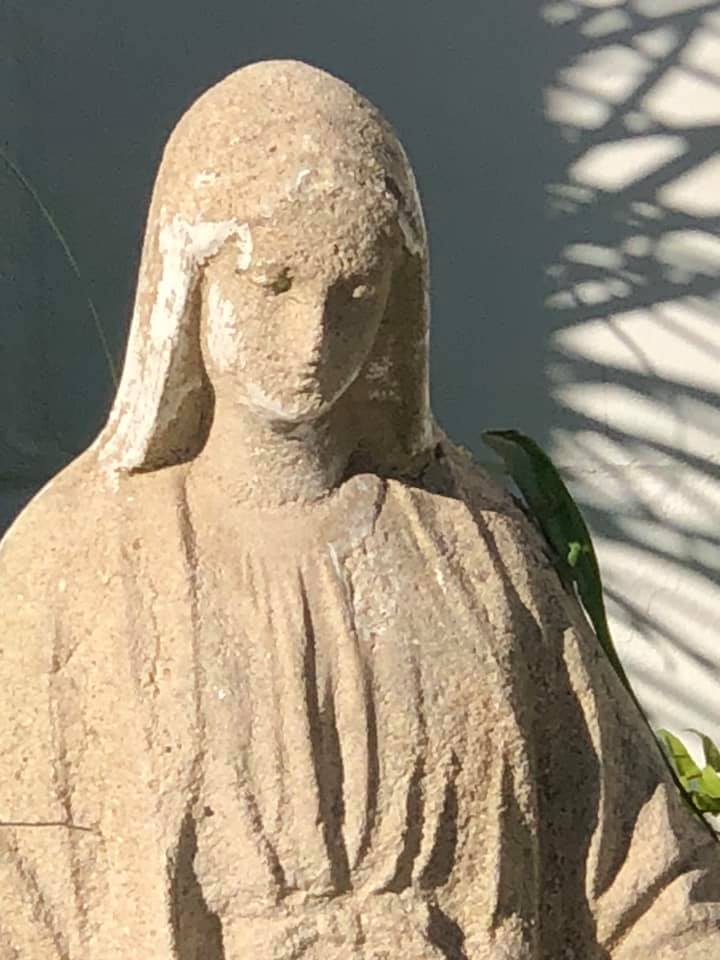
This photo appeared on my Facebook feed from local artist and children’s book author Paul Schexnayder. Paul has an ironic sense of humor, especially in the everyday. His photo reflects that sense.
Mary’s Lizard by Paul Schexnayder
When I asked Paul if I could use this photo for a poem, he said, “I was hoping you’d ask? I almost asked you to write one!!!”
Please consider leaving your own small poem in the comments. Leave a comment for a few participants. Fun writing practice to wake up your creative self. No pressure. No judgement. Thanks for coming by.
A lonely lizard seeks shade in the arms of Mary. She stoically abides.
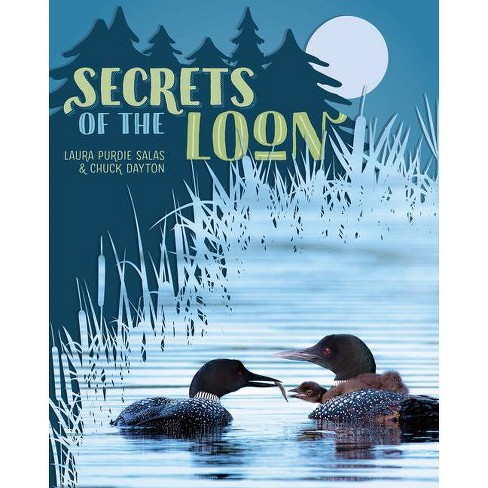
Today, I’d like to introduce Laura Purdie Salas’s new book Secrets of the Loon. Released in early May, this book is different in design from her others, yet still holds her amazing poetic voice. Beautifully designed with photographs by Chuck Dayton, Laura takes us on a journey with newborn loon, Moon Loon.
Loons do not live in the deep south. My experience is with wood ducks. Wood ducks will lay a clutch of a dozen or so eggs, while loons only lay two. But I gather that their survival rate is better because the baby loon will ride on its parent’s back to escape danger. On the bayou, wood ducks are prey to birds, alligators, and snakes. I’m not sure of the survival percentage, but it can’t be that great, or we would have wood ducks everywhere.
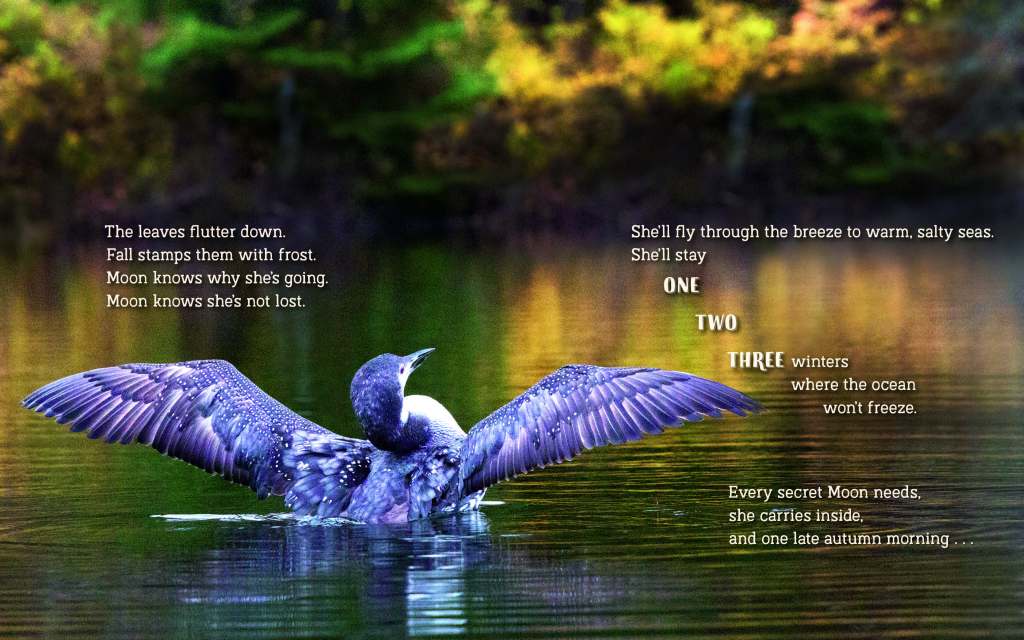
Secrets of the Loon is written in rhyming verse. I didn’t notice this at first. Other poetic elements jumped out at me; repetition, onomatopoeia, and imagery together create a delightful tour of the lake.
Secrets of the Loon, Minnesota Historical Society Press (5/1/20) ISBN: 9781681341583
These rocky shores, with trees tipped in gold. These ripples and currents, fishy and cold. This dazzling sky, a vivid blue dome. This spruce-scented bay offers comfort. It’s home.
Laura Purdie Salas, Secrets of the Loon
Being unfamiliar with loons, I also enjoyed reading the back matter of More Loon Secrets. I hope one day I will see a loon in real life. But for now, Laura’s book takes me to a beautiful lake full of natural sights and sounds.
Lagniappe (a little something extra) today is a video I saw on CNN’s Five Things to Know page. Believe me, it was the best thing there. One of my favorite hymns to sing. I first sang Jesu, Joy of Man’s Desiring in my high school choir. That is why I remember it so well. Ah, youth…
Thank you to Two Writing Teachers for creating an amazing community of writers and a safe, welcoming space to write and share.
My feelings are all over the place. Starting the day later because I can sleep longer wakes me rested, ready. A walk outside on a perfect spring morning energizes. But then the weight of all that is different, all that is not happening, not normal comes with cleaning out a classroom or picking up items at the store or watching the news.
Poetry helps me cope. In my email inbox, on my Instagram feed, or on the bedside table, I can find a poem that soothes, comforts, or inspires me.
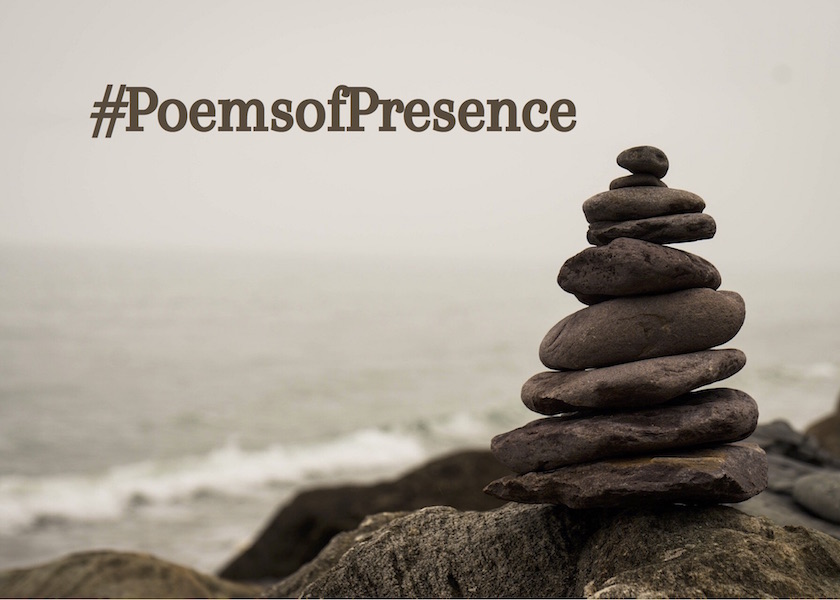
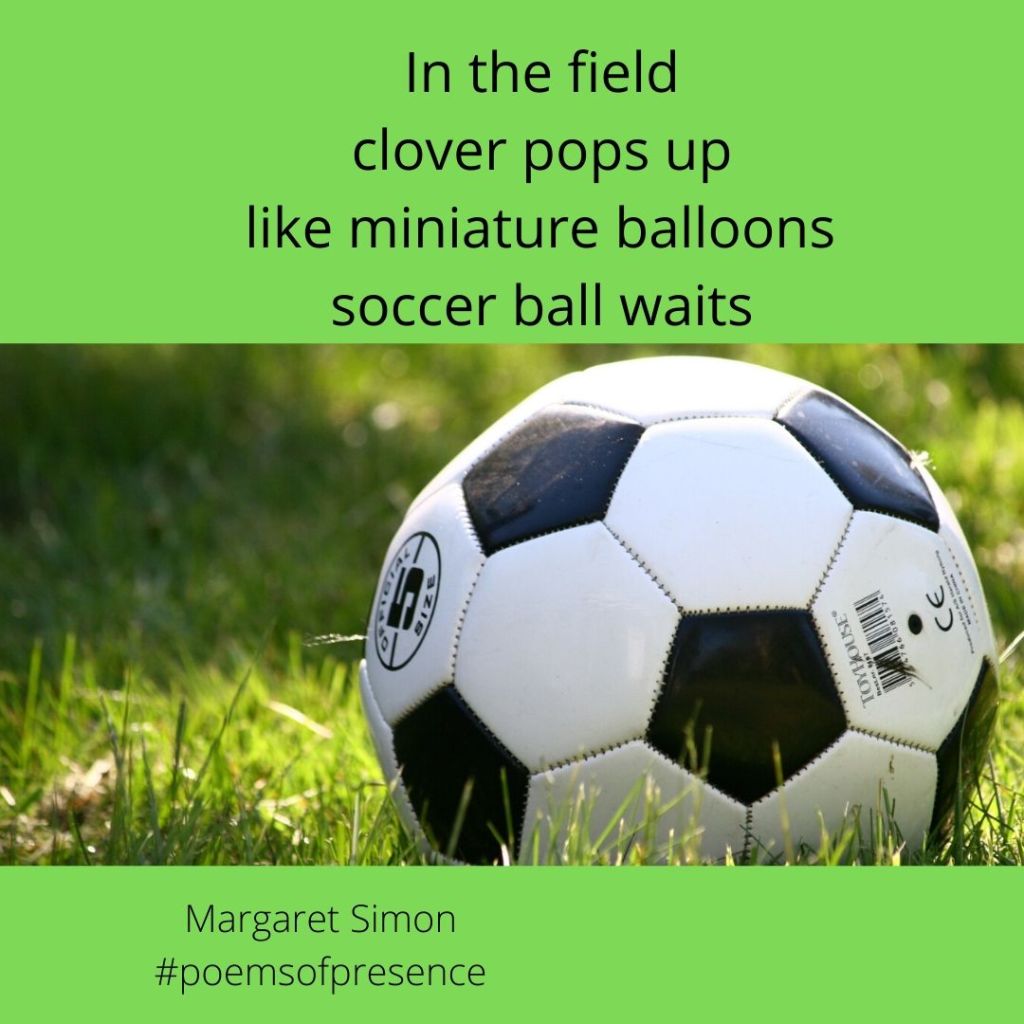
On Twitter this month, a group of us teacher-poets are writing #Poemsof Presence. These poems capture a single moment in time. They honor the present without regard or worry over the future or past. I can find connection and hope in this task. If you are a poem dabbler, join us.
This poem by ADA LIMÓN has come across my path a few times. Today from Gratefulness.org. I love how the title Instructions on Not Giving Up tells me what she wants me to learn from nature. And the poem fills me with a beautiful image.
More than the fuchsia funnels breaking out of the crabapple tree, more than the neighbor’s almost obscene display of cherry limbs shoving their cotton candy-colored blossoms to the slate sky of Spring rains, it’s the greening of the trees that really gets to me.
This Photo Wants to be a Poem is a low pressure, quick writing prompt I post each week. Consider joining in the playful poetry today. Leave a comment with 15 words or less structured as a poem. Write encouraging comments on other responses. That’s it. No judgement. Just be present.
Speaking of being present, a group of poet dabblers are writing a poem of presence each day of May on Twitter using the hashtag #PoemsofPresence. This grew out of my Ditty of the Month interview. You can also write a poem of presence on the padlet that Michelle is curating.
Today’s photo was taken last week when we were out on a family walk with Leo, who is 17 months today. He is learning about mischief, and he took Baby Thomas’s hat from his stroller and put it on and ran. It was all such a fun game. I was lucky to capture this shot in the multitude of photos I took.
Catch me if you can! photo by Margaret Simon
Let me run in the sun. Hat askew, can’t catch you.
We made it to May 1st, and I’m pleased to announce the Progressive Poem has reached a celebratory ending. Thanks to all the poets who participated and took their turns without any prodding or reminding from me. My job as coordinator this year was made easy because we are a community that works ( and plays) well together. See the completed poem here.
This month my Poetry Swaggers group is sharing epistolary poems. I have to admit that when Molly Hogan suggested this form, I didn’t know what it was. Basically this is a letter poem with a fancy name. My poem is written to my notebook, a constant companion these days.
My notebook
Dear Notebook,
From the time I was a teenager with a diary that locked, I’ve written word by word. Some days the pen scribbles nonsense or a secret I will not share. Other days, the blank page inspires–my words play on your stage.
Whether you are lined or graphed or solid white, I love the magic of empty pages filling you with scrolled loops and curved letters. When I hold you near, I smell the scent of flair pens, washi tape, glue stick– a writer’s incense.
I can be whoever I want to be in my own little corner in my own little notebook.
Margaret Simon, draft
To see more epistolary poems, visit these Swaggers’ sites:
In other news, I am the Reader’s Spotlight over at Michelle Barnes’ site Today’s Little Ditty. Thanks, Michelle, for all you do to promote poets and encourage writers.
Thank you to Two Writing Teachers for creating an amazing community of writers and a safe, welcoming space to write and share.
Even before we were sheltering in our homes, I enjoyed making connections over cyberspace. Teacher-poet-writer Fran Haley is one of those connections. We read each other. Yesterday she wrote a beautiful blog post “Ode to the Wind.” In that post she wrote about a tweet from Robert MacFarlane with the word of the day: susurrate.
Word of the day: “susurrate”—to whisper, murmur, esp. of noise produced by numerous individual sources of sound (bees humming, leaves rustling, etc.) Compare to “psithurism,” its similarly sibilant sense-sibling, meaning the whispering of wind in trees (from Ancient Greek).
Susurrate was a new word to me when I read MacFarlane’s most amazing, beautiful book the lost words: A Spell Book. A friend who knows I love words and poetry loaned it to me. I presented the first few poems to my students. The last stanza of the second poem “adder” reads:
Rustle of grass, sudden susurrus, what the eye misses: For adder is as adder hisses.
Robert MacFarlane, the lost words
Reading Fran’s post, I remembered that I had written a definito to the word. The definito is a form created by my friend, teacher-poet Heidi Mordhorst. “The definito is a free verse poem of 8-12 lines that highlights wordplay as it demonstrates the meaning of a less common, often abstract word, which always ends the poem.“
I love this form for working with the meaning of a new word in a way that helps someone else understand the word.
As murmur is to whisper a mutter to a babble When grumbles turn to mumbles and a purr softens sound As whisper is to wind a sigh of the weather As a hum is to a hummingbird flying quickly to a flower You may hear something close to silence…susurration.
On Tuesday evening I participated in a free webinar from Highlights with Lesléa Newman called “Poetry to Soothe the Soul”. During the presentation, I realized I had picked up one of her books at NCTE last fall, October Mourning. I went on a search for it and found it and have been reading. It’s a verse novel about the killing of Matthew Shephard. Her use of short form and repetition is affective in that book.
The Patrol Officer’s Report
two thin white tear tracks one red swollen blood-caked face this is someone’s child
With us, she shared her own Pandemic Haiku. Her homework assignment was to write our own. I had written a haiku a few weeks ago and sent in a soundbite of me reading it to Alan Nakagawa’s sound collage commissioned by OCMA, Social Distance, Haiku, and You! This week I received a link to all the creative sound recordings. They had more than 500 entries. My haiku is included in Part B. Posted here if you choose to listen.
Heartbroken world mourns Loss of who we were before Waiting for new life -Margaret Simon
On Wednesday, I collected moments throughout my day in haiku. Here is my collection:
Pandemic Haiku
In a viral time, let us be grateful for this: Breath. Green. Life.
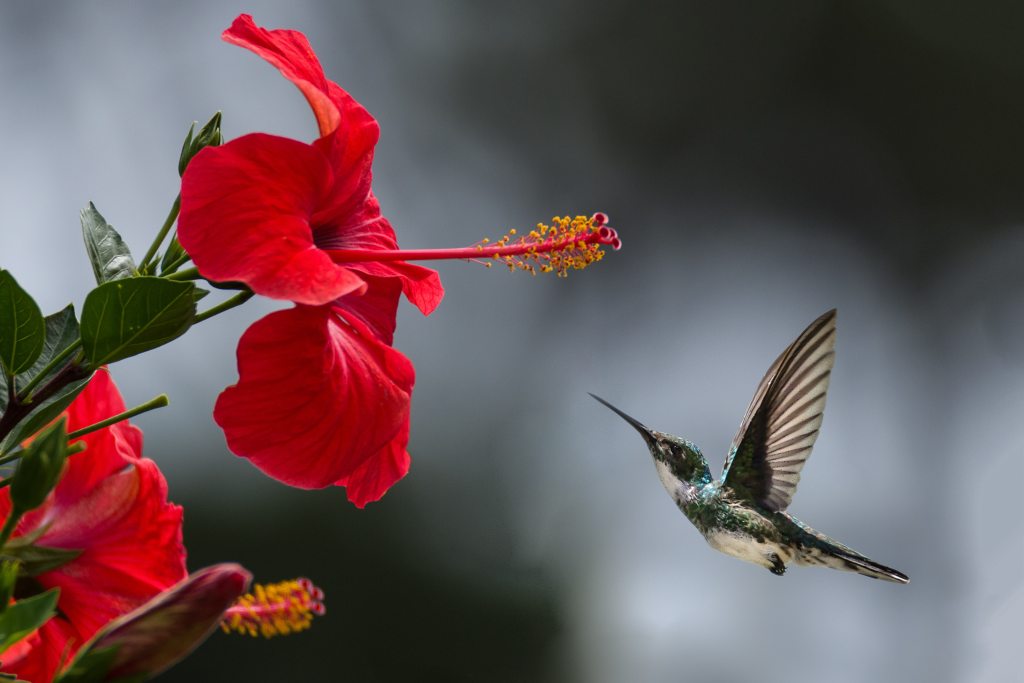
Early morning sun slant of light through cypress shades welcoming hummers
Walks with Leo are a wander, meander See dat, dat, and dat?
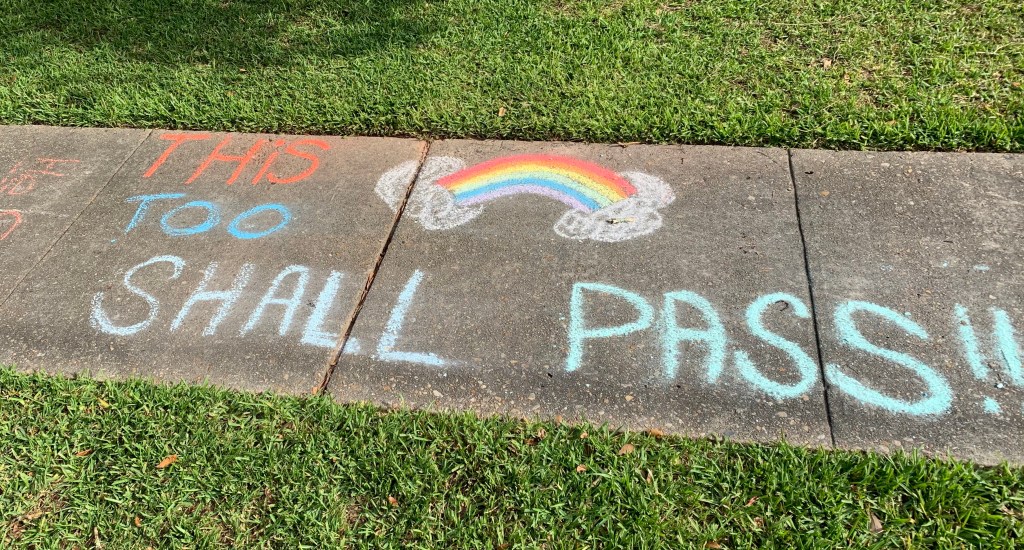
Chalk art on sidewalks greet passersby with colors “This too shall pass!”
A new duck tenant three eggs today lay in the wood duck house.
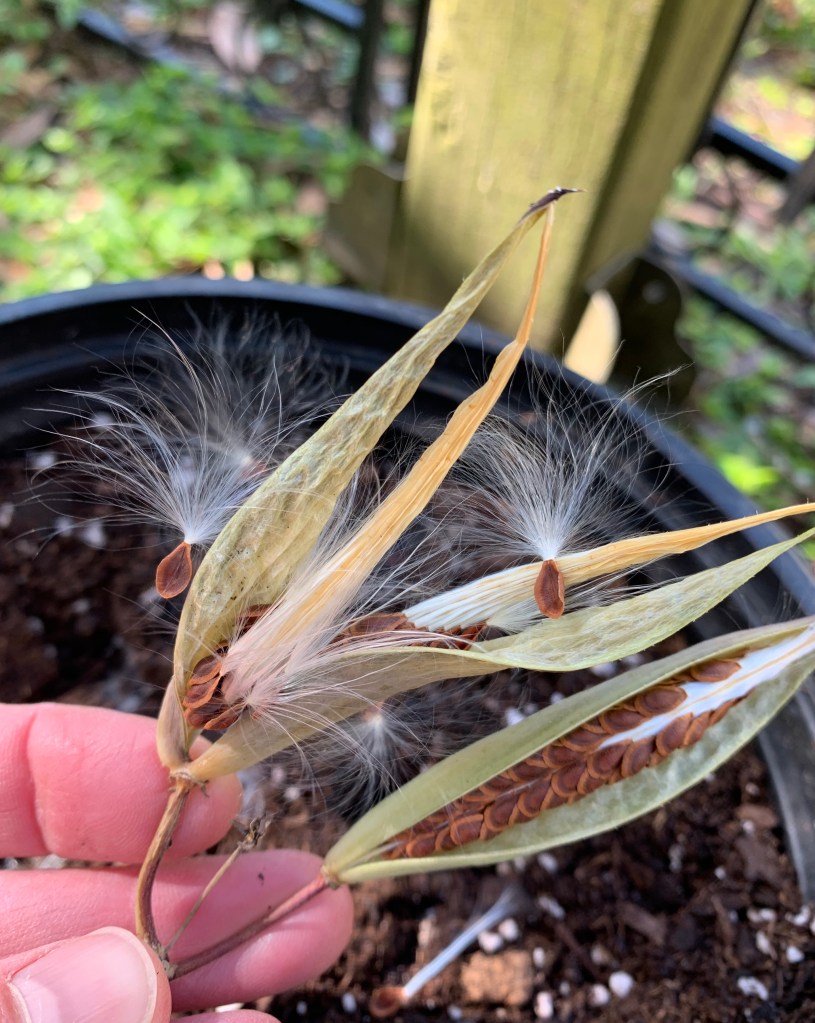
Seven green-gold charms chrysalis-haven for wings to magically form.
Watching my screen I see Chloe, Rylee, you in your own kitchen.
Don’t know what will be when the viral storm calms down I hope for a hug.
This poetry month I didn’t commit to write a certain type of poem every day like many other poets I am following. I decided I would write to the muse. Wherever she lead, I would follow.
Among my weekly teacher-poet emails, I get Teach this Poem from Poets.org. This week the poem to teach was “Earth. Your Dancing Place” by May Swenson. One line (“Take earth for your own large room”) jumped out at me and wanted to be a golden shovel. After messing with it in my journal, I created this draft.
Earth’s Heartbeat
If you take
a moment with earth,
touch her for
her soothing spirit, place your
hand on her beating heart, your own
heart will open a door to a large
living room
Margaret Simon, draft 2020
I was also inspired by Catherine Flynn’s post that included the NASA Earth Day poster. The artist, Jenny Motter, used the idea of listening to the pulse of a tree to create this amazing image. There is much more imagery used in the artwork that you can read about at the NASA site.
I subscribe to Poets & Writers The Time is Now writing prompt email each week. This week, the poetry prompt here asked writers to watch a video of a dance in which their movements were stilted rather than flowing. The prompt was to write a poem of one syllable words. I want this to be a new form: single-syllable song.
My dog in many ways is the perfect dog, schnoodle (schnauzer/ poodle mix) so no shedding. He always wants to please. He’s incredibly patient with kittens and babies. However, he is afraid of storms.
Last night a storm rumbled around 11:30 PM. Charlie barked. His bark is more of a squeal. Like a baby’s cry of fear. I got up and held him in my lap for a while until he was calm enough to sleep. That’s where my mind went to write this poem. I like how placing each word on its own line helps bring out the tone of fear and release.
Storm Song One step forth leads me through dark halls when he cries he pulls my heart grabs me in a hug we fall to sleep dream of a new way to feel.
Have you heard of the Zeno form? It’s one of my favorites that I’d forgotten about until I made a “Poetry on the Bayou” episode on my YouTube channel. I’ve been recording myself sitting outside on the back deck overlooking the Bayou Teche. I’m reading poems from my book Bayou Song.
This week I read a Zeno about cypress knees, a strange phenomenon for the bald cypress trees which are prolific around the shores of the bayou. Some people cut the cypress knees and use them to carve decorations or paint on. There is no solid research on how or why the cypress trees make their knees. And my husband, aka the yard man, curses how they interrupt his mowing flow.
Listen to a Cypress Zeno and learn to write a Zeno poem.
A zeno follows a mathematical sequence for a syllable count of 8,4,2,1,4,2,1,4,2,1. J. Patrick Lewis originated the form and added that the 1 syllable lines should rhyme.
With students, I enjoyed adding the element of a “zine” to create a “Zeno-Zine.” You can see a previous posts about making Zeno-Zines for Dot Day and in Summer Poetry Swap.
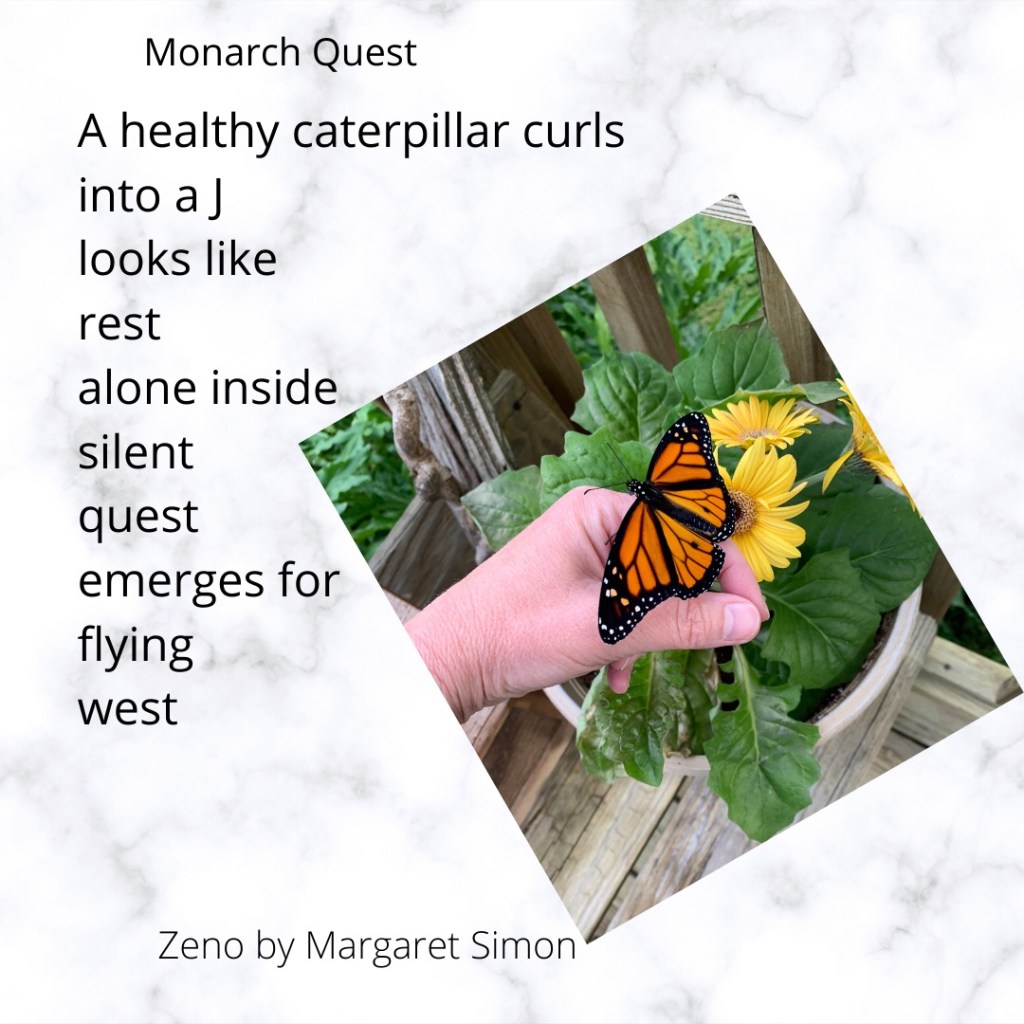
Today I released a monarch butterfly that I had sheltered in a habitat for two weeks. The caterpillar came as “lagniappe” on a milkweed plant I bought nearly three weeks ago. The caterpillar made its chrysalis on a leaf. I wanted to plant the milkweed in the garden, so I taped the leaf to the top of the butterfly net, only to have the tape release, and the chrysalis end up falling to the floor. I had luckily taken precaution and placed bubble wrap on the floor. Once it fell, I realized that the tape was sticking too well to the bubble wrap, so I just decided to leave it alone. I really wasn’t sure if it would develop. Call it the miracle of nature or the resilience of monarchs, but the butterfly emerged yesterday, full and complete. This calls for celebration in a Zeno poem.
Margaret Simon lives on the Bayou Teche in New Iberia, Louisiana. She is a retired elementary gifted teacher who writes poetry and children's books. Welcome to a space of peace, poetry, and personal reflection. Walk in kindness.