dragonfly eyes by Margaret Simon, all rights reserved
Rest your agile flight
on a sunbeam, look about
with dragonfly eyes.
While I was attempting to get a photo of bees that are extremely active in a flowering tree, this dragonfly lit upon an African iris. I had the telephoto lens on. I was so excited that I captured such an amazing close-up. So clear I could see the eyes of the dragonfly.
Laura Shovan is a poet who shares the love. For her birthday month, February, she commits to writing poems every day and shares the experience with anyone who dares to jump in to the party. Read her introduction to the project here.
I have joined in her project every year and find the experience challenging, inspiring, and enriching. I don’t know if I get better at writing poems, but I know for sure that this is a welcoming and passionate-about-poetry group. I am honored to host today.
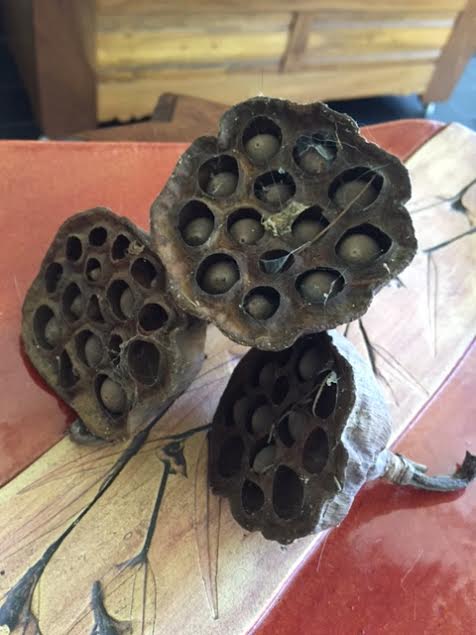
In preparation for this month of writing, Laura called for images of found objects. I sent her this image of lotus seed pods I picked up out of the swamp on a winter canoe trip. They sit in a pottery piece that is also reminiscent of nature.
Diane Mayr was considering skipping today. And that very thought made her write a skippy poem. You never know where the muse may hide. I love the rhythm of the flower names and of course, the final truth.
Mama Planted a Garden
(a skipping rhyme)
Mama planted a garden,
but it came up weeds.
Oh, my silly Mama!
You planted the wrong seeds.
No, my little Missy,
they were the right ones.
A flower to a father
may be a weed to the son!
Buttercup, aster, and bergamot.
Maiden pink, dandelion, forget-me-not.
Columbine, bunchberry, periwinkle.
Violet, lady slipper, honeysuckle.
Always remember this,
my little daughter:
one person’s weed
is another one’s flower!
–Diane Mayr
Patricia VanAmburg did some research on lotus pods and found out there is a disease, Trypophobia—fear of holes. So she wrote a rather empty poem about that feeling of empty nest, one I know all too well.
Empty
Of what use this pod
Without her seeds
Temporary filler for
More fruitful flowers
But every life
Returns to earth
Fragile as the cradle
In an attic corner
Brittle as mother’s ribs
After every baby has gone
–Patricia VanAmburg
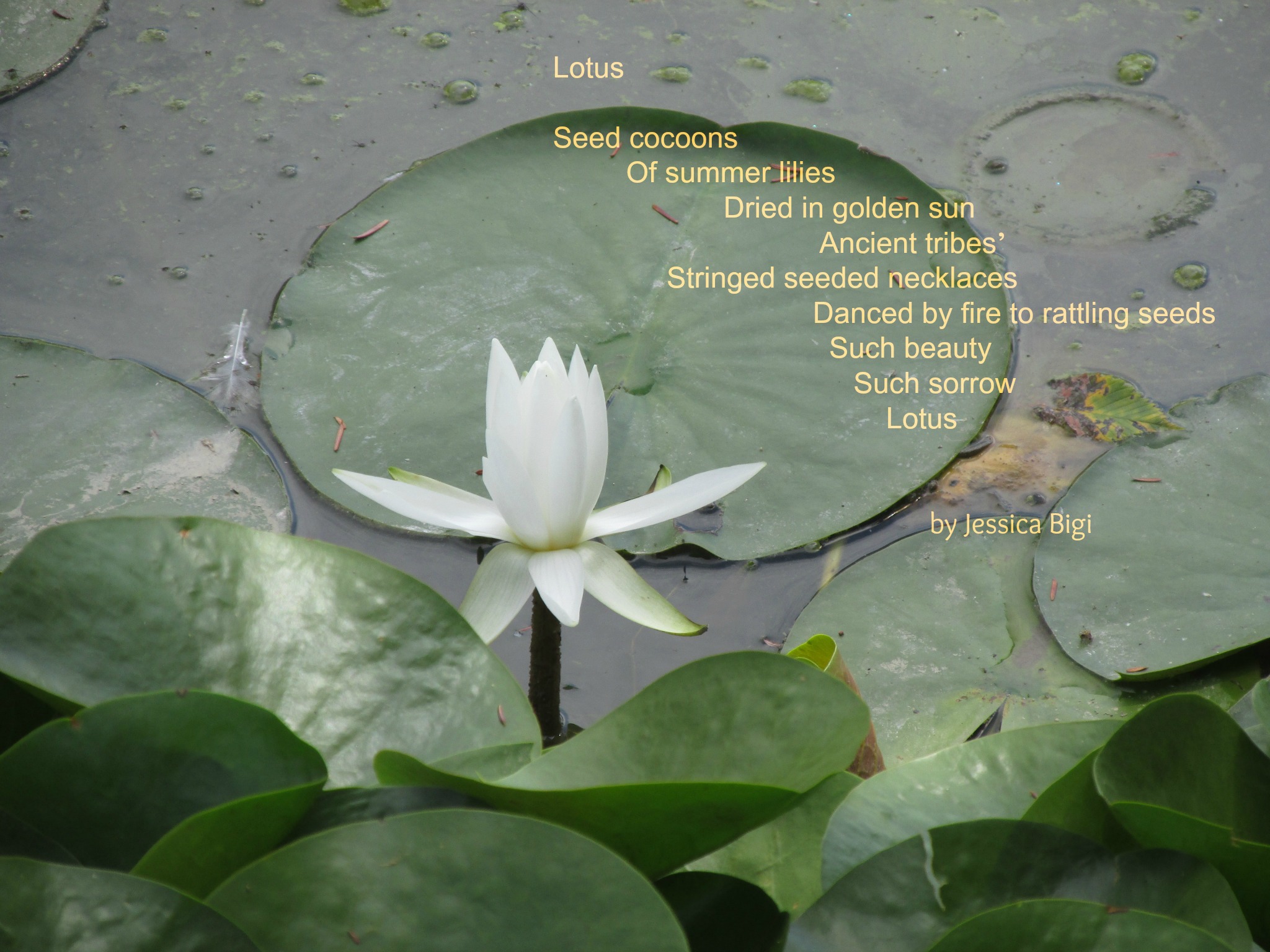
Jessica Bigi sent an image of a lotus flower while she takes us back to ancient rituals.
Photo and poem by Jessica Bigi, all rights reserved.
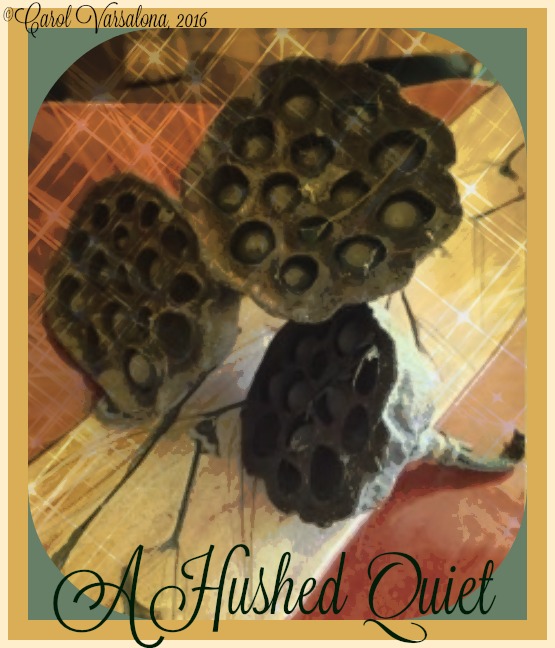
Carol Varsalona is cross-posting her poems on her blog. I love how she is digitally playing with the image as well. I imagine sitting with Carol enjoying a warm cup of coffee and the quiet.
As I sit by the window,
the morning sun
drifts on in,
singing the praises
of yet another day.
A zen-like quality emerges.
Rays bouncing from
winter white blankets
bring outdoors in.
A hushed quiet
envelops the room.
In a corner,
upon a mat of bamboo,
cut-open pods of grace
in triad formation
adorn a desk
of muted colors.
Indoor life merges
with outdoor sights
in a seasonal burst,
reminding me that
new life is waiting
in an early spring.
Violet also did her research on Trypophobia and wrote an erasure poem from an article on Mental Floss. Who knew? I certainly did not. Thanks for the learning as well as the poetry.
Trypophobia
skin crawls, heart flutters
shoulders tighten, I shiver
crazy revulsion to holes, bumps
images of holes, parasites
bot flies, worms, ravages of disease
pregnant suriname toad
lotus seed head
give people trypophobic
heebie jeebies
soap bubbles trigger
nightmares
~ Violet Nesdoly
Heidi Mordhorst digs into the earth to consider how an anthropologist looks at things.
Day 10
anthropology
once thought to be
an elaborately carved musical
instrument used
only on the wedding day
of a woman born under
the eleventh moon
it is now understood to be
a deliberately culled muscular
implement used
only on the winding way
of a man burned under
the oppressive soon
context is everything
Here’s another from Heidi. This one is a child’s wonderment at the things of this world.
Making Sense
First it’s something to see–
almost black among the greens and yellows,
scalloped around the edges like
crayon clouds or flowers,
clouds full of black hailstones–
or it’s a leopard-skin jellyfish.
Next it’s something to hold–
not weighty like a microphone
or a metal shower head,
but light and hollow, not plastic
and not wood, part smooth
and part ridged and rumpled.
Now it’s something to hear–
take it by the curving handle oh!
is that a stem? and shake, shake
shake–those blackish beads or
beans or oh! they’re seeds!
they make a marvelous rattling!
~Heidi Mordhorst 2016
all rights reserved
Donna Smith makes a simple poem reveal a truth of nature. Love the alliteration, one of my favorite literary devices. I think Donna is a little bit chilly in Maine, so she has thoughts of overcoats.
PODS
Purposefully plopping pondward
Out of open overcoat
Drooping, dropping down
Swamped seeds settle, silently sprout.
To write my own poem, I turned to form and tried out a Bio-poem. Laura Purdie Salas used this form with 3rd graders this week. See her post here.
Lotus
mystical, pure, beauty, enlightened
Daughter of Bodhi
Lover of muddy water, sun, and spring
Who feels spiritual, open to the light
Who gives wisdom, joy, and peace
Who fears storms, drowning, neglect
Who would like to see the ocean (Is it as blue as me?),
tomorrow (My life is fleeting.),
and world peace (Doesn’t everyone wish for world peace?)
Who lives in Atchafalaya Swamp
Who knows noble truths
Lily of the Mud.
–Margaret Simon
And here is Laura with another of my favorite forms, a Fib poem. Read more about Fib poems here.
Lotus Pod Fibonacci
By Laura Shovan
Three
brown
pods shake
rattle, roll.
Seeds fly. We stomp them
into the ground, part of the dance.
Molly Hogan was flying under the radar with her first attempt at haiku. This challenge is pushing us all to find what form fits best.
Day 10 –My first attempt at haiku.
Autumn maracas
Invite you to merengue
Shake a leg, baby!
–Molly Hogan
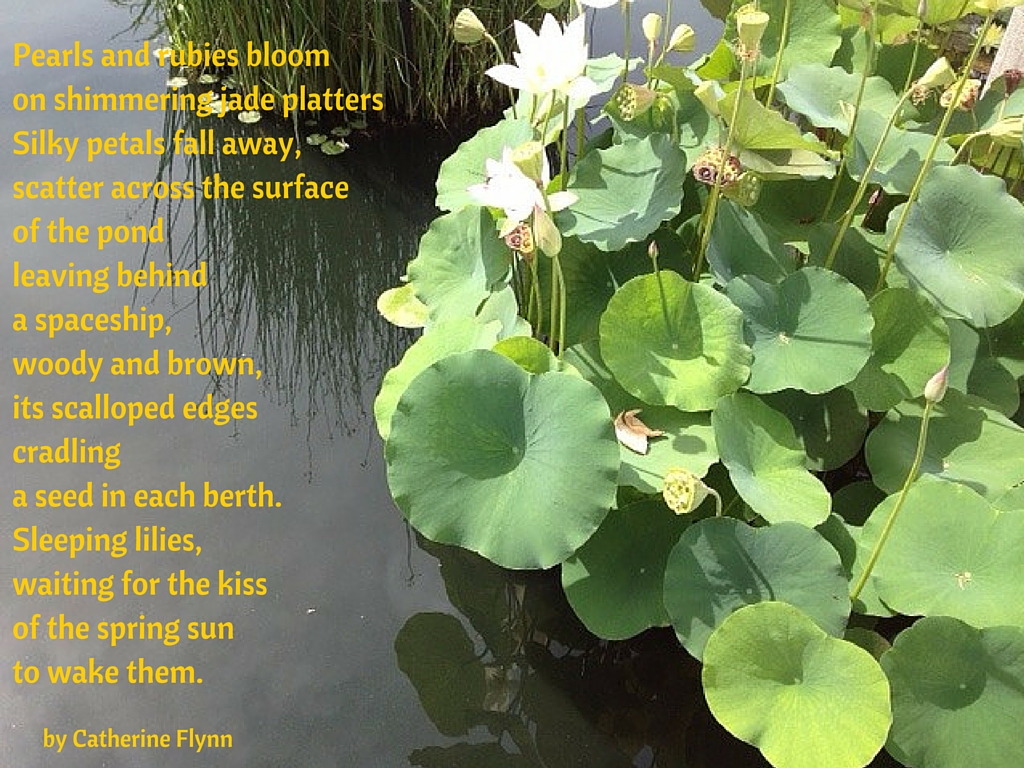
Catherine Flynn found the lyrics to the life cycle of a lotus at the New York Botanical Garden.
Photo and poem by Catherine Flynn, all rights reserved.
Buffy Silverman offers another haiku, which is the ultimate nature poetic form. Hard to capture a moment in few syllables.
dried lotus pods
shriveled and moored in mud
cradle tomorrow
–Buffy Silverman
What’s a poetry parade without Charles Waters? He bounced in with this sunshine.
LOTUS FLOWER (HEY BUDS)
Fuchsia covered buds
stretch out in praise of morning
revealing their sun-shined heart.
(c) Charles Waters 2016
lotus pods
seed mysteries
three days
of flowering
rebirth
an open heart
If you have a poem for today’s found object, put it in the comments and I will add it to the post. Thanks again for joining us and for reading all the way through to the end. Mardi Gras ended yesterday, but this is a joyful parade of poems to keep you passin’ a good time!
Poetry Friday round-up with Diane at Random Noodling
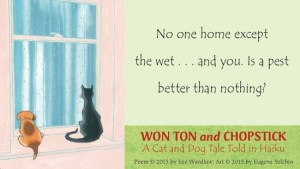
Won Ton and Chopstick is a cutie-pie story in haiku. I shared it with my students this week and a funny thing happened. They were compelled to read it chorally. These short verses about Won Ton, the cat, and his new friend (maybe) Chopstick, the puppy, are clever and witty.
Won Ton and Chopstick by Lee Wardlow
When searching for a website, I came across this great activity for kids. Wish I had found it sooner!
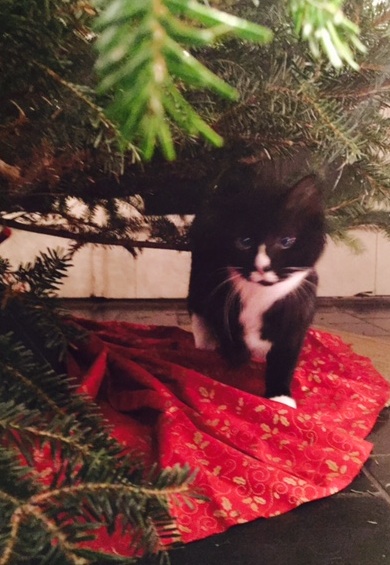
We quickly figured out that it’s not so easy to write a story in haiku. I tried a few drafts about my cat Mimi.
Bow tie mustache bites
at open faucet, waiting
for drip-water to fall.
Oh, that Christmas tree,
lights and hanging ornaments
a feline playground.
Please use this button on your site for DigiLit Sunday posts
Technology allows us, invites us even, to collaborate more and more. No longer am I a lonely teacher behind closed doors of a classroom. Through my PLN (Professional Learning Network) on Twitter and Facebook, I have met colleagues. Teachers are doing the every day thing in innovative ways. Months ago, Leigh Anne Eck tweeted me about helping with her high ability camp. She was teaching poetry. I Skyped with a group of 2nd and 3rd graders this week. What fun! I didn’t have to care at all about the boy who wiggled all around in his seat and started drumming with his pencil. That’s my kind of teaching. I was on screen far away in my own living room.
Leigh Anne shared the student work and her thoughts about the collaboration on her site A Day in the Life.
The haiku lesson itself was a collaboration because I used another colleague’s poetry project. Linda Baie blogs at Teacher Dance. We’ve never met face to face, but every week we are in contact through our blog posts. She’s one of my top commenters. Her poetry project in April was to write a haiku each day. She catalogued them on her site.
I am encouraged by this collaboration to look for ways to use Skype more in my class during the year. We’ve had author visits. These are great, but what about connecting with other teachers and students? We could Skype a whole hour lesson and share our writing together across the miles.
This next school year, I will have two 6th grade girls at two different schools. I am wondering how I can use collaboration to make their world bigger and more meaningful. Through Kidblogs, we could create a site just for them. If you know you will have high ability sixth graders next year, maybe we could collaborate on a book or writing prompt. Let me know in the comments.
In what ways are you collaborating using technology? What ways do you plan to collaborate? Link up your blog post and/or tweet out your response to #digilitchallenge and @MargaretGSimon.
For the next month, DigiLit Sunday will be on vacation. Please consider joining CLMOOC.
Sign up for CLMOOC running June 28- August 2, 2015.
In this wacky wonderful world of the Kidlitosphere, I have met so many awesome writers and teachers and teacher/writers. It becomes an even richer experience when we work together to teach and inspire students. When Leigh Anne Eck tweeted me about Skyping with her summer writing camp, I agreed, of course. I was actually flattered. As the day got closer, I worried that I didn’t have what I needed to adequately teach this workshop. We had a quick email exchange and decided to do haiku. All my books are packed away at school, so I turned to another online friend, Linda Baie. She had written a haiku every day in April and made a catalog of them all on her site. How perfect and convenient! Thanks, Linda!
These were the poems I selected and a few things we talked about.
snow shadows again
blossoms tighten their hold
no open window
(Note the use of the word shadows. Why do blossoms tighten? What does the last line tell you?)
That little boy
digs into warm earth –
wiggle in his hand
(What is in his hand? How do you know? Poets can tell you that it’s a worm without using the word.)
from snow to puddles
mother nature’s pasttime –
trees drink deeply
(What is happening? How do you know? Note the personification of trees. What is a pasttime?)
Following our discussion, we looked at this image from National Geographic. First we collected words and phrases that the students shared. Together we wrote this haiku.
Three pairs of flip-flops.
Shadows of three kids playing.
Puddle reflection.
We pulled up a Google image search of “summer days.” Each student chose their own image to write from. Sacred writing time for about 7 minutes. Then some wonderful sharing time. I had such a good time teaching from my living room, even if it was early in the morning. (two time zones)
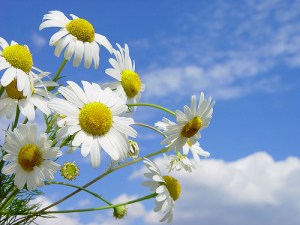
I wrote a haiku to an image of daisies. Teachers write, too, during workshop. I borrowed a line from Linda, “no open window,” and made it “open your window.” I talked about how poets get ideas from other poets.
Open your window
Summer daisies are here.
Golden sunshine smiles.
–Margaret Simon
Ruth Ayres invites us the celebrate each week. Click over to her site Discover. Play. Build. to read more celebrations.
Use this button created by Leigh Anne Eck to post your Digital Poetry this month.
Please use this button on your site for DigiLit Sunday posts
Since this is Easter weekend, and I will be celebrating with my family, I am combining my weekend posts into one. Continuing my April commitment to digital poetry, a weekly celebration link up, and DigiLit Sunday all in one.
I think I am getting the hang of Nutshell now. You have to take the pictures on the spot because that’s how the app knows to take video. You have to keep in mind that after you take the picture, the phone is still capturing video.
I did not go on an exotic trip to Laos, but very close to my own town, there is a Laotian village complete with a Buddhist temple, Wat Thammarattanaram. This weekend they celebrate Songkran, the Laotian New Year. Yesterday we attended the opening prayer service.
For us in the Christian tradition, it is Holy Week. I began the week with Palm Sunday and a procession led by bagpipes to celebrate Jesus’ ride into Jerusalem. This video I took while participating in the procession of the palms at my parents’ church, St. James Episcopal Church in Jackson, MS. I uploaded it into iMovie and wrote a simple haiku using the title slides in iMovie.
There is stark contrast here in these two traditions. We felt uncomfortable seated on the floor in the Buddhist Temple; however, Bea, a Laotian woman with good English, welcomed us to sit with her and turned to tell us the story of what was happening throughout the service. This kindness made us feel more comfortable.
Today I celebrate the many religions of the world.
I celebrate that traditions are passed on generation to generation.
I celebrate resurrection and renewal.
I celebrate celebrations.
Link up your Digital Literacy posts. Happy Easter!
On Thursdays I join Holly Mueller’s round up of Spiritual Journey posts. We are all writing around a theme. This week we explore Jaana’s one little word, Discover.
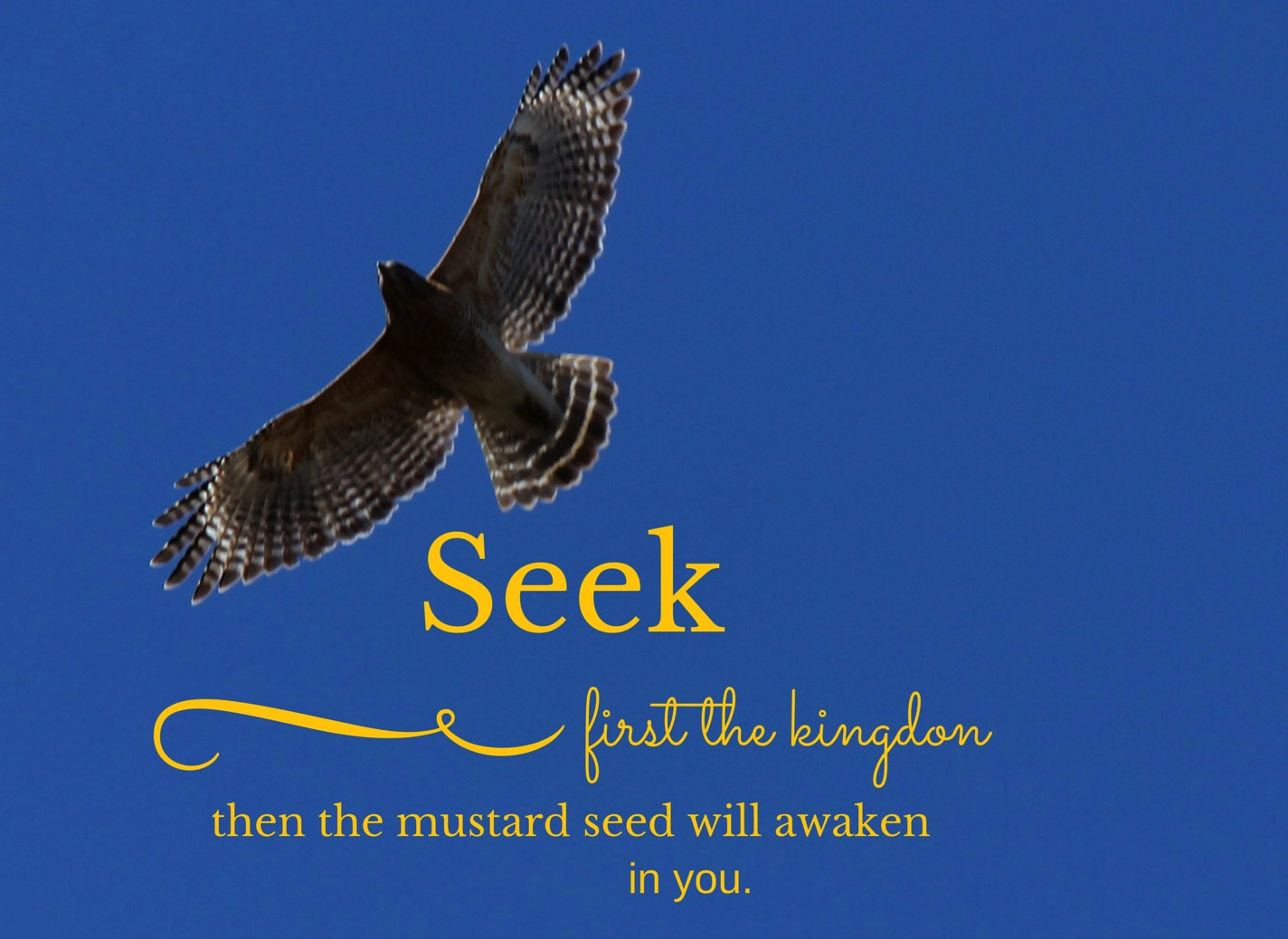
I have an offering of a beautiful photograph taken by my friend, journalist, Chere’ Coen and a small poem based on these words of wisdom from Eknath Easwaran:
This prayer (Seek ye first the kingdom of God) is not addressed to someone outside us, but to our deepest Self, the Lord of Love, who dwells in the hearts of us all. When we repeat it, we are not asking for anything in particular, like good health or solutions to our problems or richer personal relationships. We are simply asking to get closer to the source of all strength and all joy and all love. Eknath Easwaran
Join the roundup with Heidi at My Juicy Little Universe
I have discovered from being surrounded by gifted kids and showering them in poetry that they get adventurous and brave. They try new things in poems. And they invent new poetry forms.
This week I used a picture prompt as I often do. This week’s Robin Update from Journey North was a close-up image of a robin with a berry in its mouth. I introduced Laura Purdie Salas’ latest poetry project, Why-Ku. I haven’t read Mary Lee Hahn’s activities yet, but I doubt one of them is to create your own poem form.
I have a few boys who seem to find every excuse to get distracted from the task at hand, but this time I waited and allowed their distraction to see where this would go.
“Let’s write a Psy-ku?”
“Great! A Sci-Ku with scientific facts.”
“No, Mrs. Simon, not Science haiku, Psy-ku, like crazy.”
While the rest of us worked on poems about the robin, the boys were scheming and making up a new form.
They created a syllable count: 5,4,5,5,5,6,5,7,5,8
Then the poets three headed to our Kidblogs site to try to create the next poetry phenomenon.
Reed wrote, “A new thing that me REED and Nigel have created is called a psyku. This is an out -of-the-world dumb type of writing. You just make up a topic and have it carzyfied! It can be something about a dumb person or a wacky topic.”
I would skate Monday,
With unicorns.
I would skate Tuesday,
With Spongebob Squarepants.
I would skate Wednesday,
With the Greek Roman gods.
I would skate Thursday,
With Godzilla and Bigfoot.
I would skate Friday,
With another bottle of gin.
Nigel, 6th grade
I know the bottle of gin is probably not classroom appropriate, but I had to laugh. They didn’t really know what it was. Who knows? This psy-ku form may become a thing. If you are so inclined to give it a shot, write one in the comments or comment on our Kidblog. Go for it!
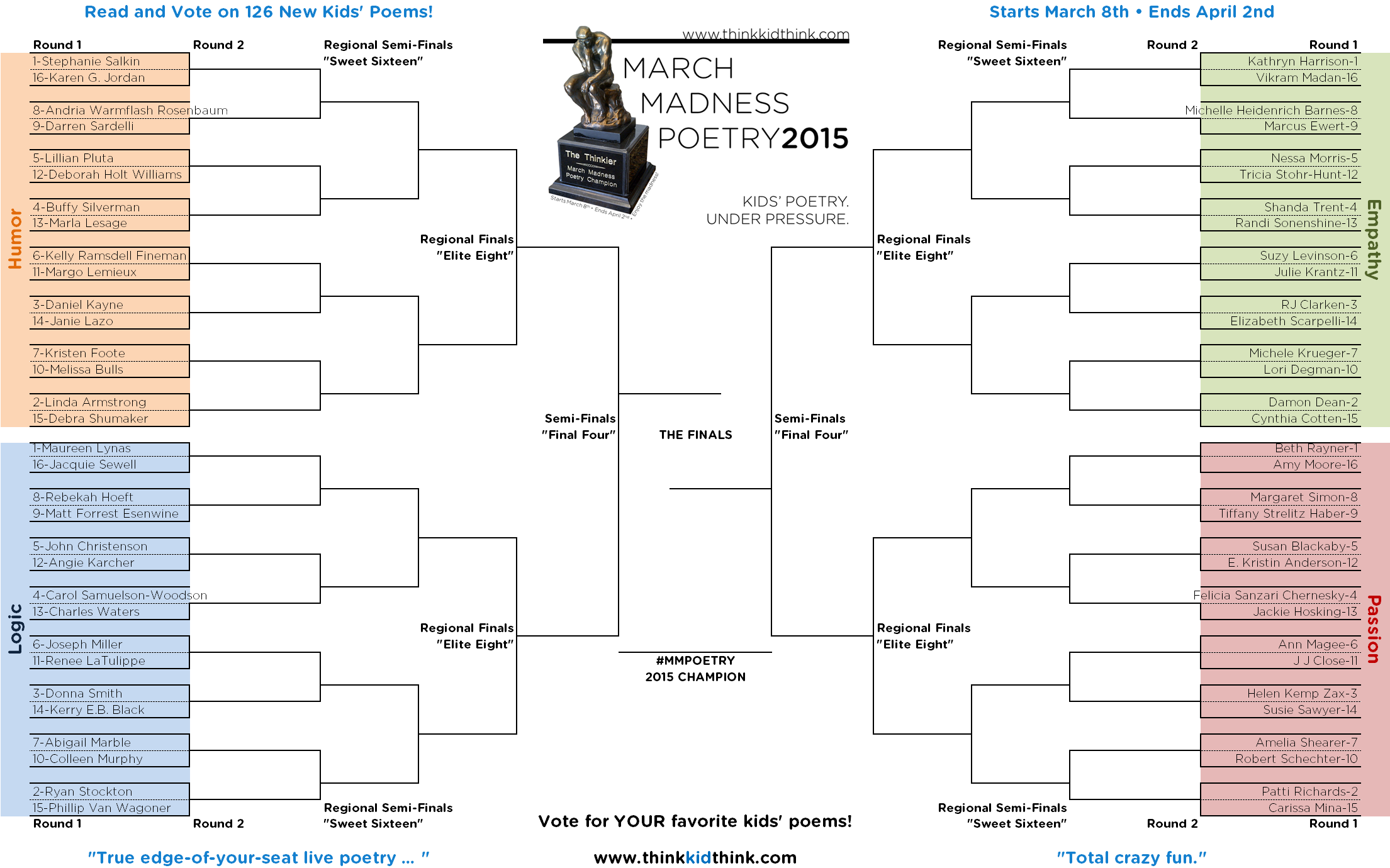
Announcement! I have been selected to be one of the 64 authletes in the 2015 March Madness for Kids’ Poetry. The competition begins on March 10th. I am totally intimidated by the competition, but I am Reaching this year, and what better way to reach than to do something scary. Here is the tournament poster. You can find me in the Passion category. Check Ed’s site for updates.
Margaret Simon lives on the Bayou Teche in New Iberia, Louisiana. She is a retired elementary gifted teacher who writes poetry and children's books. Welcome to a space of peace, poetry, and personal reflection. Walk in kindness.














 Reflections on the Teche